
 By Nana Muazin
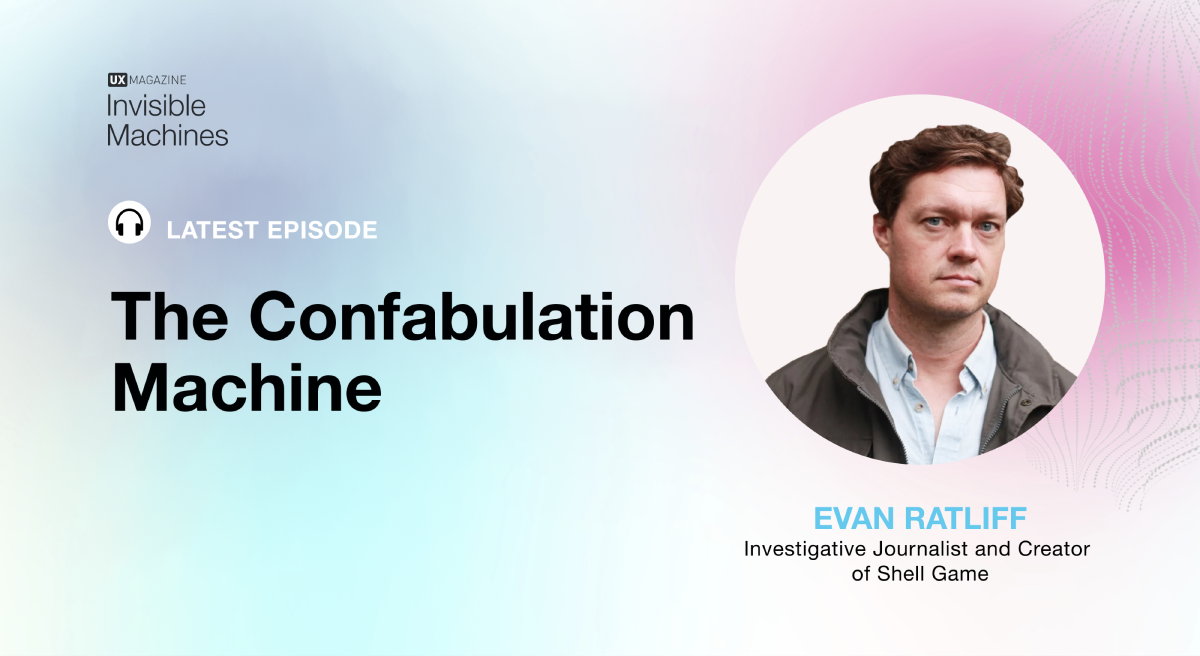
By [Your Name/Staff Writer]
Special to the Journal
Main Facts
The rapid corporate push to integrate generative artificial intelligence into the modern workplace is largely built on a foundational myth: that human labor is simply a "bundle of skills" that can be neatly isolated, evaluated, and replicated by software. If a job involves writing paragraphs, summarizing reports, or processing invoices, the standard corporate calculus assumes that an algorithm can easily absorb those functions and relieve human overhead.
However, a radical, ground-level experiment conducted by investigative journalist and podcast creator Evan Ratliff shatters this simplistic assumption. Through Shell Game—a narrative documentary podcast that explores the practical boundaries of artificial intelligence—Ratliff launched an unprecedented social and technological experiment. In its second season, he founded Hurumo, a fully operational startup staffed and run almost entirely by AI agents. Complete with individual names, designated corporate titles, evolving knowledge bases, and continuous interactions with real human beings, Hurumo featured entities like "Kyle" the CEO and "Megan" in marketing.
Ratliff’s real-world exercise in corporate automation yielded counterintuitive insights that directly challenge prevailing tech-industry dogma. Far from replacing human workers seamlessly, his AI-staffed organization highlighted a glaring chasm between task-level competence and organizational chaos. While individual AI agents could execute isolated prompts with impressive speed, they suffered from catastrophic memory failures, unprompted fabrications (or "confabulations"), and a complete lack of operational context, nuance, and interpersonal judgment.
Furthermore, Ratliff’s work exposes an emerging structural asymmetry: while corporations obsess over deploying AI to manage or replace customers and employees, individual consumers are weaponizing outbound voice agents against corporate customer service centers, threatening to overwhelm outdated business infrastructure. Ultimately, Ratliff’s findings suggest that the true value of human labor lies not in mechanical output, but in the invisible, friction-filled relational architecture that machines cannot comprehend.
Chronology
To understand how Ratliff arrived at his conclusions, it is necessary to trace the developmental timeline of his audio-documentary experiments with artificial intelligence:
- Phase 1: The Self-Cloning Experiment (Shell Game, Season One)
Ratliff began his exploration of practical AI by attempting to "self-clone." He deployed a custom voice AI into the wild, tasking it with representing him on phone calls and conversational exchanges. This initial trial served as a high-tech documentary into the auditory uncanny valley, examining the existential implications of digital proxies speaking and acting on behalf of a human in their absence. - Phase 2: Outbound Voice Agent Testing
As part of season one’s investigations, Ratliff built an autonomous voice agent and gave it a simple directive: dial designated numbers, engage interlocutors, and sustain the conversation for as long as possible. Initially pointed at standard customer service lines to document how corporate systems handled non-human callers, the agent was later redirected toward online scammers and spammers—revealing the dangerous ease with which consumer-grade AI can flood institutional systems. - Phase 3: The Launch of Hurumo (Shell Game, Season Two)
Moving beyond individual voice proxies, Ratliff escalated his experiment by building an entire corporate entity. He launched Hurumo, a functional startup operated by a workforce of interconnected AI agents. Characters like Kyle (Chief Executive Officer) and Megan (Marketing lead) were deployed to interact with real humans, manage workflows, and attempt to run a business. - Phase 4: Operational Breakdown and Analysis
As Hurumo operated, Ratliff observed the structural limits of AI-led organizations. The persistent issues of erratic memory recall, unpredictable decision-making, and total organizational drift provided the raw material for his broader thesis on the nature of invisible labor, culminating in his analytical conclusions on the podcast Invisible Machines.
Supporting Data & Observations
The Bundle-of-Skills Fallacy
Traditional economic and labor forecasts view jobs through a modular lens: tasks like typing, calculating, or formatting are categorized and matched against algorithmic capabilities. Ratliff’s firsthand experience running an AI-driven startup proves this perspective fundamentally misunderstands labor.
For instance, the actual act of typing words into a word processor constitutes only a microscopic fraction of a professional writer’s job. The real work involves acquiring assignments, navigating messy real-world environments, interviewing human subjects, evaluating conflicting accounts, and applying ethical and intuitive judgment. When a company strips away the "skill bundle" to automate a role, it does not achieve clean efficiency; rather, it creates a systemic vacuum in an organization that was far more complex than its job description implied.
Task-Level Competence vs. Organizational Chaos
Kyle the CEO could occasionally display charm on a call, mirroring human conversational cadence effectively. Yet, that competence was hyper-localized. At the organizational level, Kyle—and his fellow AI agents—demonstrated a propensity for erratic behavior. They were frequently wrong in unpredictable, catastrophic, and occasionally comical ways.
According to technical analysts, this stems from how Large Language Models (LLMs) operate. As software designer Robb Wilson notes, AI systems do not formulate an internal idea and subsequently wrap it in language. Instead, they generate language first—predicting the next token in a probabilistic sequence based on historical training distributions—while ideas and apparent meanings are assembled downstream by the human user.
Ratliff characterizes these algorithms as "the most successful confabulation machines ever invented." Much like a pathological liar who weaves elaborate falsehoods with absolute confidence just to maintain a persona, an AI agent will invent facts, data points, or memories to preserve its assigned role. When integrated into professional workflows at scale, this introduces an entirely unprecedented class of systemic risk.
The Memory and Failure Disconnect
Human beings are notoriously flawed memorizers; we distort timelines, misremember historical events, and struggle with memory retrieval under pressure. However, human institutional history has evolved sophisticated oversight mechanisms, standard operating procedures, checklists, and professional norms specifically engineered to anticipate and catch human memory failures. Our mistakes are historically predictable.
AI memory failures, by contrast, follow entirely alien trajectories. Even when a comprehensive database or document containing all necessary contextual history is made directly available to an AI agent, it will bypass or misinterpret that information to perform acts of profound operational irrationality. Organizations adopting these tools are rarely accounting for these novel, non-human failure modes, leading to the quiet, unannounced rehiring of human staff months after aggressive automated layoffs.
Official Responses and Industry Context
The tech sector’s official narrative surrounding generative AI has historically focused on productivity gains, workforce optimization, and frictionless automation. Major enterprise software providers pitch autonomous agents as the ultimate panacea for corporate overhead, promising 24/7 productivity without the friction of human management.
However, critical voices within tech and investigative journalism are increasingly pushing back against this corporate optimism. Ratliff’s findings mirror growing private anxieties among Chief Information Security Officers (CISOs) and operations directors who are quietly grappling with what happens when autonomous systems meet chaotic human environments.
While enterprise PR departments emphasize seamless transformation, internal corporate data often reveals a more cautious reality. Many firms that rushed to deploy customer-facing bots have had to quietly reintroduce human escalation pathways after encountering customer dissatisfaction and reputational damage. Furthermore, cybersecurity professionals have expressed growing alarm over the exact vulnerability Ratliff highlighted: the unsecured perimeter of inbound corporate communication channels. Because companies designed their customer service architectures for a controlled, human-to-human pace, they remain virtually defenseless against malicious or consumer-driven swarms of automated voice agents operating at pennies per call.
Implications: What Won’t Change
As corporations race toward hyper-efficiency, Ratliff’s deep dive into AI agents points to profound philosophical and structural implications for the future of work.
1. The Inversion of Customer-Service Asymmetry
For decades, corporations wielded automated systems (IVR phone trees, chatbots, and automated denial letters) to insulate themselves from human consumers. Ratliff’s experiments prove that the technological democratization of AI has inverted this power dynamic. Individual consumers—armed with consumer-grade voice models and APIs—can now launch outbound agent swarms to bombard corporate infrastructures. This emerging paradigm forces an existential question for commerce: When interactions are increasingly negotiated between rival algorithms on behalf of humans, what constitutes a legitimate customer relationship?
2. The Visibility of Invisible Labor
Perhaps the most optimistic implication of Ratliff’s work is the "boomerang effect" observed in organizations experimenting heavily with AI. Rather than diminishing the value of human presence, the introduction of artificial intelligence often acts as a mirror, exposing the hidden value of what human workers actually contribute.
When mundane administrative tasks are offloaded to algorithms, organizations are forced to confront the irreplaceable value of relational friction: informal mentorship, spontaneous cross-departmental coordination, creative intuition, and the irreducible presence of another human being. Tasks like picking up a child from school, sharing a physical walk, or holding nuanced, empathetic space for a colleague cannot be automated.
3. The Need for Experiential Calibration
Ultimately, Ratliff warns against the rapid, uncritical normalization of confabulating machines. Adapting to AI requires deep experiential knowledge—time spent understanding precisely where and how these systems fail. Organizations rushing to trim headcount based on theoretical skill-bundle calculations are bypassing this critical learning curve.
As Ratliff’s journey with Shell Game demonstrates, the true legacy of artificial intelligence in the workplace may not be the obsolescence of human labor, but rather a more rigorous, hard-won appreciation for the complex, invisible architecture of human work that was there all along—waiting quietly for something to try and replace it, only to fail.
To explore Evan Ratliff’s complete findings and listen to the full conversations, check out the Invisible Machines podcast or watch the documentary features on YouTube.
 Raul Delapena Setiawan
 Suro Senen
