
 By Nana Wu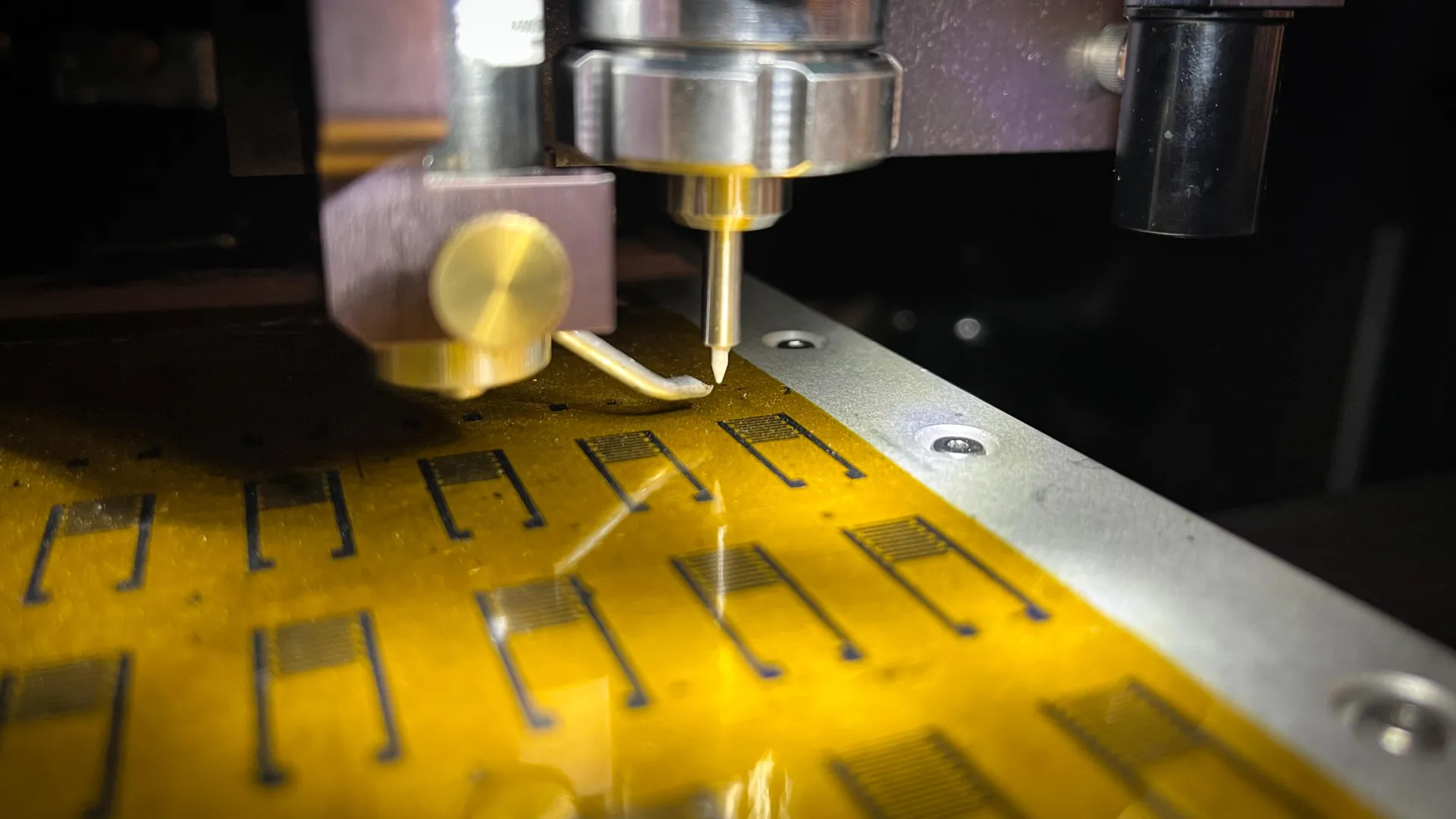
In a landmark achievement for both neuroscience and materials engineering, researchers at Northwestern University have successfully developed printed artificial neurons capable of not only mimicking the behavior of biological brain cells but actively communicating with them. This breakthrough, slated for publication in the April 15 issue of the journal Nature Nanotechnology, represents a profound shift in how we conceive the interface between inorganic electronics and organic life. By bridging the gap between rigid silicon architecture and the soft, dynamic nature of the human brain, this technology promises to revolutionize neuroprosthetics and provide a blueprint for a new, ultra-efficient era of artificial intelligence.
The Convergence of Biology and Electronics: Main Facts
The core innovation lies in the creation of flexible, low-cost artificial neurons produced via aerosol jet printing. Unlike traditional silicon-based transistors, which are uniform and rigid, these printed devices utilize nanoscale flakes of molybdenum disulfide (MoS₂) and graphene. These materials, when printed onto a flexible polymer substrate, allow for the generation of electrical signals that precisely mirror the temporal and structural characteristics of biological neural spikes.
In rigorous laboratory testing, these artificial devices were introduced to living slices of mouse cerebellum. The results were striking: the artificial neurons successfully "talked" to the biological tissue, triggering natural responses in the mouse neurons. This bidirectional capability marks a significant departure from previous artificial neuron designs, which often lacked the necessary precision, speed, or biological compatibility to function within a living neural circuit.
A Chronological Evolution of Neural Computing
The quest to emulate the brain’s computing power has occupied scientists for decades, yet the progress has been hampered by the fundamental mismatch between silicon and biology.
- The Silicon Era (1960s–Present): Computing has relied on the Von Neumann architecture, where processing and memory are separate, and logic is dictated by billions of identical, rigid transistors. While powerful, this approach is fundamentally inefficient when tasked with the complex, parallel processing inherent to the brain.
- Early Artificial Neurons (2010s): Researchers began exploring organic materials and metal oxides to build "memristors"—components that remember their past electrical state. However, these early attempts struggled to match the precise "spiking" patterns of the human brain. Some were too slow, while others were too fast or lacked the ability to produce complex, burst-like firing patterns.
- The Northwestern Breakthrough (2024): Led by Mark C. Hersam, the team at Northwestern moved beyond traditional fabrication. By utilizing aerosol jet printing and a novel method of "partially decomposing" the polymer substrate to create conductive filaments, they achieved a device that can replicate the nuance of biological signaling. This allows for the production of varied signals—single spikes, continuous firing, and complex bursts—using far fewer components than previously required.
The Science of Efficiency: Supporting Data
To understand why this development is significant, one must compare the energy profile of a modern data center to that of the human brain. As Hersam points out, the brain is roughly five orders of magnitude more energy-efficient than current digital supercomputers.
Modern AI training is a power-hungry endeavor. As models grow in complexity, they require increasingly massive datasets, leading to energy consumption that threatens to plateau the advancement of the technology. Current data centers, cooling under the strain of gigawatt-level power requirements, are pushing the limits of global electrical grids and water supplies.
The artificial neurons developed at Northwestern provide a potential solution to this "power wall." Because each artificial neuron possesses "multi-order complexity"—meaning one device can perform the work that previously required a small network of simpler devices—the overall hardware footprint can be drastically reduced. By packing these neurons into 3D, brain-inspired configurations, future computing systems could theoretically perform tasks at a fraction of the current energy cost, effectively decoupling AI performance from the current trajectory of exponential power demand.
Perspectives from the Laboratory: Official Responses
The project was a collaborative effort involving experts across materials science, neurobiology, and chemistry. Mark C. Hersam, the Walter P. Murphy Professor of Materials Science and Engineering at Northwestern’s McCormick School of Engineering, emphasized that the inspiration for this technology was rooted in the fundamental differences between silicon and the human nervous system.
"Silicon achieves complexity by having billions of identical devices," Hersam noted. "Everything is the same, rigid and fixed once it’s fabricated. The brain is the opposite. It’s heterogeneous, dynamic, and three-dimensional. To move in that direction, we need new materials and new ways to build electronics."
The biological validation of the work was spearheaded by Indira M. Raman, the Bill and Gayle Cook Professor of Neurobiology at Northwestern. Her role was to determine if the electronic signals were not just "close" to biological signals, but physiologically indistinguishable to the mouse brain tissue.
"Other labs have tried to make artificial neurons with organic materials, and they spiked too slowly," Hersam added. "Or they used metal oxides, which are too fast. We are within a temporal range that was not previously demonstrated for artificial neurons. You can see the living neurons respond to our artificial neuron. So, we’ve demonstrated signals that are not only the right timescale but also the right spike shape to interact directly with living neurons."
The study, titled "Multi-order complexity spiking neurons enabled by printed MoS₂ memristive nanosheet networks," was supported by the National Science Foundation, highlighting the high-level scientific interest in transitioning from binary computing to neuromorphic hardware.
Beyond the Lab: Implications for the Future
The implications of this technology extend far beyond the research lab, touching on the future of healthcare, energy policy, and artificial intelligence.
1. The Future of Neuroprosthetics
The ability of an artificial device to communicate directly with biological neurons opens doors for next-generation medical implants. Current neuroprosthetics, such as cochlear implants or deep brain stimulators, often suffer from a lack of "biological resonance"—the signals they send are often too crude to be interpreted naturally by the brain. A device that can mimic the complex, bursting signals of natural neurons could lead to more seamless integration, potentially restoring hearing, vision, or movement with greater precision and fewer side effects.
2. A Sustainable Path for AI
The environmental argument for this technology is perhaps the most urgent. As tech companies build increasingly massive data centers, the environmental cost of AI is becoming a focal point of public policy. If hardware can be manufactured using low-cost, sustainable aerosol jet printing—and if that hardware can process data with the efficiency of a biological brain—the AI industry could pivot toward a more sustainable growth model. This reduces the reliance on water-intensive cooling systems and the demand for energy that currently necessitates the construction of dedicated nuclear or fossil-fuel power plants.
3. Redefining Computing Architecture
The Northwestern team’s work challenges the assumption that computing must remain rigid and two-dimensional. By utilizing aerosol jet printing, the researchers have demonstrated a manufacturing method that is not only cost-effective but also capable of creating heterogeneous, 3D structures. This move toward "brain-inspired" computing suggests that the next generation of hardware will be less like a static chip and more like an evolving, adaptive network.
Conclusion
The development of printed artificial neurons is a testament to the power of interdisciplinary science. By treating the polymer substrate not as a defect to be removed, but as a functional component to be manipulated, the Northwestern team has unlocked a new paradigm in neural-electronic interaction. As these devices move from the petri dish to potential clinical and industrial applications, they serve as a powerful reminder that the most sophisticated computer ever designed—the human brain—remains the ultimate gold standard for efficiency and complexity. Whether through restoring lost biological functions or powering the next wave of sustainable AI, the neural bridge between silicon and biology is finally being built.
 Sagoh
Sagoh  Asro
Asro  Siti Muinah