
 By Ali Ikhwan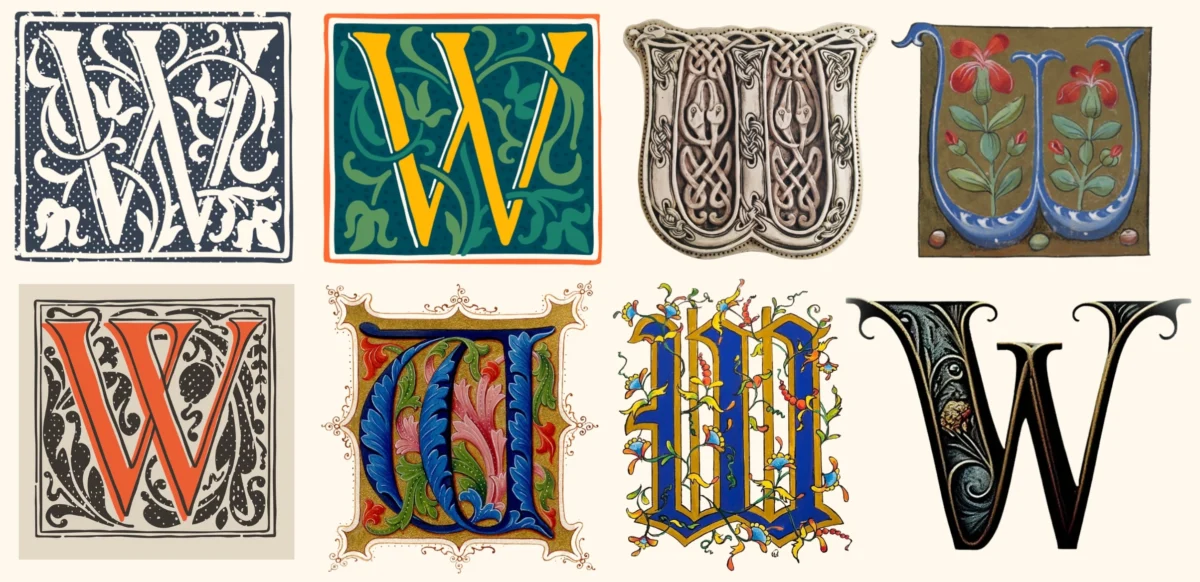
In the landscape of the Latin alphabet, the letter ‘W’ stands as an anomaly. It is the only letter whose name—"double U"—directly describes its physical construction, yet it is a relatively modern interloper in a script that has served Western civilization for millennia. Its story is not merely one of orthography; it is a historical chronicle of the disintegration of the Roman Empire, the collision of cultures, and the linguistic ingenuity of scribes attempting to capture sounds that the Roman world had long since abandoned.
The Disintegration of Empire and the Rise of the Germanic Elite
The origins of the letter ‘W’ are inextricably linked to the fifth century CE, a period defined by the systemic collapse of the western Roman Empire. As central authority crumbled, the borders of the empire became porous, allowing for the movement of various Germanic peoples. While contemporary Roman elites dismissed these migrants as "barbarians," the reality was far more symbiotic.
The Romans, struggling to maintain control, increasingly relied on these groups for military stability. These were the foederati—peoples bound by treaty to defend Roman territory in exchange for land, provisions, and political standing. The reliance on these forces was perhaps most famously illustrated in 451 CE, when Roman forces, bolstered by their Germanic allies, successfully checked the expansion of Attila the Hun. However, this dependence proved to be a double-edged sword; as regional Germanic leaders gained prestige and military command, the central authority of the emperor withered, leading to the final deposition of the western emperor in 476 CE.
Chronology of a Linguistic Invention
The emergence of the letter ‘W’ can be tracked through a fascinating timeline of adaptation and necessity:
- 5th Century CE: The western empire, traditionally Latin-speaking, is flooded with Germanic-speaking migrants. These new rulers, keen to maintain the prestige of the Roman state, adopt Latin for official documentation but struggle with names containing the Germanic /w/ sound.
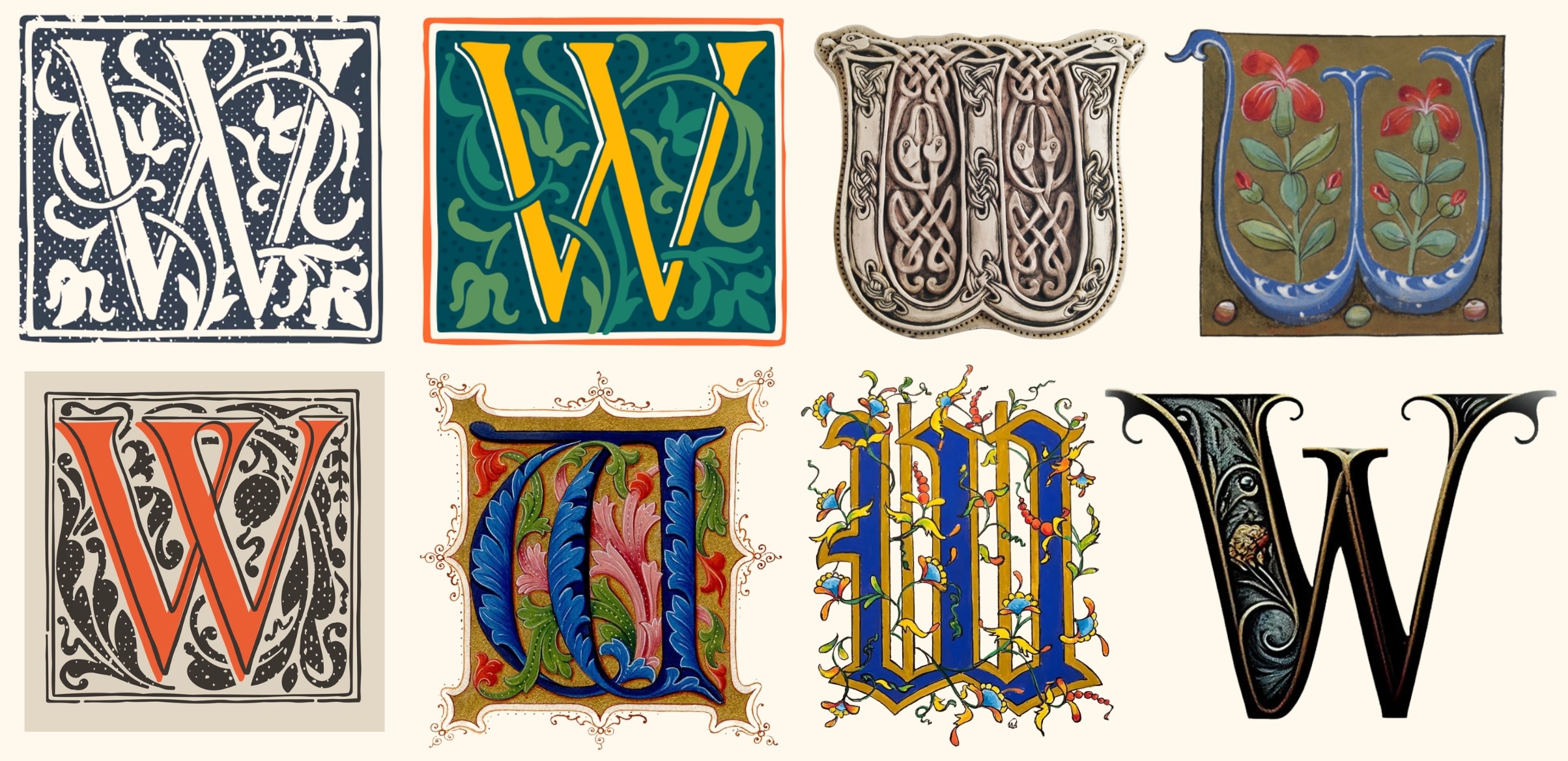
- 6th–10th Century CE: Scribes in the Frankish kingdoms begin "doubling the U" (UU) to represent the /w/ sound, which the Latin ‘V’ could no longer accommodate (as it had shifted to represent a /v/ sound).
- 11th Century CE: The ‘UU’ digraph fuses into the ligature ‘W’, becoming a standard feature in Latin manuscripts.
- Old English Period: English scribes, recognizing that their language possessed unique phonetics, adopt the runic character wynn (ƿ) for the /w/ sound.
- Post-Norman Conquest: The French-influenced spelling of the Norman elite forces the displacement of wynn in favor of the now-standard ‘W’.
The "Wynn" and the Resistance to Latinization
While the ‘W’ eventually conquered the English alphabet, its rise was not uncontested. Early English writers, acutely aware that their native tongue was distinct from the prestige language of Latin, sought a more efficient way to represent the /w/ sound than the clunky ‘UU’ or the ambiguous ‘U’. They turned to their own heritage, utilizing the runic character wynn (ƿ).
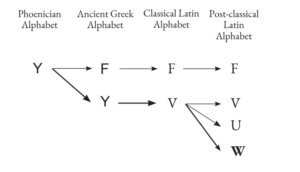
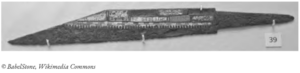
Wynn was ubiquitous in Old English literature; it appears prominently in the only surviving manuscript of Beowulf and can be found inscribed on period artifacts, such as a tenth-century decorated dagger from Kent. The transition away from wynn was a slow process of cultural assimilation. After the Norman Conquest, the pressure to conform to continental spelling standards—which had already embraced the ‘W’—eventually rendered wynn obsolete. By the late Middle Ages, the ‘W’ had become the universal standard, despite the persistent friction between the sound and the symbol.
The Disruptive Consonant: Phonetic Implications
The letter ‘W’ does more than just sit at the start of words like water or want; it exerts a tangible, often disruptive, influence on the vowels that follow it. This phenomenon, known as "W-rounding," reveals much about the fluidity of English pronunciation.
In words like was, wand, wash, warm, and war, the /w/ sound acts as a chemical catalyst. Because the consonant is articulated with rounded lips and the back of the tongue raised, it forces the following vowel to mirror those physical constraints. This is why wand does not rhyme with hand, and warm does not rhyme with arm.
Historically, this rounding is a relatively modern development. Shakespearean-era poets regularly rhymed was with glass and warmed with disarmed, suggesting that the vowel shift occurred long after the initial spelling of these words was standardized. Even as late as the 19th century, Lord Byron used rhymes that strike the modern ear as jarring, indicating that the shift in vowel pronunciation was not universally settled until the modern era.
The Great Vowel Shift and Orthographic Confusion
The modern English speaker often finds themselves perplexed by the discrepancy between spelling and sound, a reality exacerbated by the Great Vowel Shift. In words like town, cow, and owl, the ‘W’ serves as a marker for a diphthong that has drifted significantly from its Old English origins (tun, cu, ule).
The language failed to establish a rigorous rule for this shift, leading to the confusing coexistence of ‘OW’ and ‘OU’. While a half-hearted convention emerged—using ‘OW’ at the end of syllables and ‘OU’ elsewhere—it was never strictly applied. This flexibility has led to distinct spelling variations for words with similar origins, such as the differentiation between flower and flour.
Implications for Modern Orthography
The legacy of the letter ‘W’ is a testament to the fact that English spelling is a historical map rather than a phonetic blueprint. We are currently stuck with a system that reflects 15th-century phonetic trends, even as our speech has continued to evolve. The "mischievous" nature of the letter—its ability to round vowels and confuse rhyming schemes—remains a source of delight for linguists and a source of frustration for learners.
Ultimately, the ‘W’ serves as a reminder that languages are not static monuments; they are living, breathing entities shaped by migration, administrative necessity, and the small, human decisions of scribes trying to spell the names of their kings. Whether it is the /w/ sound, which survived in the isolated pockets of Britain while being lost to the continent, or the complex history of the wynn rune, the letter ‘W’ remains the oddest, yet most necessary, survivor of the post-Roman world. As Danny Bate notes in Why Q Needs U, we continue to navigate the English language with a degree of caution around the letter ‘W’, a character born of chaos and preserved by the stubbornness of tradition.
 Layla Zulfa
  Nana
Nana  Iffa Jayyana