
 By Reynand Wu
By UX Design Lab Insights
Originally published on UX Design Lab
Main Facts: The Anatomy of Modern Creative Burnout
In remote and hybrid work environments across the globe, a quiet crisis is unfolding inside creative and product organizations. For years, executive leadership has misdiagnosed team exhaustion as a simple failure of resilience, an inevitable byproduct of ambitious quarters, or a talent deficit. According to industry expert and illustrator Pavel Bukengolts, this assumption is fundamentally wrong.
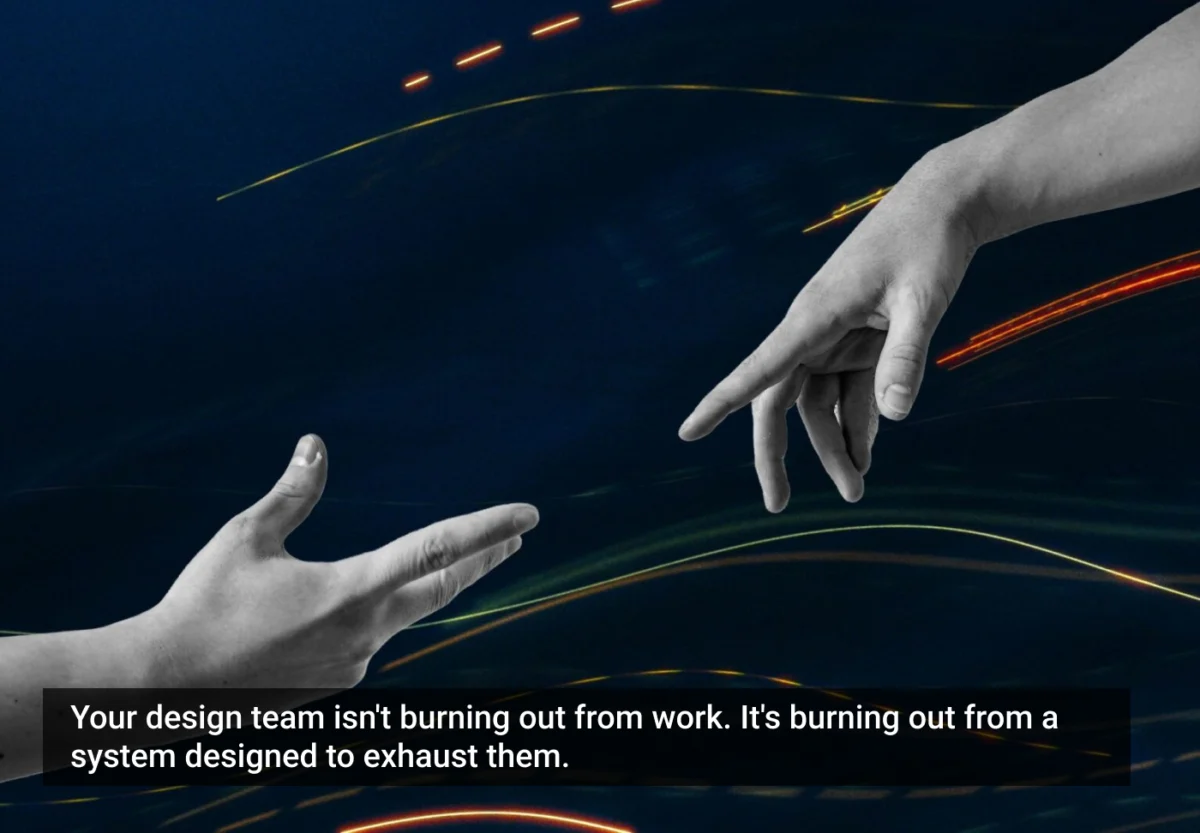
Burnout, Bukengolts argues, is rarely a people problem; it is friction in disguise.
When design teams collapse under the weight of their workloads, the culprits are rarely the grand visions of the company. Instead, they are the accumulation of micro-frustrations: lost files in decentralized digital folders, moving briefs that invalidate days of wireframing, unwritten product decisions, out-of-date design systems, and the constant digital hide-and-seek required to locate a single source of truth.
This operational entropy creates what experts call "the grind"—a slow, systematic bleeding of morale, time, and trust. Teams do not typically shatter from a single catastrophic project; they bleed out, one papercut at a time, until adaptation to chaos becomes the cultural baseline.
The remedy, Bukengolts asserts, is not demanding more effort, longer hours, or increased output. The fix is robust Design Operations (DesignOps): a strategic commitment to clarity, structured mentorship, sustainable workflows, and absolute process transparency.
Chronology: How Operational Debt Compounds Over Time
To understand how high-performing, passionate design teams devolve into cynical, exhausted groups, one must examine the lifecycle of operational neglect. Organizations rarely start broken; they drift into inefficiency through incremental compromises.
Phase 1: The Honeymoon of Hyper-Growth
At the outset of a project or a company’s scaling phase, speed is valued above all else. Leadership emphasizes rapid prototyping, quick shipping, and immediate market feedback. Teams bypass formal documentation, arguing that process slows down innovation. "We don’t have time or money for a formal process," becomes the rallying cry. Workarounds are invented on the fly, and individual heroics bridge the widening gaps.
Phase 2: The Proliferation of Custom Workarounds
As the product scales, the lack of centralized structure begins to tax the team. Designers find that checking the official design system takes longer than rebuilding components from scratch, leading to the phrase, "I’ll just build it myself—it’s faster." Different departments adopt conflicting workflows. Remote collaboration exacerbates the issue; hallway conversations are replaced by fragmented Slack DMs, leading to misaligned goals and competing versions of truth.
Phase 3: The Midstream Pivot and Context Collapse
Leadership, responding to rapid market fluctuations, shifts product direction without cascading the necessary context down to the execution layer. A designer spends weeks crafting a user flow, only to hear: "The goal changed again." Midstream pivots without historical context force teams into endless cycles of rework. Senior designers spend hours playing human shields, re-explaining foundational processes to juniors and unblocking frustrated peers.
Phase 4: Operational Paralysis and Burnout
At this terminal stage, the organization’s operational debt reaches its peak. Teams are caught in a loop of hesitation, waiting for approvals because feedback loops are completely broken. Senior leadership, looking at lagging velocity metrics, responds by adding more check-ins, micromanaging, and introducing new, uncoordinated priorities. The team feels profoundly disconnected, disempowered, and exhausted—not from the design work itself, but from the exhausting administrative tax required to navigate the system.
Supporting Data: The Empathy Mapping Diagnostic
To bridge the gap between executive perception and on-the-ground reality, Bukengolts advocates for rigorous empathy mapping across all functional roles. When leadership listens to the background chatter of an organization rather than just reviewing high-level deliverables, clear behavioral patterns emerge.
The following data matrix maps the perspectives of various stakeholders within a dysfunctional design ecosystem:
| Persona | Say | Do | Think | Feel |
|---|---|---|---|---|
| Designers | "Oh, the requirements changed again?" | Recreates work and chases down information to navigate ambiguity. | "If they would just make a decision, I could get this done in a day." | Frustrated and disempowered by the constant churn. |
| Leads / Seniors | "Let me get some clarity on that, and I’ll get back to you." | Acts as a human shield, absorbing chaos and unblocking their team. | "My team is talented, but the system is setting them up to fail." | Drained and responsible; protective of the team but resentful of the system. |
| Product Managers | "We absolutely have to hit the Q4 release date." | Constantly juggles priorities and pushes for delivery to meet deadlines. | "If we miss this launch, my neck is on the line." | Pressured and stressed by deadlines and stakeholder demands. |
| Leadership | "Why are we moving so slowly?" | Intervenes based on metrics, adding more check-ins and new priorities. | "We have smart people, so why isn’t it flowing?" | Impatient and disconnected from the on-the-ground friction. |
Translating the Distress Signals
When analyzing this data, a stark disconnect appears between what people say and what they genuinely feel. Organizations must learn to decode these distress signals:
- "I’ll just build it myself."
- Underlying Reality: Your design system is broken, outdated, or untrusted. Component reuse feels slower than recreation.
- "Is this the latest file?"
- Underlying Reality: There is no single source of truth. Remote teams are playing digital hide-and-seek, leading to devastating rework.
- "The goal changed again."
- Underlying Reality: There is a severe leadership and communication gap. Direction shifts midstream without supplying the underlying context.
- Senior designers repeatedly explaining processes.
- Underlying Reality: Institutional knowledge lives in individuals rather than systematic documentation. Mentorship is happening in unsustainable whispers.
- "Who’s approving this?"
- Underlying Reality: Feedback loops are fractured. Ambiguity breeds hesitation, causing people to stall rather than risk making an unauthorized mistake.
Official Responses and Industry Perspectives: The Shift Toward DesignOps
As the tech sector matures past the era of unbridled, growth-at-all-costs expansion, industry leaders are increasingly recognizing DesignOps not as bureaucratic overhead, but as an essential corporate infrastructure.
The Deming Principle in Modern Product Design
Management theorists frequently cite the philosophy of W. Edwards Deming, who famously stated: "Every system is perfectly designed to get the results it gets." When applied to contemporary design organizations, this axiom challenges executives to stop blaming employees for systemic failures.
Industry veterans point out that traditional metrics—such as velocity charts, story points completed, and raw output volume—only measure the symptoms of a team’s health, never the root causes. By treating operational process as scaffolding rather than red tape, organizations can transition from a reactive firefighting culture to a sustainable, scalable ecosystem.
The Rise of Diagnostic Tools
Forward-thinking enterprises are moving away from gut-feeling management and implementing structured frameworks like the Team Capability Engine. These diagnostic tools act akin to an organizational MRI, highlighting skill gaps, friction points, and cultural bottlenecks before they manifest as catastrophic churn rates or missed product launches.
Rather than serving as a mechanism for employee surveillance or micromanagement, these engines provide transparent diagnostic data, allowing leadership to see how well internal systems hold up under market pressure.
Implications: The Cost of Blindness and the Roadmap to Clarity
Ignoring operational friction is never a neutral management strategy; it represents a compounding debt. Every unclear decision adds drag to future initiatives. Every deferred operational fix taxes tomorrow’s momentum.
The Financial and Cultural Toll
When a design team spends a significant portion of its working hours chasing files, decoding shifting briefs, and recreating missing design system assets, the company is effectively leaking fuel mid-flight. The aircraft still moves forward, but the journey is slower, exponentially more expensive, and exhausting for the crew. The predictable results of operational blindness include:
- Soaring employee turnover and the loss of institutional memory.
- A palpable decline in creative risk-taking and innovation.
- Product stagnation caused by defensive, risk-averse execution.
- Chronic friction between product management, engineering, and design.
What Structural Transformation Looks Like
When organizations commit to measuring team capability, training with intentionality, and baking mentorship directly into daily workflows, the cultural atmosphere transforms instantly. The team feels lighter, leaders gain long-range strategic visibility, and design operations scale seamlessly alongside business growth.
To initiate this transformation, Pavel Bukengolts recommends a simple, highly effective intervention: The Friction Log.
For the span of a single week, organizations should ask team members to anonymously log every minor slowdown, administrative hurdle, or frustration they encounter. Crucially, participants should record observations without attempting to invent immediate solutions. At the end of the week, leadership must review the data to identify systemic patterns.
Conclusion: A Call to Awareness
If a design team is exhausted, it is almost never because they lack passion or dedication. More often than not, it is because the operational system supporting them is indifferent to their struggle. When creative professionals are forced into endless cycles of firefighting, administrative guesswork, and wheel-reinvention, the issue lies firmly within the operational architecture.
Organizations do not necessarily need to tear down their entire structure and start over from scratch. Instead, they must learn to observe clearly.
DesignOps is not about control, micromanagement, or bureaucratic red tape. It is about radical clarity. And clarity is the ultimate catalyst that allows exceptional teams to perform their best work—no matter where they log in from, what tools they use, or how fast the market shifts around them.
 Nana Muazin
 Raul Delapena Setiawan
 Suro Senen
