
 By Laily UPN
In the fast-paced world of digital marketing, visual presentation can make or break a brand’s online presence. As social media algorithms increasingly favor high-engagement, multimedia content, using the correct image dimensions is no longer a minor detail—it is a critical pillar of any successful digital strategy. Uploading an improperly sized image can lead to awkward cropping, severe compression, pixelation, and the truncation of essential branding or text elements. Ultimately, these visual missteps degrade brand consistency and hurt overall audience reach and engagement.
To help marketers, creators, and enterprise teams navigate these technical hurdles, this comprehensive guide outlines the definitive, up-to-date social media image size requirements for every major platform in 2026.
Main Facts: The 2026 Landscape of Social Media Sizing
Social media networks continuously refine their user interfaces, feed layouts, and display algorithms. Consequently, image dimensions evolve regularly. However, several overarching standards have stabilized across the digital ecosystem:
- The 1080p Standard: A width of 1080 pixels remains the most reliable baseline standard for high-definition image uploads across nearly all major platforms.
- Mobile-First Aspect Ratios: Vertical and full-screen formats—specifically 4:5 for standard feed posts and 9:16 for stories, reels, and short-form video covers—continue to dominate mobile-first platforms like Instagram, TikTok, Facebook, and YouTube.
- Platform Fragmentation: While general standards exist, formatting rules vary wildly between personal profiles, corporate company pages, in-stream feeds, paid advertisements, and ephemeral stories.
Failing to adhere to these specifications risks more than just an unpolished aesthetic; it directly impacts how algorithms distribute content to target audiences.

Chronology and Evolution: How We Got Here
The evolution of social media image sizes tracks closely with the shift from desktop browsing to mobile-first consumption.
- The Early Era (Pre-2015): Social platforms primarily catered to desktop monitors. Image sizes were smaller, fixed, and heavily constrained by rigid layouts (such as Facebook’s early timeline grids and Twitter’s compact photo previews).
- The Mobile Pivot (2015–2020): As smartphones became the primary gateway for internet traffic, platforms like Instagram popularized vertical framing (moving away from strict 1:1 squares). Platforms raced to optimize user interfaces for vertical scrolling, introducing Stories and full-screen video feeds.
- The Modern Multimedia Era (2021–Present): Today, platforms like X (formerly Twitter), LinkedIn, and Bluesky have transformed into multimedia hubs supporting diverse aspect ratios. Newer networks like Threads and Bluesky have emerged with unique architectural requirements, while established platforms lean heavily on automated cropping tools and AI-driven enhancements. Despite these tools, manual optimization remains the gold standard for professional content creators.
Platform-by-Platform Specifications
To maintain brand integrity and maximize engagement, digital marketing teams must master the precise dimensions required for each network.
1. Instagram
Instagram remains a visual-first powerhouse, supporting horizontal, vertical, and square orientations. However, creators must note that while various aspect ratios display correctly in the main feed, they are uniformly cropped to a vertical rectangle on the user profile grid.
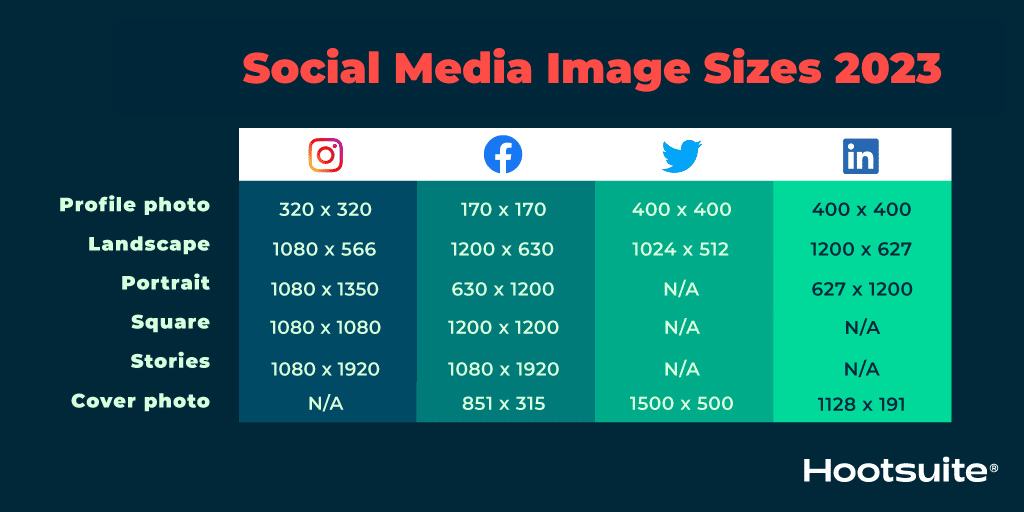
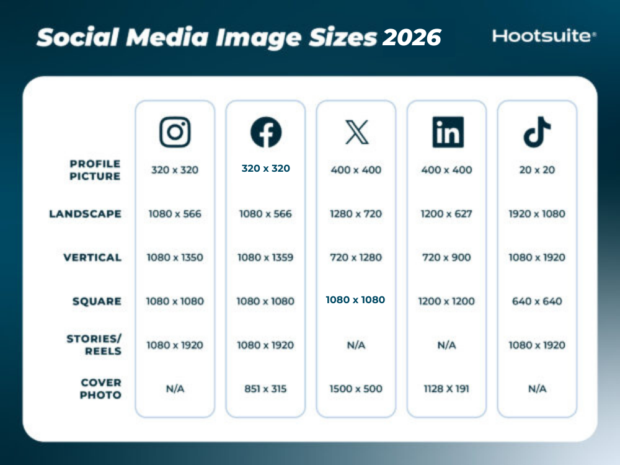
- Profile Picture: 320 x 320 pixels (displayed as a circle; keep key elements centered).
- Feed Posts (Square): 1080 x 1080 pixels (1:1 aspect ratio).
- Feed Posts (Vertical): 1080 x 1350 pixels (4:5 aspect ratio).
- Feed Posts (Horizontal): 1080 x 566 pixels (1.91:1 aspect ratio).
- Stories & Reels: 1080 x 1920 pixels (9:16 aspect ratio). Note: For Reels and Stories ads (1440 x 2560 pixels), leave roughly 14% at the top, 35% at the bottom, and 6% on the sides free of critical text or logos to avoid UI element overlaps.
2. Facebook
Facebook’s dual-environment nature—serving both desktop and mobile users—requires careful consideration of responsive design.

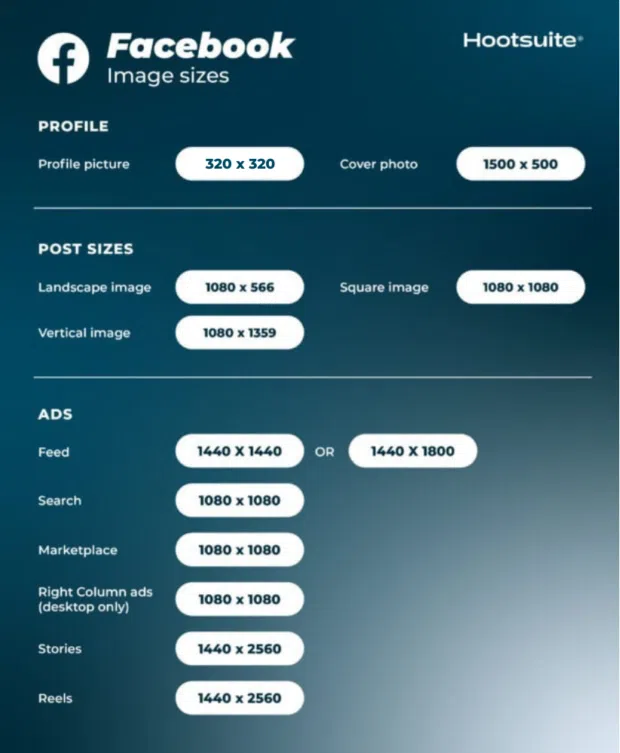
- Profile Picture: 320 x 320 pixels recommended.
- Cover Photo: 851 x 315 pixels for desktop; 640 x 360 pixels minimum for mobile.
- Timeline & Feed Posts: 1200 x 630 pixels (landscape) or 1080 x 1080 pixels (square).
- Stories: 1080 x 1920 pixels.
- Reels Ads: 1440 x 2560 pixels.
3. X (Formerly Twitter)
X has heavily embraced a multimedia-rich experience, bolstered by dedicated video tabs and inline image previews.
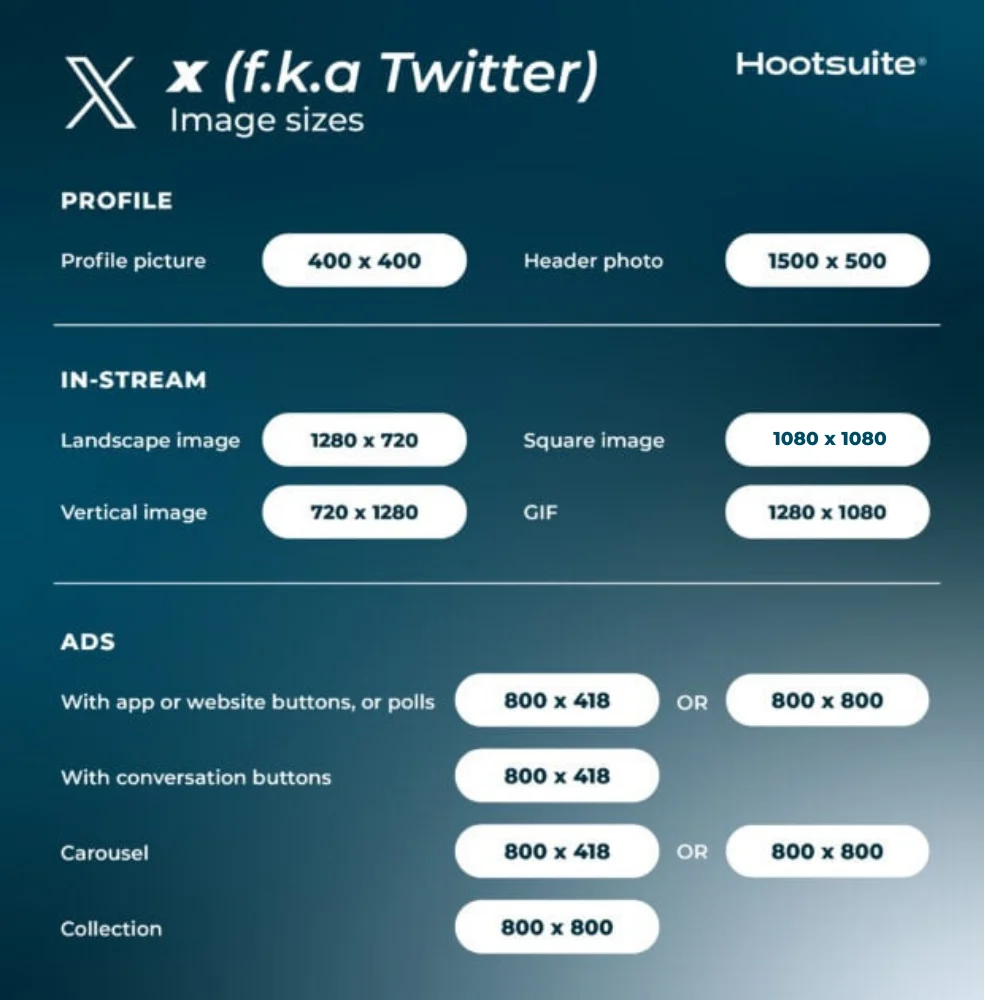
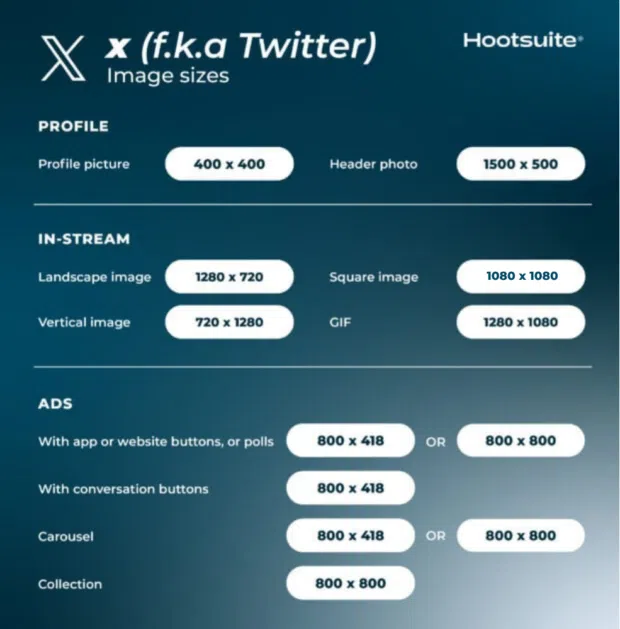
- Profile Photo: 400 x 400 pixels recommended.
- Header Photo: 1500 x 500 pixels.
- In-Stream Photos: 1600 x 900 pixels (16:9 aspect ratio recommended for optimal preview display).
4. LinkedIn
LinkedIn differentiates requirements between personal profiles and company pages, demanding precision from B2B marketers.
- Personal Profile Photo: 400 x 400 pixels (minimum).
- Personal Background Photo: 1584 x 396 pixels.
- Company Page Logo: 300 x 300 pixels.
- Company Page Cover Photo: 1128 x 191 pixels.
- Standard Post Image: 1200 x 1200 pixels (square) or 1200 x 627 pixels (link preview format).
5. TikTok
TikTok’s immersive, full-screen vertical ecosystem leaves little room for error.
- Profile Photo: 200 x 200 pixels.
- Videos & Carousels: 1080 x 1920 pixels (9:16 aspect ratio).
6. Emerging Platforms: Bluesky and Threads
Decentralized networks and microblogging alternatives require specific sizing for optimal display.
- Bluesky Profile Picture: 1000 x 1000 pixels.
- Bluesky Banner: 3000 x 1000 pixels.
- Bluesky Post Images: Minimum 1000 pixels on the shortest side.
- Threads Profile Image: 640 x 640 pixels.
- Threads Post Image: 1440 x 1920 pixels recommended for vertical clarity.
Supporting Data: The Cost of Getting Sizing Wrong
Industry data consistently shows a direct correlation between visual presentation and audience engagement. According to recent digital marketing benchmarks:
- Posts utilizing platform-optimized image dimensions experience up to 30% higher engagement rates compared to those subjected to awkward automated platform cropping.
- Approximately 68% of consumers report that low-resolution or poorly formatted images negatively impact their perception of a brand’s professionalism.
- Mobile users account for over 80% of total social media traffic, underlining why vertical (4:5 and 9:16) aspect ratios consistently outperform traditional horizontal landscape images in click-through rates.
Official Industry Responses and Workflow Solutions
Recognizing the administrative burden that constant dimension updates place on social media managers, top-tier software providers have integrated automated resizing solutions directly into publishing workflows.

Enterprise tools like Perch by Hootsuite have integrated native editing suites (such as Canva) directly into their content creation dashboards. Instead of forcing marketers to manually crop, export, and re-upload assets for multiple networks, modern publishing tools allow users to select network-optimized templates from a drop-down menu within the composer.
Industry analysts note that automated asset management tools are quickly becoming essential enterprise infrastructure. By standardizing templates and establishing approved aspect ratios across shared organizational drives, marketing departments can eliminate human error and maintain flawless visual continuity across global campaigns.

Implications for Marketers and Enterprises
The implications of mastering social media image sizes extend far beyond aesthetic appeal. For modern brands, optimized visuals drive tangible business outcomes:
- Algorithmic Favorability: Clean, uncompressed, and properly proportioned media keeps users lingering on posts longer, sending positive engagement signals to platform algorithms.
- Resource Efficiency: Standardizing asset creation through templates and integrated publishing tools drastically reduces the hours spent on tedious manual redesigns.
- Brand Equity: Consistent, high-resolution visual execution reinforces corporate identity, building long-term trust and recognition among prospective customers.
As social media platforms continue to evolve through 2026 and beyond, staying informed of dimensional shifts—and leveraging automated workflow tools to bridge the gap—will remain a core competency for winning digital marketing teams.
 Neng Nana
 Ammar Sabilarrohman
 Jia Lissa
