
 By Neng Nana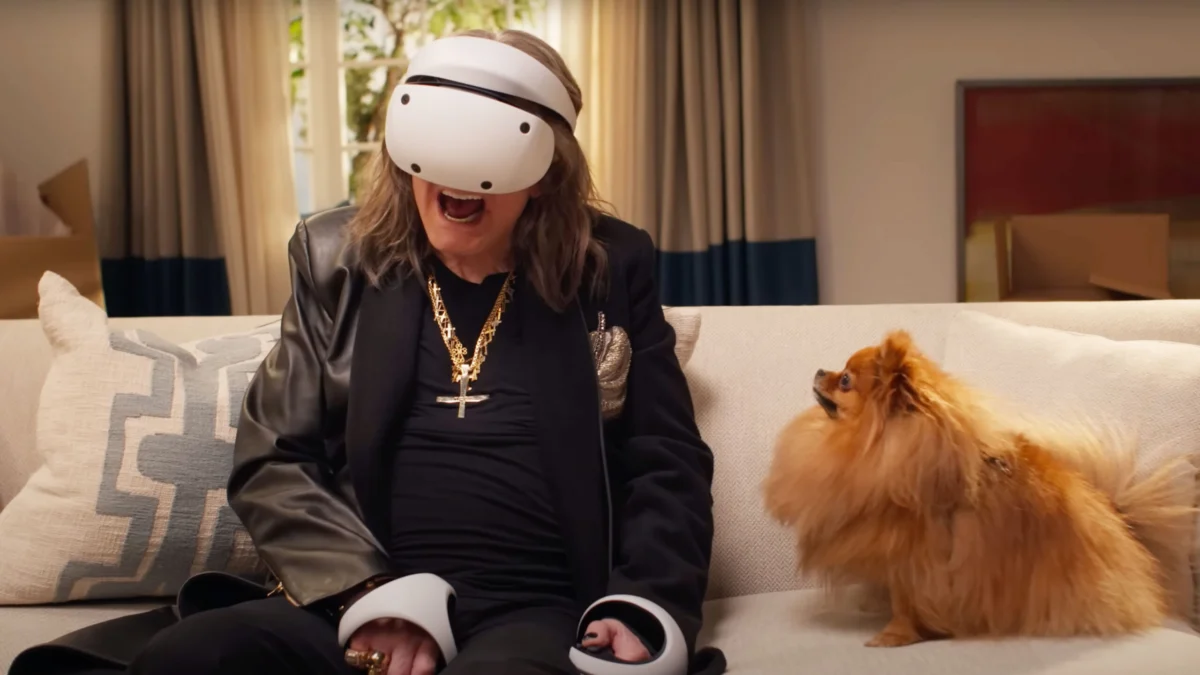
Introduction: A Timeless Reflection on Craft and Authenticity
On this day, marking the anniversary of the passing of the inimitable "Prince of Darkness," Ozzy Osbourne, a profound reflection he once shared on the nature of music and human craftsmanship resonates with startling clarity in our current era. As artists and creatives grapple with the unprecedented and rapid ascent of Artificial Intelligence (AI) across their respective industries, Osbourne’s words offer a potent counter-narrative to the prevailing pursuit of digital perfection.
In a candid 2011 interview with The Guardian, the legendary Black Sabbath frontman mused on the raw, visceral experience of classic analog recording sessions. "Rock music is not meant to be perfect," Ozzy declared, harkening back to a time when the sonic landscape was defined by its inherent human texture. He vividly recalled how his iconic guitarist, Randy Rhoads, "loved hearing his fingers slide up and down the strings." This embrace of the tangible, the audible friction of creation, stood in stark contrast to what Osbourne perceived as the increasing sanitization of modern production: "Nowadays everyone irons the fucking air, it’s all about technology."
This seemingly simple observation from a rock icon, known more for his theatricality than his technological prognostication, serves as a crucial beacon for contemporary creatives. In an age where AI promises, and often delivers, technical flawlessness and an exponential increase in ideation speed, the core message remains: true human creativity frequently flourishes not in the sterile realm of the perfect, but within the nuanced tapestry of small imperfections and the physical processes that imbue work with unique character and soul. This article will delve into the profound implications of Osbourne’s insight, tracing the evolution of creative technology, examining the irreplaceable value of human touch, and exploring the complex ethical and artistic dilemmas posed by AI in the creative landscape.
From Analog Authenticity to Algorithmic Artistry: A Creative Evolution
The journey of creative production, particularly in music, has been a relentless march from the tangible to the ethereal, from the mechanical to the algorithmic. Ozzy Osbourne’s observations, though made over a decade ago, capture a pivotal moment in this transition, offering a lens through which to view the profound shifts that have led us to the current AI-dominated discourse.
The Golden Age of Analog: Embracing the Flaw
The era Ozzy referenced – the genesis of rock and roll, the golden age of analog recording – was characterized by a profound appreciation for the raw, unadulterated sound. Studio technology, while advanced for its time, imposed certain limitations that paradoxically fostered a unique brand of authenticity. Multi-track tape recorders, large-format mixing consoles, and a limited number of takes meant that performances had to be robust, live, and imbued with an immediate energy.
Imperfections were not merely tolerated; they were often celebrated as hallmarks of human performance and the unique character of a recording. The subtle hiss of analog tape, the occasional crackle, the slight bleed between microphones, or the deliberate feedback from an amplifier were all integral components of the sonic tapestry. A guitarist like Randy Rhoads, renowned for his virtuosity and emotive playing, would indeed cherish the audible friction of his fingers against steel strings. This wasn’t merely a technical detail; it was a sonic signature, a testament to the physical act of creation. These "flaws" conveyed immediacy, passion, and the undeniable presence of human hands and hearts behind the music. They made the music feel alive, imperfectly human, and therefore, deeply relatable. This philosophy extended beyond music, influencing visual arts where brushstrokes were visible, and literature where unique authorial voices, with all their quirks, were paramount.
The Digital Revolution: Smoothing the Edges
The late 20th century heralded the digital revolution, a paradigm shift that fundamentally altered how creative content was produced, edited, and consumed. Digital Audio Workstations (DAWs) like Pro Tools emerged, offering unprecedented control over every sonic parameter. Autotune became ubiquitous, capable of correcting vocal pitches with surgical precision. Digital editing tools allowed for the seamless removal of unwanted noises, the quantization of rhythms to perfect grids, and the layering of countless tracks without degradation.
This new technological frontier promised liberation from the constraints of analog. The pursuit of "perfection" became not just attainable but expected. Suddenly, the "fucking air" could indeed be "ironed out." Every errant note, every subtle timing discrepancy, every unwanted sonic artifact could be meticulously eradicated. While this brought a new level of polish and technical precision, it also ushered in a subtle, yet significant, shift in aesthetic values. The natural grit and organic texture that defined the analog era began to recede, replaced by a pristine, often homogenized soundscape. In visual arts, Photoshop enabled pixel-perfect manipulation, while in writing, advanced grammar and style checkers aimed for unblemished prose. The initial debate centered on efficiency versus soul, with many creatives embracing the newfound power while others lamented the loss of an undefinable "humanity."
The AI Tsunami: Unprecedented Automation and the Quest for the Flawless
Today, we stand at the precipice of another, even more profound, transformation with the advent of Artificial Intelligence. AI’s capabilities transcend mere editing; they encompass generation, composition, and even the emulation of human style. In music, AI can compose entire pieces, generate background scores, or even mimic the voice of a deceased artist. In visual arts, generative AI can produce photorealistic images, intricate designs, or abstract art from simple text prompts. Writers now leverage AI for brainstorming, drafting, and even generating complete articles or narratives. Designers use AI to automate repetitive tasks, create multiple design iterations, and personalize user experiences.
The promise of AI is staggering: unparalleled speed, massive scale, and a level of technical flawlessness that far surpasses human capabilities. An AI can generate thousands of ideas in moments, perfect a piece of music to mathematical precision, or create an image free of any discernible "flaw." It can, in essence, "iron the fucking air" to an extent Ozzy Osbourne likely couldn’t have imagined. Yet, it is precisely at this zenith of technical prowess that Osbourne’s concern finds its most resonant echo. The drive towards absolute perfection, facilitated by AI, risks stripping away the very elements that make human creativity distinct, emotive, and ultimately, meaningful. The question is no longer just about smoothing edges, but about whether the pursuit of algorithmic perfection inadvertently erases the soul of the craft itself.
The Irreplaceable Value of Human Texture and Creative Friction
Ozzy Osbourne’s insight that "small imperfections and physical processes are often where the character lives" is not merely a nostalgic sentiment but a profound observation rooted in the very nature of human perception and artistic expression. In an age dominated by AI’s pursuit of technical flawlessness, understanding the irreplaceable value of human texture and creative friction becomes paramount.
The Neuroscience and Psychology of Imperfection
Why do we, as humans, often connect more deeply with something that exhibits subtle flaws rather than absolute perfection? The answer lies partly in our psychology and neuroscience. The concept of Wabi-Sabi in Japanese aesthetics, for instance, celebrates beauty that is "imperfect, impermanent, and incomplete." It finds charm in the rustic, the aged, the slightly asymmetrical – qualities that speak to the passage of time and the natural world.
Similarly, in human-computer interaction, the "uncanny valley" describes our discomfort with creations that are almost perfectly human but not quite, highlighting our innate sensitivity to minute deviations from natural human expression. Conversely, deliberate imperfections can evoke authenticity and vulnerability, fostering a deeper emotional connection. A hand-drawn line, with its slight waver, communicates the presence of a human hand and mind more powerfully than a geometrically perfect, AI-generated vector. These "flaws" are not errors; they are signals of origin, effort, and unique perspective. They tell a story that sterile perfection cannot.
Moreover, the creative process itself is inherently messy and iterative. Errors, unexpected outcomes, and "happy accidents" have historically been catalysts for innovation. From penicillin’s discovery to the accidental feedback that shaped rock music, limitations and serendipity often push creators beyond conventional boundaries. The resistance of a physical medium – the drag of a brush, the tension of guitar strings, the stubbornness of clay – forces the artist to adapt, to innovate, and to imprint their unique struggle and solution onto the work. AI, operating on algorithms and vast datasets, may struggle to replicate this organic, serendipitous friction that often sparks genuinely novel ideas.
Case Studies Across Disciplines: Where Imperfection Shines
The principle that character lives in imperfection is evident across a multitude of creative disciplines:
-
Music: Beyond Ozzy’s rock anthems, consider the raw power of the blues, where a slightly bent note or a gravelly vocal evokes profound emotion. Jazz improvisation thrives on spontaneous deviations and rhythmic pushes and pulls that defy metronomic precision. The energy of a live punk rock performance, often technically "flawed," resonates precisely because of its unbridled, human intensity. AI can generate technically perfect melodies and harmonies, but replicating the "feel" – the elusive human swing, the emotional weight behind a vocal tremor, the improvisational genius born of a split-second decision – remains its greatest challenge. The human element in music is not just about notes, but about narrative, emotion, and shared experience.
-
Visual Arts: The unique "hand" of an artist is often revealed in the subtle inconsistencies of their brushstrokes, the texture of the canvas, or the specific way they render light and shadow. Van Gogh’s swirling impasto, Rembrandt’s expressive chiaroscuro, or the spontaneous energy of a sketch all derive their power from visible human effort and deliberate imperfection. The debate around AI-generated art often circles back to questions of authorship and the absence of a discernible human journey. While AI can produce visually stunning images, they often lack the underlying narrative of human struggle, inspiration, and unique interpretation that defines traditional art.
-
Writing: The human voice in writing is paramount. It’s not merely about correct grammar or vocabulary, but about nuance, irony, subtext, and the subtle emotional currents that flow beneath the words. A technically perfect AI-generated text might be grammatically flawless and logically structured, but it frequently lacks the unique stylistic quirks, the deep empathy, or the profound insights that characterize truly compelling human narratives. The "flaws" in human writing might be an unusual metaphor, a challenging sentence structure, or a distinctive rhythm – elements that, while not strictly perfect, contribute to a unique and memorable authorial voice.
-
Design: While AI can optimize designs for efficiency and aesthetics, human-centric design often embraces "affordances" and intuitive interactions that might not be mathematically perfect but feel natural to human users. Handcrafted design elements, with their visible textures and slight variations, can evoke warmth, authenticity, and a sense of care that sterile, mass-produced perfection often fails to achieve. The charm of a bespoke product, with its minor irregularities, often outweighs the uniformity of an industrial output.
The "Happy Accident" and Serendipity
The history of innovation, both artistic and scientific, is replete with instances of "happy accidents." These unforeseen outcomes, often born from limitations or mistakes, have frequently led to groundbreaking discoveries and artistic breakthroughs. The physical constraints of analog equipment, the unpredictable nature of paint on canvas, or the unexpected turn in a jam session have all, at various times, forced creators to adapt, reinterpret, and discover new pathways.
AI, in its current iteration, tends to be deterministic. It operates within the parameters of its training data and algorithms. While it can generate novel combinations, the true serendipitous "accident" – the intuitive leap, the mistake that reveals a new truth, the resistance of a medium that sparks an entirely new approach – remains largely a human domain. The "friction" that Ozzy alludes to, the struggle with the medium, is not merely a hindrance but often a vital component of the creative process, pushing the artist beyond their comfort zone and into uncharted territory.
Industry Voices and the Shifting Creative Paradigm
The rapid proliferation of AI tools has not been met with universal acclaim within creative industries. Instead, it has ignited a passionate and multifaceted debate, prompting "official responses" not necessarily from government bodies, but from the very heart of the creative community itself – artists, designers, writers, musicians, and industry leaders who are actively shaping the future of their crafts.
The Divide Among Creatives: Adoption vs. Resistance
As the original article briefly touches upon, AI remains deeply divisive amongst creatives. This division is not a simple binary but a spectrum of responses, ranging from enthusiastic early adoption to cautious integration, and, in some cases, outright resistance.
-
Early Adopters and Optimists: This group views AI as a powerful augmentative tool, a co-pilot that can handle tedious tasks, generate a multitude of initial concepts, or provide data-driven insights. They see it as a means to unlock new creative possibilities, accelerate workflows, and democratize access to high-quality production. For them, AI is a tool to be mastered, enhancing human capability rather than replacing it. They often highlight AI’s capacity for rapid prototyping, iteration, and personalized content generation.
-
Cautious Integrators: Many creatives fall into this category. They acknowledge AI’s potential benefits but approach its integration with a healthy dose of skepticism and a keen awareness of its limitations. Their focus is on finding the "breathing room for human texture and friction" within an AI-assisted workflow. They emphasize human oversight, ethical considerations, and the importance of using AI to support creativity rather than dictate it. This group aligns closely with Ozzy’s sentiment, advocating for a mindful approach where human judgment and unique perspective remain paramount.
-
Staunch Traditionalists and Resistors: This camp expresses significant concerns about AI’s impact. Their worries span several critical areas:
- Job Displacement: The fear that AI will automate creative roles, leading to widespread unemployment.
- Intellectual Property and Copyright: The ethical dilemma of AI systems being trained on existing human-created works without proper attribution or compensation, and the question of who owns AI-generated content.
- Devaluation of Human Skill: The concern that the ease of AI generation will diminish the perceived value of years of human practice, skill, and unique talent.
- Homogenization of Output: The fear that AI, by drawing from vast datasets, will lead to a predictable, aesthetically uniform, and unoriginal creative landscape, devoid of true innovation or individual voice.
- Loss of Soul and Authenticity: The belief that AI cannot truly replicate the human spirit, emotion, or lived experience that imbues art with meaning.
Reclaiming Craft: Calls for Human-Centric Approaches
Amidst this debate, there’s a growing chorus of voices from prominent artists, designers, writers, and industry leaders emphasizing the enduring importance of human touch and the necessity of reclaiming craft in the AI era. Organisations like the Artists’ Rights Alliance and various creative unions have begun to issue guidelines and advocate for policies that protect human creators and their intellectual property in the face of AI.
Leading figures are advocating for a shift in focus: from technical proficiency (which AI can increasingly handle) to conceptual brilliance, emotional intelligence, critical thinking, and unique storytelling. The new "craft" is not just about what is created, but why and how it’s created, with a human purpose and narrative at its core. Educational institutions are also adapting, recognizing the need to teach students not just how to use AI tools, but how to critically evaluate their output, understand their ethical implications, and, most importantly, how to cultivate unique human skills that AI cannot replicate. This includes fostering empathy, original thought, artistic vision, and the ability to find beauty in imperfection.
The Paradox of Perfection: When Flawlessness Falls Flat
A recurring theme in the discussions around AI-generated content is the "paradox of perfection." While AI can produce technically flawless outputs – perfectly tuned music, anatomically precise illustrations, grammatically impeccable text – these often lack the spark, the warmth, or the compelling imperfections that resonate deeply with human audiences. There’s a growing awareness that aesthetic "perfection" can sometimes feel sterile, impersonal, or even uncanny.
The market, in many instances, reflects this sentiment. Consumers continue to seek out authenticity, the human story behind a creation, and the unique artistic vision that only a human can provide. A perfectly rendered, AI-generated song might be pleasant, but it may struggle to evoke the same emotional depth or cultural impact as a track born from human struggle, joy, or heartache, complete with its subtle imperfections. Ozzy’s ad for PSVR2, where he ironically embraces technology despite his previous stance, serves as a humorous reminder of the complexities. While he might use new tech, the core of his musical appeal remains rooted in his raw, unpolished, and intensely human persona. The challenge for creatives, then, is not to reject AI outright, but to understand when its pursuit of perfection serves a purpose, and when it risks diminishing the very essence of human artistry.
Forging a Future Where Humanity and AI Coexist
Ozzy Osbourne’s seemingly simple lament about "ironing the fucking air" becomes a profound philosophical statement when viewed through the lens of AI’s burgeoning influence. It compels us to consider the ultimate implications for creativity, education, and the very definition of artistic value in a world increasingly shaped by algorithms. Forging a future where humanity and AI coexist effectively in the creative sphere requires a deliberate, mindful approach that prioritizes the unique strengths of human ingenuity.
Redefining Skill and Value: Beyond Technical Perfection
In an era where AI can rapidly generate technically competent outputs, the definition of "skill" in creative fields is undergoing a radical transformation. Purely technical proficiency, once the bedrock of many creative careers, will become increasingly table stakes. The new frontier of value lies in areas where human intelligence remains indispensable:
- Critical Thinking and Curation: The ability to discern quality, identify originality, and curate compelling narratives from a sea of AI-generated content.
- Emotional Intelligence: The capacity to infuse work with genuine emotion, empathy, and understanding of the human condition, creating pieces that resonate deeply.
- Unique Perspective and Vision: The singular worldview, life experiences, and personal biases that lead to truly original concepts and interpretations – elements AI, by its nature, struggles to develop organically.
- Problem-Solving Beyond Logic: Addressing complex, ambiguous creative challenges that require intuition, lateral thinking, and an understanding of human psychology, rather than just data processing.
- Storytelling and Meaning-Making: Crafting narratives that connect, inspire, and provoke thought, giving purpose and context to creative output.
The new "craft" will involve mastering the art of directing AI, knowing when to leverage its power for efficiency and when to deliberately pull back, allowing for the messy, unpredictable, yet uniquely human process to unfold. It means understanding that the ultimate goal is not just a perfect product, but a meaningful experience.
Education and Training in the AI Era: Nurturing the Human Spark
Creative education must evolve to meet the demands of this hybrid future. The curriculum cannot merely focus on teaching AI tools; it must equally, if not more emphatically, reinforce fundamental artistic principles, critical thinking, ethical considerations, and the enduring value of human expression.
- AI Literacy: Students need to understand how AI works, its capabilities, and its limitations. This includes prompt engineering, understanding algorithmic bias, and critically evaluating AI-generated content.
- Foundational Human Skills: Simultaneously, there must be a renewed emphasis on traditional drawing, painting, sculpting, instrument playing, creative writing, and critical analysis. These practices cultivate the tactile sensitivity, manual dexterity, and deep conceptual understanding that underpin true artistic mastery.
- Interdisciplinary Thinking: Encouraging students to combine humanistic inquiry with technological prowess, fostering innovators who can bridge the gap between algorithmic efficiency and soulful artistry.
- Embracing Imperfection: Educators should foster an environment where experimentation, failure, and the beauty of the "happy accident" are celebrated as integral parts of the learning and creative process.
The Enduring Power of the Human Narrative: Art as Connection
Ultimately, the power of art, music, and creative expression lies in its ability to connect human beings, to share experiences, emotions, and ideas across time and space. AI can generate forms, replicate styles, and even mimic emotional tones, but can it truly feel? Can it express the raw, visceral human condition, with all its inherent imperfections and contradictions, in a way that resonates profoundly without direct human input?
Ozzy Osbourne’s legacy is a testament to this enduring power. His music, often raw, sometimes technically unpolished, yet always brimming with an undeniable human energy and rebellious spirit, connected with millions. It was his unique, imperfect voice, his larger-than-life persona, and the palpable human effort behind his performances that forged an unbreakable bond with his audience. This is the essence that AI, despite its astounding capabilities, may forever struggle to replicate.
A Call to Mindful Creation: Safeguarding the Human Element
The message for modern creatives is clear: there is undeniable ease and convenience in integrating automated tools into the creative process. AI offers speed, efficiency, and a new frontier of possibilities. However, the true artistry in the AI era will increasingly lie in the mindful decision of when to embrace technology’s sterile perfection and when to deliberately leave breathing room for human texture, friction, and the beautiful, idiosyncratic imperfections that imbue work with character, authenticity, and soul.
As creatives navigate this evolving landscape, their responsibility will be to act as custodians of the human element, ensuring that the pursuit of technological advancement does not inadvertently diminish the very qualities that make human creativity unique, valuable, and irreplaceable. Ozzy Osbourne, the "Prince of Darkness," through his timeless reflection, offers a guiding light: rock music, and indeed all creative endeavors, are not meant to be perfect. They are meant to be human.
 Evan Lee Salim
  Nana
Nana  Ammar Sabilarrohman