
 By Asep Darmawan
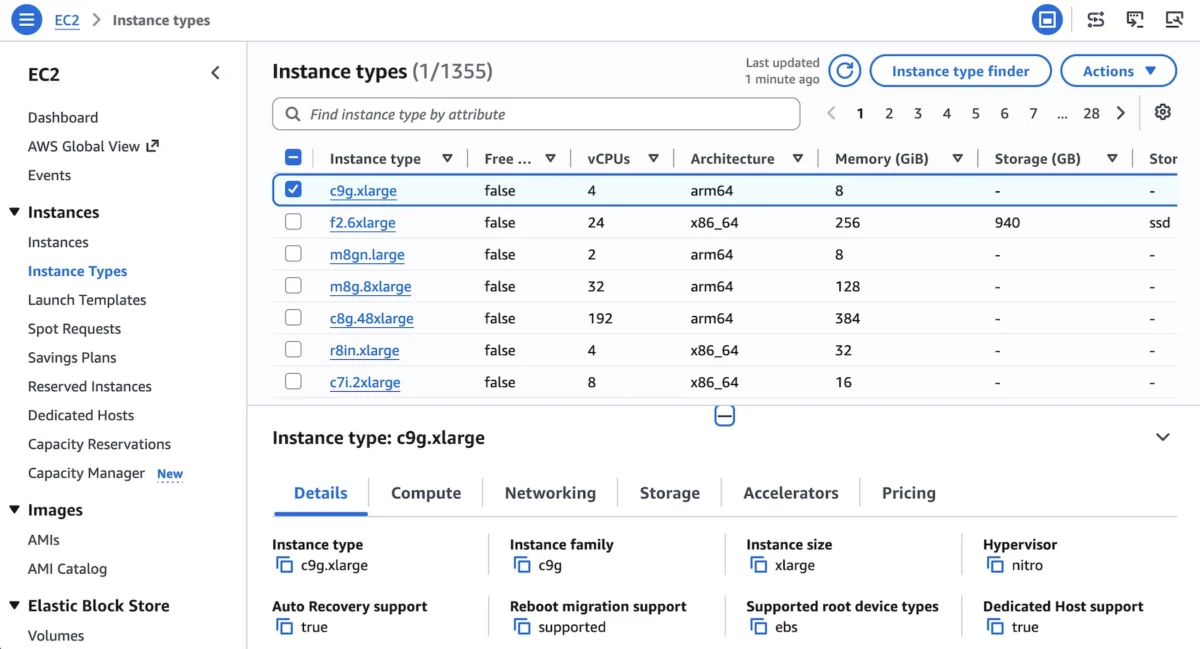
SEATTLE — Two decades ago, a single blog post by Jeff Barr quietly reshaped the trajectory of the technology industry. On a modest August day in 2006, Amazon Web Services (AWS) introduced the Amazon Elastic Compute Cloud (EC2) Beta. At its inception, the service offered a singular promise: resizable Linux virtual servers hosted in the cloud, billed flexibly by the hour, deploying a solitary instance type (m1.small) within a single geographic region (US East).
What began as a minimal yet functional utility has since metastasized into the bedrock of the modern digital economy. Today, Amazon EC2 celebrates its 20th anniversary, standing not merely as a pioneer of cloud computing, but as the foundational architecture upon which a multi-billion-dollar ecosystem—spanning container orchestration, serverless computing, and advanced artificial intelligence—has been built.
As enterprise workloads have evolved from simple static web applications to complex, trillion-parameter generative AI models, EC2 has scaled alongside them, redefining the boundaries of what developers and enterprises can achieve without owning physical hardware.
Main Facts: The Evolution of a Cloud Titan
The core architecture of Amazon EC2 was born out of a radical realization: companies should not have to spend months procuring, racking, and configuring physical hardware to run software applications. By abstracting physical servers into software-defined virtual machines (VMs), AWS unlocked unprecedented agility.
Over the past twenty years, EC2 has expanded from that single m1.small instance into a staggering portfolio comprising over 1,200 distinct instance types. This expansive catalog is meticulously tailored to nearly every conceivable computing requirement, categorized across general-purpose, compute-optimized, memory-optimized, storage-optimized, accelerated computing, and high-performance computing (HPC) families.
Geographically, the service has grown past the boundaries of the US East region to encompass 39 global AWS Regions, deploying availability zones designed to guarantee fault tolerance and high availability. Furthermore, AWS broke through traditional data center walls by pushing EC2 directly to the edge and on-premises environments:
- AWS Outposts (2018): Brought native AWS infrastructure and operating models directly to customer on-premises data centers.
- AWS Local Zones (2019): Placed compute and storage capacity closer to end-users in major metropolitan areas to minimize latency.
- AWS Wavelength (2019): Embedded EC2 instances deep inside global 5G telecommunications carrier networks to power ultra-low-latency mobile edge applications.
Despite these monumental hardware and geographical expansions, the foundational value proposition of Amazon EC2 remains unaltered: customers can provision secure, resizable compute capacity in minutes, pay exclusively for the resources they consume, and scale dynamically on demand without ever signing long-term capital-intensive leases.
Chronology: Key Milestones in EC2’s 20-Year History
The trajectory of Amazon EC2 is defined by a series of architectural breakthroughs that progressively transformed a simple virtual server rental service into a comprehensive, enterprise-grade cloud operating system.
The Foundation Years (2006–2009)
- August 2006: Jeff Barr launches the Amazon EC2 Beta, introducing on-demand Linux virtual machines billed by the hour.
- 2008: The release of Amazon Elastic Block Store (EBS) introduces persistent, low-latency block storage volumes designed specifically for EC2 instances, resolving the ephemeral nature of early cloud storage.
- 2009: AWS introduces Elastic Load Balancing (ELB), Auto Scaling, and Amazon CloudWatch, granting developers the ability to automatically distribute incoming traffic, scale capacity up or down based on real-time metrics, and monitor infrastructure health.
- 2009: The launch of Amazon Virtual Private Cloud (VPC) allows enterprises to provision logically isolated sections of the AWS cloud, providing complete control over virtual networking environments, IP address ranges, subnets, and route tables.
The Modernization and Custom Silicon Era (2017–2018)
- 2017: AWS introduces the AWS Nitro System, a revolutionary combination of dedicated hardware and custom hypervisor software that offloads virtualization functions from the host CPU to specialized hardware chips. This innovation drastically improved cloud security, reduced virtualization overhead, and accelerated the pace of new instance delivery.
- 2018: AWS launches A1 instances powered by AWS Graviton processors—custom-built, ARM-based processors designed by AWS specifically to deliver optimized price-to-performance for scale-out workloads. This marked AWS’s strategic shift toward designing its own enterprise silicon.
Edge Expansion and Hyper-Scale AI (2018–Present)
- 2018–2019: AWS expands its footprint beyond traditional regions, launching AWS Outposts, AWS Local Zones, and AWS Wavelength to cater to edge-computing and low-latency network constraints.
- 2020s: EC2 evolves into the core engine powering heavy-duty deep learning, high-performance computing clusters, and massive foundational AI model training workflows, utilizing specialized accelerators and ultra-fast networking fabrics.
Supporting Data: By the Numbers
To comprehend the sheer scale of Amazon EC2, one must look at the quantitative metrics that define its infrastructure footprint:
- 20 Years: The lifespan of EC2 since its initial beta release in August 2006.
- 1 Instance Type to 1,200+: The explosive diversification of computing options available to developers today.
- 1 Region to 39 Regions: The global expansion of AWS infrastructure, spanning multiple continents and availability zones.
- 100% of AWS Compute-Dependent Services: The total integration of EC2 as the physical bedrock underlying higher-level abstractions like Amazon ECS, Amazon EKS, AWS Lambda, AWS Fargate, AWS Batch, Amazon EMR, Amazon SageMaker AI, and Amazon Bedrock.
Behind these figures lies the relentless engineering of custom silicon. From the early reliance on standard merchant processors, AWS has aggressively diversified its hardware portfolio. The AWS Nitro System revolutionized security by creating hardware-isolated virtualization layers, while the AWS Graviton processor family has set new industry benchmarks for energy efficiency and price-to-performance ratios in cloud computing. Furthermore, accelerated computing instances equipped with advanced GPUs and custom machine learning chips (such as AWS Trainium and Inferentia) now form the clusters driving the generative AI revolution.

Official Responses and Perspectives
Reflecting on the milestone, senior AWS leadership and evangelists have emphasized the core principles that guided EC2 from a speculative internal experiment to the backbone of the modern internet.
Channy Yun, Principal Developer Advocate at AWS, noted in a retrospective commentary:
"We made strong foundational decisions in 2006, and we left room for the service to grow. Twenty years later, that strategy of creating services that are minimal-yet-useful, launching quickly, and iterating rapidly in response to your feedback continues to guide how we build. The next twenty years of cloud computing will demand capabilities we have not yet imagined. Amazon EC2 will continue to be the foundation where your workloads run."
Industry analysts point out that EC2’s genius was never just about renting virtual servers; it was about shifting computing from a capital expenditure (CapEx) hurdle into a variable operational expenditure (OpEx) utility. By decoupling software from physical metal, AWS created a frictionless environment where startups could scale from a single developer in a garage to a global enterprise with millions of users overnight, entirely via API calls.
Implications: The Engine Behind Modern Cloud and AI
As Amazon EC2 enters its third decade, its strategic importance to the broader technology landscape cannot be overstated. It is easy to view EC2 as a legacy infrastructure service in an era dominated by serverless functions, managed containers, and generative AI APIs. However, such a perspective misses a fundamental truth: EC2 is the silent engine powering the entire cloud stack.

Services such as Amazon ECS, Amazon EKS, AWS Lambda, AWS Fargate, AWS Batch, Amazon EMR, Amazon SageMaker AI, and Amazon Bedrock do not operate in a vacuum. Underneath their abstracted management layers, they rely entirely on EC2 capacity. Every architectural pattern engineered over the past twenty years—from basic LAMP-stack web applications to massive distributed clusters training trillion-parameter foundation models—ultimately begins with the execution of an API call to launch an EC2 instance.
The AI Imperative
Looking forward, the implications of EC2’s architecture are shifting toward artificial intelligence. Training and deploying Large Language Models (LLMs) require unprecedented levels of computational density, ultra-low-latency cluster networking, and massive parallel processing power. EC2 has adapted to this paradigm shift by integrating ultra-fast Elastic Fabric Adapter (EFA) networking and high-performance accelerator instances.
What started as a tool to run simple Linux scripts is now the primary battleground where the future of artificial intelligence is being forged. By continuously modernizing its underlying silicon through the Nitro system and Graviton processors, AWS ensures that EC2 remains insulated against hardware bottlenecks.
Conclusion
Two decades after Jeff Barr published his historic blog post, Amazon EC2 remains the undisputed touchstone of cloud computing. Its journey from a single instance type in a single region to a sprawling global fabric of over 1,200 specialized configurations mirrors the maturation of the internet itself. As enterprises look toward a future dominated by autonomous agents, edge computing, and ambient AI, they will build upon the same fundamental promise established in 2006: secure, resizable compute capacity available at the click of a button.
 Sagoh
 Siti Muinah
 Reynand Wu
