
 By Azzam Bilal Chamdy
By Pradershika Sharma | October 23, 2026
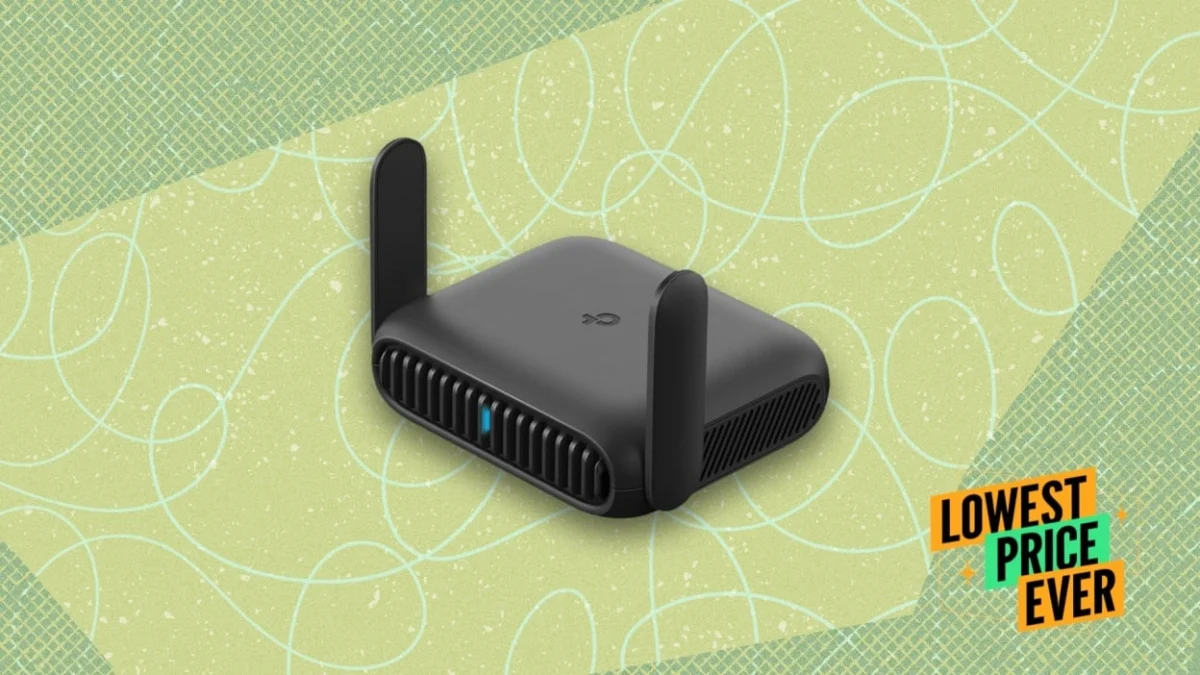
For frequent travelers, digital nomads, and remote workers, navigating the digital landscape of hotels, Airbnbs, and public spaces has long been a frustrating exercise. Dealing with sluggish public Wi-Fi, restrictive captive portals, and tedious individual device log-ins can turn a simple task into a major headache. Recognizing this persistent pain point, network giant TP-Link designed its Roam 6 travel router series to streamline mobile connectivity. Currently, both models in the lineup—the high-capacity AX3000 and the budget-friendly AX1500—have dropped to their lowest prices yet on Amazon, offering significant savings for tech-savvy travelers.
Table of Contents
- Main Facts: The TP-Link Roam 6 Sale
- Chronology: The Evolution of Mobile Connectivity and Travel Routers
- Supporting Data: AX3000 vs. AX1500 Specifications
- Industry Expert Perspectives and Official Responses
- Implications for Remote Workers and Modern Travelers
Main Facts: The TP-Link Roam 6 Sale
The current Amazon promotion brings two of the market’s premier travel routers down to unprecedented price points, according to historical price-tracking data:
- TP-Link Roam 6 AX3000: Discounted to $69.99 (down from its standard retail price of $79.98).
- TP-Link Roam 6 AX1500: Discounted to $44.99 (down from its standard retail price of $59.99).
Both units serve a fundamental purpose: they intercept public, hotel, or Airbnb Wi-Fi signals and convert them into a single, secure, private local area network (LAN). Instead of repeating the tedious process of signing into a captive portal on your phone, laptop, tablet, and streaming stick individually, users simply connect the travel router once. All subsequent personal devices automatically connect to the router’s trusted network.
Furthermore, both routers feature built-in support for advanced VPN protocols, including OpenVPN and WireGuard. This allows users to route all connected devices through a Virtual Private Network, establishing an essential layer of security when operating on vulnerable, unencrypted public networks.
Chronology: The Evolution of Mobile Connectivity and Travel Routers
To understand why devices like the TP-Link Roam 6 are generating significant industry buzz, it is helpful to look back at how mobile connectivity has evolved over the past two decades.
Early 2010s: The Tethering Era
In the early days of smartphones and mobile broadband, getting multiple devices online while traveling relied almost exclusively on cellular hotspot tethering. While effective for a single laptop, doing so rapidly depleted limited cellular data allowances, drained phone batteries rapidly, and struggled under the weight of multiple concurrent connections.
Mid-2010s: The Rise of Basic Travel Bridges
As hospitality Wi-Fi became ubiquitous, hardware manufacturers introduced rudimentary "travel routers" or Wi-Fi bridges. These compact devices allowed users to clone MAC addresses or connect to hotel Ethernet ports, broadcasting a local wireless signal. However, these early iterations were plagued by slow processors, outdated Wi-Fi standards (such as Wi-Fi 4 or early Wi-Fi 5), and a complete lack of modern security features.
2020–2024: The Remote Work Boom
The global shift toward remote work dramatically transformed travel patterns. "Digital nomads" and hybrid workers began traveling with a small ecosystem of smart devices—laptops, tablets, smartphones, e-readers, and media streaming boxes. Public networks buckling under this sudden surge in demand highlighted the critical need for robust personal network isolation and superior bandwidth management.
2026: The Wi-Fi 6 Standard Goes Mobile
The introduction of Wi-Fi 6-enabled travel hardware marks a maturation of the category. Products like the TP-Link Roam 6 integrate high-efficiency wireless standards, multi-gigabit wired connections, and advanced security protocols into pocket-sized form factors. The October 2026 price drop represents a major milestone in making high-performance mobile networking accessible to everyday consumers rather than exclusively targeting enterprise IT professionals.
Supporting Data: AX3000 vs. AX1500 Specifications
Choosing the right model depends largely on your hardware ecosystem, travel style, and performance expectations. A detailed side-by-side comparison reveals distinct advantages for each tier.
| Feature / Specification | TP-Link Roam 6 AX1500 | TP-Link Roam 6 AX3000 |
|---|---|---|
| Current Sale Price | $44.99 (Reg. $59.99) | $69.99 (Reg. $79.98) |
| Max 5GHz Bandwidth | 1,201 Mbps | 2,402 Mbps |
| Max 2.4GHz Bandwidth | 300 Mbps | 574 Mbps |
| Max Connected Devices | Up to 60 devices | Up to 80 devices |
| Wired WAN Port | Gigabit Ethernet | 2.5Gbps WAN Port |
| USB Functionality | USB Tethering Support | USB 3.0 (Tethering, Modems, File Sharing) |
| VPN Support | OpenVPN, WireGuard | OpenVPN, WireGuard |
The Case for the AX3000 ($69.99)
The AX3000 is engineered for power users, families traveling together, and remote professionals who cannot afford a drop in network performance. With a ceiling of 2,402 Mbps on the 5GHz band, it easily handles heavy data loads, large file transfers, and ultra-high-definition video conferencing.

Its capacity to maintain stable connections for up to 80 simultaneous devices ensures that even heavy device loads won’t bog down the system. Additionally, the inclusion of a 2.5Gbps WAN port and a USB 3.0 interface opens up advanced capabilities, such as plugging in a secondary mobile phone for cellular tethering, attaching a USB modem, or sharing files locally across connected drives.
The Case for the AX1500 ($44.99)
For solo travelers or minimalists carrying only a phone, a laptop, and perhaps a Kindle, the AX1500 offers exceptional value. It retains the core benefits of Wi-Fi 6, Gigabit Ethernet ports, USB tethering capabilities, and robust privacy protocols. For $44.99, it provides an entirely friction-free hotel Wi-Fi experience without overspending on capacity you may never utilize.
Industry Expert Perspectives and Official Responses
Networking analysts have praised TP-Link’s entry into the travel router space for addressing a long-neglected market segment. While major enterprise network vendors have historically focused on campus or home-mesh environments, consumer demand for reliable point-to-point mobile security has accelerated rapidly.
In official statements regarding the product design philosophy behind the Roam series, TP-Link representatives emphasized user privacy and convenience:
"Modern travelers carry personal data ecosystems that deserve the same robust segmentation and encryption found in corporate branch offices. The Roam 6 architecture is specifically formulated to bridge the gap between volatile public infrastructure and private, secure personal computing environments without requiring an engineering degree to set up."
Cybersecurity specialists have similarly endorsed the integration of native OpenVPN and WireGuard support. Public Wi-Fi hotspots at airports, cafes, and hotels are prime targets for packet sniffing, man-in-the-middle attacks, and malicious spoofing. By routing all connected gadgets through an encrypted travel router tunnel, users effectively create a portable digital fortress that shields sensitive work communications and personal browsing habits from malicious local actors.
Implications for Remote Workers and Modern Travelers
The widespread adoption of travel routers marks a broader cultural shift in how society views remote mobility. As boundaries between home offices and international travel continue to blur, reliable connectivity is no longer viewed as an accidental luxury—it is core infrastructure.
1. Enhanced Digital Privacy and Security
The integration of easy-to-configure VPN clients directly into pocket-sized hardware democratizes cybersecurity. Non-technical users who might otherwise skip installing VPN applications on every individual device can now secure their entire digital footprint with a single hardware configuration.
2. Elimination of Captive Portal Frustrations
Anyone who has tried to connect a smart TV stick, an e-reader, or a smart home accessory to a hotel Wi-Fi network knows the agony of captive portals that fail to load on non-browser devices. Travel routers act as a universal translator: the router handles the messy hotel login page once, while all subsequent personal devices enjoy immediate, uninterrupted internet access.
3. Future-Proofing Mobile Productivity
As businesses continue to adopt remote-first operations, the expectation for uninterrupted uptime remains absolute. Equipping mobile professionals with enterprise-grade Wi-Fi 6 speeds, multi-gigabit wired failovers, and high device capacities ensures that remote work can happen seamlessly from anywhere on earth—whether from a remote mountain cabin or a bustling metropolitan hotel lobby.
Note: Deal pricing and product availability are subject to change following the time of publication. Affiliate links included in original tracking mechanisms may provide financial commissions to publishing partners.
 Nila Kartika Wati
 Nana
 Basiran
