
 By Nana
By Terrence O’Brien
Weekend Editor & Tech Industry Veteran
Main Facts: The iFixit Verdict on Apple’s First Foldable
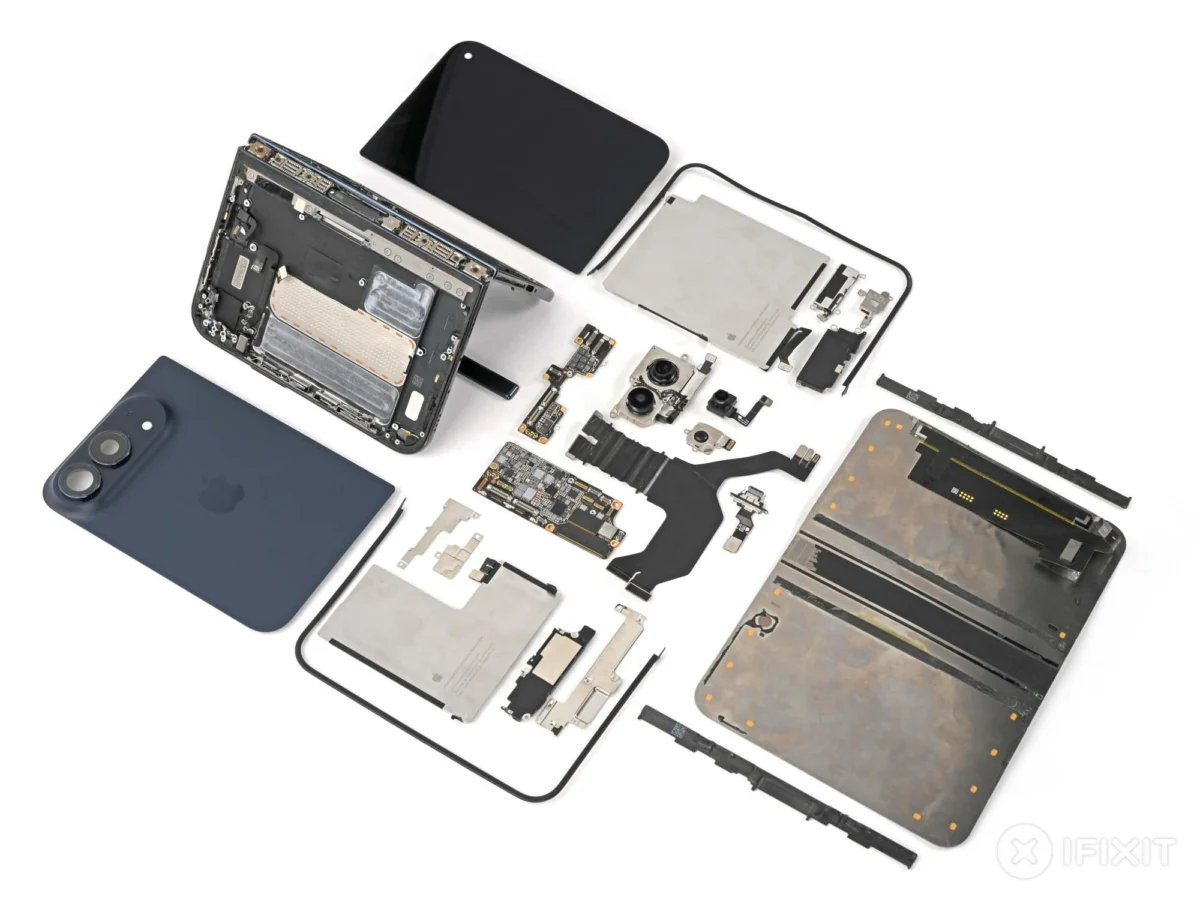
True to tradition, the hardware teardown specialists at iFixit have dismantled Apple’s long-awaited entry into the foldable market, the iPhone Duo. Laying its intricate components across the dissection table, the team uncovered fascinating engineering choices regarding how Apple manages to suppress the dreaded display crease.
Ultimately, iFixit awarded the iPhone Duo a 5/10 repairability score. While a mid-tier rating might ordinarily sound unremarkable, in the context of foldable smartphones—a product category historically characterized by atrocious repairability metrics—a 5 out of 10 is actually the highest score iFixit has ever bestowed upon a folding device.
The teardown reveals a device of striking contradictions: it features clever modularity choices for outer protective layers alongside the expected, terrifying complexity of internal flexible OLED assemblies. Furthermore, the teardown sheds light on early user reports of structural failures, offering mechanical theories as to why some consumers have experienced catastrophic screen fractures right out of the box.
Chronology: From Launch Hype to Dissection Bench
The Anticipation and Early Reports
The journey of the iPhone Duo has been anything but smooth. Following months of speculation, Apple finally introduced the device to a market already saturated with maturing foldable options from competitors like Samsung and Google.
Almost immediately after hitting store shelves, however, early adopters took to online forums to voice alarming concerns. Reports began surfacing of an "audible crack" sound when opening the device, quickly followed by catastrophic display failures and visible fractures along the primary fold line. These early hardware failures cast a shadow over Apple’s triumphant entry into the form factor, leaving analysts and consumers demanding answers regarding the device’s structural integrity.
The iFixit Dissection
Hot on the heels of these consumer complaints, the iFixit team acquired a retail unit to perform their signature teardown. By systematically peeling back layers of glass, metal, and proprietary adhesives, the technicians were able to map out the Duo’s internal architecture.
During the process, they examined the hinge mechanism under magnification, analyzed the subpixel layout of the flexible display, and tested the durability of the outer protective layers against dust and particulate ingress. The resulting analysis not only explained how Apple achieved its visual feats but also pointed directly to the mechanical culprits behind the early failure reports.
Supporting Data: Engineering the Fold and Surviving the Elements
Masking the Crease: Optics and Subpixels
One of the greatest engineering hurdles in foldable smartphone design has always been the crease—the inevitable depression that forms where the display bends. Apple has tackled this challenge using a two-pronged approach involving both chemistry and micro-geometry.
- The Matte Nano-Texture Cover: The internal folding screen utilizes a matte nano-texture finish. Beyond improving legibility in direct sunlight by cutting down glare, this textured surface physically scatters light reflections, effectively camouflaging the visual depth of the crease to the human eye.
- Angled Oval Subpixels: Under microscopic examination, iFixit discovered that the OLED panel features oval-shaped subpixels arranged at varying angles along the fold axis. This deliberate geometric variance is engineered to reduce optical artifacts and further mask the physical transition zone in the middle of the display.
Repairability Breakdown: A Mixed Bag
Achieving a 5/10 repairability score required Apple to make certain components more accessible than its industry rivals, though major hurdles remain:
- The Nano-Texture Layer: Encouragingly, the outer nano-texture protective layer can be replaced independently without requiring technicians to rip out and replace the delicate underlying OLED panel. This is a massive win for everyday wear-and-tear repairs.
- The OLED Nightmare: If the underlying display panel itself fails or suffers internal trauma, however, users face an expensive, high-risk nightmare. Replacing the flexible OLED assembly remains a painstaking process prone to user error and steep component costs.
- Dust Resistance: iFixit tested the device’s resilience against particulate intrusion. While minor amounts of dust managed to infiltrate the USB-C port, speaker grills, and the complex hinge mechanism—leaving them feeling slightly "crunchy"—the Duo performed noticeably better than competitors like the Samsung Galaxy Z Fold8 or the Google Pixel 11 Pro Fold when exposed to particulate debris.
Dissecting the Cracks: Mechanical Theories
To address the reports of broken screens and cracking hinges, iFixit investigated the Duo’s internal kinetics. Their findings suggest that the culprit lies in the extreme complexity of the hinge assembly.

The team suspects that a specific sub-component within the hinge occasionally fails to descend or retract properly during the opening motion. Compounding this issue is an accordion-style ribbon cable that bridges the gap directly over this vulnerable mechanical zone, situated dangerously close to the edge of the internal battery.
The structural hypothesis is that as the hinge moves, it may occasionally pinch or concentrate excessive pressure onto this accordion cable and the adjacent display glass, triggering the reported "audible crack" and subsequent catastrophic screen failure for unfortunate users.
Official Responses: Silence from Cupertino
As is frequently the case with hardware controversies during launch windows, Apple has maintained a guarded posture.
When approached by journalists and repair advocates regarding the mounting user complaints of cracked screens, fractured hinges, and the mechanical theories put forward by iFixit, Apple representatives did not immediately return requests for comment.
The lack of an official statement leaves consumers and enterprise buyers hanging in the balance, waiting to see whether Apple will issue a voluntary recall, adjust manufacturing tolerances quietly in future production batches, or address the hardware issues strictly through standard warranty repair channels.
Implications: What the iPhone Duo Means for the Future of Foldables
The iFixit teardown of the iPhone Duo carries profound implications not just for Apple, but for the entire mobile device industry.
1. Raising the Bar for Repairability
By scoring a 5/10, Apple has inadvertently proven that foldable devices do not have to be entirely disposable rectangles of proprietary glue. By making the outer protective nano-texture layer modular and easier to service, Apple has set a new benchmark that competitors must now chase. If the company that historically popularized sealed, unrepairable hardware can design a serviceable foldable component, consumer expectations across the entire market will shift.
2. The Limits of Optical Illusion Engineering
Apple’s reliance on nano-texture glass and custom-angled subpixels to hide the crease demonstrates a brilliant marriage of software-adjacent hardware thinking. However, the early failure reports underscore a harsh physical reality: no amount of optical sleight-of-hand can compensate for mechanical stress. As form factors grow thinner and hinges grow more complex, structural physics will always push back against industrial design ambitions.
3. Consumer Confidence and the Early Adopter Tax
For an ecosystem as fiercely loyal as Apple’s, hardware missteps are heavily scrutinized. The early reports of cracking screens threaten to dampen consumer enthusiasm for the first-generation Duo, echoing the rocky launches experienced by early foldable pioneers years ago. How Apple handles warranty claims, hardware revisions, and public communications in the coming weeks will determine whether the iPhone Duo is remembered as a pioneering milestone or a cautionary tale of rushing complex mechanics to market.
Ultimately, the iPhone Duo represents a monumental step forward in display engineering and a modest victory for repair advocates. Yet, as iFixit’s tools made clear, conquering the physical laws of folding glass remains one of the most punishing frontiers in modern technology.
 Pevita Pearce
 Sagoh
 Azzam Bilal Chamdy
