
 By Sagoh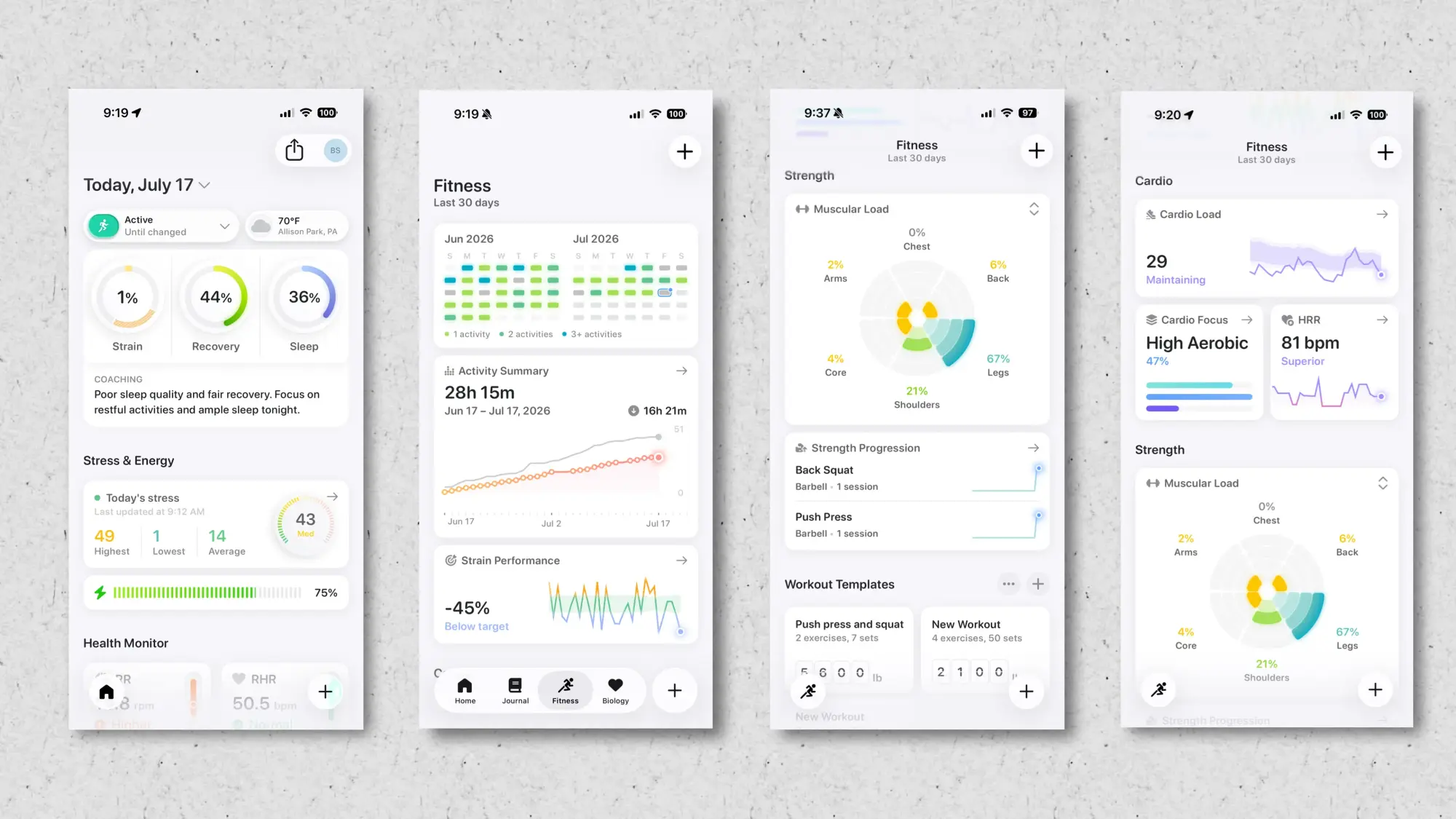
By Beth Skwarecki, Senior Health Editor
July 17, 2026
The Fitbit Air has cemented its reputation as a premier wearable device, praised for its sleek, unobtrusive design and accessible price point. However, despite the high-quality hardware, many users have found themselves frustrated by the software experience provided by the native Google Health app. Frequent, unsolicited AI-generated text prompts and a rigid, unintuitive interface have left power users yearning for an alternative.
This week, that alternative arrived in the form of a new integration: the iOS health-tracking powerhouse, Bevel, is now fully compatible with Google Health. For those who love their Fitbit hardware but loathe the software ecosystem, this is a transformative development.
Main Facts: A New Ecosystem for Your Fitbit Data
The central issue for many Fitbit Air owners is not the device itself, but the "walled garden" of the Google Health app. While the hardware excels at collecting biometric data, the software often buries that data under layers of AI coaching—which is often locked behind a premium subscription—and lacks basic functionality, such as viewing historical stats from the previous day.
Bevel, a robust third-party application, bridges this gap by acting as a high-performance dashboard for your fitness metrics. Historically known for turning the Apple Watch into a rival for high-end trackers like Whoop, Bevel has pivoted to a more inclusive model. It is now free to use, pulling data from various sources including Garmin, Oura, Strava, and, as of this week, Google Health. By syncing your Fitbit Air data into Bevel, users can bypass the most intrusive aspects of the official Google app while retaining the accuracy of their wearable’s sensor suite.

Chronology: The Evolution of the Fitbit-Bevel Connection
- 2024–2025: The Fitbit Air launches to widespread critical acclaim, lauded for its form factor and sensor precision. However, early reviews highlight the Google Health app’s tendency to prioritize AI "coaching" over raw data visualization.
- Early 2026: Bevel gains traction as a top-tier alternative for Apple Watch users, offering advanced "recovery" and "strain" metrics. The developer begins expanding integration capabilities to include non-Apple hardware.
- July 2026: Official integration between Bevel and Google Health is released. This update allows Bevel to ingest data streams from Google’s cloud, effectively decoupling the Fitbit Air’s hardware from the Google Health user interface.
- Present Day: Users are now able to maintain the Google Health app solely as a background "bridge" for data syncing, while utilizing Bevel as their primary interface for analysis.
Supporting Data: Why Bevel Outperforms the Native App
To understand why this shift is significant, one must look at the functional disparity between the two platforms.
1. Granular Data Visualization
Google Health’s interface is designed for the casual user, often smoothing out data points into generalized summaries. Bevel, by contrast, focuses on actionable metrics. It provides deep-dive analysis into cardiovascular load, sleep cycles, and heart rate variability (HRV) that feels more akin to clinical or professional athletic software than a general-purpose fitness app.
2. Feature Richness at No Cost
The most striking difference lies in the feature set available to free users. Bevel includes:
- Habit Logging: Tracking consistency in daily routines.
- Strength Training Metrics: Detailed muscle-group tracking that tells you exactly how your training is affecting specific areas of the body.
- Barcode Scanning: A standard utility for food logging that, in the Google Health ecosystem, is often gated behind a monthly "Premium" subscription.
3. AI Fatigue
The primary complaint regarding Google Health is the "AI Coach." For many, receiving multiple paragraphs of generated advice throughout the day is an annoyance rather than a utility. By shifting to Bevel, users can minimize their reliance on the Google Health notification engine, effectively silencing the AI commentary while still receiving accurate battery alerts and sync notifications from the hardware.
Official Responses and Developer Strategy
While Google has not released a statement specifically regarding the Bevel integration, the company has consistently emphasized its "Health Connect" strategy, which aims to make health data portable across different platforms. The decision to allow third-party apps like Bevel to pull from the Google Health cloud aligns with this broader interoperability goal, even if it circumvents Google’s own user interface.

Developers at Bevel have framed this update as a response to the "data transparency movement" in wearables. By opening the API to Fitbit Air users, they are banking on the idea that users will choose software that provides the most utility, rather than software that forces them into a subscription model.
Implications: The Future of Wearables
The integration of Bevel and the Fitbit Air represents a major shift in the wearable market: the decoupling of hardware and software.
A Move Toward Modular Fitness
For years, the industry standard has been to lock users into a single app ecosystem. If you bought a Fitbit, you used the Fitbit app; if you bought a Garmin, you used Garmin Connect. The success of apps like Bevel suggests that users are increasingly viewing their fitness trackers as "data collectors" and their apps as "data interpreters." When the interpreter fails, the consumer now has the agency to swap it out for a better one.
The Death of Subscription-Gated Features
By offering a superior experience for free, Bevel puts immense pressure on competitors to justify their subscription costs. If a free app can provide barcode scanning, habit tracking, and detailed recovery metrics, the "Premium" tiers of larger tech conglomerates must offer significant, tangible value—such as proprietary medical insights or human-led coaching—to stay relevant.
User Agency and Data Sovereignty
Perhaps the most profound implication is the shift in data ownership. By moving their data into a third-party app that respects the user’s focus, individuals are gaining better control over how their health data is presented. This is not just about a better user interface; it is about the right to choose how you interact with your own biological statistics.

How to Make the Switch: A Practical Guide
For those looking to migrate their daily routine to Bevel, the process is straightforward:
- Maintain the Bridge: You must keep the Google Health app installed and connected to your Fitbit Air. It acts as the essential conduit between the wearable hardware and your phone’s storage.
- Silence the Noise: Navigate to the Google Health settings. Locate the "Health Coach" features and disable them. If you prefer, keep notifications active only for essential system alerts (like low battery) and silence the daily "AI insight" push notifications.
- Integrate: Download Bevel from the App Store. Within the app, navigate to Settings > Data Sources. Tap the plus (+) icon under Integrations and select Google Health.
- Authorization: You will be prompted to allow Bevel to read your health data. Grant the necessary permissions, and within minutes, your historical Fitbit Air data will populate in the Bevel dashboard.
Final Verdict
The Fitbit Air is an excellent piece of hardware that was, until now, held back by a cluttered and restrictive software experience. By utilizing Bevel, you are essentially "unlocking" your device. You keep the thin, comfortable, and affordable wearable you chose, but you gain a professional-grade interface that treats your data with the respect and clarity it deserves.
As of this week, this integration is the most effective way to optimize your health-tracking routine. Whether you are a casual walker or a serious athlete, the ability to view your metrics without the intrusion of AI commentary is, in itself, a significant upgrade to your daily wellness journey.
 Layla Zulfa
  Asro
Asro  Reynand Wu