
 By Asro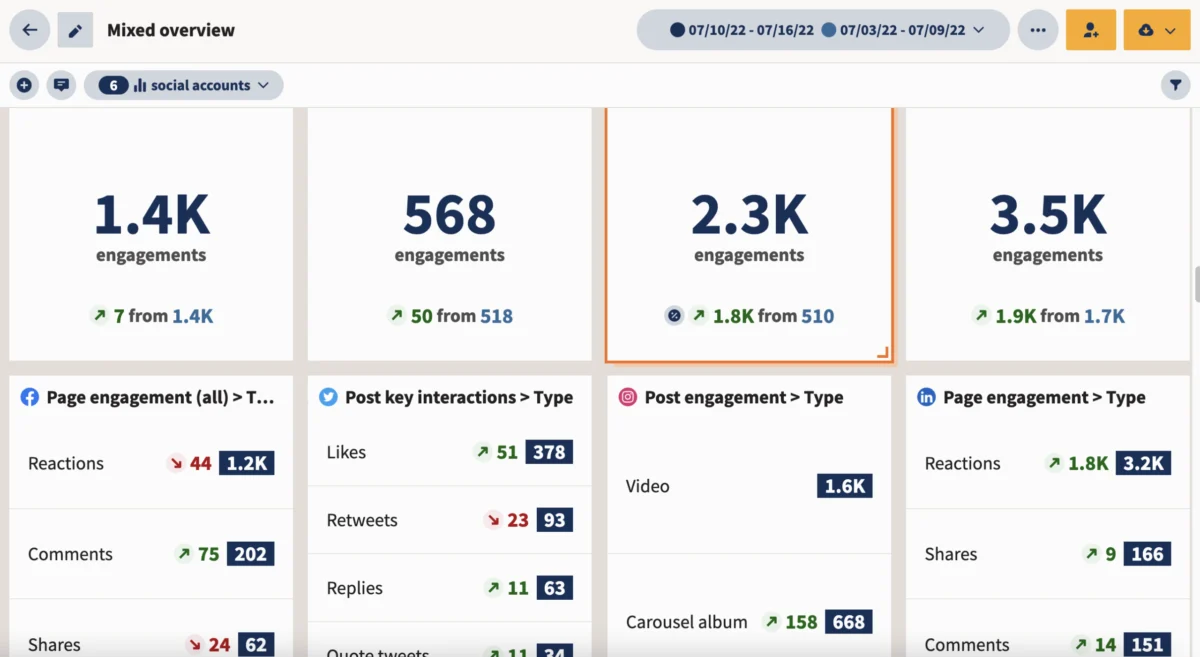
In the rapidly evolving landscape of digital marketing, "vanity metrics"—such as total follower count—have largely lost their luster. Today, the currency of the social web is engagement. Whether you are a small business owner, a social media manager at an enterprise firm, or a content creator, understanding your engagement rate is the single most effective way to determine if your content is actually resonating with your audience.
As we move through 2026, social media algorithms have become increasingly sophisticated, prioritizing high-interaction content over simple reach. To navigate this environment, brands must move beyond superficial views and master the science of engagement.

What Is Engagement Rate and Why Does It Matter?
At its core, engagement rate is a performance metric that measures the level of interaction an audience has with a brand’s content relative to its reach or audience size. Unlike impressions, which simply track exposure, engagement signifies active participation.
The Anatomy of Interaction
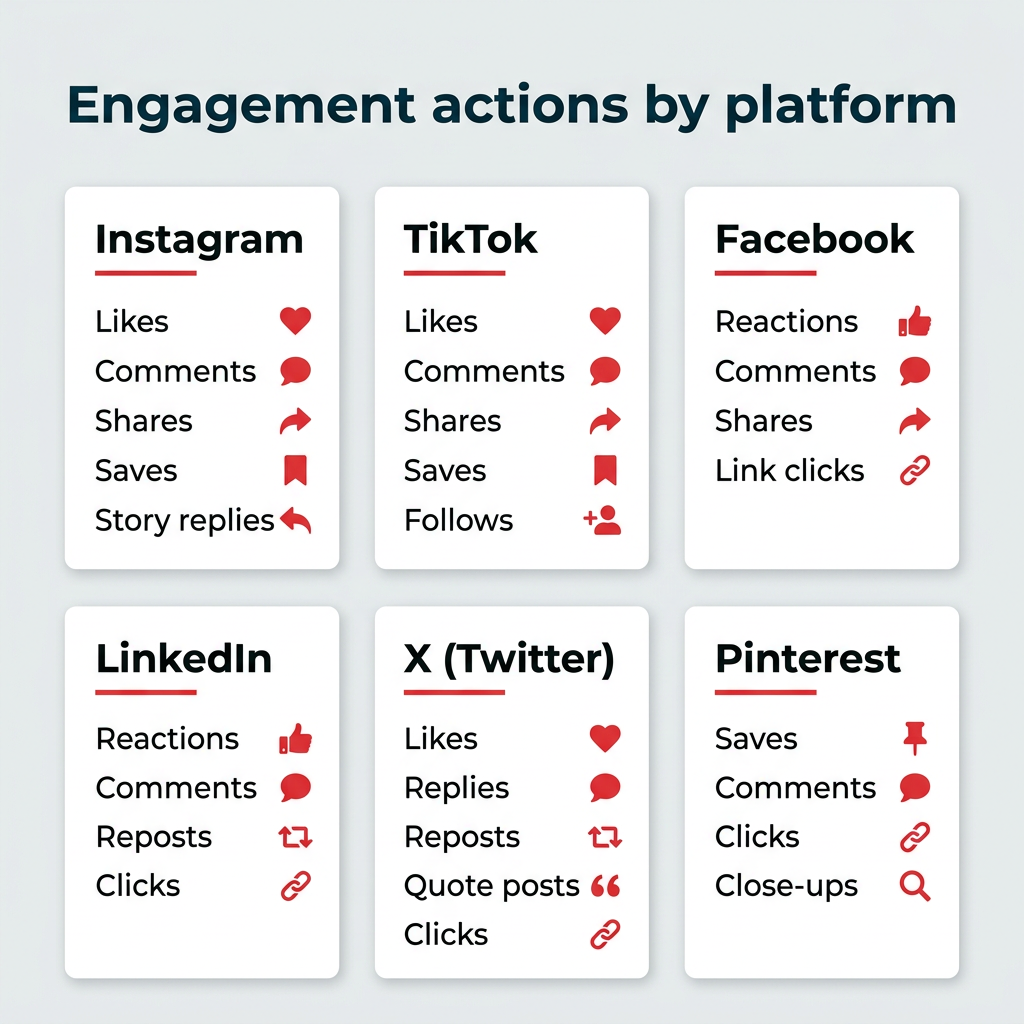
Engagement is not a monolithic metric. Depending on the platform, it encompasses a wide range of user behaviors, including:

- Likes and Reactions: The lowest barrier to entry, signaling quick approval.
- Comments: A deeper level of investment that fuels community discussion.
- Shares/Reposts: The ultimate sign of advocacy, extending your reach to new networks.
- Saves/Bookmarks: A strong signal of long-term value, indicating that users intend to return to the content.
- Direct Messages and Link Clicks: High-intent actions that often lead directly to conversion.
The Strategic Value of Engagement
Why should organizations obsess over these numbers? First, engagement is the primary signal to social algorithms. When a post receives a flurry of activity, the platform interprets this as "high-quality content" and pushes it to a wider audience, often reaching people who do not follow your account.
Second, engagement builds social proof. A profile with high interaction rates appears more trustworthy and authoritative to first-time visitors. For leadership teams, engagement rate serves as a tangible bridge between creative content and business ROI, proving that marketing efforts are driving genuine audience behavior rather than just noise.
Decoding the Formulas: How to Measure Success
There is no "one size fits all" formula for engagement. The correct calculation depends entirely on your business objectives. Based on industry standards, here are the six most critical formulas:
1. Engagement Rate by Reach (ERR)
Formula: (Total Engagements / Reach) × 100
This is the industry standard for organic content. It measures how effectively your content converts viewers into participants. Because reach accounts for both followers and non-followers who discover your content, it is often the most accurate measure of organic performance.

2. Engagement Rate by Post (ER Post)
Formula: (Total Engagements / Total Followers) × 100
This provides a stable baseline for comparing your performance over time. It is particularly useful for influencers or brands that want to measure consistency, regardless of how much an algorithm fluctuates your reach.
3. Engagement Rate by Impressions (ER Impressions)
Formula: (Total Engagements / Total Impressions) × 100
This is the gold standard for paid social media advertising. Since impressions track every time a post appears on a screen (including repeat views), this formula helps advertisers evaluate the efficiency of their ad spend, especially under CPM (Cost Per Mille) structures.
4. Daily Engagement Rate (Daily ER)
Formula: (Total Engagements in a Day / Total Followers) × 100
This metric is essential for long-term analysis. It tracks how active your audience is with your brand on an average day, accounting for all posts—even those published in the past that continue to generate traction.
5. Engagement Rate by Views (ER Views)
Formula: (Total Engagements / Total Video Views) × 100
With the explosion of short-form video (Reels, TikToks, YouTube Shorts), this formula has become vital for video-first strategies. It identifies which videos are successfully prompting viewers to pause and interact.
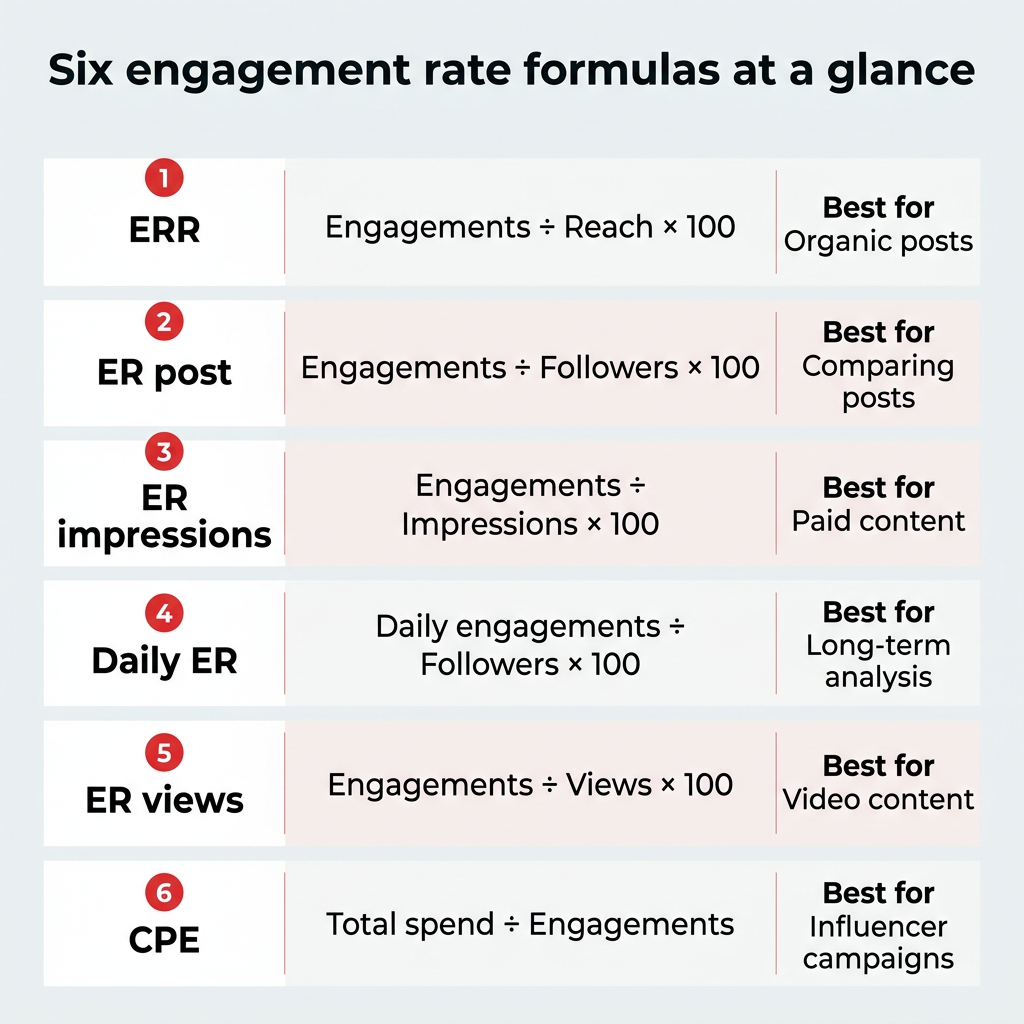
6. Cost Per Engagement (CPE)
Formula: Total Spend / Total Engagements
CPE is the primary metric for conversion-based campaigns. It provides a clear financial figure on exactly what it costs to earn a single interaction, making it indispensable for budget management and influencer marketing ROI.
2026 Industry Benchmarks: Setting Your Goals
Data science researchers have recently analyzed over one million social media posts to establish the definitive benchmarks for 2026. Understanding these figures is essential for tempering expectations and setting realistic KPIs.
The All-Industry Baseline
Across all industries, the average engagement rates by platform are as follows:
- Instagram (Feed): 3.0%
- Instagram Reels: 2.7%
- LinkedIn: 2.0%
- X (Twitter): 1.8%
- TikTok: 1.5%
- Facebook: 0.8%
Industry-Specific Realities
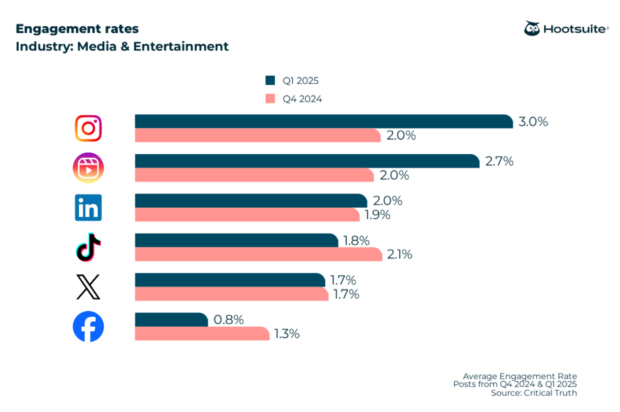
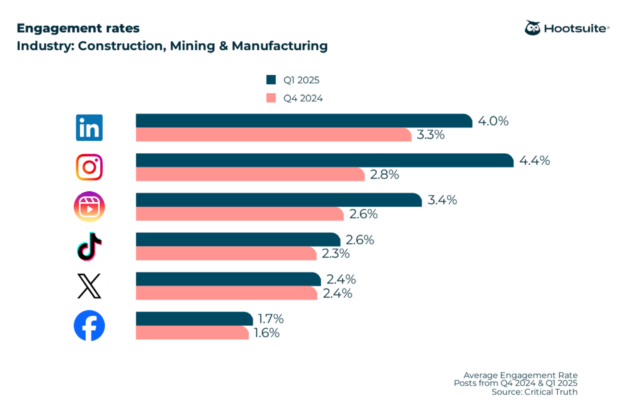
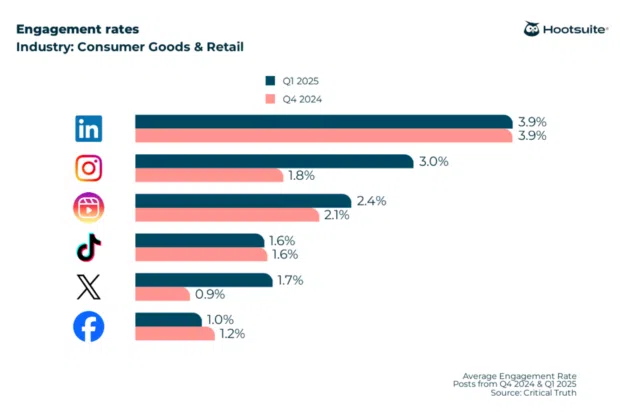
It is important to note that performance varies significantly by sector. For example, in the Nonprofit and Construction/Manufacturing sectors, Instagram often sees engagement rates as high as 4.4%, whereas in Finance, the bar sits closer to 3.8%. These variances exist because different industries have different audience expectations—a financial services client may engage differently than a follower of a charitable organization.

Implications: Translating Data into Strategy
Data is useless without action. Once you have calculated your engagement rates, you must implement a strategy to refine your output.
1. Double Down on What Works
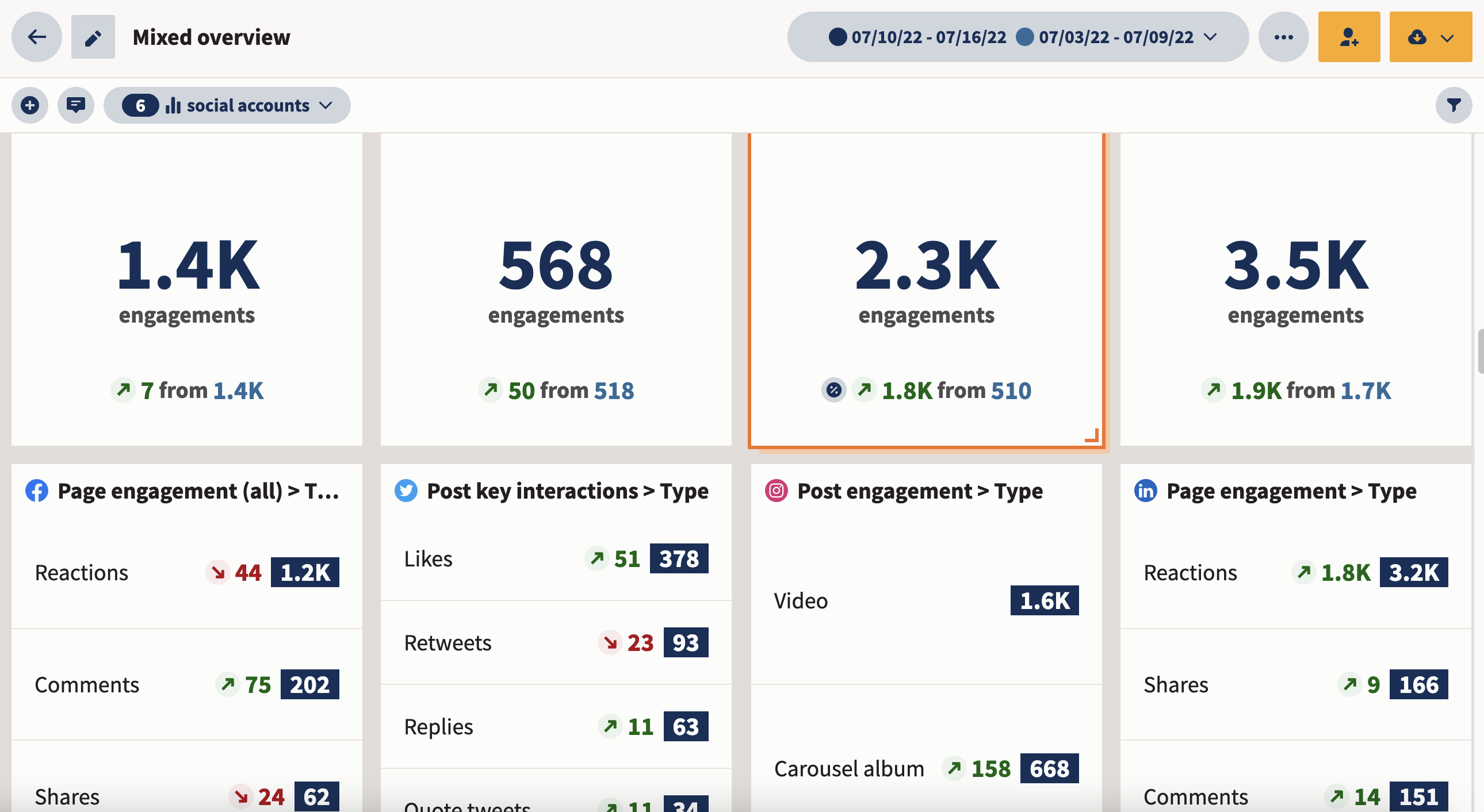
Analyze your highest-performing posts from the last quarter. What did they have in common? Was it the format (e.g., carousels vs. single images)? Was it the timing? Use analytics tools to identify the exact hour your audience is most active and schedule your high-value content for those windows.
2. Prioritize Community Management
Engagement is a two-way street. Algorithms favor accounts that maintain an active conversation. By responding to comments, acknowledging shares, and participating in discussions, you signal to the platform that your account is a hub of interaction, which in turn boosts your future visibility.
3. Optimize for "Save-ability"
In 2026, the "Save" is the new "Like." Content that provides utility—such as educational tutorials, industry tips, or check-lists—tends to get saved, which signals deep value to the platform. Prioritize "educational" and "utility-driven" content over purely promotional posts.
4. Experiment with Video Formats
The data is clear: video remains the most engaging format across almost every platform. However, the quality of the hook is paramount. If your engagement rate by views (ER Views) is low, your video hook—the first three seconds—is likely failing to grab attention.
Conclusion: The Path Forward
Improving your engagement rate is a marathon, not a sprint. It requires a disciplined approach to measurement and a willingness to iterate based on performance. By using tools like Hootsuite to automate the heavy lifting of data collection and reporting, you free up your team to focus on what truly matters: creating compelling content that builds genuine connections.
Remember, engagement is not just a metric to be tracked—it is the digital heartbeat of your brand. When you focus on creating value for your audience, the engagement will follow. Start by establishing your baseline today, set your targets based on the 2026 industry benchmarks provided, and begin the iterative process of growing your digital footprint.
The brands that win in the coming years will be those that stop talking at their audience and start talking with them. Your engagement rate is the scorecard for that conversation.
 Reynand Wu
  Muslim
  Nila Kartika Wati