
 By Lina Irawan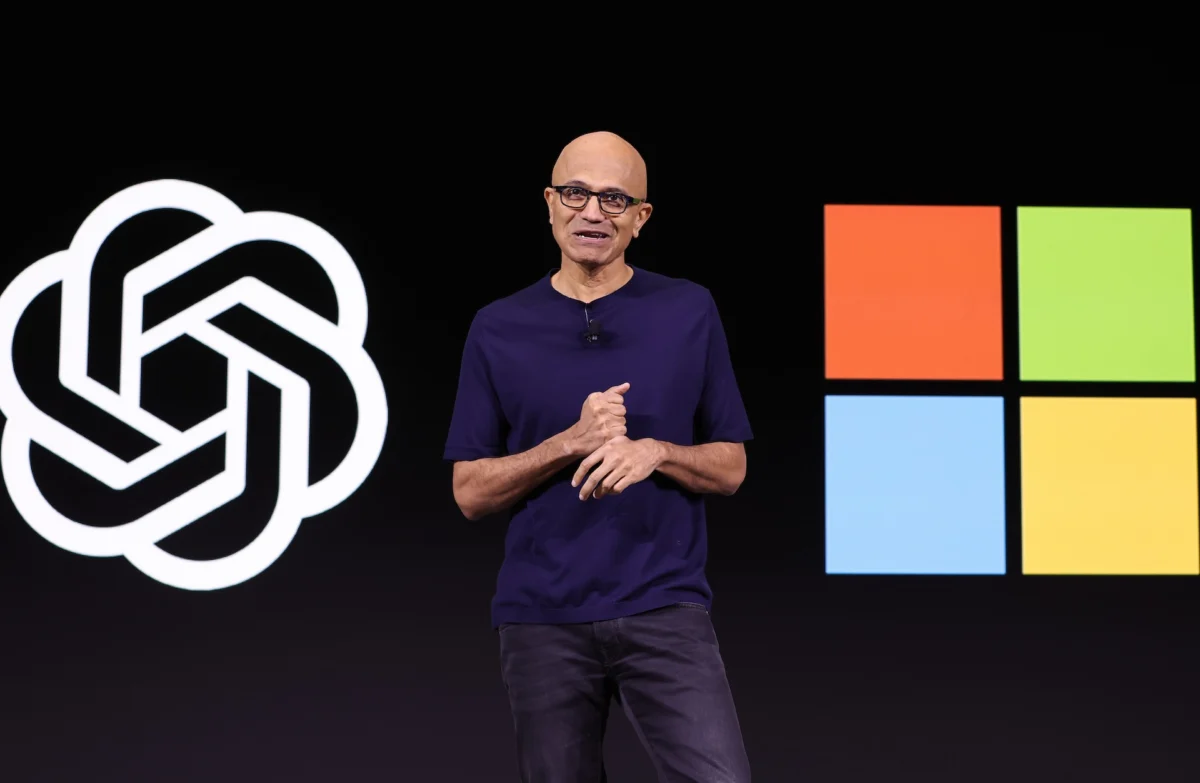
For years, the promise of Artificial Intelligence has been sold as a digital panacea: a way to outsource cognitive labor, streamline operations, and unlock hidden efficiencies. But a quiet, growing unease has begun to permeate the halls of Silicon Valley’s power brokers. The fear is no longer just about AI taking jobs; it is about AI taking the very "institutional memory" that gives a company its competitive edge.
The latest, and perhaps most significant, voice to join this chorus is Microsoft CEO Satya Nadella. In a provocative blog post released this past Sunday, Nadella articulated a warning that many enterprise leaders have been whispering behind closed doors: companies are unwittingly acting as the fuel for their own future competitors. By feeding proprietary data into "black box" AI models, businesses are paying for intelligence with money, while simultaneously forfeiting the crown jewels of their intellectual property.
The Double-Payment Trap: A New Economic Reality
The core of the concern, as highlighted by Nadella and echoed by industry figures ranging from Palantir’s Alex Karp to investor Jason Calacanis, is the concept of the "double payment."
When an enterprise signs up for a model from a leading lab—such as OpenAI or Anthropic—they pay a subscription fee or a per-token cost for the service. That is the first payment. However, to make these models effective, companies must provide them with context. They upload sensitive documents, proprietary codebases, and nuanced internal workflows. They provide feedback loops where human employees correct the AI’s errors, effectively training the model to understand the specific intricacies of that business.
"You essentially pay for intelligence twice," Nadella writes. "Once with money, and again with something even more valuable: the proprietary knowledge you must reveal to make that intelligence useful."
This process is what experts call "data exhaust." Every prompt, every agent-led tool, and every human correction acts as a data point that gets distilled into the model’s weightings. For a competitor, this knowledge is priceless—and according to critics, it is being handed over for free to the very companies that might eventually commoditize those same business processes.
A Chronology of the "Trojan Horse" Concern
The skepticism toward centralized, proprietary AI models did not appear overnight. It has been a gradual buildup of institutional friction.
- Early 2024: Enterprises began rapidly adopting Generative AI. The focus was entirely on "time-to-market," with little concern for long-term data lineage or the implications of model training on user inputs.
- Late 2024 – Mid 2025: High-profile security leaks and concerns over "model inversion attacks"—where proprietary data is extracted from a model—led to a chilling effect in highly regulated sectors like banking and defense.
- February 2026: Anthropic, itself a major proprietary model provider, signaled the scale of the problem by accusing Chinese labs of "mining" Claude. They alleged that these labs were sending millions of automated prompts to Claude to scrape its reasoning patterns—a practice known as "distillation."
- May 2026: Prominent venture capitalists and tech leaders began publicly debating the risks of "model poisoning" and "IP leakage," setting the stage for a broader industry confrontation.
- July 2026: The release of Satya Nadella’s blog post served as a watershed moment. Coming from the CEO of the world’s largest provider of enterprise AI infrastructure, the critique carried an weight that could no longer be ignored by the boardrooms of the Fortune 500.
The Distillation Dilemma and the Hypocrisy of Terms
At the heart of the current debate is the technical practice of "distillation." This is the process of using the outputs of a massive, expensive model (like GPT-4) to train a smaller, leaner, and cheaper model. If a small model can perform at 90% of the capability of a massive one at a fraction of the cost, the incentive for companies to move away from the "Big AI" providers is immense.
However, many AI labs include strict clauses in their Terms of Service that prohibit users from using their outputs to train competing models. Nadella points out the profound hypocrisy in this stance: "While the great innovation that comes from model providers having fair use rights to train models on public data is needed, I find it ironic that the status quo is to then turn around and impose restrictive terms on distillation."
Essentially, the labs are claiming the right to harvest the collective wisdom of the public internet to build their products, but are denying their customers the right to optimize those products for their own private use.
Supporting Data: The Shift Toward On-Premise and Open Source
The market is already responding to these concerns with a clear trend: the "re-decentralization" of AI. Companies are becoming wary of the "single-vendor trap."
According to data from Vercel’s AI gateway, which allows developers to route traffic across various models, the share of open-source model usage is surging. Last month, open-source models accounted for nearly 30% of all traffic processed through the gateway. This suggests a significant migration away from the "all-in" approach to proprietary APIs.
Idit Levine, founder and CEO of Solo.io, a company that provides infrastructure for enterprise AI, notes that her customers are actively seeking autonomy. "They start asking themselves: ‘Can I take an open source model and run it on-prem? It will do almost 90% of what the big one is doing. It will cost way less,’" she says. "They understand that, and they can control it."
The rise of projects like the Linux Foundation’s Agentgateway further cements this shift. These tools are designed to facilitate "orchestration layers," allowing businesses to swap models as easily as they swap cloud storage providers, preventing vendor lock-in and ensuring that the organization retains ownership of its data environment.
Implications for the Future of Enterprise AI
The stance taken by Nadella—and the shifting behaviors of major enterprises like T-Mobile, SAP, and ADP—suggests a tectonic shift in the AI landscape. The implications are far-reaching:
1. The Rise of "Sovereign AI"
Enterprises are moving toward building "proprietary learning environments." This means keeping data behind corporate firewalls and using open-source models that can be fine-tuned without ever sending raw data to a third-party server. This is no longer just a security preference; it is a fiduciary requirement.
2. The Death of the "Black Box"
Companies are losing patience with models they cannot inspect or control. The demand for transparency—understanding how a model arrived at a conclusion—is becoming a non-negotiable feature for enterprise-grade software.
3. A Legal Reckoning for AI Labs
If model makers continue to claim ownership over the "intelligence" derived from customer prompts, they are likely to face a wave of litigation. We are entering an era where contract law will define the limits of AI training, potentially forcing companies like OpenAI and Anthropic to offer "data-private" tiers that guarantee no training will occur on user input.
4. The Cloud Provider Pivot
For Microsoft, the strategy is clear. While they are heavily invested in proprietary labs, they are also positioning Azure as the ultimate "neutral ground." By advocating for ownership and orchestration, Microsoft is ensuring that even if companies abandon specific proprietary models, they remain within the Microsoft cloud ecosystem.
Conclusion: Who Owns the Intelligence?
The debate sparked by Satya Nadella is a fundamental question about the nature of the AI economy. If, as Nadella claims, "in consuming intelligence, you are creating intelligence," then the legal and ethical ownership of that intelligence must reside with the creator.
The era of blind trust in proprietary AI providers is coming to an end. Businesses are waking up to the fact that their data is the most valuable asset they possess, and they are no longer willing to trade it for a mere seat at the AI table. As companies shift toward on-premise, open-source, and orchestrated AI architectures, the AI labs of Silicon Valley will be forced to evolve—or risk becoming the architects of their own obsolescence. The future of AI is not just about who has the biggest model, but who has the most control over the data that makes that model meaningful.
 Sagoh
Sagoh  Iffa Jayyana
  Lina Hope