
 By rifanmuazin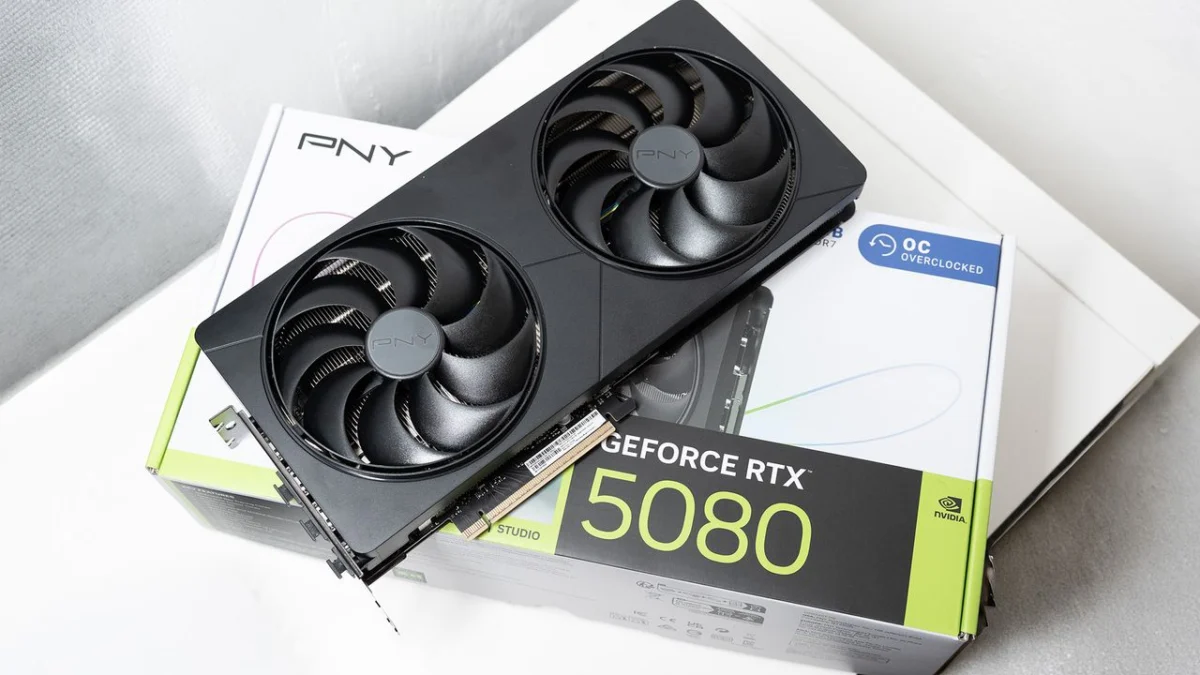
Our Verdict:
The PNY GeForce RTX 5080 OC Slim transcends the traditional gaming GPU, positioning itself as an indispensable asset for professionals engaged in high-resolution video editing, intricate 3D rendering, and demanding AI applications. Its formidable processing capabilities deliver a monumental leap in performance, offering a superior alternative to virtually any other graphics solution available. With a thoughtfully designed slim profile and a factory overclock, this card is not just about raw power, but also about intelligent integration into diverse desktop configurations and external docks.
Main Facts: Unleashing the Next Generation of Graphics Power
The PNY GeForce RTX 5080 OC Slim emerges as a significant contender in the high-performance graphics card market, leveraging Nvidia’s cutting-edge Blackwell architecture. While often associated with the realm of extreme gaming, this particular iteration of the RTX 5080 has been engineered with a distinct focus on professional creative workflows and the burgeoning field of artificial intelligence. Its core promise is a dramatic acceleration of tasks that demand immense graphical computation, from rendering complex visual effects in 4K to training sophisticated machine learning models locally.
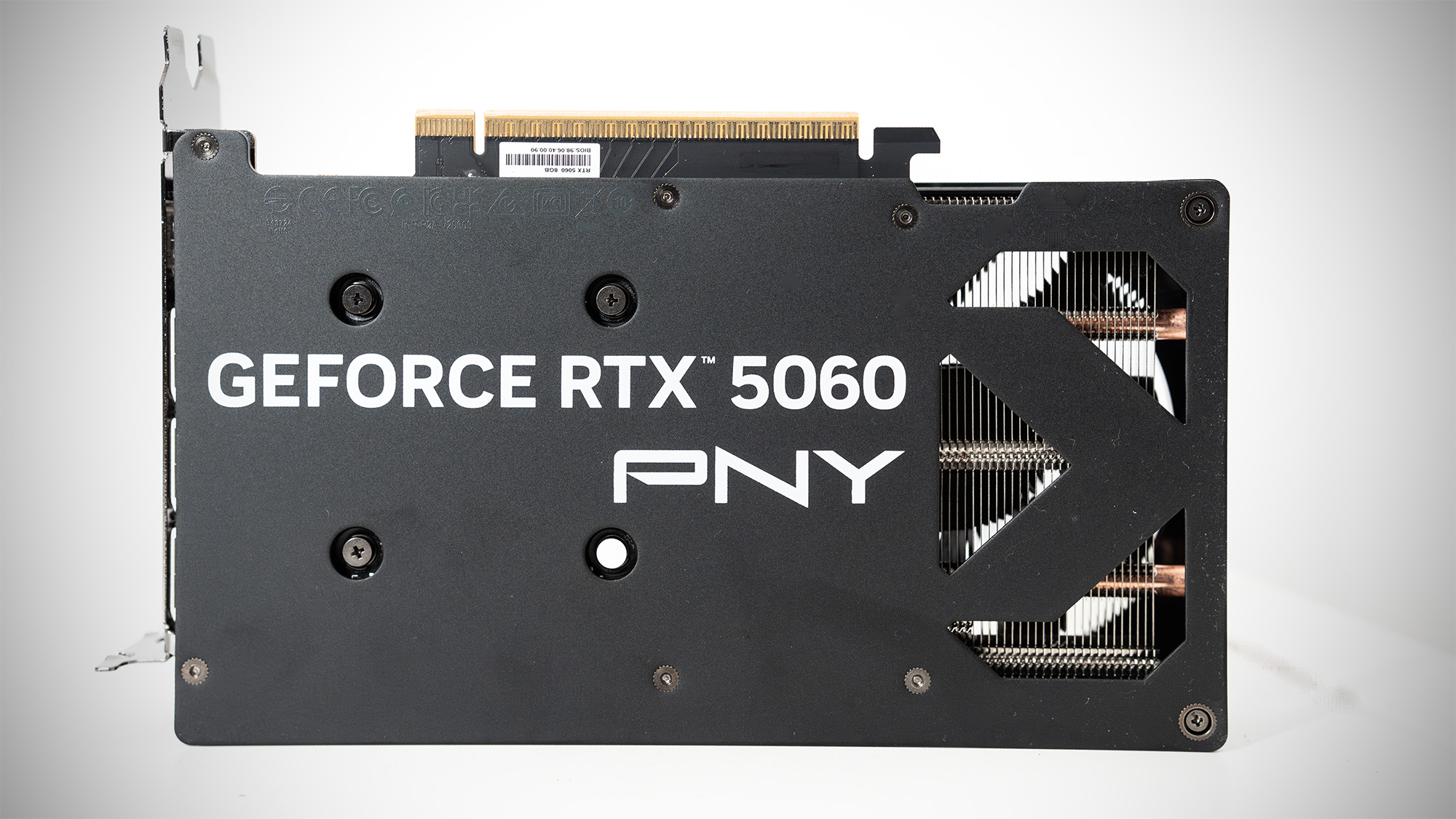
Key to its appeal are the impressive specifications: 10752 CUDA cores, 5th-generation Tensor cores boasting 1801 AI TOPS, and 4th-generation Ray Tracing cores delivering 171 TFLOPS. These figures translate directly into unparalleled speed and efficiency for tasks such as real-time ray tracing, AI-enhanced upscaling (DLSS), and rapid data processing. Complementing this is a generous 16GB of ultra-fast GDDR7 memory, operating on a 256-bit bus with up to 960 GB/s bandwidth, ensuring that even the most memory-intensive applications run without bottleneck.
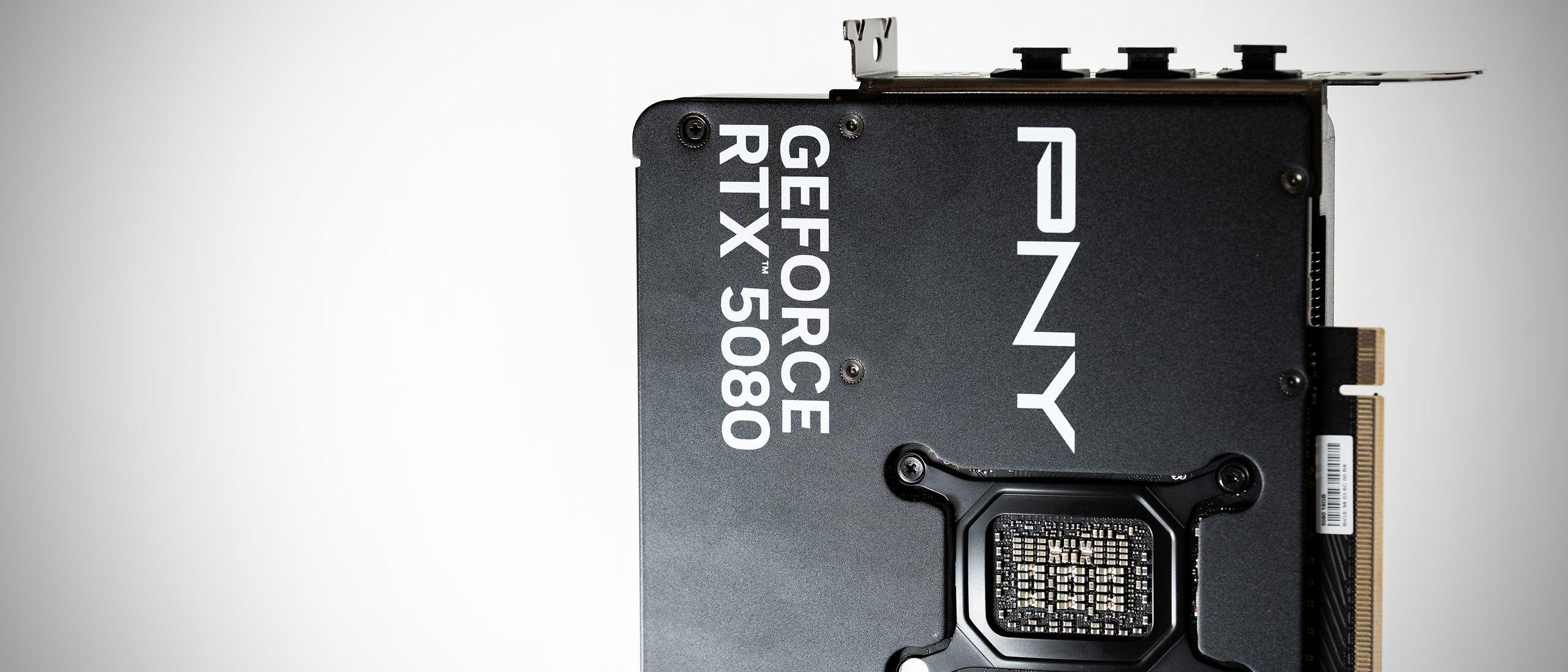
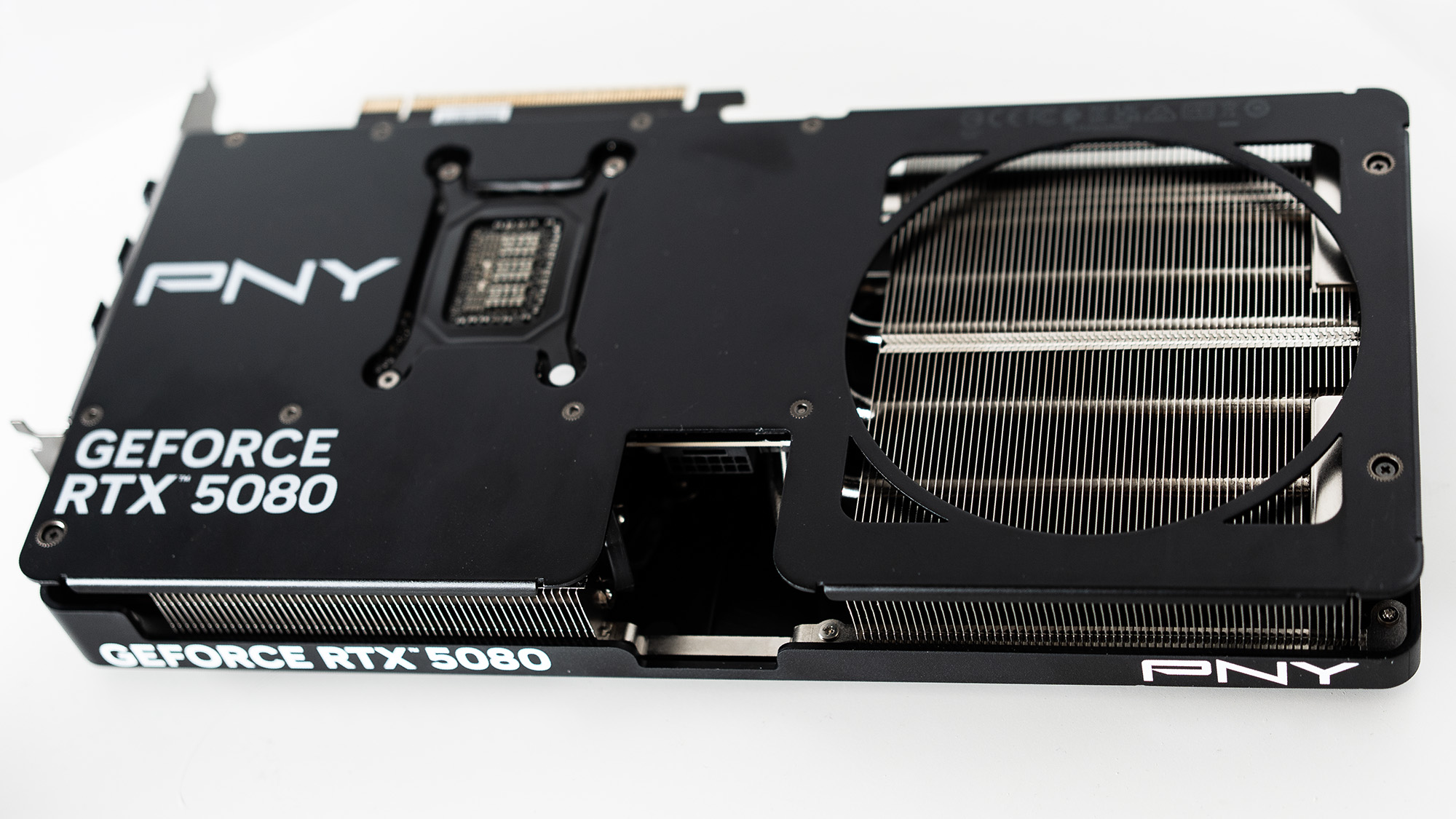
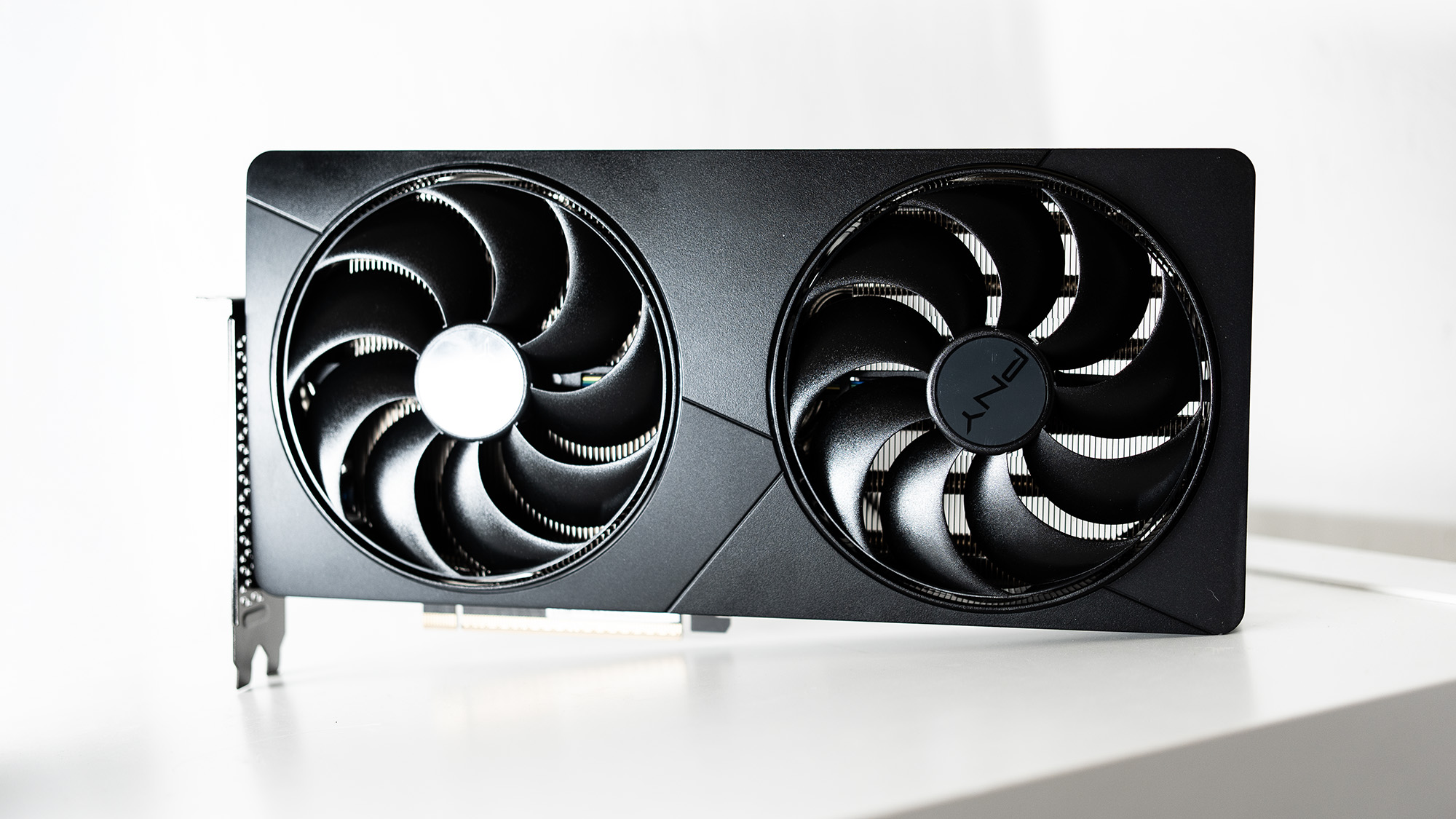
PNY’s "OC Slim" designation points to two crucial differentiators. Firstly, it arrives factory-overclocked, with a boost clock of 2730MHz—a slight edge over Nvidia’s own Founder’s Edition (FE) model. Secondly, its slim, two-slot design (300 x 150 x 40mm) makes it a more versatile option for a wider range of PC cases, particularly smaller form factor (SFF) builds, and external GPU (eGPU) enclosures, which traditionally struggle with bulkier, multi-slot cards. This blend of raw power and intelligent design positions the PNY GeForce RTX 5080 OC Slim as a compelling choice for those seeking top-tier performance without sacrificing compatibility.
Chronology: The Ascent of Dedicated Graphics and the RTX 5080’s Place
The journey of graphics processing units (GPUs) has been one of continuous innovation, driven by an insatiable demand for visual fidelity and computational speed. From simple 2D accelerators in the early PC era to the complex parallel processing behemoths of today, GPUs have evolved from mere display adapters into indispensable co-processors for a vast array of applications.
For decades, basic computing tasks relied on integrated graphics solutions, often embedded directly into the CPU. These were, and largely still are, adequate for web browsing, office applications, and casual media consumption. However, the advent of increasingly complex video games, high-resolution multimedia content, and sophisticated scientific simulations quickly exposed the limitations of integrated graphics. Tasks involving "throwing pixels around a screen" – be it rendering intricate 3D scenes, applying multiple layers of effects in Photoshop, or editing 4K video timelines – would inevitably lead to frustrating bottlenecks, stuttering performance, and extended processing times.
This growing demand fueled the rise of dedicated graphics processors. Companies like Nvidia and AMD have been at the forefront, developing specialized hardware optimized for parallel computation. Nvidia’s GeForce RTX series, in particular, marked a pivotal moment with the introduction of dedicated RT (Ray Tracing) and Tensor cores, alongside the traditional CUDA cores. Ray tracing revolutionized lighting and shadows in real-time, offering unprecedented realism, while Tensor cores unlocked powerful AI acceleration, leading to innovations like DLSS (Deep Learning Super Sampling) for improved performance and image quality.
The RTX 50-series, built upon the new Blackwell architecture, represents the latest iteration in this relentless pursuit of power. The PNY GeForce RTX 5080 OC Slim steps into this lineage as a high-end offering, sitting just below the flagship RTX 5090. Its release signifies a continued push towards not only enhancing gaming experiences but also empowering creative professionals and researchers with tools that can handle ever-more demanding computational loads. The 5080, with its substantial memory and core count, is designed to clear out the bottlenecks that plague less powerful solutions, offering a seamless and accelerated workflow for the most intensive digital tasks. Its arrival marks another milestone in the ongoing evolution of how we interact with and create digital content, making once-unimaginable tasks achievable on a desktop PC.
Supporting Data: A Deep Dive into Specifications and Performance Metrics
Understanding the PNY GeForce RTX 5080 OC Slim requires dissecting its technical specifications and evaluating its performance through rigorous benchmarks. This data not only quantifies its capabilities but also illustrates its practical impact on real-world applications.
Key Specifications Explained:
- Architecture: Blackwell
- The Blackwell architecture is Nvidia’s latest generation, succeeding Ada Lovelace. It introduces significant advancements in core design, memory efficiency, and AI processing capabilities. This forms the fundamental backbone of the 5080’s raw power and efficiency.
- CUDA Cores: 10752
- CUDA cores are Nvidia’s proprietary parallel processing units, crucial for general-purpose GPU computing. A high core count like 10752 directly translates to superior performance in tasks that benefit from massive parallelization, such as 3D rendering, video encoding/decoding, and scientific simulations.
- Tensor Cores: 5th Generation, 1801 AI TOPS
- Tensor cores are specialized processing units designed to accelerate matrix operations, which are fundamental to artificial intelligence and machine learning workloads. The 5th generation offers enhanced performance and efficiency, and 1801 AI Tera Operations Per Second (TOPS) signify an incredible capacity for AI inference and training, making the card ideal for local AI model development and execution.
- Ray Tracing Cores: 4th Generation, 171 TFLOPS
- These dedicated cores handle the computationally intensive calculations required for real-time ray tracing, enabling hyper-realistic lighting, reflections, and shadows in games and professional visualization applications. The 4th generation brings further performance improvements, and 171 TFLOPS (Tera Floating Point Operations Per Second) underscore its advanced ray tracing capabilities.
- Base Clock: 2295MHz / Boost Clock: 2730MHz
- The base clock is the minimum guaranteed operating frequency, while the boost clock represents the typical maximum frequency the GPU can reach under optimal conditions. The PNY’s factory-overclocked boost clock of 2730MHz (compared to the FE’s 2620MHz) indicates PNY has pushed the card slightly beyond Nvidia’s reference design for marginal performance gains.
- Memory: 16GB GDDR7
- GDDR7 is the latest generation of graphics memory, offering significantly higher bandwidth and efficiency than previous GDDR6/GDDR6X. 16GB is a substantial amount, crucial for handling large textures, complex 3D models, high-resolution video frames, and vast AI datasets without running out of VRAM.
- Memory Bus: 256-bit / Memory Bandwidth: Up to 960 GB/s
- The memory bus width dictates how much data can be transferred simultaneously, and bandwidth measures the rate of data transfer. A 256-bit bus combined with GDDR7 yields an impressive 960 GB/s bandwidth, ensuring rapid access to the 16GB VRAM, which is vital for maintaining high frame rates and quick processing in demanding applications.
- Max Resolution: 4K at 480Hz or 8K at 165Hz with DSC
- This indicates the card’s ability to drive ultra-high-resolution, high-refresh-rate displays. Display Stream Compression (DSC) allows for visually lossless compression to achieve these extreme resolutions and refresh rates over a single cable. This is critical for professionals working with multiple high-resolution monitors or for enthusiasts seeking the ultimate visual experience.
- Ports: 3x DisplayPort 2.1b, 1x HDMI 2.1b
- A robust set of modern display outputs ensures compatibility with the latest monitors and TVs, supporting the maximum resolutions and refresh rates mentioned above. Full-size ports mean no additional dongles are required, simplifying setup.
- PCIe Version: 5.0 x16
- PCI Express 5.0 provides double the bandwidth of PCIe 4.0, ensuring the GPU can communicate with the rest of the system at maximum speed, preventing data transfer bottlenecks, especially crucial for large file transfers or high-speed gaming.
- Dimensions: 300 x 150 x 40mm
- This "slim" two-slot design is a key selling point, enhancing compatibility with smaller PC cases and external GPU enclosures, a practical consideration for many users.
Performance Benchmarks and Analysis:
To quantify the PNY GeForce RTX 5080 OC Slim’s capabilities, it was directly compared against Nvidia’s Founder’s Edition (FE) card, using identical test systems and drivers.
- Geekbench 6 GPU Benchmark:
- PNY: 285,965
- Nvidia FE: 285,963
- The difference of a mere 2 points (0.000699389%) is statistically insignificant and falls well within the margin of error for such tests. This indicates that for general GPU compute tasks, the PNY and FE models perform virtually identically.
- Cinebench 2026 Rendering Test:
- PNY: 114,112
- Nvidia FE: 112,971
- Here, the PNY card showed a slightly larger lead of approximately 1.00492%. While still a small margin, this suggests that the factory overclock might provide a minor, but perceptible, advantage in highly parallel rendering workloads over extended periods.
- 3DMark’s Wild Life Extreme:
- Both cards "blowing past 400fps" in this demanding gaming benchmark underscores their immense power for modern gaming. The minor differences observed in other tests cease to matter when performance is already far exceeding typical display refresh rates.
- Topaz Video AI Benchmark:
- The PNY 5080 scored significantly better than the equivalent card in the Acer Predator Orion 7000 gaming PC by over 200 points (almost 11%) in the combined cycle.
- This benchmark specifically tests the enhancement and slow-motion creation from 1080p video, tasks heavily reliant on AI acceleration (Tensor cores). The superior performance is attributed to the 5080’s advanced Tensor cores, potentially faster clock speeds, and the more modern AMD CPU in the test system, along with ongoing driver software improvements since the Acer PC review (late 2025). This highlights the card’s exceptional capabilities for AI-driven video processing.
Conclusion on Performance:
The benchmarks unequivocally demonstrate the RTX 5080 chipset’s formidable processing power. While PNY’s factory overclock provides a fractional theoretical advantage, in practical terms, the performance difference between the PNY OC Slim and Nvidia’s FE is negligible. The overwhelming takeaway is that any RTX 5080, regardless of the specific board partner, will deliver a truly high-end experience, obliterating bottlenecks in creative, AI, and gaming applications. The decision between different 5080 variants will therefore hinge more on factors like cooling design, physical dimensions, and price, rather than significant performance disparities.
Official Responses: PNY’s Strategic Positioning and Market Context
While there are no direct "official responses" from PNY or Nvidia quoted in the provided text, we can infer their strategic positioning and intent based on the product’s design, specifications, and market pricing.
PNY’s Design Philosophy: Form Factor for Functionality
PNY’s decision to brand this card as "OC Slim" is a clear statement of intent. The "Slim" aspect, emphasizing a two-slot design (300 x 150 x 40mm), directly addresses a growing segment of the PC building market: Small Form Factor (SFF) enthusiasts and users of external GPU (eGPU) docks. Many high-end GPUs are notoriously bulky, often occupying three or even four expansion slots, making them incompatible with compact cases like the Fractal Terra, or limiting options for eGPU enclosures. By maintaining a two-slot profile, PNY broadens the 5080’s accessibility without compromising its core performance. This can be seen as PNY’s "response" to market demand for powerful components that don’t necessitate a massive, traditional tower PC.
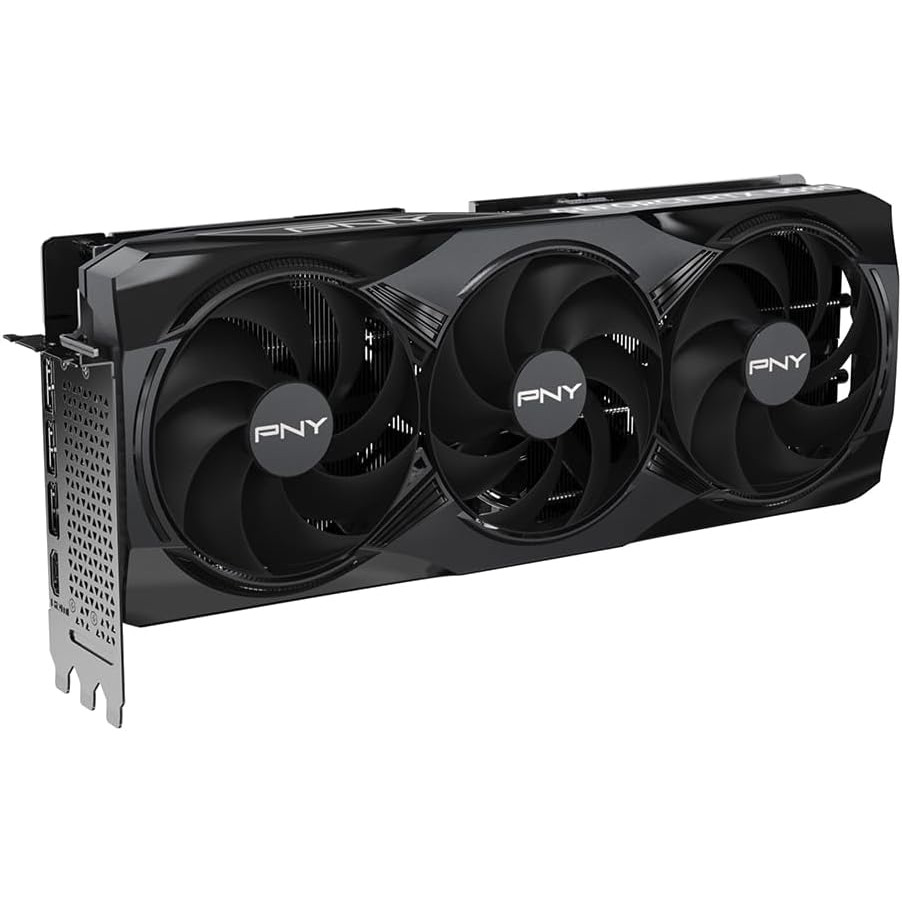
The twin-fan cooling system, while functional and effective, also reflects this focus on practicality over flamboyant aesthetics. Unlike some premium cards that feature elaborate RGB lighting or highly stylized shrouds, the PNY 5080 OC Slim is described as a "long black rectangle" – a design meant to be efficient and discreet, primarily seen through a PC’s side window. This suggests PNY is targeting users who prioritize performance and compatibility over visual flair, aligning with a professional user base.
Nvidia’s Broader 50-Series Strategy:
Nvidia, as the chipset manufacturer, aims to segment its product stack to cater to different price points and performance tiers. The RTX 5080 is positioned as the high-end option for users who demand exceptional performance but perhaps don’t require the absolute maximum offered by the flagship RTX 5090 (which commands an even higher premium). The consistent core specifications across different AIB (Add-in-Board) partners like PNY (same CUDA cores, memory, etc.) indicate Nvidia’s control over the fundamental performance baseline. The slight factory overclock by PNY is a common practice among AIBs to differentiate their products, offering a minor value add within Nvidia’s performance envelope.
Addressing Power Delivery and Upgradability:
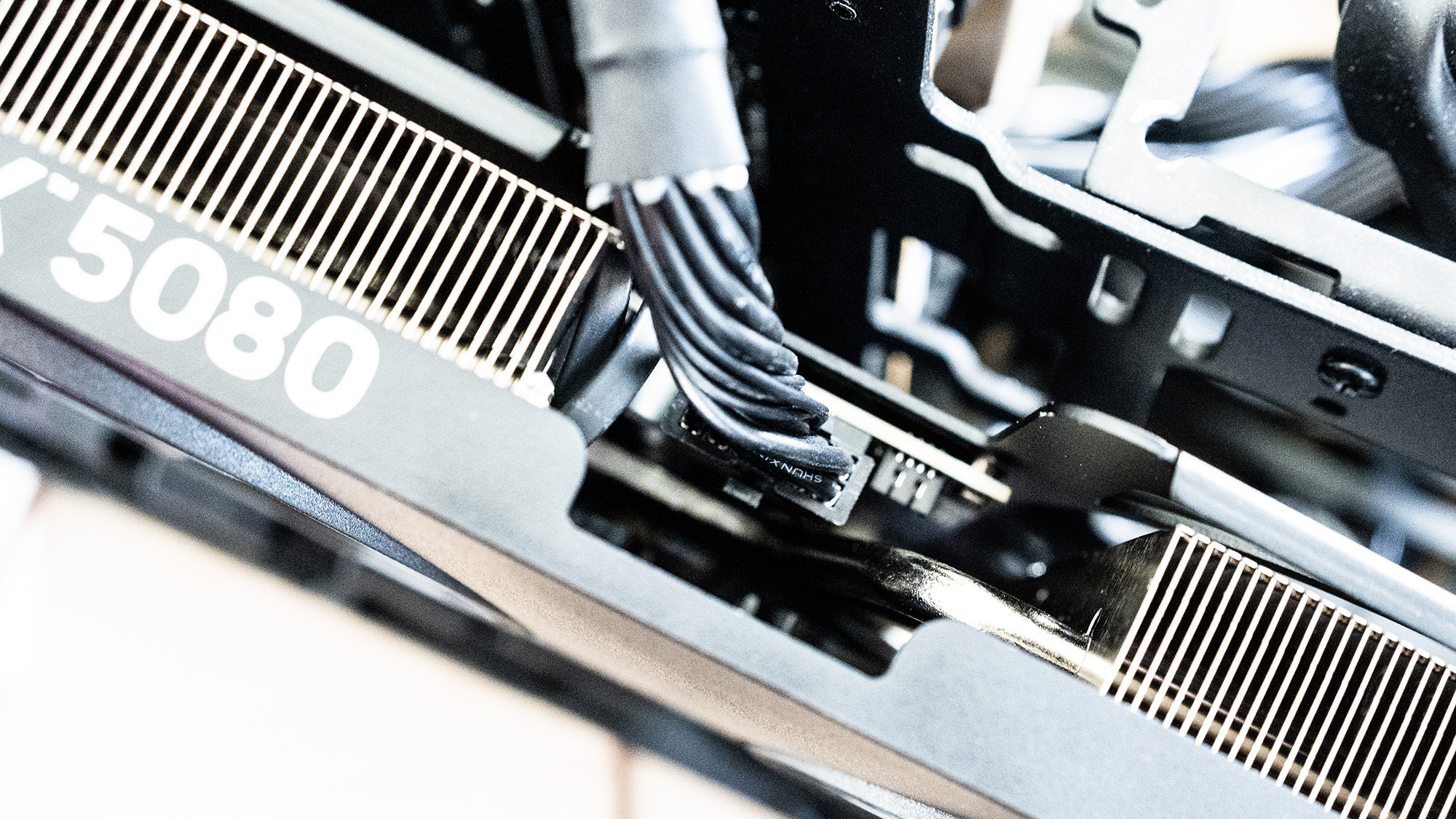
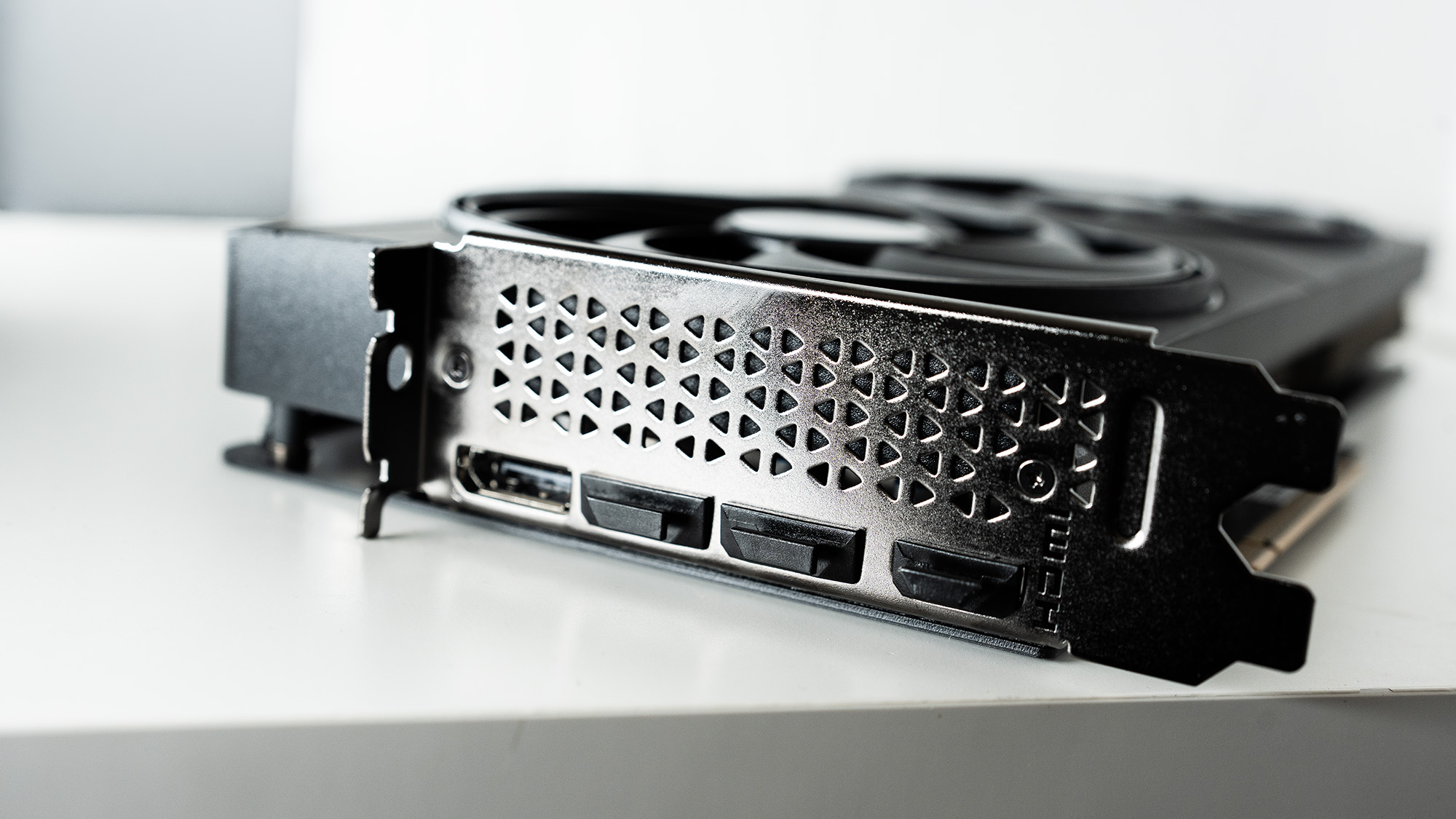
The inclusion of a 16-pin 12VHPWR connector, along with an adapter for three 8-pin PSU connections, is Nvidia’s standard for its top-tier cards. PNY’s implementation, while slightly fiddly to access, acknowledges the need to support upgraders who might not have a native 12VHPWR PSU. This demonstrates a "response" to the installed base of users with older, albeit still powerful, 850W power supplies, facilitating a smoother transition to the new generation.
Market Pricing and Value Perception:
The "soaring prices" of GPUs and components like RAM are a broader market trend, influenced by supply chain dynamics, manufacturing costs, and global demand. PNY’s pricing of the 5080 OC Slim ($1,377.99 / £1,279.99) positions it above Nvidia’s FE RRP ($999 / £1,039) but significantly below ultra-premium custom designs like the ASUS ROG Astral 5080 ($1,843.99 / £1,679.99). This suggests PNY is attempting to offer a compelling value proposition by delivering a slightly overclocked, slim-profile card at a more accessible price point than the absolute top-tier custom cards, while still acknowledging the premium nature of the 5080 chipset. This pricing strategy is PNY’s "response" to balancing high performance with market competitiveness and perceived value.
In essence, PNY’s official stance, as reflected in the product, is one of practical innovation: delivering cutting-edge performance in a form factor that enhances compatibility and offers a competitive edge in a demanding market, all while adhering to Nvidia’s foundational architectural advancements.
Implications: Reshaping Creative Workflows and AI Horizons
The introduction of graphics cards like the PNY GeForce RTX 5080 OC Slim carries profound implications for various industries and user groups, fundamentally reshaping what’s possible on a desktop computer. Its power extends far beyond gaming, impacting the very core of digital creation and technological advancement.
1. Revolutionizing Creative Workflows:
- Video Editing: For professionals working with high-resolution footage (4K, 8K, or even higher), the RTX 5080 is a game-changer. Its massive CUDA core count and abundant GDDR7 memory translate into significantly faster render times, smoother real-time playback of complex timelines with multiple effects and color grades, and quicker encoding of final exports. Tasks that once required render farms or dedicated workstations can now be handled more efficiently on a single, powerful desktop. The ability to work with large, uncompressed files becomes less of a bottleneck, fostering a more fluid and iterative creative process.
- 3D Rendering and Animation: Artists and animators rely heavily on GPU power for rendering photorealistic scenes. The 5080’s Blackwell architecture, with its enhanced RT cores, accelerates ray tracing calculations, enabling quicker previews and final renders of intricate models, complex lighting, and volumetric effects. This drastically reduces the waiting time for artists, allowing for more experimentation and higher-quality output within tighter deadlines. Game developers also benefit from accelerated asset creation and real-time environment testing.
- Graphic Design and Photography: While not always as GPU-intensive as video or 3D, applications like Adobe Photoshop and Illustrator increasingly leverage GPU acceleration for features like AI-powered filters, complex brush strokes, and large document manipulation. The 5080 ensures these applications run with maximum responsiveness, even with multi-layered, high-resolution files.
2. Accelerating the AI Frontier:
- Local AI Model Development and Inference: The 5th-generation Tensor cores and 1801 AI TOPS are perhaps the most significant feature for the burgeoning field of artificial intelligence. This card empowers researchers, developers, and even enthusiasts to run and train complex AI models locally on their desktop PCs. This reduces reliance on expensive cloud computing resources, offers greater data privacy, and allows for faster iteration cycles during model development. From natural language processing models to image generation (e.g., Stable Diffusion, Midjourney) and advanced data analysis, the 5080 provides a robust platform for AI exploration and deployment.
- AI-Enhanced Applications: Beyond dedicated AI development, many mainstream software applications are integrating AI features. Video upscaling, image noise reduction, intelligent object selection, and content generation tools all benefit from the GPU’s AI acceleration. The 5080 ensures these features operate at peak efficiency, enhancing productivity across the creative spectrum.
3. Enabling Next-Generation Gaming and Entertainment:
- While the focus here is on professional applications, the RTX 5080 remains an elite gaming card. It enables unparalleled performance at 4K resolutions and high refresh rates, with full ray tracing enabled, pushing the boundaries of visual immersion. Support for 4K at 480Hz or 8K at 165Hz with DSC implies a future-proof investment for the most demanding displays.
4. Form Factor and Accessibility:
- The "Slim" design (two-slot) has crucial implications for system integrators and DIY builders. It allows the 5080 to be incorporated into smaller, more discreet PC cases that were previously limited to less powerful GPUs. This opens up possibilities for compact yet powerful workstations or gaming rigs that fit into tighter spaces without sacrificing performance.
- For laptop and mini-PC users, the slim profile is particularly beneficial for external GPU (eGPU) docks. An eGPU solution allows users to leverage the power of a desktop-class GPU with their portable devices, transforming a modest laptop into a formidable creative or AI workstation when docked. The PNY 5080 OC Slim expands the range of compatible eGPU enclosures, making high-end graphics more accessible to a mobile workforce.
5. Market Dynamics and Value Perception:
- The high price point (over $1,300 USD) reflects the premium nature of this technology and the current market trends for high-end GPUs. This positions the 5080 as a significant investment, likely appealing to professionals whose income directly benefits from faster workflows, or serious enthusiasts.
- Its existence also reinforces the idea that performance differences between board partners (like PNY vs. Nvidia FE) within the same GPU chipset are often minimal. This empowers consumers to make purchasing decisions based on factors like price, specific cooling designs, or form factor rather than chasing minuscule benchmark leads.
In conclusion, the PNY GeForce RTX 5080 OC Slim is more than just a component; it’s an enabler. It allows professionals to push the boundaries of their creative and analytical work, reduces the barriers to entry for advanced AI development, and offers a glimpse into the future of high-performance computing in increasingly compact form factors. Its implications resonate across industries, solidifying the GPU’s role as a cornerstone of modern digital innovation.
Conclusion: A Powerful Investment for the Demanding User
The PNY GeForce RTX 5080 OC Slim stands as a testament to the relentless march of technological progress in graphics processing. While its primary appeal might traditionally lie with hardcore gamers, its true value is unlocked when harnessed by creative professionals and AI enthusiasts who demand uncompromising performance for their most intensive tasks. From rendering complex 3D scenes and editing multi-layered 8K video to accelerating machine learning workflows and running local AI models, this card provides a colossal boost over integrated solutions and even many older dedicated GPUs.
Key Strengths:
- Exceptional Performance: Powered by Nvidia’s Blackwell architecture, it delivers top-tier performance across rendering, video editing, and AI applications, with 10752 CUDA cores and dedicated Tensor and RT cores.
- Generous Memory: 16GB of GDDR7 memory with high bandwidth ensures smooth handling of large datasets and complex projects.
- Slim Design: The two-slot form factor is a significant advantage, enhancing compatibility with a broader range of PC cases, including SFF builds, and external GPU docks, offering flexibility often lacking in high-end cards.
- Factory Overclock: While yielding only marginal gains, the slight factory overclock provides a minor performance edge over the reference design.
- Future-Proof Connectivity: PCIe 5.0 and multiple DisplayPort 2.1b/HDMI 2.1b outputs ensure compatibility with the latest high-resolution, high-refresh-rate displays.
Considerations:
- Premium Price: As a high-end card, it represents a substantial investment, reflecting current market trends for powerful electronics. While competitive against ultra-premium custom cards, it’s still a significant outlay.
- Minimal Overclocking Benefit: The "OC" aspect provides only negligible performance increases over Nvidia’s FE model, meaning buyers shouldn’t choose it solely for this reason.
- Power Requirements: An 850W PSU is still necessary, and the 12VHPWR connector can be fiddly, though an adapter is provided.
Who is it for?
- 3D Artists & Animators: For faster rendering, real-time previews, and complex simulations.
- Video Editors: To handle high-resolution footage (4K/8K), demanding effects, and quick exports.
- AI/ML Developers & Enthusiasts: For training and running local AI models, leveraging the powerful Tensor cores.
- Game Developers: For accelerated asset creation, game engine development, and high-fidelity testing.
- High-End Gamers: Who demand the absolute best performance at 4K/8K resolutions with all graphical settings maxed out.
- SFF PC Builders & eGPU Users: Those who need maximum power in a compact or external form factor.
Who is it not for?
- Budget-Conscious Users: If your budget is tight, there are more affordable mid-range options that still offer significant improvements over integrated graphics.
- Casual Users: For basic computing, web browsing, or light gaming, this card is overkill.
- Users with Older, Low-Wattage PSUs: The 850W requirement means an upgrade might be necessary.
Also Consider:
- PNY GeForce RTX 5060 OC 8GB: A more budget-friendly option for those seeking a significant upgrade over integrated graphics, particularly suitable for compact eGPU setups. It provides solid creative potential at a lower cost.
- Nvidia GeForce RTX 5090 FE: If budget is no object and you need the absolute pinnacle of GPU performance for the most demanding professional tasks, the 5090 FE is the undisputed king.
- Intel Arc Pro B50: For users prioritizing a low-profile, gentle power draw solution for smaller workstation PCs or those primarily focused on AI models with specific VRAM needs, Intel’s offering provides a compelling alternative to integrated graphics.
Ultimately, the PNY GeForce RTX 5080 OC Slim solidifies the RTX 5080’s position as a premium, versatile, and immensely powerful graphics card. Its thoughtful "Slim" design makes it a particularly attractive option for users building compact systems or leveraging external GPU docks, offering top-tier performance without the usual bulk. While a significant investment, for those whose work or passion demands cutting-edge graphical and AI processing, the PNY GeForce RTX 5080 OC Slim represents a highly valuable and impactful upgrade.
 Evan Lee Salim
  Nana
Nana  Ammar Sabilarrohman