
 By Neng Nana
In the modern digital landscape, the financial services sector—comprising banks, credit unions, insurance firms, wealth management providers, and fintech disruptors—faces a unique paradox. While the industry is rooted in tradition, stability, and stringent regulatory oversight, its customer base is rapidly migrating to social media as their primary hub for financial education, peer recommendations, and even account management.

Successfully integrating social media into a financial services business model is no longer an optional marketing flourish; it is a critical infrastructure requirement. However, this transition requires a delicate balancing act: maintaining the human connection that builds trust while navigating the complex web of compliance mandates that govern the industry.

The Modern Financial Customer Journey
The role of social media in finance has shifted from a simple broadcasting tool to a comprehensive, cross-functional engine that powers marketing, sales, and customer experience. Today, a robust social presence serves as a "digital storefront" where trust is established long before a formal contract is signed.
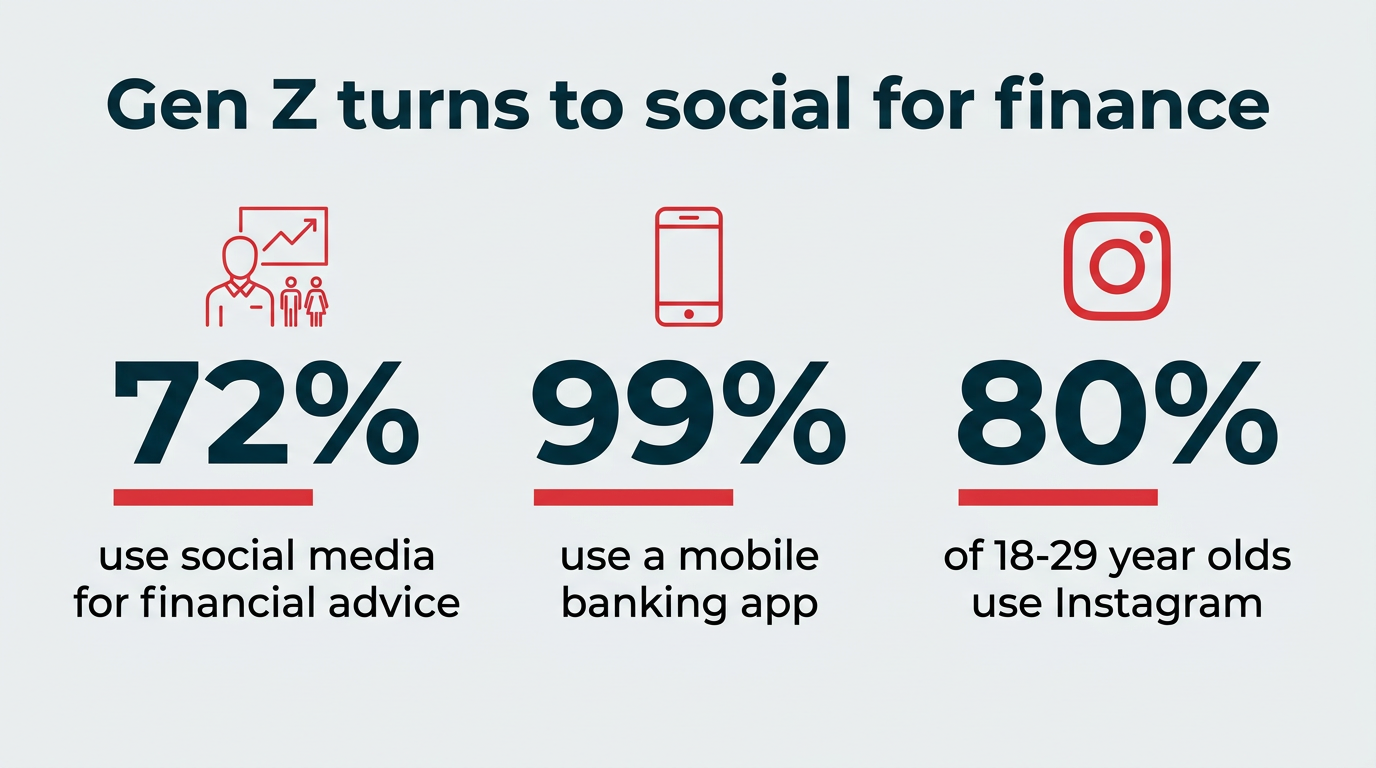
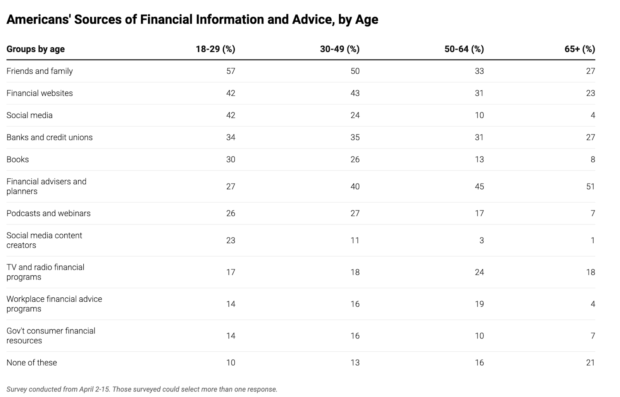
Data indicates that the demographic shift is the primary driver of this evolution. Younger generations, specifically Gen Z and Millennials, treat social media as their primary search engine for financial literacy. Recent studies show that 72% of Gen Z consumers rely on social media for financial advice, and an overwhelming 99% utilize mobile banking apps. For financial institutions, the failure to show up on these platforms is effectively a failure to capture the next generation of clients.
Chronology of Adoption: From Caution to Integration
The history of financial institutions on social media has been marked by three distinct phases:
- The Defensive Phase (2010–2015): Early adoption was defined by extreme caution. Firms used social media primarily as a news feed for corporate press releases, fearing that open comment sections would invite unmanageable litigation or regulatory backlash.
- The Engagement Phase (2016–2021): Recognizing the shift in consumer behavior, brands began to experiment with humanizing their presence. This era saw the rise of educational content, the emergence of "finfluencers," and the first real attempts at digital customer service.
- The Strategic Integration Phase (2022–Present): We are currently in a period where social media is fully integrated into the tech stack. Through sophisticated tools and AI-driven platforms like Hootsuite Social OS, institutions now manage compliance, publishing, and social listening in a unified environment, allowing for proactive, rather than reactive, communication.
Supporting Data: Why the Stakes are High
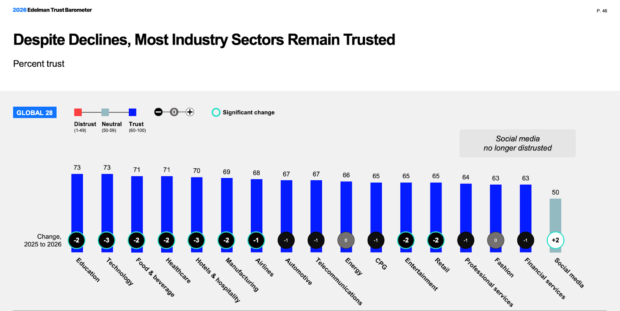
The financial stakes for getting social media right are substantial. According to the 2026 Edelman Trust Barometer, financial services remain one of the least trusted sectors globally, despite recent improvements. Social media provides the only scalable mechanism to bridge this trust gap through transparency and real-time interaction.

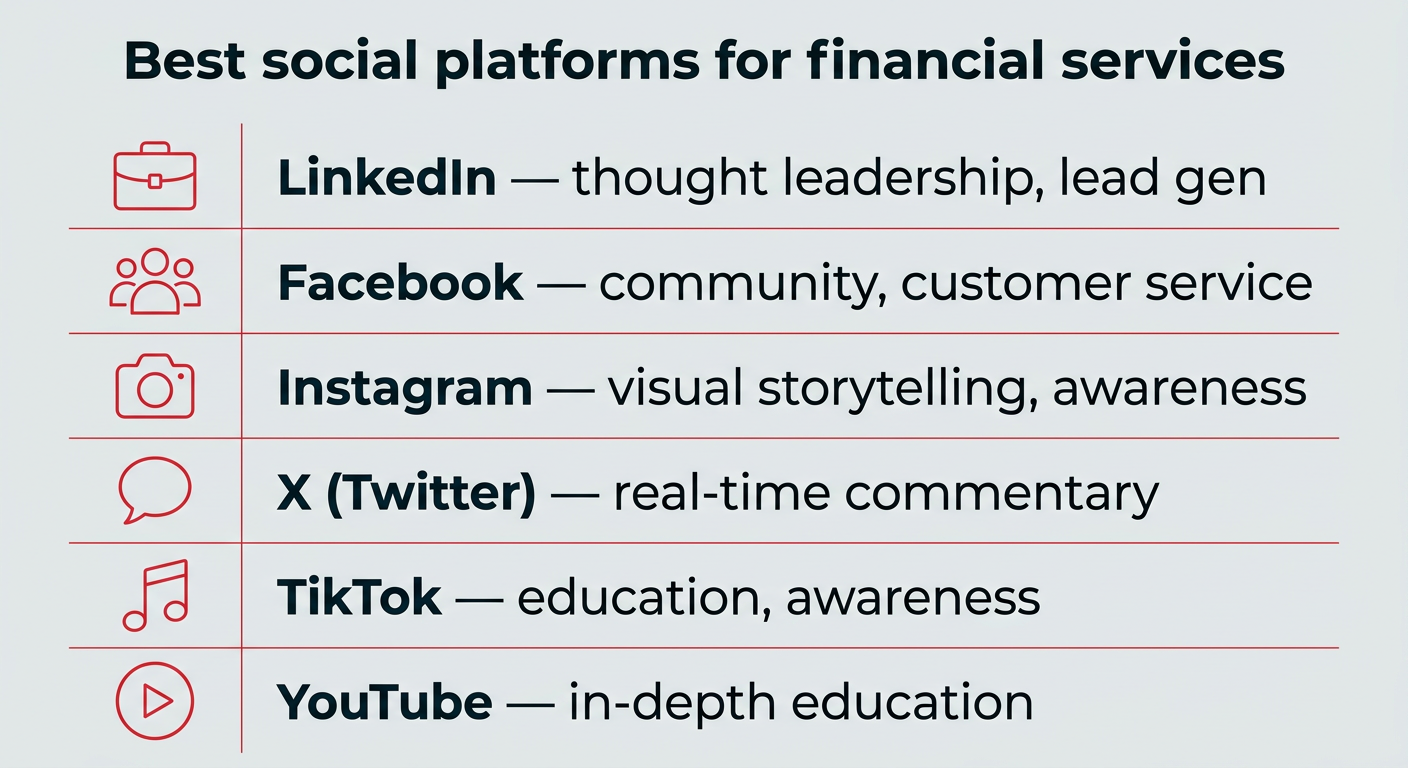
Furthermore, the "social selling" model is yielding tangible results. Professionals on LinkedIn are twice as likely to seek financial advice on the platform, and Instagram—boasting a 3.8% engagement rate for financial brands—has become the premier destination for visual storytelling and brand awareness.
| Platform | Best For | Primary Strength |
|---|---|---|
| Thought Leadership | Reaching business decision-makers | |
| Visual Storytelling | Highest engagement and growth | |
| TikTok | Education | Explaining complex topics in plain language |
| YouTube | In-depth Education | SEO value and content longevity |
Official Regulatory Landscapes and Compliance
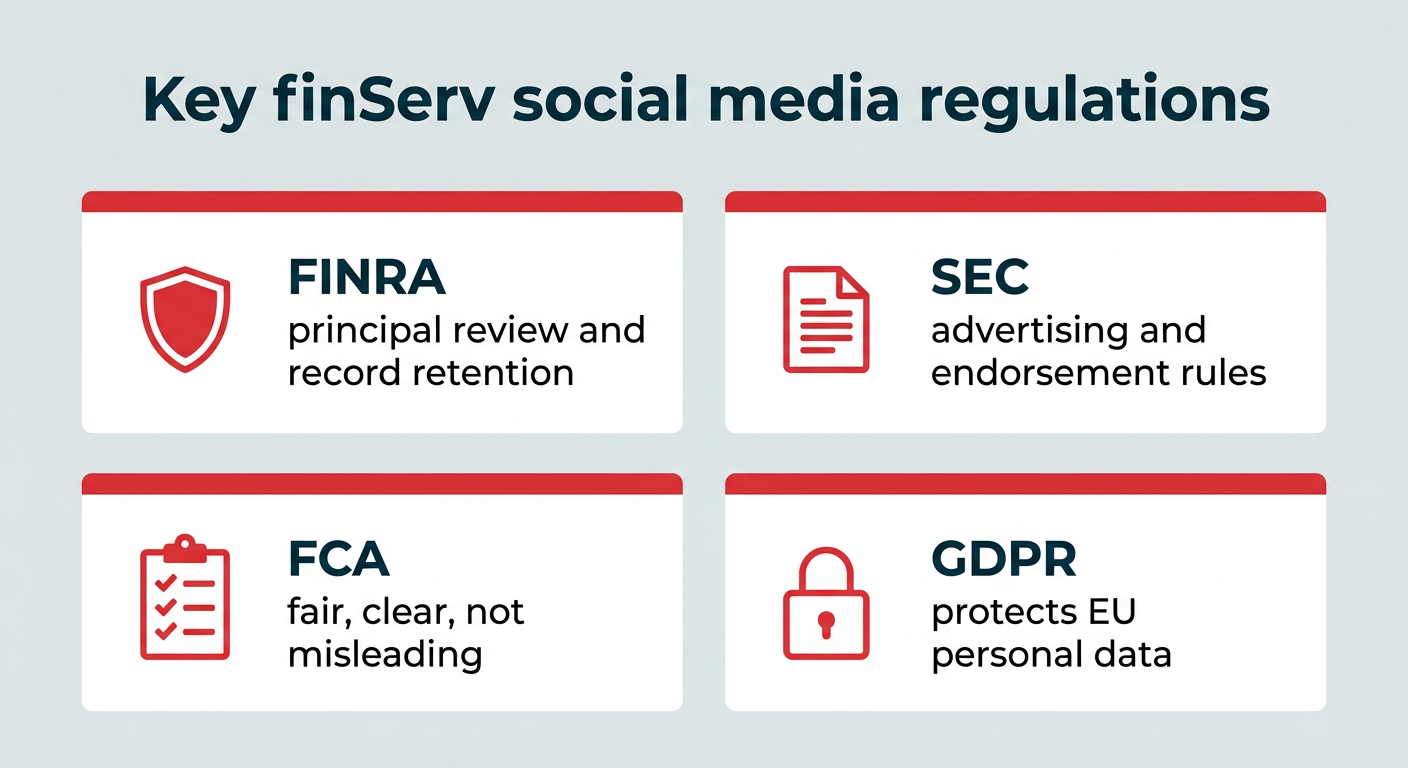
The defining characteristic of financial services social media is the weight of regulatory oversight. Bodies such as the FINRA, SEC, FCA, and GDPR impose strict requirements on communication. The most vital of these is the "registered principal" requirement, which mandates that a qualified supervisor must review and approve content before it is published for business purposes.

The Role of Governance
To operate safely, firms are increasingly moving away from manual, spreadsheet-based approval processes. Instead, they are adopting dedicated compliance layers—such as "Vigil"—that enforce approval chains, manage role-based access, and provide an immutable audit trail. Because regulators require that communications related to business be archived for at least three years, seamless integration with archiving solutions like Smarch or Brolly is now considered standard practice for any serious institution.
Implications for the Future: AI and Humanization
Looking toward the remainder of 2026, three major trends are set to define the industry’s trajectory:
1. The AI-Driven Intelligence Layer
Artificial Intelligence is transforming how firms manage risk and sentiment. AI orchestration layers allow teams to surface real-time insights, detect potential PR crises before they escalate, and draft content that remains within the guardrails of pre-approved brand messaging. This speed is a competitive advantage in a volatile market.
2. The Rise of Employee Advocacy
Institutional voices are often perceived as "cold." To counteract this, forward-thinking firms are investing in employee advocacy programs. By equipping individual advisors and executives with pre-approved, compliant content, firms can scale their reach while maintaining the personal, human connection that clients demand. Evidence suggests that 82% of consumers are more likely to trust a company when its senior leaders are active and authentic on social media.
3. The "Finfluencer" Collaboration
Partnering with independent content creators—or "finfluencers"—has moved from a fringe strategy to a mainstream tactic. By collaborating with creators who already possess the trust of younger audiences, institutions can translate complex financial products into accessible, native-platform content that bypasses the friction of traditional corporate advertising.
Conclusion: Building a Resilient Social Strategy
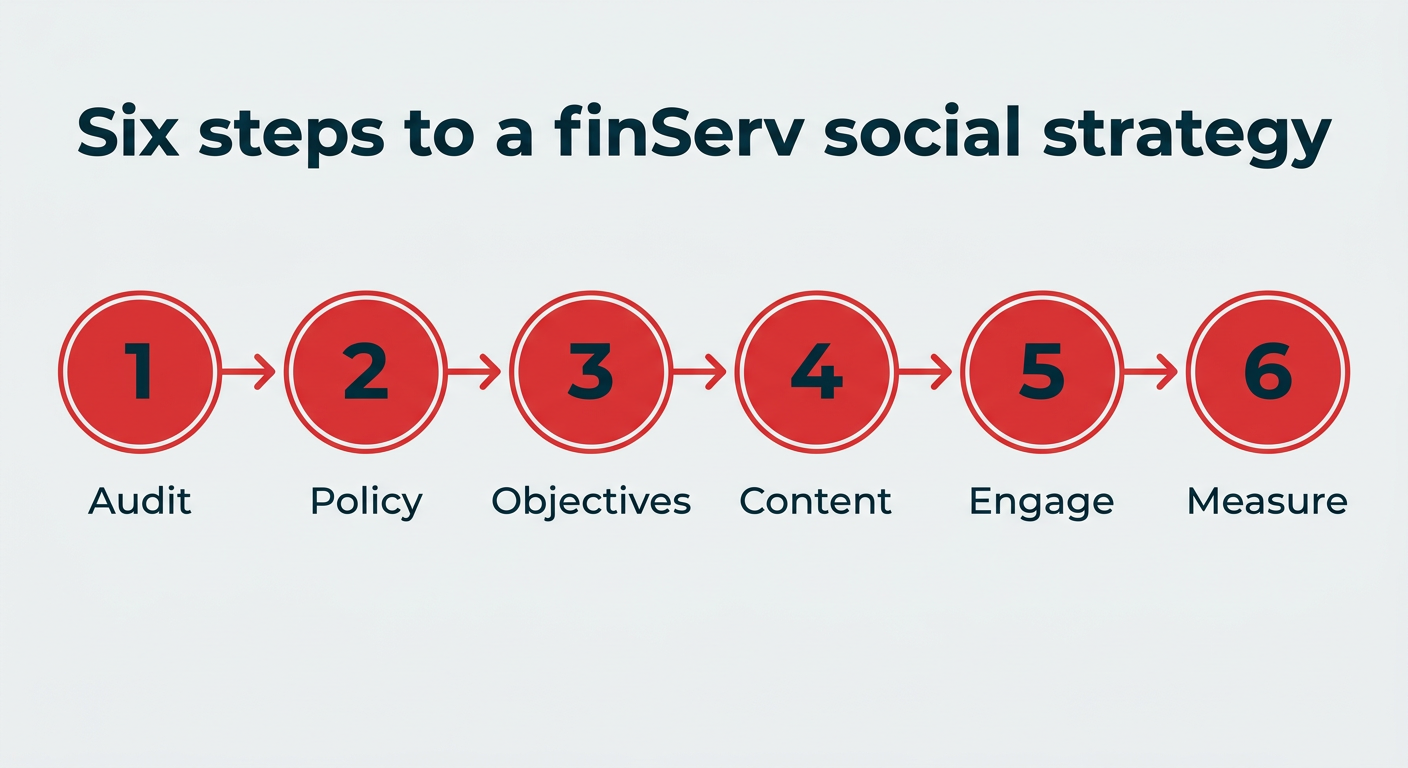
The path forward for financial services is not to retreat from the digital public square but to master it. An effective strategy must be built on a six-step foundation:

- Conducting a comprehensive audit of all existing and shadow social profiles.
- Implementing a rigorous social media policy that includes input from legal, compliance, and marketing teams.
- Establishing clear, business-linked objectives that move beyond vanity metrics.
- Creating compliant, platform-native content that balances education with engagement.
- Nurturing relationships through proactive customer service and social listening.
- Measuring and optimizing through unified analytics to prove ROI to leadership.
As the industry continues to evolve, the brands that succeed will be those that view compliance not as a barrier, but as the framework that allows them to build deeper, more transparent, and ultimately more profitable relationships with their clients. In the digital age, trust is the currency, and social media is the marketplace where that currency is earned.
 Reynand Wu
  Muslim
  Nila Kartika Wati