
 By Ali Ikhwan
In an era where digital identity is synonymous with professional and personal reputation, the concept of "verification" has shifted from an exclusive status symbol to a mainstream service. Meta, the parent company of Facebook, Instagram, and WhatsApp, has fundamentally transformed how users establish credibility online through its "Meta Verified" subscription program. As of 2026, this service has become a cornerstone of the company’s non-advertising revenue strategy, generating hundreds of millions of dollars while simultaneously changing the landscape for creators and businesses.
The Core Concept: What is Meta Verified?
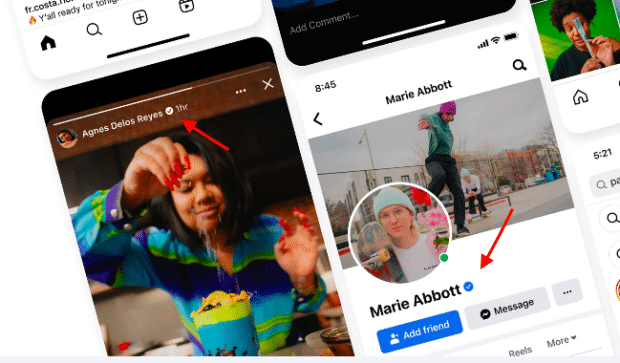
Meta Verified is a premium subscription service designed to provide users with a "blue checkmark" and a suite of administrative and security tools. While the blue checkmark was once a badge of "notability" reserved for celebrities and public figures, it is now an accessible asset for any user or business willing to pay the monthly subscription fee.

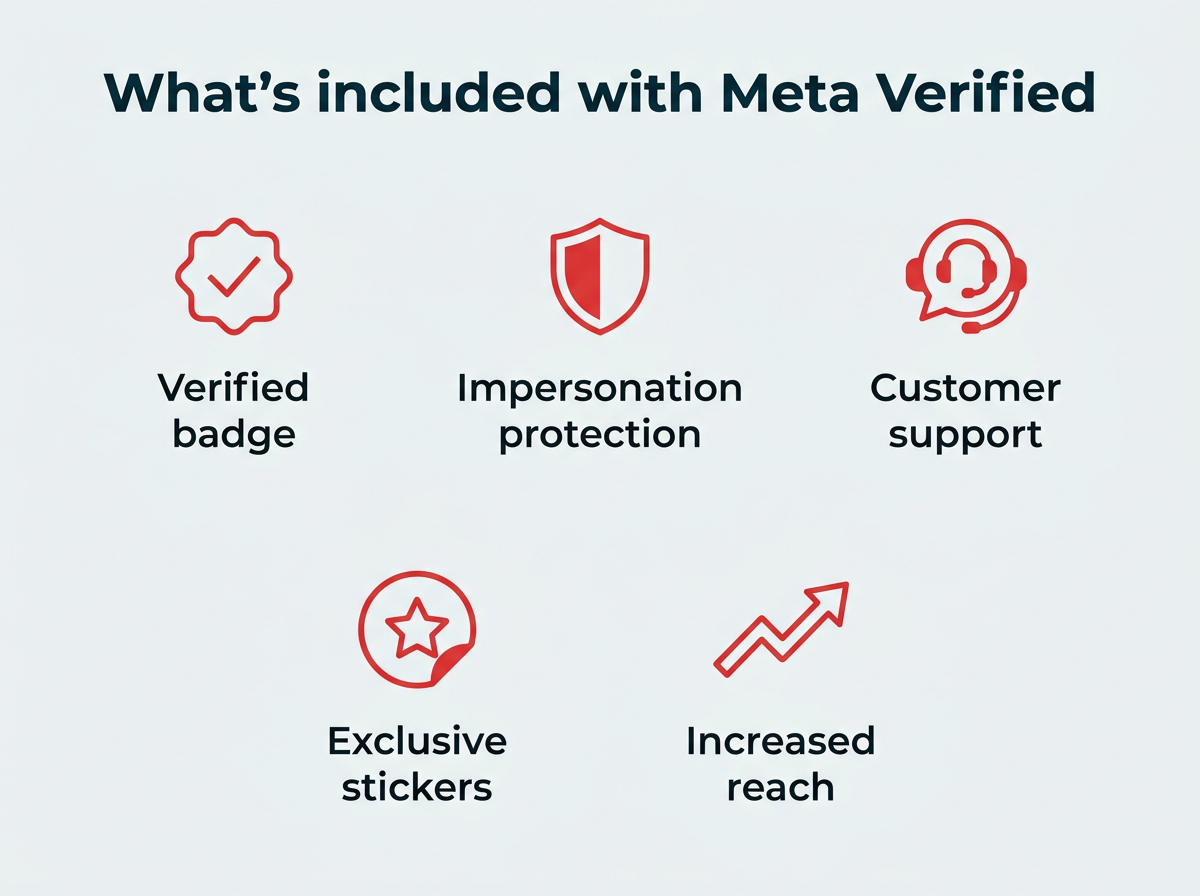
The bundle includes four primary pillars of value:
- Verified Identity: A badge that signals the account has been authenticated against government-issued identification.
- Proactive Security: Advanced monitoring systems that actively scan for and mitigate impersonation attempts.
- Direct Support: Priority access to human customer service representatives to resolve technical issues or account hacks.
- Enhanced Visibility: Algorithmic prioritization in comments, search, and recommendation engines.
A Chronological Perspective: From Elite Status to Universal Subscription
The journey to the current state of Meta Verified began with a dramatic pivot in Meta’s business model.

- Pre-2023: Verification was an elusive, invitation-only status. It required proof of "notability"—meaning an account had to be featured in multiple high-profile news outlets or represent a globally recognized brand.
- Early 2023: Meta officially launched the Meta Verified pilot program, initially testing it in Australia and New Zealand before rolling it out to the U.S. and beyond. This marked the end of the "notability" era for the average user, introducing the concept of paid authentication.
- 2024–2025: The program expanded significantly. Meta introduced business-tier subscriptions and eventually extended the verification ecosystem to WhatsApp, recognizing that business-to-customer communication requires a high degree of trust.
- 2026: Today, the program is a mature revenue stream. With Meta reporting $690 million in non-ad revenue in Q3 2025 alone, the subscription model has proven that users are willing to pay for peace of mind and platform reach.
Data-Driven Insights: Is the Investment Worthwhile?
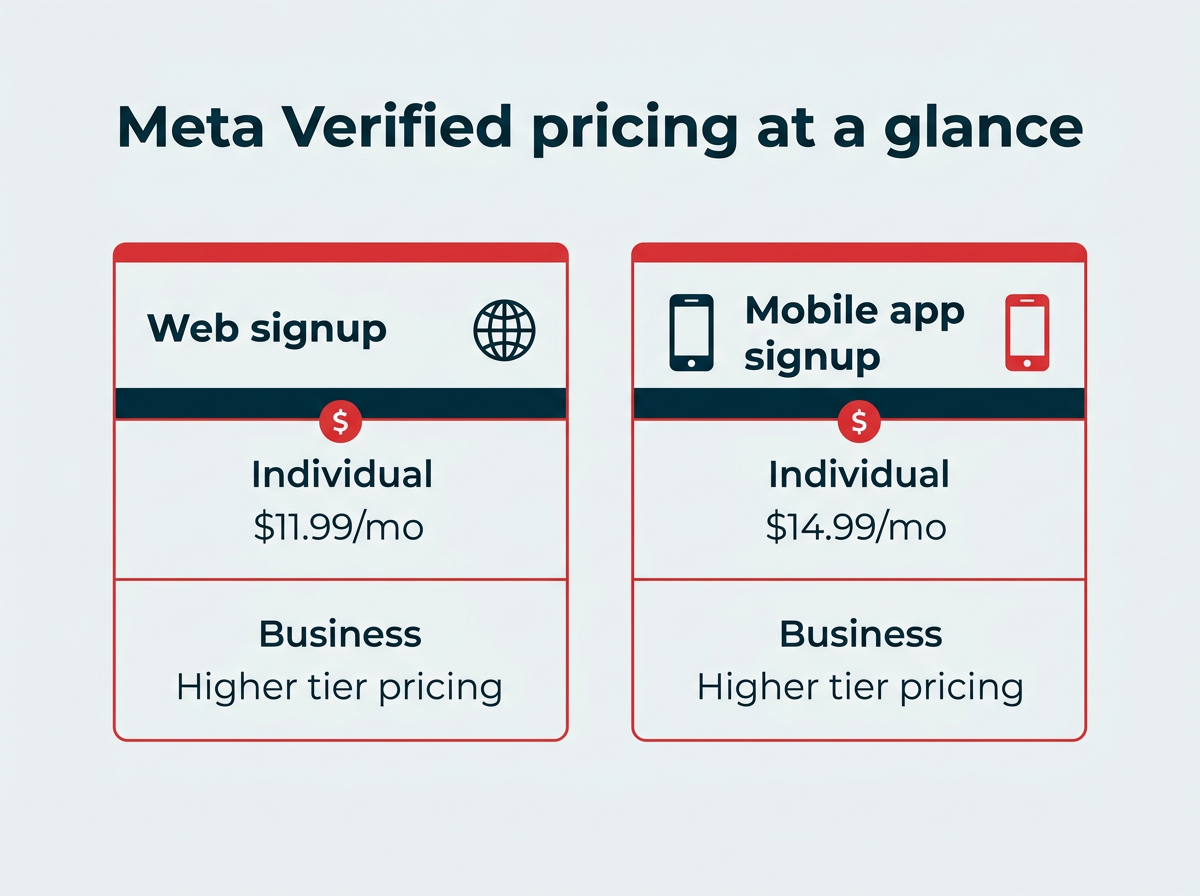
The decision to subscribe to Meta Verified requires a cost-benefit analysis based on the user’s specific goals. The pricing structure is segmented by platform and user type:
| Subscriber Type | Web Signup (Monthly) | Mobile App (iOS/Android) |
|---|---|---|
| Individual | $11.99 | $14.99 |
| Business | Tiered Pricing | Tiered Pricing |
Note: Mobile signups are more expensive due to the "app store tax" imposed by Apple and Google on in-app purchases.
The Economic Implications
The $11.99–$14.99 price point places Meta Verified among the most expensive social media subscriptions in the industry. For context, X (formerly Twitter) Premium starts at $8/month. However, Meta justifies this premium by including features that X does not, most notably direct access to human customer support. For small business owners who have historically struggled with the "black hole" of automated support systems, this feature alone often justifies the monthly cost.
Official Stance and Strategic Vision
Meta has maintained a consistent narrative regarding its shift toward subscription-based services. In official announcements, the company characterizes Meta Verified as a move to build a product that is "valuable to everyone, including creators, businesses, and our community at large."
By charging for verification, Meta has effectively solved two problems:
- Administrative Overhead: Instead of thousands of human moderators reviewing subjective "notability" claims, the verification process is now automated through ID verification, reducing the company’s operational burden.
- Revenue Diversification: By moving away from a reliance solely on digital advertising, Meta is hedging against market volatility in the ad-tech sector.
The Business and Creator Ecosystem
Meta Verified for Business
For businesses, the stakes are higher than for individuals. Impersonation is not just an annoyance; it is a direct threat to revenue and customer trust. The business tier provides not just a badge, but a layer of security that protects brand reputation. Furthermore, on WhatsApp, the verified badge is critical. As businesses increasingly use WhatsApp as a CRM and customer support channel, the verification badge assures the customer that they are engaging with the legitimate entity.
The "Reach" Factor
One of the most debated aspects of the subscription is the "increased reach and visibility." Meta has confirmed that subscribers may see a more noticeable impact on their content distribution. This has led to concerns regarding a "pay-to-play" environment. However, Meta clarifies that content must still adhere to community standards and recommendation guidelines to benefit from this boost. Smaller creators, in particular, report that this visibility boost can be a turning point in growing a new audience.
Comparing the Landscape: The Verification Wars
The social media landscape is now saturated with verification programs, each with a different value proposition:
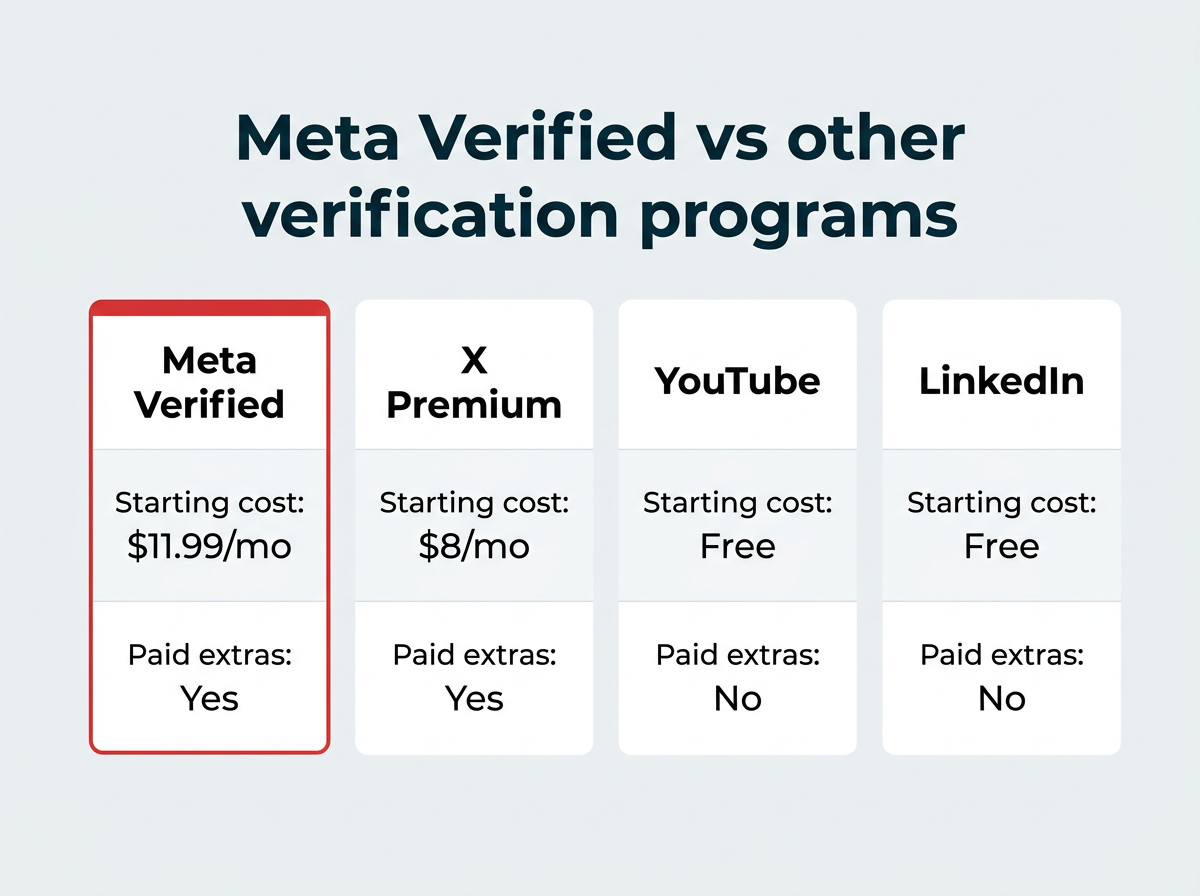
- Meta Verified: The "full-service" option. It provides the most comprehensive security and support features but carries the highest price tag.
- X Premium: Focuses on power-user features like longer posts and the ability to edit content. It is less concerned with identity authentication and more focused on platform engagement.
- YouTube/LinkedIn: These platforms largely maintain a free, meritocratic approach to verification, focusing on objective criteria (e.g., subscriber counts or employer verification) rather than a paid subscription.
Practical Implications: How to Get Started
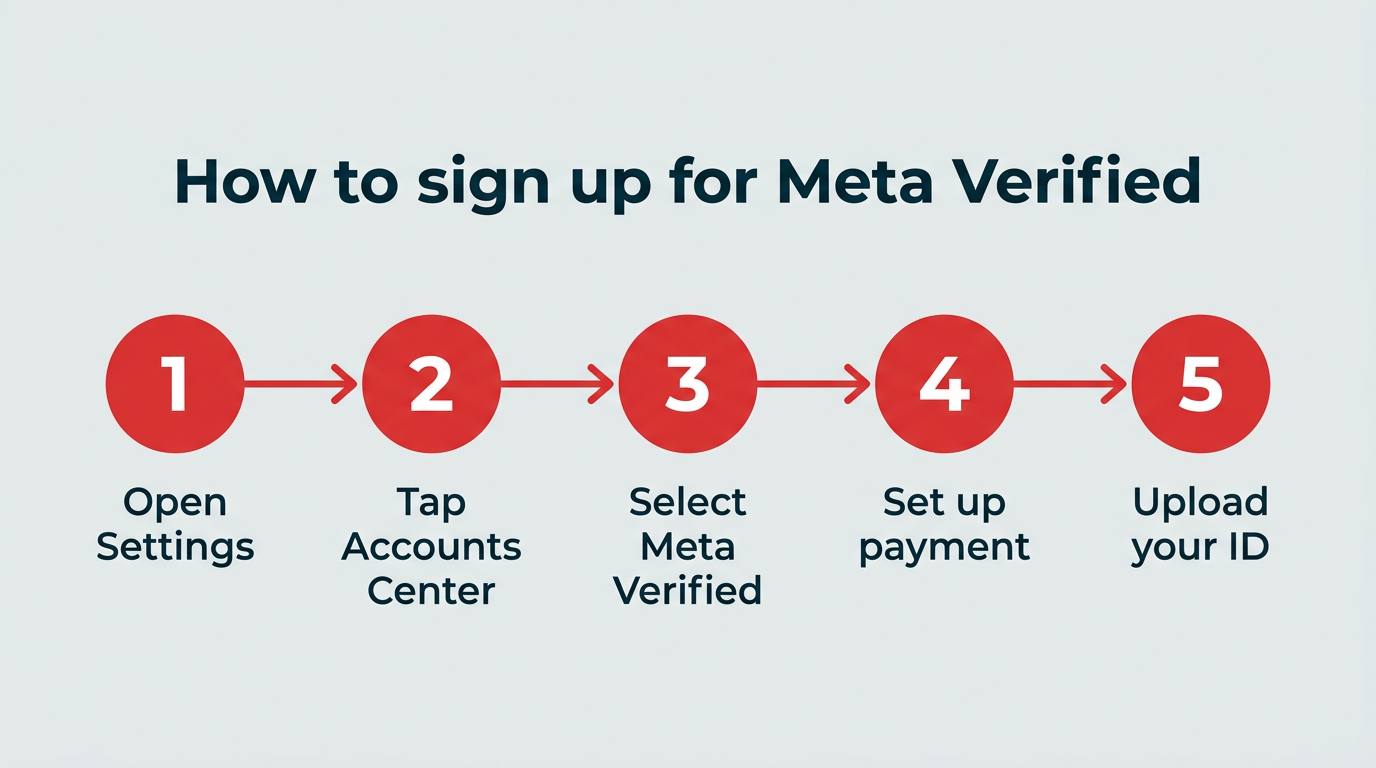
If you have decided that the benefits of Meta Verified—specifically the protection against impersonation and the access to live support—outweigh the costs, the application process is streamlined:
- Eligibility Check: You must be 18 or older and reside in a supported country. Your profile name must match your government-issued ID exactly.
- Application: Navigate to the "Accounts Center" in your Facebook or Instagram settings.
- Authentication: Upload a clear, government-issued photo ID.
- Payment: Complete the transaction via the web (to save on mobile fees) or the mobile app.
Important Considerations:
- Identity Syncing: Once verified, you cannot change your username or profile information without triggering a re-verification process.
- Separate Subscriptions: A subscription on Instagram does not cover your Facebook account. If you operate on both platforms, you must pay for two separate subscriptions.
- Risk of Removal: Violating Community Standards can lead to the revocation of your badge. In such cases, your subscription fee is not typically refunded.
Conclusion: A New Standard of Digital Identity
The move toward paid verification is not merely a revenue play; it is a fundamental shift in the social contract between users and platforms. By paying for the badge, users are essentially "hiring" Meta to provide a baseline of security, service, and visibility.
For the average user, the legacy "free" verification remains the gold standard for prestige, but for the modern creator or business owner, Meta Verified has become a necessary operational expense. As we move further into 2026, the question is no longer whether you can be verified, but whether your digital footprint is robust enough to justify the investment. As the digital economy continues to integrate with social platforms, the blue checkmark has evolved from a status symbol into a functional, professional tool for the digital age.
 Reynand Wu
  Muslim
  Nila Kartika Wati