
 By Pevita Pearce
In the rapidly evolving landscape of global finance, the traditional image of the marble-columned bank branch is being supplanted by a new, virtual reality: the social media feed. For modern financial institutions, social media has moved beyond a mere marketing experiment to become the primary frontier for customer acquisition, financial literacy, and brand reputation.

As digital channels now account for nearly 62% of total bank marketing budgets, the industry is witnessing a fundamental shift in how trust is brokered. With consumer banking digital ad spend surging toward $370 million per quarter, institutions that fail to maintain a robust, compliant, and engaging social presence risk obsolescence in the eyes of the next generation of investors.

The Financial Shift: Why Social Media is the New "Branch"
The traditional banking model relied on local presence and physical relationships. Today, that influence is dictated by algorithms, influencers, and viral content. Research from the FINRA Foundation underscores this seismic shift: 29% of investors now cite social media and online message boards as their primary sources for investment ideas.
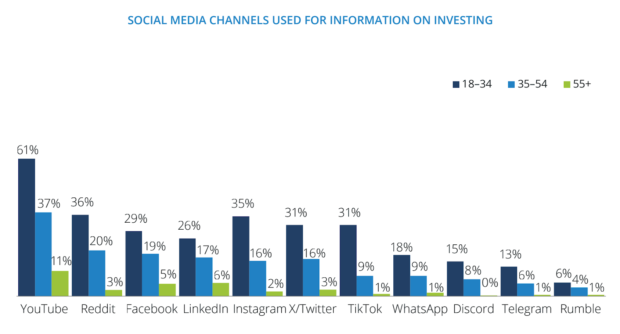
This trend is even more pronounced among younger demographics. According to a recent Gallup poll, 42% of Americans aged 18 to 29 turn to social media for financial guidance, and 61% of investors under 35 have acted on recommendations provided by "finfluencers." For banks, this presents a unique paradox: audiences are hungrier than ever for financial education, yet the "trust bar" for institutions remains remarkably high.

Chronology of a Digital Transformation
The integration of social media into the banking sector did not happen overnight. The progression followed a clear, three-stage evolution:
- The Defensive Phase (2010–2015): Banks initially viewed social media as a liability—a space where customer complaints could go viral. The focus was entirely on crisis management and silencing public discourse.
- The Informational Phase (2016–2020): Institutions began using platforms like Facebook and LinkedIn to broadcast corporate news and product updates. Social media was treated as an extension of a website—a one-way megaphone for announcements.
- The Engagement & Literacy Phase (2021–Present): Today, banks are adopting a "human-first" approach. Recognizing that Gen Z favors personality over logos, banks are now leveraging short-form video, employee advocacy programs, and interactive financial literacy campaigns to meet users where they already spend their time.
Supporting Data: Where the Money Moves
The efficacy of this transition is supported by compelling industry metrics. A 2023 American Bankers Association (ABA) report revealed that 90% of banks now acknowledge social media as a critical business component, with 88% maintaining active, daily engagement across their platforms.
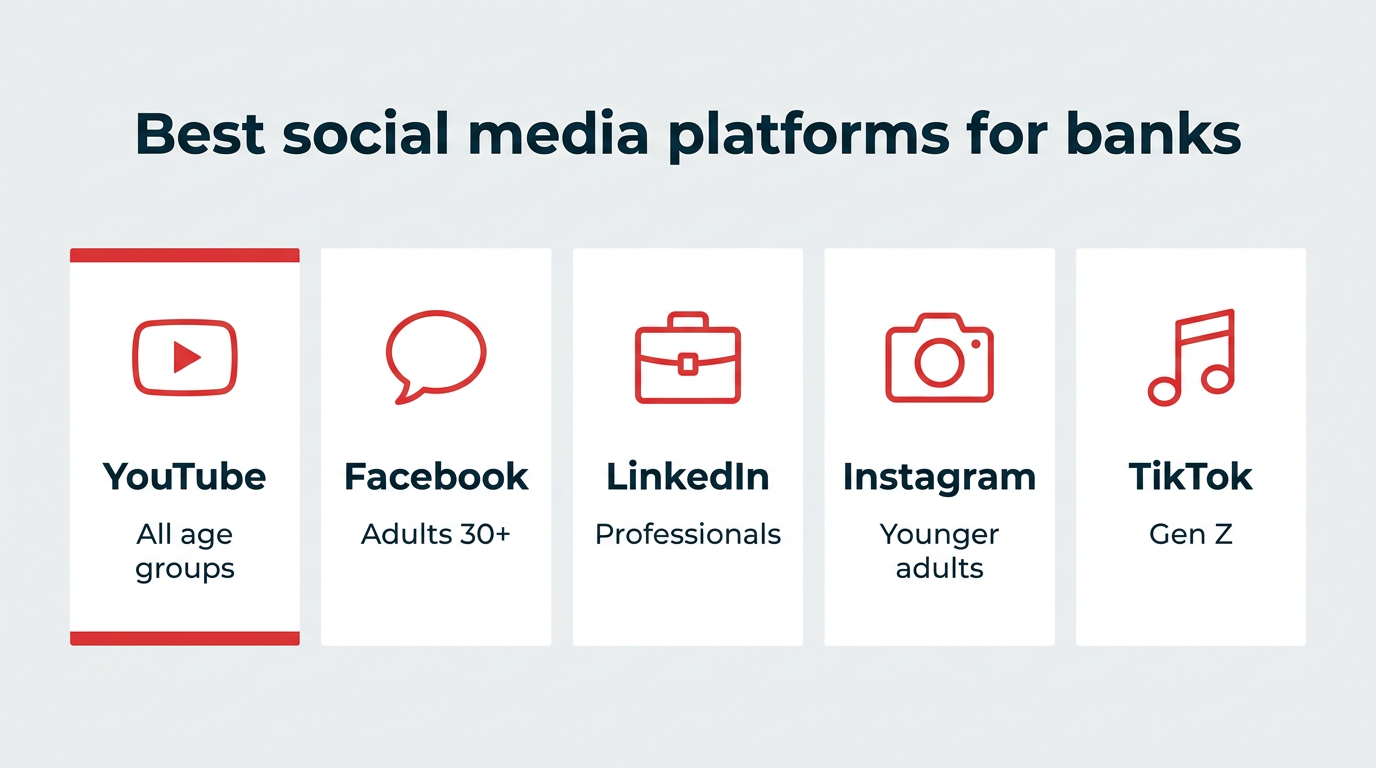
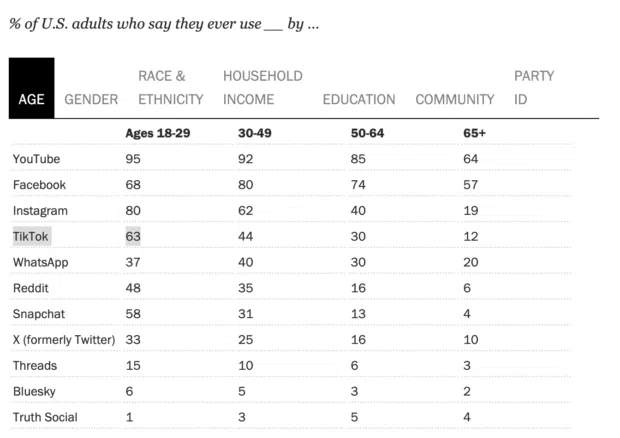
The choice of platform is no longer arbitrary. Data from the Pew Research Center confirms that YouTube remains the undisputed heavyweight, with 95% of adults aged 18–29 utilizing the platform. Consequently, banks are shifting their long-form educational content—webinars, market explainers, and retirement planning guides—to YouTube, while reserving TikTok and Instagram for high-energy, bite-sized financial literacy tips.
The competitive landscape is equally clear: if a bank isn’t present, the "finfluencers" fill the void, often with advice that lacks the regulatory rigor or institutional backing of a formal bank.

Navigating the Compliance Minefield
While the benefits of social media are clear, the risks for financial institutions are existential. Unlike consumer brands, banks operate under the watchful eye of the SEC, FINRA, the FDIC, and the OCC. A single misstep—such as an unsubstantiated claim or a breach of data privacy—can trigger massive regulatory fines and irreparable reputational damage.

The Governance Mandate
To operate safely, banks are increasingly implementing strict social media governance policies. These frameworks typically mandate:

- Approval Workflows: Ensuring all posts pass through a compliance officer before going live.
- Archiving: Maintaining a legally compliant record of all social interactions, including deletions and edits.
- Cybersecurity Protocols: Utilizing automated tools (such as Hootsuite’s "Vigil" or "Lumen") to monitor for unauthorized profiles, phishing attempts, or malicious content mimicking the brand.
Case studies, such as that of the global insurance giant MAPFRE, demonstrate the power of consolidation. By auditing their digital footprint and consolidating over 80 fragmented social pages into a unified, managed ecosystem, they were able to standardize their brand voice and reduce security vulnerabilities, leading to a significant uptick in engagement.

Official Responses and Strategies for Success
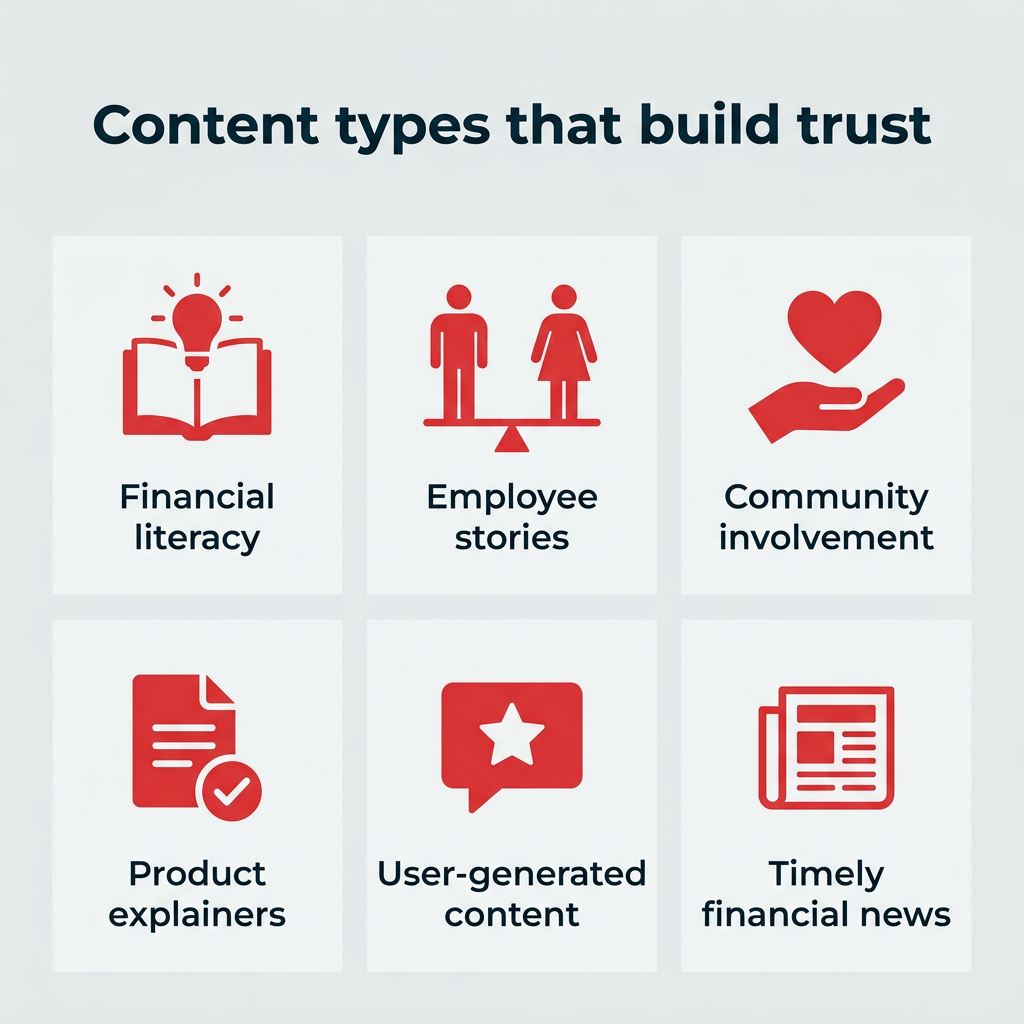
Industry leaders are not just avoiding risks; they are actively turning compliance into a competitive advantage. The most successful institutions have adopted a "human-forward" content strategy. By showcasing employee stories, client testimonials, and behind-the-scenes glimpses of corporate culture, these banks strip away the sterile, corporate facade that often alienates younger customers.

Nine Tips for a Compliant and Effective Strategy
- Conduct a Comprehensive Audit: Map every existing social account and delete inactive or rogue pages.
- Prioritize Education over Promotion: Follow the "finfluencer" model—lead with value and insight, not hard sales pitches.
- Invest in Compliance Tools: Use dedicated social media operating systems to automate approvals and archiving.
- Educate Internal Teams: Implement an employee advocacy program. When employees share content, it feels more authentic, but only if they are properly trained on what is "safe" to share.
- Establish a Governance Policy: Create a living document that outlines the rules of engagement for all staff.
- Integrate with Marketing Stacks: Connect social media data to CRM platforms like Salesforce to measure real-world conversion rates.
- Humanize the Brand: Feature real people to build empathy and trust.
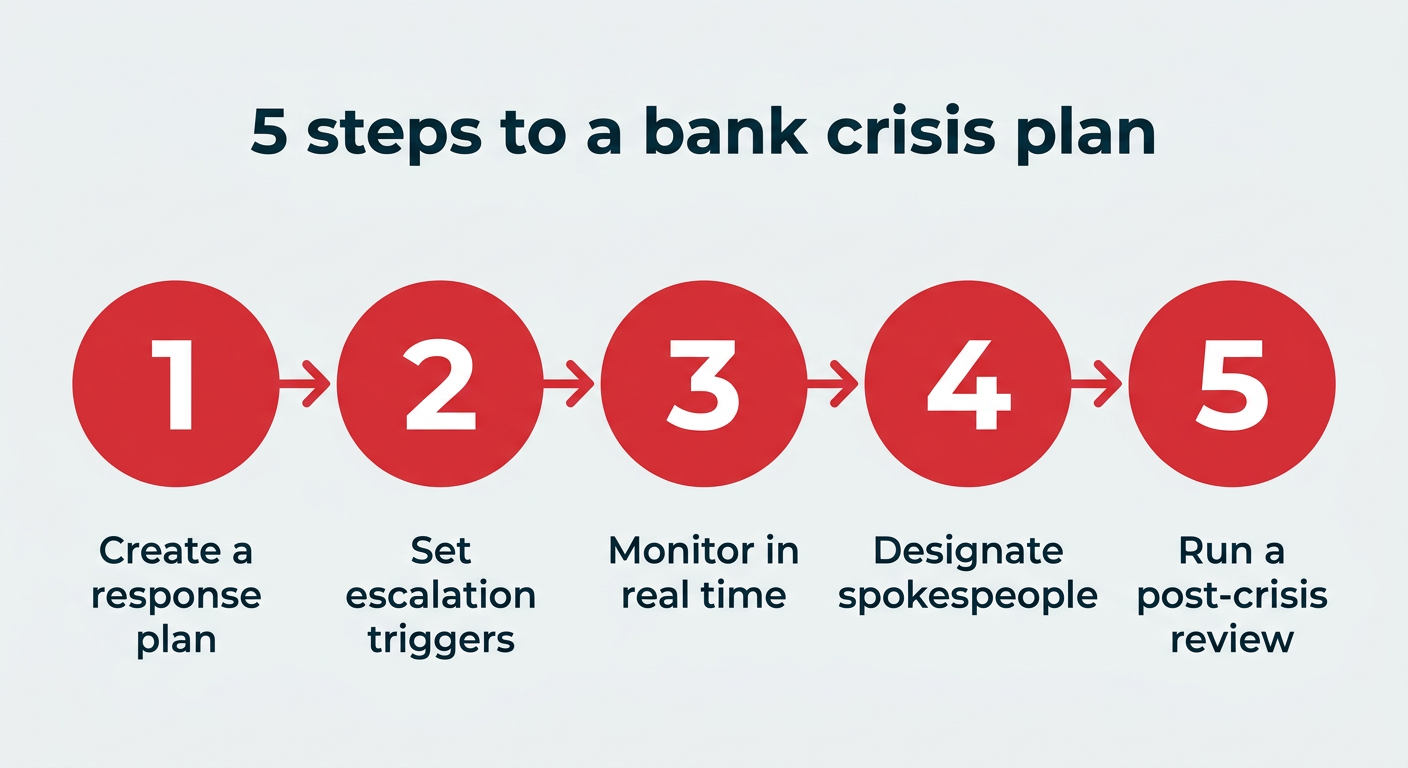
- Prepare for Crisis: Develop a "break-glass" plan for social media disasters, including pre-approved templates and defined chain-of-command protocols.
- Engage, Don’t Just Broadcast: Social media is a two-way street. A unified inbox is essential for responding to customer queries in real-time.
Implications for the Future of Banking
The implication for the industry is clear: the wall between "banking" and "content creation" is dissolving. As financial technology continues to integrate with social platforms, the institutions that win will be those that provide the most value, not just the highest interest rates.

For the modern bank, the primary challenge of the next decade will be maintaining the gravity of a financial institution while capturing the agility of a social creator. Whether through AI-driven transparency, enhanced cybersecurity for customer interactions, or hyper-targeted educational campaigns, the goal remains the same: to remain the trusted, authoritative voice in a sea of digital noise.
As we look toward 2026 and beyond, the "digital vault" will not be a physical place, but a digital relationship. Banks that fail to cultivate this relationship on social media will find that their physical branches are merely expensive relics of a bygone era. In the age of the algorithm, visibility is the new currency, and trust is the only asset that truly appreciates.
 Reynand Wu
  Muslim
  Nila Kartika Wati