
 By Dwi Wanna
By Global Security Desk
In a coordinated transnational sting that marks a major turning point in the ongoing war against software supply chain manipulation, Australian law enforcement authorities have successfully apprehended two men suspected of orchestrating the operations of TeamPCP. Recognized by global cybersecurity agencies as a prolific data extortion and cybercrime syndicate, TeamPCP is widely blamed for engineering the longest-running, most disruptive software supply chain attack spree in computing history.
Announced in a joint statement by the Australian Federal Police (AFP), the operation involved tactical support from the Federal Bureau of Investigation (FBI) and the Western Australia Police Force (WAPF). Two local residents—aged 21 and 23, from the affluent Perth suburb of Cottesloe—were taken into custody following raids targeting what officials described as a “sophisticated cybercrime syndicate that allegedly created malicious open-source software to rob thousands of global businesses.”

While initial police statements withheld the identities of the defendants, subsequent reporting by investigative journalist Brian Krebs and Australian broadcaster ABC News confirmed the suspects as Ruben Ian Thomson and Michael Gaebler. Thomson, identified by intelligence researchers as the driving force behind TeamPCP under aliases such as “Ellis,” faced immediate denial of bail during his initial appearance at the Perth Magistrates Court, underscoring the severity of the charges levelled against the young hackers.
Main Facts: The Reign of TeamPCP and the Shai-Hulud Worm
Bursting onto the threat landscape in late 2025, TeamPCP quickly distinguished itself from traditional ransomware gangs. Rather than deploying traditional malware against isolated corporate networks, the syndicate specialized in a cyclical, highly scalable exploitation vector: embedding malicious payloads directly into open-source software repositories and public code libraries.
The group’s premier weapon was a self-propagating worm dubbed Shai-Hulud. By harvesting stolen or phished developer credentials at major code repositories like GitHub and Node Package Manager (NPM), the worm injected malicious code into utility programs maintained by developers. When downstream engineers downloaded these legitimate-looking tools, their own machines were compromised, allowing TeamPCP to harvest fresh credentials and expand their web of breached environments.

The scale of the syndicate’s operations reached unprecedented heights through several targeted high-impact campaigns:
- The LiteLLM Breach (March 2026): TeamPCP compromised the open-source AI gateway LiteLLM, which connects applications to over 100 large language models. Security firm CloudSEK estimated that this single supply chain breach successfully harvested cloud service keys and sensitive secrets from more than 2,500 organizations, including multiple Fortune 500 technology giants.
- The GitHub Compromise (May 2025): The group claimed responsibility for infiltrating at least 3,800 code repositories hosted on Microsoft-owned GitHub after a developer fell victim to a compromised code extension.
- The "Cybercats" Syndicate: Security researchers emphasize that TeamPCP functioned less as a rigid corporate criminal enterprise and more as a decentralized "center of gravity" within an informal hacker community known as Cybercats, collaborating with actors linked to high-profile data extortion groups like Fulcrumsec and automotive data-leak broker xpl0itrs.
Chronology of a Collapse: From Open-Source Exploitation to Arrest
The unraveling of TeamPCP is a masterclass in modern digital forensics, tracing a line from global enterprise breaches back to sloppy operational security (OpSEC) mistakes made by its core architects.
Mid-2025: The Genesis of Shai-Hulud and Forum Personas
Operating under a rotating roster of online aliases—including EllisD25/LSD, BulkDMT, Express, and Persy_PCP—the syndicate’s leader cultivated a presence on English-language cybercrime forums such as Darkforums and Breachforums. Intelligence firms like Intel 471 and Flashpoint noted that the primary operator frequently alternated between locations in South Africa and Perth, Australia, while grappling publicly with severe substance abuse issues and personal ideological grievances.

Early 2026: Escalating Attacks and Collaborative Chats
The creation of the "Cybercats" Matrix chat server by security researcher-turned-threat actor George Prepakis (known online as @kernelstub) centralized communications for the loose collective. Around this time, TeamPCP launched an unorthodox recruitment contest. Offering a baseline prize of $1,000 in Monero (XMR) alongside promises of higher payouts for valuable harvested access, the group incentivized external participants to deploy the Shai-Hulud 3.0 worm against the most popular open-source code libraries.
June–July 2026: The Net Closes
Despite operating in clandestine chat rooms, the syndicate’s leaders repeatedly betrayed their real-world identities through digital footprints. Security researchers and investigative journalists began correlating forum registration emails (such as [email protected] and [email protected]), passive DNS records from Perth family networks, and public business registrations.
Crucially, Ruben Thomson committed a fatal operational security error by registering a profile on the bug bounty platform HackerOne under the username Deadcatx3—an alias already flagged by multiple cyber intelligence firms as core to TeamPCP operations.

Following extensive investigative interviews conducted via Signal between the TeamPCP leader and independent security researchers in July 2026—during which the suspect expressed resignation over his inevitable apprehension—law enforcement closed the trap. On Wednesday morning, Australian authorities executed raids in Western Australia, arresting Thomson (21) and Gaebler (23).
Supporting Data and Technical Insights
The technical infrastructure utilized by TeamPCP highlights a dangerous shift in the accessibility of advanced cyber threats. According to Austin Larsen, a principal threat analyst with the Google Threat Intelligence Group, the syndicate’s structure reflects a new era of peer-driven cybercrime communities rather than hierarchical criminal cartels.
Furthermore, industry analysis reveals that the rapid rise of TeamPCP was heavily accelerated by generative artificial intelligence. Charlie Eriksen, a security researcher at Aikido Security, notes that artificial intelligence and large language models have dramatically compressed the traditional "knowledge gap" required to conduct complex operations:

"You had to understand the research, adapt the code, troubleshoot it, build infrastructure around it, and then repeat that process across different targets. LLMs have compressed that gap significantly."
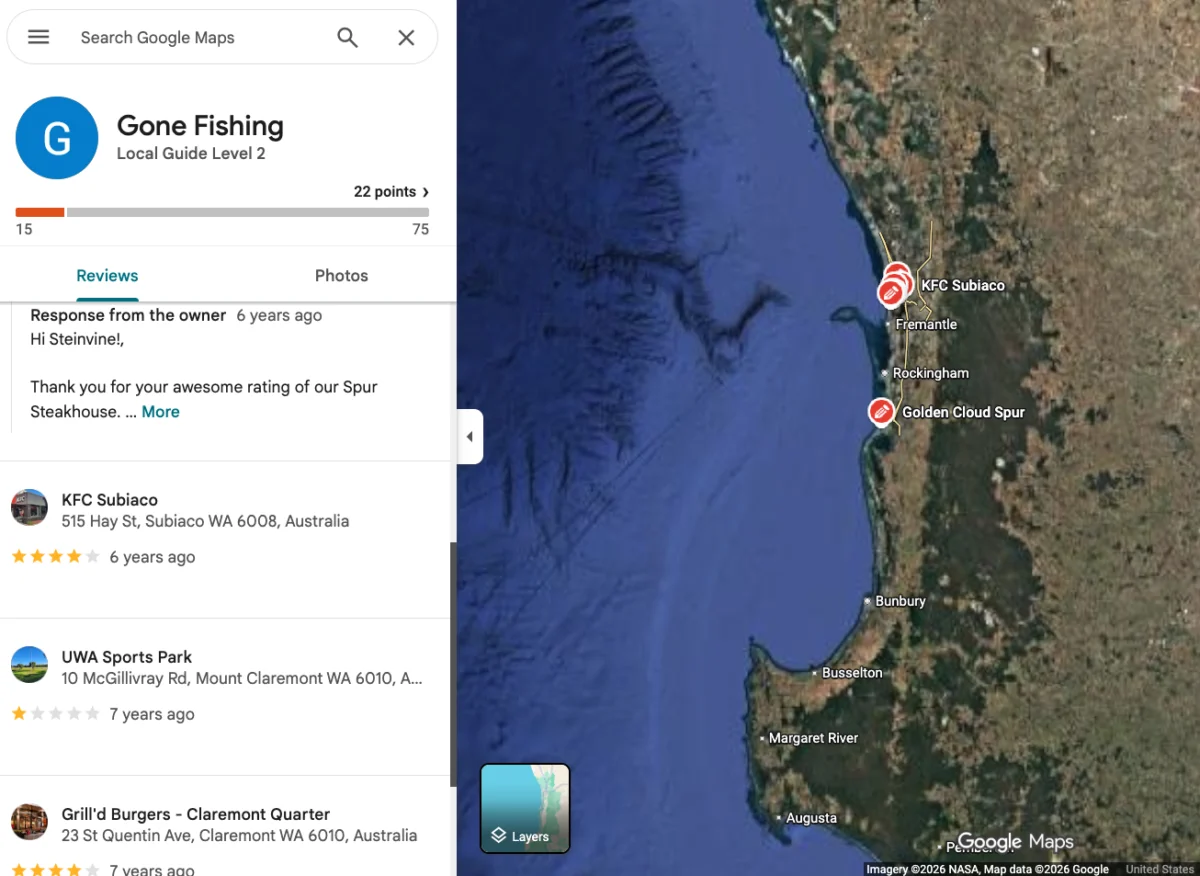
This technological democratization enabled young, technically proficient threat actors to operate at scale without possessing the rigorous discipline traditionally maintained by professional criminal syndicates or state-sponsored APT groups. Consequently, TeamPCP left an extensive trail of digital breadcrumbs, from local business reviews left on Google Maps to personal social media profiles and active local company registrations under variations of their hacking handles.
Official Responses and Legal Proceedings
The joint operation culminated in immediate judicial actions in Western Australia. The Australian Federal Police formally charged the two men with a combined 14 cybercrime offenses.

During their initial court hearings at the Perth Magistrates Court:
- Ruben Ian Thomson was denied bail, reflecting the prosecution’s argument regarding the severity of his alleged leadership role in global extortion and software supply chain sabotage.
- Michael Gaebler, identified as the user behind the handle
@pcpcasper, was remanded in custody.
Both men are scheduled to make their next joint appearance before the court on September 18. Legal experts anticipate that extradition requests or parallel indictments from international jurisdictions, notably the United States, may follow as federal agencies analyze the seized digital evidence.
Implications: The Legacy of TeamPCP and Industry Reform
While TeamPCP’s operational capabilities have been effectively neutralized by the arrests in Perth, the long-term impact of their cybercrime spree has permanently altered the security posture of the global software development ecosystem.

For years, security advocates urged public code repositories to implement stricter update verification mechanisms. Ironically, security analysts credit TeamPCP’s aggressive campaigns—particularly the Shai-Hulud worm—as the catalyst that finally forced major platform operators to act.
In response to the unprecedented wave of poisoned packages, GitHub introduced a mandatory three-day "cooldown" mechanism for Dependabot in July 2026. This administrative pause forces automated package managers to wait before pushing newly updated dependencies into downstream applications, buying critical time for security researchers and maintainers to vet and neutralize malicious code before it proliferates. Similar cooldown frameworks have since been adopted across Python and JavaScript packaging ecosystems.
As Charlie Eriksen aptly summarized:

"They managed to wake up Microsoft to the fact that they had become negligent in terms of security. By compromising GitHub and stealing their source code, they humiliated Microsoft into action, making them finally act on what we had been asking them to do and take seriously for a while now."
The downfall of TeamPCP serves as both a cautionary tale regarding the fragility of modern open-source software supply chains and a testament to the efficacy of international law enforcement cooperation in tracking down cybercriminals who mistakenly believe their digital anonymity is absolute.
 Lina Irawan
 rifanmuazin
 Neng Nana
