
 By Suro Senen

In the high-stakes world of digital marketing, there is a prevailing, uncomfortable truth that every founder must eventually confront: what worked yesterday is rarely a blueprint for tomorrow. As consumer attention spans fragment and inboxes become increasingly crowded with noise, the intuition that once propelled your business forward can quickly become a liability.
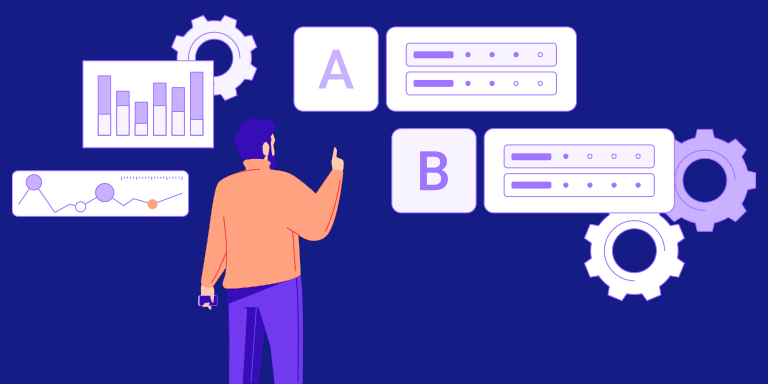
For modern entrepreneurs, A/B testing—the systematic comparison of two versions of a digital asset to determine which performs better—has evolved from a “nice-to-have” technical luxury into a non-negotiable operational standard. In an era where customer acquisition costs are soaring, the most successful brands are not necessarily the ones spending the most on ads; they are the ones extracting the most value from the audience they already possess.
The Main Facts: Why Optimization Outperforms Guesswork
At its core, A/B testing is the antidote to the “hunch-based” decision-making that plagues early-stage startups. When you rely on gut feeling, you are essentially gambling with your conversion rates. When you rely on data, you are investing in a compounding feedback loop.
The math is compelling. A 5% lift in open rates, coupled with a 10% bump in click-through rates, might seem marginal in a vacuum. However, when these incremental gains are applied across an entire sales funnel, the result is often a 30% increase in revenue—achieved without spending a single additional dollar on top-of-funnel advertising. This is the "compounding interest" of digital marketing: small, consistent optimizations that pay dividends indefinitely.
The Chronology of Optimization: From Manual Guessing to Automated Intelligence
The evolution of A/B testing has mirrored the broader digital revolution.
- The Early Days (The "Guess and Check" Era): In the early 2000s, testing was manual, laborious, and limited to basic web page layouts. Marketers had to rely on small sample sizes and often waited weeks for statistically significant results.
- The Rise of Analytics (2010–2018): The introduction of sophisticated analytics suites allowed brands to track granular user behavior. However, this period was marked by "analysis paralysis," where companies collected vast amounts of data but lacked the infrastructure to act on it in real-time.
- The Modern Era (2019–Present): Today, we are in the age of AI-driven, automated optimization. Platforms like Omnisend have democratized access to enterprise-grade testing, allowing even lean, bootstrap startups to automate flows, trigger personalized messages, and conduct multivariate testing with minimal manual intervention.
Supporting Data: The Evidence for Systematic Testing
The efficacy of A/B testing is not merely theoretical; it is backed by a wealth of industry data. According to recent analysis by Omnisend, average email open rates for merchants rose from 22.9% in 2022 to 25.1% in 2023. This growth was not accidental—it was driven by a industry-wide shift toward rigorous segmentation and continuous testing.
Even more striking is the performance gap between manual, "batch-and-blast" emails and automated, optimized flows. Triggered emails—such as welcome series or abandoned cart reminders—boast 52% higher open rates, 332% higher click rates, and an astounding 2,361% higher conversion rate compared to standard campaigns.
The data confirms that the highest-performing brands do not treat these automated flows as "set it and forget it" systems. Instead, they treat them as living, breathing funnels that require constant A/B testing to maintain peak performance. For many e-commerce brands, testing abandoned cart flows alone has resulted in monthly revenue gains of approximately $5,000, proving that optimization is often the most cost-effective path to scaling.
Key Areas for High-Impact Testing
To move the needle, entrepreneurs must stop testing vanity metrics and start focusing on high-leverage elements.
1. The Gateway: Subject Lines
Roughly 43% of consumers decide to open an email based solely on the subject line. Conversely, poor or deceptive copy leads to 69% of users marking messages as spam. Testing here should focus on curiosity-driven vs. benefit-driven copy, and the inclusion of personalization tokens.
2. The Engine: Call-to-Action (CTA)
A CTA is the bridge between interest and action. Testing should focus on the copy (e.g., "Get My Discount" vs. "Learn More"), button color, and placement. Does the button feel like an invitation or a demand?
3. The Timing: Send Frequency
Even the most compelling content will fail if it arrives when your customer is at their busiest. Experimenting with send times—morning vs. evening, weekday vs. weekend—allows you to align your messaging with the natural rhythms of your audience’s day.
4. The Authority: Sender Identity
The "from" field is often overlooked, yet it is a primary indicator of trust. Testing whether an email comes from a generic "Support" address or a specific person (e.g., "Jane from [Company]") can significantly impact engagement rates.
5. The Micro-Target: Segmentation
Blanket emails are becoming relics of the past. Testing how different segments—such as high-spenders vs. one-time buyers—respond to different messaging is the most effective way to drive long-term customer lifetime value (CLV).
Official Perspectives: The Mindset of Market Leaders
Industry experts emphasize that A/B testing should be viewed as a system, not a tactic. "Testing isn’t a one-off project," says one digital strategist. "It’s a culture."
The most successful companies, including those leveraging platforms like Omnisend, treat testing as a continuous feedback loop. They understand that audience preferences are fluid. Seasonality, economic shifts, and even changes in platform algorithms mean that a strategy that worked in Q1 might be obsolete by Q3. By maintaining at least one active test at all times, brands create a "private library" of insights that informs not just their email marketing, but their social media ads, landing page copy, and product positioning.
Implications: The Competitive Advantage of "Fast-Moving" Brands
The implications of failing to adopt a testing-first mindset are clear: you are effectively leaving money on the table while your competitors iterate their way to market dominance.
A/B testing serves as a primary competitive advantage for smaller brands. When you lack the deep pockets of an enterprise-level competitor, your ability to "move fast and learn faster" becomes your greatest asset. By isolating variables, tracking results, and applying those learnings systematically, a lean team can outperform a larger, slower-moving organization.
The Framework for Success
To avoid the trap of "testing for the sake of testing," adopt this rigorous, four-step framework:
- Define the Hypothesis: Never start a test without a clear goal. Instead of "Let’s change the button color," try "We believe that a benefit-driven CTA will increase click-throughs by 10% because it clearly communicates the value proposition."
- Isolate Variables: Never test more than one major variable at a time. If you change the subject line, the CTA, and the image simultaneously, you will never know which change actually moved the needle.
- Choose the Right Metric: Ensure your success metric matches your goal. If you are testing subject lines, your primary metric is the Open Rate. If you are testing the CTA, focus on the Click-Through Rate.
- Statistical Significance: Don’t declare a winner based on a small sample. Most platforms recommend testing with at least 1,000 recipients per version. If your list is smaller, use a split-test approach (e.g., 20/20/60) to ensure the winner is sent to the majority of your audience.
Conclusion: Start Small, Win Big
You do not need to overhaul your entire business model to see significant growth. You simply need to commit to the process of continuous improvement. Each small experiment—whether it’s a tweak to a subject line or a adjustment in your sending cadence—is a step toward deeper audience understanding.
For those ready to move beyond the guesswork, tools like Omnisend provide the infrastructure necessary to execute these strategies without the burden of manual, complex workflows. By automating the technical heavy lifting, you are free to focus on what really matters: the strategy behind the test and the relationship with your customer.
Start testing smarter. Start converting more. Take the first step by implementing your first hypothesis today.
 Asep Darmawan
 Reynand Wu
 Nana
