
 By Nana
EXECUTIVE SUMMARY: Product design has long suffered from a fundamental misunderstanding of motivational psychology. When digital product teams declare, "Let’s add gamification," they commit the equivalent error of a composer shouting, "Let’s add music!" without deciding whether they are scoring a heavy metal concert or a classical concerto. By dissecting seven core video game genres, product architects can finally transition from superficial engagement tricks to a mature, psychology-driven design methodology.
1. Introduction: The Missing Framework in Modern Product Design
For over a decade, the standard playbook for product gamification has relied on a predictable triad: points, badges, and leaderboards (often referred to in the industry as PBL). While this superficial approach can yield short-term spikes in user metrics, it consistently fails to build long-term retention or genuine emotional investment.
The root cause of this failure is a persistent myth: the assumption that a single, monolithic "game psychology" exists.
Just as jazz, heavy metal, and classical music attract entirely different audiences through distinct emotional mechanisms, different video game genres pull players in via fundamentally divergent motivational structures. An RPG player seeks narrative weight and character growth. A puzzle solver craves the sudden, elegant flash of insight. A strategy enthusiast demands complex, long-term system optimization.
For Gamification 2.0, the governing rule is clear: Product designers must choose their genre intentionally. Instead of indiscriminately bolting random mechanics together, teams must understand which game genre naturally aligns with their application, study the core psychological hooks of that genre, and design accordingly.
2. Chronology of a Paradigm Shift: From PBL to Genre-Based Design
To understand how product teams arrived at Gamification 2.0, it is helpful to trace the evolution of interactive design over the last twenty years:
- Phase 1: The Gamification Gold Rush (2010–2015). Early adopters realized that adding progress bars and achievement badges increased initial app engagement. The focus was heavily quantitative—optimizing Daily Active Users (DAU) and superficial reward loops.
- Phase 2: The Fatigue and Disillusionment (2016–2020). Users grew wise to psychological manipulation. Meaningless streak counters and arbitrary point systems began to feel like chores rather than rewards, leading to high churn rates across productivity, fitness, and educational apps.
- Phase 3: The Behavioral Economics Awakening (2021–2024). Designers began integrating deeper behavioral frameworks, looking closely at intrinsic motivation, autonomy, and mastery. However, they still lacked a taxonomy to categorize how different applications should evoke these feelings.
- Phase 4: Gamification 2.0 and Genre Alignment (2025–Present). Modern product strategists are mapping specific software categories directly to proven game genres—treating software not as a point-scoring utility, but as a purposeful interactive experience.
3. The Seven Core Genres of Gamification 2.0
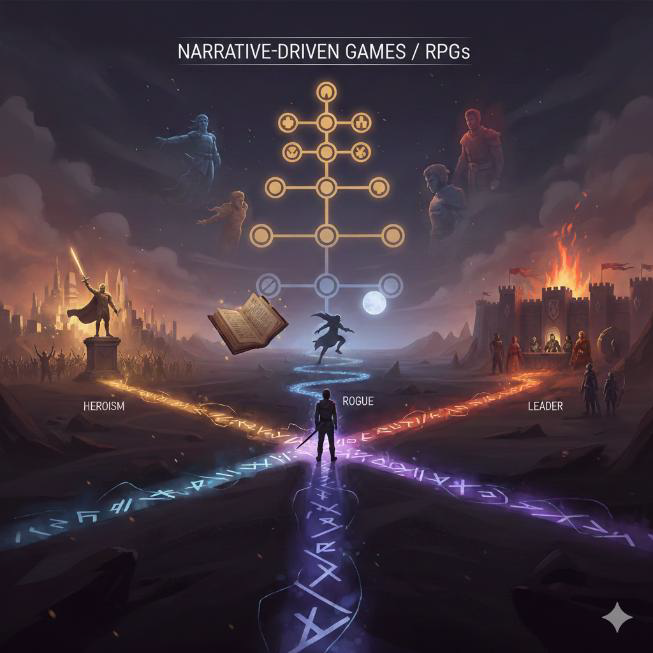
A. Narrative-Driven Games & RPGs (The Last of Us, Final Fantasy, Mass Effect)
Who They Attract and The Core Hook
RPG players are story-seekers. They invest heavily in character development, plot arcs, and rich world-building. Their core motivational hook is identity evolution—the deep desire to see a protagonist (and by extension, themselves) transform over time.
What Product Design Can Learn
Stop treating the user journey as a static feature checklist. Instead, frame milestones as narrative beats. For example, language-learning apps like Duolingo could frame mastering a new tense not as "Level 5 reached," but as unlocking the ability to navigate a foreign culture, read original literature, and connect with millions of new speakers. Software must cultivate identity and capability, not arbitrary numbers.
B. Action & Twitch-Based Games (DOOM, Call of Duty, Street Fighter)
Who They Attract and The Core Hook
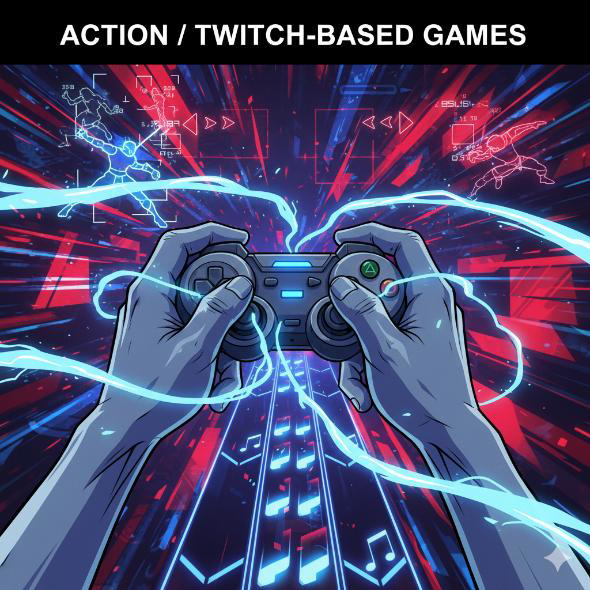
Action games attract skill-focused users who crave motor mastery, physical precision, and immediate feedback. The fighting game community, for instance, spends years mastering frame-perfect combos—representing deliberate practice at its finest. The core hook here is sensory satisfaction and immediate feedback loops.
What Product Design Can Learn
Most productivity apps fail because they treat core actions as tedious chores to be endured for a delayed reward. Action games prove that the action itself must feel satisfying. Fitness tracking and data-logging interfaces should be as responsive and satisfying as landing a fighting game combo, utilizing precise animations and haptic feedback to make the interaction intrinsically rewarding.
C. Strategy & 4X Games (Civilization, StarCraft, Whiteout Survival)
Who They Attract and The Core Hook
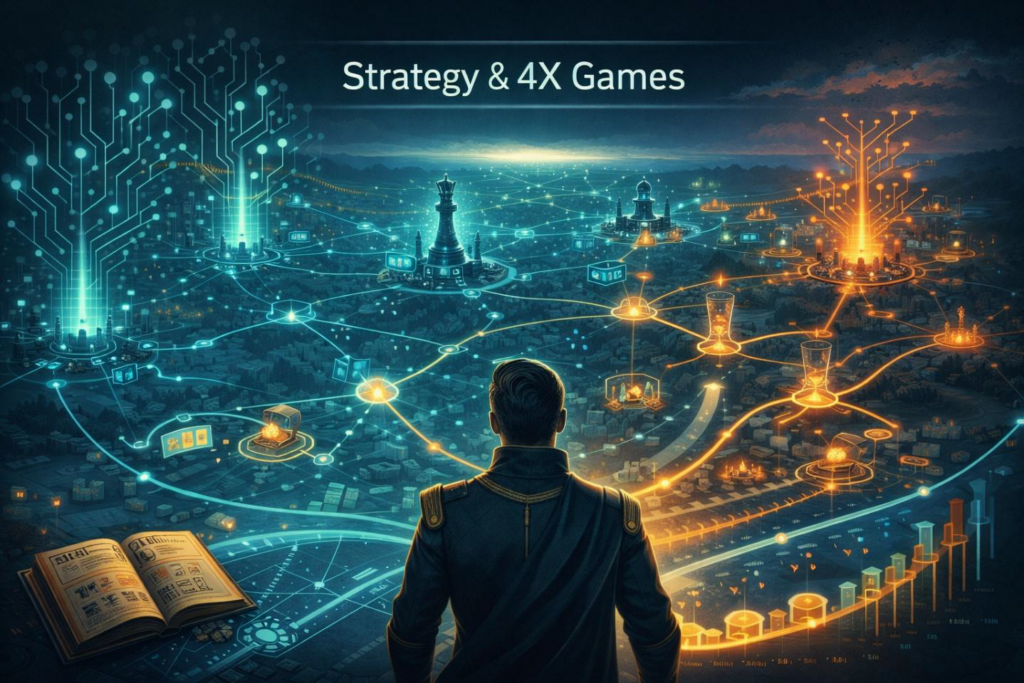
Strategy games magnetize long-term planners, system optimizers, and social alliance builders. Players spend months or years mastering complex variables. The core hook centers on strategic agency, compound growth, and social responsibility.
What Product Design Can Learn
Project management and financial planning tools should abandon linear, short-sighted task lists. By adopting "tech trees" and dynamic project timelines, apps can show users how small present-day decisions compound into future outcomes. Furthermore, introducing cooperative alliance mechanics—where teammates depend on one another—generates significantly stronger retention than isolated leaderboards.
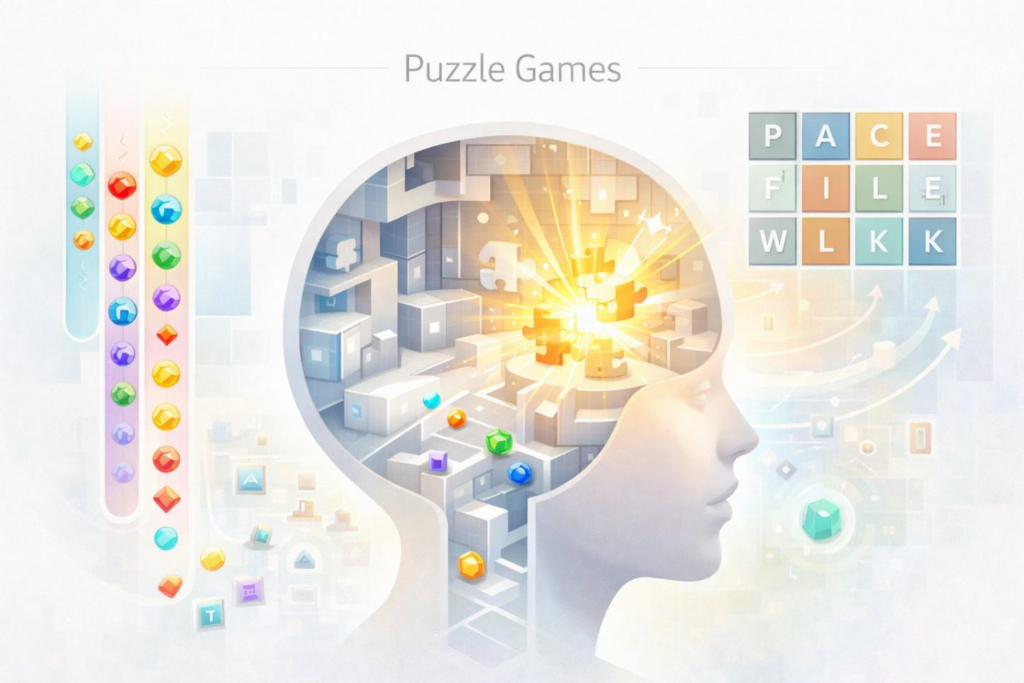
D. Puzzle Games (Portal, Wordle, Royal Match)
Who They Attract and The Core Hook
Puzzle players are problem-solvers hunting for the elusive "aha!" moment. They want elegant solutions that make them feel smart, not merely busy. Casual puzzle hits maintain hundreds of millions of active users through precisely calibrated challenge curves.
What Product Design Can Learn
Complexity should be revealed gradually. Instead of overwhelming users with onboarding tutorials and walls of text, software should present concepts as puzzles to be solved. Financial applications, for instance, can frame monthly budgeting challenges as optimization puzzles rather than tedious accounting chores.
E. Simulation & Management Games (The Sims, Cities: Skylines, RollerCoaster Tycoon)
Who They Attract and The Core Hook
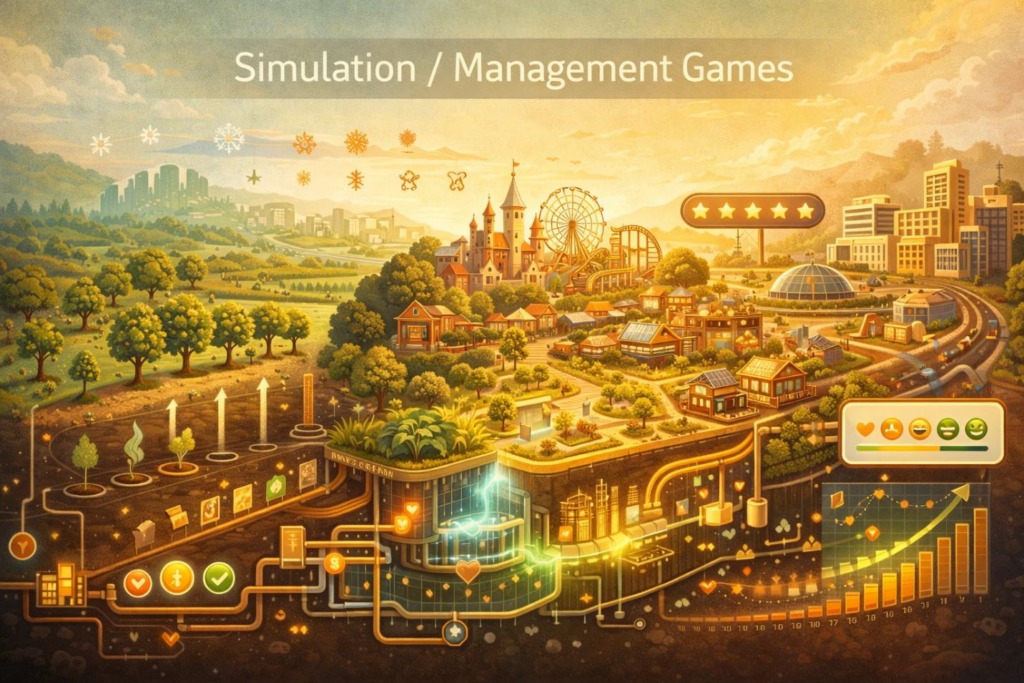
Simulation games draw systems thinkers and organizers who love watching complex ecosystems grow. Their primary hook is constructive agency and personalized evolution.
What Product Design Can Learn
Users want to build, not just consume. Software should provide modular building blocks rather than rigid templates. Customer Relationship Management (CRM) tools, for instance, can visualize relationship-building as tending a living garden, allowing professionals to customize workflows that match their personal mental models.
F. Sandbox & Open-Ended Games (Minecraft, Terraria, Breath of the Wild)
Who They Attract and The Core Hook
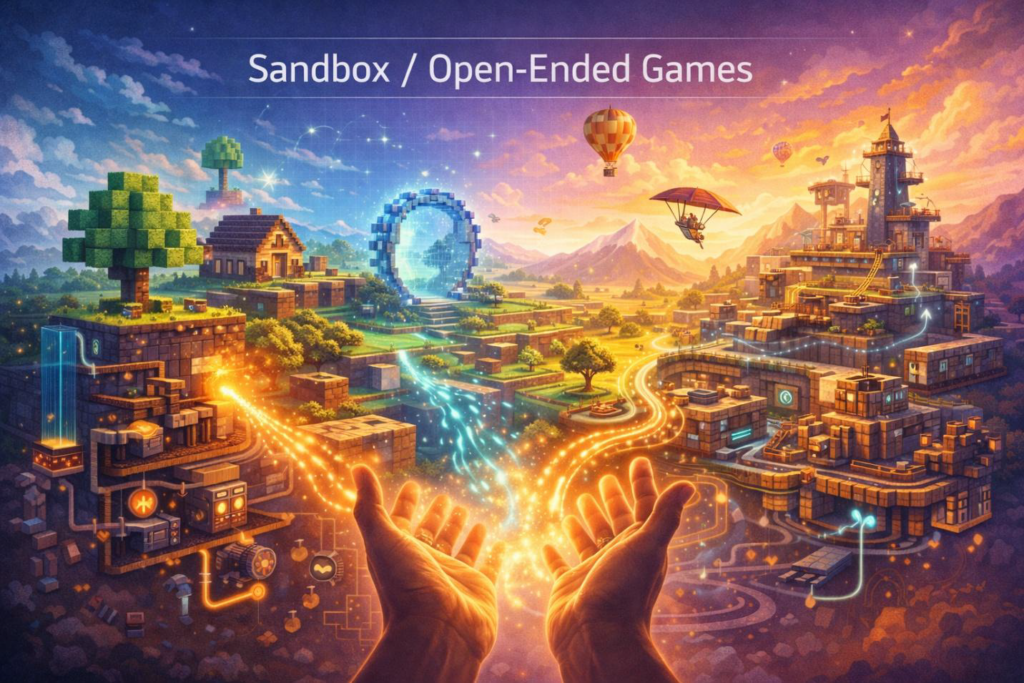
Sandboxes attract creative explorers who fiercely resist prescriptive paths. Their core hook is absolute freedom and self-directed creation.
What Product Design Can Learn
For creative power users, autonomy is far more engaging than any formal progression system. Tools like Notion succeed because they act as sandboxes, handing users flexible building blocks rather than forcing them down a single, rigid user journey.
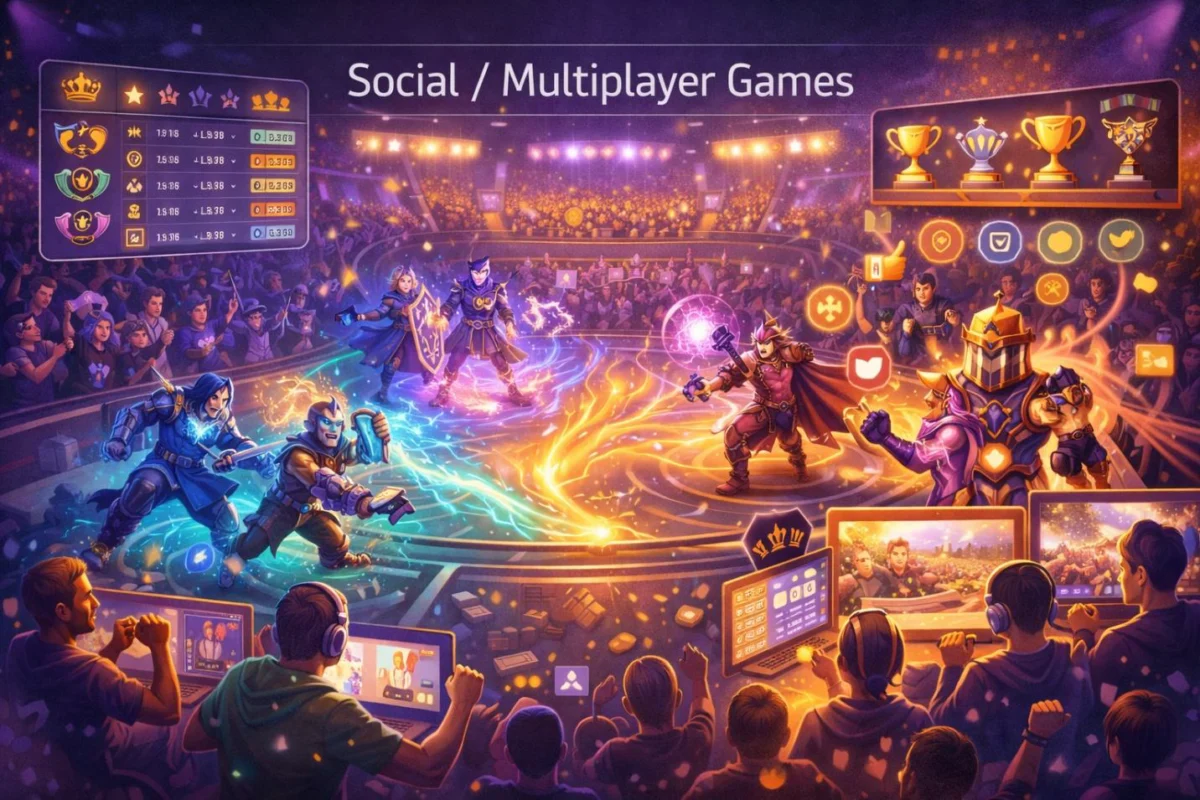
G. Social & Multiplayer Games (Fortnite, Roblox, League of Legends)
Who They Attract and The Core Hook
Multiplayer environments attract status-seekers, competitive rivals, and collaborative teammates. The platform itself serves as the value proposition.
What Product Design Can Learn
Social features must be core architectures, not bolted-on afterthoughts. Furthermore, enabling user-generated content (UGV)—allowing power users to build resources, templates, and lessons for beginners—transforms passive consumers into deeply invested community stakeholders.
4. Supporting Data and Market Implications
The financial evidence supporting genre-aligned design is staggering. Mobile strategy giants like Whiteout Survival and Last War generate hundreds of millions of dollars annually not through shallow, compulsive login streaks, but by engineering deep systems of strategic agency and social responsibility. Similarly, user-generated platform ecosystems like Roblox clear billions each year by granting players genuine creative freedom.
| Game Genre | Primary Psychological Driver | Ideal Software Application Match |
|---|---|---|
| RPG / Narrative | Identity Evolution & Story Arcs | Education, Self-Improvement, Health |
| Action / Twitch | Sensory Feedback & Motor Mastery | Data Logging, Fitness, Task Execution |
| Strategy / 4X | Long-Term Planning & Alliances | Project Management, Financial Planning |
| Puzzle | "Aha!" Insights & Problem Solving | Onboarding, Software Tutorials, Budgeting |
| Simulation | Constructive Agency & Customization | CRM Systems, Dashboards, Workspaces |
| Sandbox | Absolute Freedom & Tool Provisioning | Note-Taking, Design Software, Wikis |
| Social / MMO | Shared Status & Community Creation | Professional Networks, Team Productivity |
5. Official Industry Perspectives and Expert Insights
Leading behavioral designers and product executives are increasingly warning against the hazards of one-size-fits-all gamification.
"When product teams treat gamification as a universal spice you can sprinkle over any broken workflow, they inevitably alienate their user base," notes leading interaction design strategist Montgomery Singman. "Gamification 2.0 requires deep empathy for user motivation. You cannot design a productivity app for a strategic planner using the psychological hooks of a casual match-three game."
Industry analysts point out that as acquisition costs rise across digital markets, sustainable retention depends entirely on intrinsic alignment between software functionality and human play styles.
6. Strategic Implications for Product Teams
Implementing a genre-based framework requires a fundamental restructuring of product roadmaps:
- Audit Your User Base: Identify whether your users are narrative-seekers, micro-optimizers, creative sand-boxers, or social collaborators.
- Strip Away Meaningless Metrics: Eliminate arbitrary point tallies and badge notifications that fail to support the core experiential loop.
- Invest in "Juice" and Feedback: If your product requires repetitive user actions, ensure the interaction itself feels mechanically and sensorily satisfying.
- Design for Creation, Not Consumption: Transition users from passive button-clickers to active architects of their own digital workflows.
By embracing the diverse psychology of video game genres, modern product teams can finally move beyond the shallow era of points and badges—building applications that engage, inspire, and endure.
 Nana Muazin
 Raul Delapena Setiawan
 Suro Senen
