
 By Nila Kartika Wati
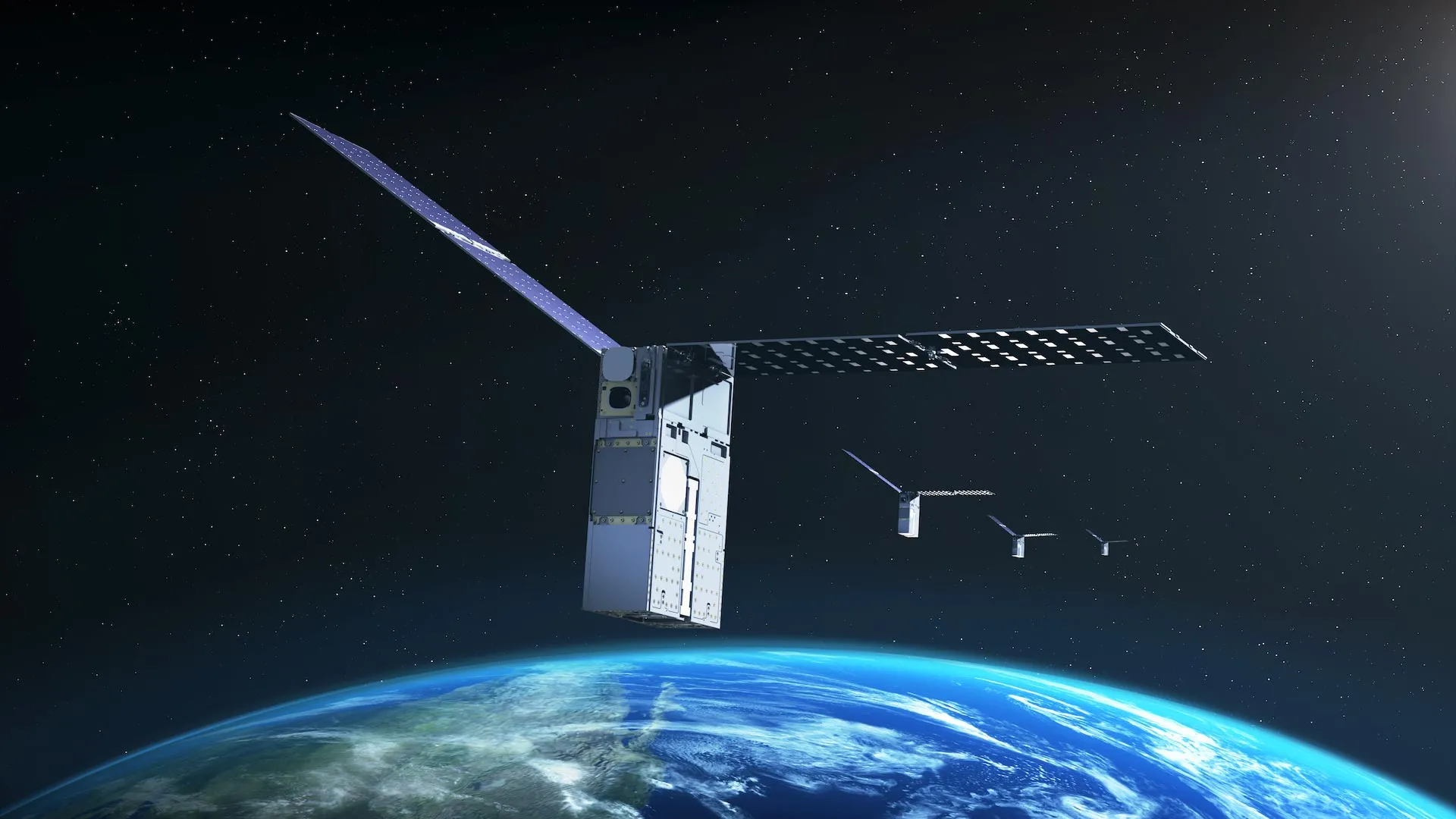
In a breakthrough that promises to reshape the future of interplanetary exploration, NASA’s Starling mission has successfully validated a revolutionary autonomous navigation system. By utilizing celestial landmarks and existing orbital objects as navigational beacons, the mission has effectively bypassed the need for traditional Earth-based GPS signals. This achievement marks a turning point in spaceflight, moving the industry toward a future where spacecraft can operate with true independence, unburdened by the tether of ground-based infrastructure.
The Dawn of FALCON: Redefining "Lost in Space"
The core of this achievement is a sophisticated technology known as FALCON—Fast Autonomous Lost-in-space Catalog-based Optical Navigation. Developed through a strategic partnership between NASA and EraDrive, a startup originating from Stanford University’s academic corridors, FALCON allows a spacecraft to determine its exact orbital position by identifying and tracking objects it encounters in the vacuum of space.
For decades, Earth-orbiting satellites have relied on the Global Positioning System (GPS). However, as NASA looks toward the Moon, Mars, and beyond, the agency faces a fundamental limitation: GPS signals are tied to Earth. In deep space, these signals become faint, unreliable, or entirely non-existent. FALCON solves this "lost-in-space" conundrum by turning the camera lenses inward, treating other satellites and orbital debris as points of reference. By correlating these observations against a pre-loaded onboard catalog of space objects, the spacecraft performs real-time triangulation, effectively "seeing" its own location without waiting for instructions or signals from home.
Chronology: From Lab Bench to Orbital Reality
The journey of FALCON is a testament to the speed at which modern aerospace innovation can travel from concept to orbit.
- Early Development: The project began under NASA’s University SmallSat Technology Partnerships, a program designed to foster collaboration between academia and the space agency. This incubator allowed researchers to develop the foundational algorithms that would eventually become the Era-Core flight software.
- The Spawning of EraDrive: Recognizing the commercial viability of the software, the research team transitioned into a private enterprise, EraDrive. This allowed for the hardening of the software into a flight-ready commercial product.
- The Starling Launch: In 2023, the Starling mission launched, carrying the FALCON payload into low-Earth orbit. The mission was specifically designed to test swarm intelligence and autonomous flight, providing the ideal sandbox for the FALCON experiment.
- The Three-Day Milestone: During a critical test phase, FALCON spent 72 hours conducting independent navigation. It successfully identified over 200 objects, cross-referenced them with external catalogs, and refined its own orbital position—all without human intervention or ground-based correction.
- The Road Ahead: Later this year, the four satellites comprising the Starling swarm will initiate the next phase of the experiment. They will share their tracking data with one another, moving from individual navigation to a collective, swarm-based positioning system.
Supporting Data: Precision Beyond Ground-Based Limits
The implications of the FALCON experiment are best understood through the data it generated. During the mission, mission controllers uploaded a database containing approximately 20,000 known space objects to the Starling spacecraft.
Using its onboard star tracker cameras—instruments typically reserved for orienting a spacecraft toward the constellations—the system performed an unprecedented feat of data processing. FALCON compared its visual findings with the cataloged orbital data. Not only did the system successfully calculate its own position, but it also identified discrepancies in the existing catalog.
Over the three-day test, the software updated the orbital predictions for over 200 objects. The result was a set of orbital data that was more precise than the information provided by ground stations. This ability to refine data in real-time proves that autonomous systems are not just "good enough"—they are, in some respects, superior to the aging infrastructure currently managed by ground-based networks. By processing observations directly at the source, FALCON minimizes the latency inherent in sending data back and forth to Earth, allowing for instantaneous collision avoidance and orbital station-keeping.
Official Perspectives: A Growing List of "Firsts"
The success of the mission has sent ripples of excitement through NASA’s Ames Research Center in Silicon Valley. Roger Hunter, the program manager for NASA’s Small Spacecraft and Distributed Systems, has been a vocal proponent of the mission’s trajectory.
"FALCON is yet another success for the Starling demonstration mission," Hunter stated. "The results from FALCON can have far-reaching implications for on-orbit space-traffic monitoring, collision avoidance, and alternative navigation. The number of ‘firsts’ from Starling just keeps growing."
For NASA, these results represent a successful validation of the "SmallSat" philosophy—the idea that high-risk, high-reward experiments can be conducted on smaller, more cost-effective platforms to accelerate the development of critical technologies. By integrating EraDrive’s commercial software with NASA’s flight hardware, the agency has effectively bridged the gap between theoretical university research and tangible spaceflight application.
Implications for Future Space Exploration
The success of the Starling-FALCON integration holds profound implications for the next century of space travel.
1. Human Exploration of the Moon and Mars
As humanity looks to establish permanent outposts on the lunar surface or launch crewed missions to Mars, the requirement for reliable, autonomous navigation becomes a safety imperative. Future lunar satellite swarms will need to communicate and position themselves accurately to facilitate everything from global communication relays to high-resolution mapping. FALCON provides the blueprint for these systems to maintain their integrity even when they lose contact with Earth.
2. The Future of Space Traffic Management
The orbital environment is becoming increasingly crowded. With tens of thousands of satellites and pieces of debris, collision avoidance is a primary concern. Currently, ground-based tracking is the primary defense against orbital accidents, but it is limited by the time it takes to process data and send commands to a satellite. Autonomous systems like FALCON allow satellites to act as their own traffic controllers, sensing potential threats and adjusting their orbits in real-time, significantly reducing the risk of Kessler Syndrome—a chain reaction of collisions that could render orbits unusable.
3. Distributed Science Missions
Many of NASA’s future scientific goals require "distributed" sensors—large arrays of small satellites working in unison to capture data, such as mapping magnetic fields or observing space weather. These missions require absolute precision in the distance between each satellite. FALCON’s ability to allow satellites to know their precise location relative to one another is the key to enabling these complex science missions, which were previously impossible due to the difficulty of coordinating multiple moving objects from the ground.
4. Commercialization and the New Space Economy
The success of EraDrive highlights a shift in the aerospace industry. By leveraging NASA’s funding and testing platforms, private companies can prove the viability of their technology. This lowers the barrier to entry for space-ready software, potentially creating an entire market for "off-the-shelf" autonomous navigation systems. This commercialization cycle ensures that NASA can continue to push the boundaries of exploration while the private sector focuses on the scalability and maintenance of the technologies that make that exploration possible.
Conclusion: A New Paradigm of Autonomy
NASA’s Starling mission has proven that the future of navigation does not lie in more powerful ground-based transmitters, but in smarter, more observant spacecraft. By transforming cameras into navigation tools and satellites into active reference points, FALCON has demonstrated that the void of space is not an obstacle, but a resource.
As the Starling mission continues its operations, the data gathered will undoubtedly inform the design of the next generation of deep-space probes. We are moving toward an era where the spacecraft is no longer a passive vessel controlled from behind a computer screen on Earth, but an intelligent, autonomous agent capable of navigating the stars by its own hand. In this new paradigm, the deep silence of the cosmos is no longer a challenge—it is the terrain upon which we will build the next era of human discovery.
 Ali Ikhwan
 Reynand Wu
 Ammar Sabilarrohman
