
 By Sagoh
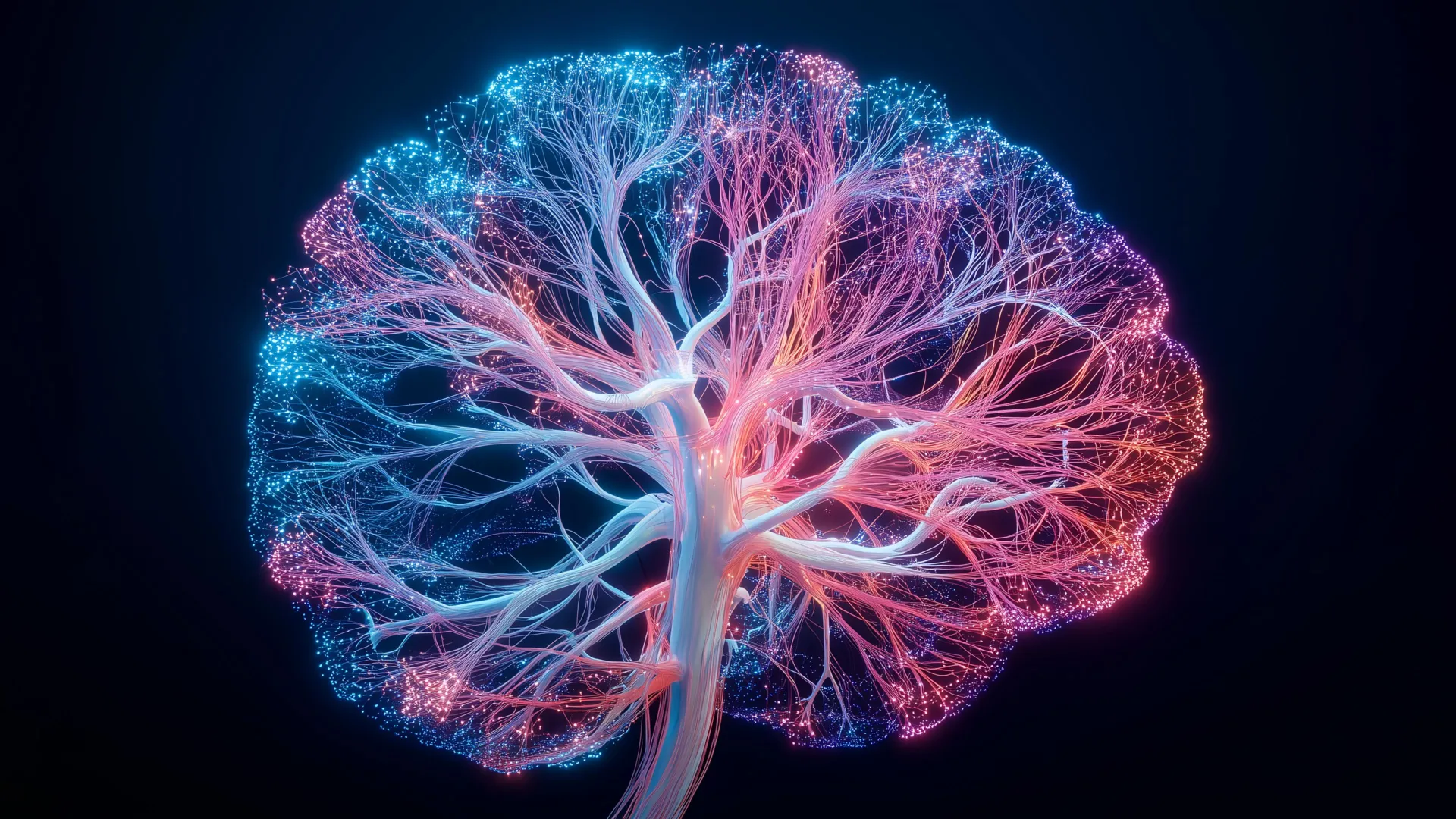
For decades, the prevailing dogma in both neuroscience and artificial intelligence (AI) has been rooted in a "bottom-up" philosophy. This model posits that the brain functions like an assembly line: sensory information enters through the periphery, travels through a rigid, hierarchical chain of processing stations, and eventually culminates in the frontal cortex, where a "decision" is finally minted.
However, a groundbreaking study led by researchers at the University of Illinois Urbana-Champaign (UIUC) is challenging this long-held architectural paradigm. By uncovering evidence that decision-making begins much earlier in the brain than previously theorized, the team, led by Professor Yurii Vlasov of The Grainger College of Engineering, is proposing a fundamental shift in how we perceive intelligence—and how we might engineer it.
The Traditional Model: A Linear Legacy
To understand the significance of this research, one must first look at the foundation of modern artificial neural networks. Since the mid-20th century, engineers have modeled AI systems—most notably convolutional neural networks (CNNs)—on a hierarchical framework. In this traditional view, data enters at the "input layer," passes through successive "hidden layers" of increasing abstraction, and eventually produces an output.
This model mirrors the classical understanding of the mammalian brain: sensory signals from the eyes or skin travel through primary processing centers and move upward through the cortex until they reach the executive centers responsible for judgment and action. While this approach has fueled the current AI boom, it has hit a plateau regarding energy efficiency and true cognitive flexibility. The human brain, by contrast, performs tasks of staggering complexity—navigating social cues, physical environments, and abstract reasoning—while consuming roughly the same amount of power as a dim lightbulb.
Chronology of a Scientific Shift
The journey to this discovery began with a simple, yet profound question: Is the hierarchy truly a one-way street?
In 2008, the National Academy of Engineering identified "Reverse Engineering the Brain" as one of the 14 Grand Challenges for the 21st century. While many have focused on mapping neurons or synapses, Vlasov and his team chose to focus on the "systems-level architecture"—the structural logic of how information flows.
The study, published in the Proceedings of the National Academy of Sciences (PNAS), utilized advanced neural recording techniques on mice navigating a virtual reality environment. The team monitored the mice as they performed perceptual tasks, expecting to see the standard linear progression of neural firing. What they found, however, was an anomaly: decision-related activity was present in the primary somatosensory cortex (S1) almost immediately. S1 is traditionally categorized as an early, "low-level" sensory area, yet it was exhibiting signs of high-level decision-making processes.
This suggests that the "decision" is not a destination at the end of a long, hierarchical path, but a distributed, dynamic process that involves an iterative conversation between the lowest and highest levels of the brain.
Supporting Data: The Power of Feedback Loops
The core of the UIUC team’s findings rests on the concept of "feedback loops." In the hierarchical model, information flows in one direction: upward. The new data suggests that the brain is a bidirectional highway.
When the researchers analyzed the neural activity in the mice, they observed that higher-level brain regions were actively modulating the activity in the primary sensory cortex. This "top-down" regulation implies that the brain does not wait for all data to be processed before it begins forming a hypothesis or a decision. Instead, it uses early sensory input to make "best guesses," which are then refined through constant, circular communication between different regions.
This architecture is vastly different from the current generation of AI, which is characterized by massive, power-hungry, feed-forward computations. By relying on interconnected feedback loops, the brain maintains efficiency by only processing what is necessary, when it is necessary, rather than pushing every bit of data through every layer of a network.
Official Perspectives: The Evolution of Logic
Professor Yurii Vlasov, reflecting on the implications of the study, emphasizes that the goal is not to mimic the brain blindly, but to capture the architectural elegance honed by millions of years of evolution.
"We want to learn from a billion years of evolution," Vlasov noted. "How is that biological intelligence organized architecturally? Can we learn from the architectural side of the brain and emulate that to make AI more effective, less power-hungry, and more intelligent than it currently is? In the level of decision-making, that’s where current AI is lacking."
Vlasov points out that while AI has mastered the art of pattern recognition, it struggles with the nuanced, energy-efficient "reasoning" that even a mouse demonstrates in a virtual maze. The "neural code" of the brain remains a language scientists are only beginning to decode, but Vlasov believes that systems-level architectural shifts—specifically the integration of dynamic feedback—could be the missing link.
"The neural code of the brain is still mostly an unknown language," Vlasov said. "But this systems-level understanding can be viewed as a potential impact on how more efficient artificial neural networks can be built. Maybe with these analogies that we learn from real brains, we can improve AI further."
Implications: A New Roadmap for AI
The potential implications for the future of artificial intelligence are profound. If researchers can move away from the "deep, wide, and linear" model of current neural networks toward a "dynamic, recurrent, and modular" architecture, the impact could be threefold:
- Energy Efficiency: Current AI models require massive server farms and astronomical energy consumption to process relatively simple tasks. By utilizing feedback loops, future systems could achieve similar results with a fraction of the computational load, essentially "pruning" the amount of information processed at each stage of a decision.
- Cognitive Flexibility: Linear AI models are brittle; they often fail when faced with data that deviates slightly from their training sets. Brain-inspired architectures that utilize bidirectional communication could be more resilient, as they can update their internal "hypotheses" in real-time as new information arrives.
- Autonomous Decision-Making: Moving decision-making capability closer to the sensors (the "edge") could revolutionize robotics and autonomous systems. By allowing sensors to possess a degree of "perceptual intelligence," machines could react to their environments with the speed and efficiency of a biological organism.
The Path Forward
The researchers are quick to caution that they have not yet provided a "plug-and-play" blueprint for the next ChatGPT or autonomous vehicle. The study is a proof-of-concept for a new way of thinking about computational organization.
The next phase of Vlasov’s research will focus on the "temporal dynamics" of these signals. The team plans to develop new technologies to measure neural activity with higher precision, aiming to map exactly how these feedback loops emerge and coordinate across different levels of processing. They are essentially looking for the "timing" of the conversation between brain regions, which they believe is the secret to the brain’s superior performance.
"By looking at the fast temporal dynamics of neural activity, maybe we can understand better how these feedback loops are engaged in making decisions," Vlasov explained. "Maybe that’s the approach that potentially uncovers these currently unknown mechanisms—how these feedback loops are organized dynamically and how they form and shape different levels of processing. Maybe that can be implemented in new architectures for AI."
As we stand at the precipice of a new era of AI development, the work at the University of Illinois Urbana-Champaign serves as a humbling reminder: the most sophisticated computer in existence is not a server rack in a data center, but the three-pound organ sitting inside our skulls. By turning our gaze away from linear processing and toward the complex, circular, and highly efficient loops of the biological mind, we may finally unlock the next generation of artificial intelligence—one that is not just faster, but fundamentally smarter.
 Reynand Wu
 Ammar Sabilarrohman
 rifanmuazin
