
 By rifanmuazin
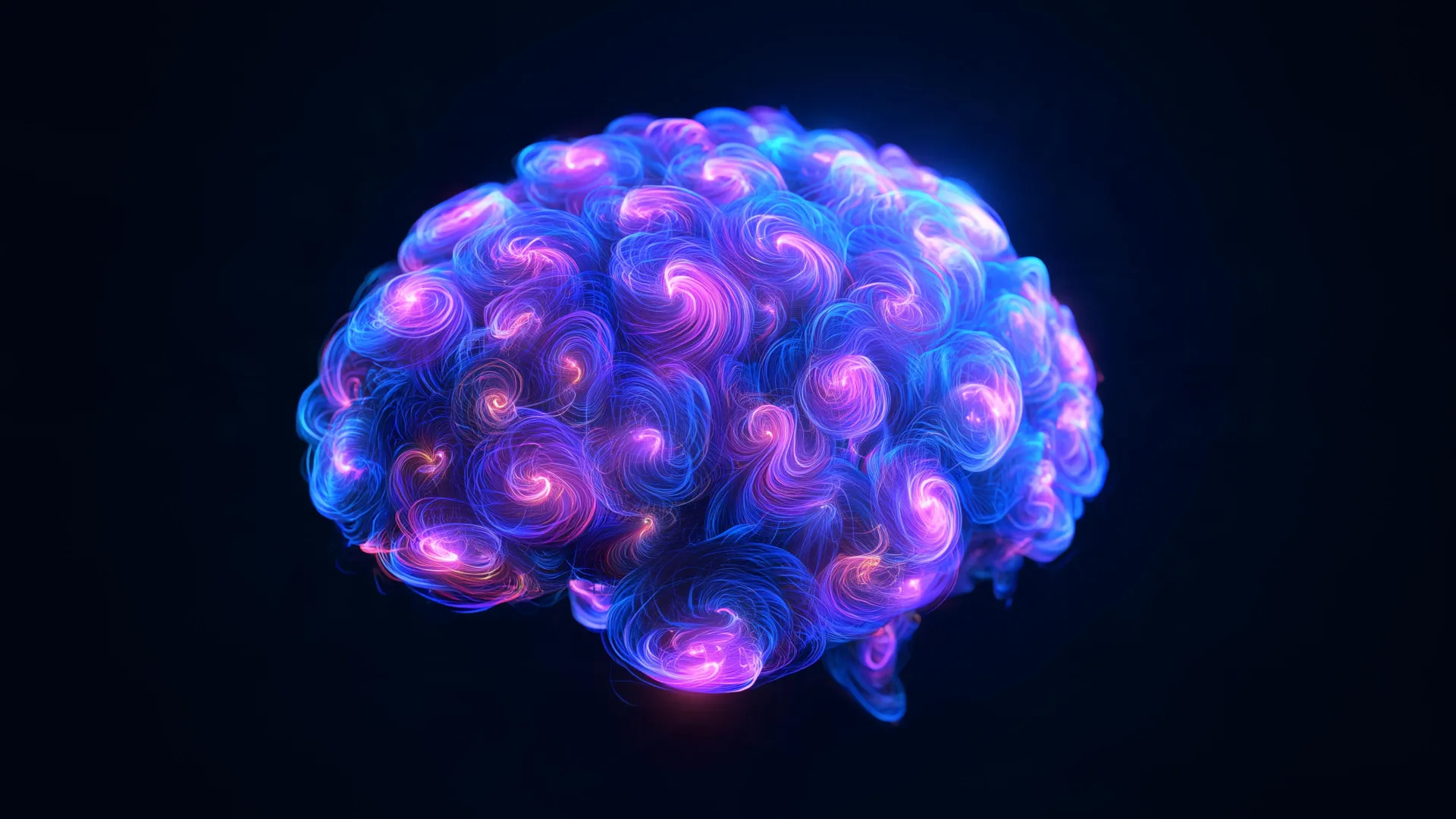
In the quiet, sub-zero chambers of the world’s most advanced physics laboratories, a revolution is brewing at the scale of mere nanometers. For decades, the trajectory of computing has been defined by Moore’s Law—the relentless drive to pack more transistors onto silicon chips. However, as we approach the physical limits of traditional electronics, the energy demands of our data-hungry world are becoming unsustainable. Enter the skyrmion: a tiny, magnetic vortex that promises to upend our current computing paradigm, offering a pathway to machines that mimic the efficiency of the human brain.
A landmark study recently published in the journal Nature Nanotechnology has provided a pivotal breakthrough in this field. By observing and manipulating these magnetic structures in real-time, researchers from the Johannes Gutenberg University in Mainz, Germany, and the Norwegian University of Science and Technology (NTNU) have unlocked a new understanding of how these vortices behave. This research does more than solve a fundamental physics puzzle; it provides the blueprint for a new generation of low-power, high-density, and neuro-inspired computing systems.
The Science of the Skyrmion: A New Frontier in Spintronics
To understand why skyrmions are capturing the imagination of the scientific community, one must first look at the limitations of modern hardware. Today’s computers rely on moving electrons through semiconductors, a process that generates significant heat and requires a constant, substantial power supply. As we scale down to the atomic level, this "charge-based" logic hits a wall: leakage currents and thermal dissipation become uncontrollable.
Skyrmions, by contrast, are topological solitons—stable, swirling magnetic structures that exist within specific materials. Unlike a simple magnetic bit, which is essentially a north or south pole, a skyrmion is a complex vortex where the magnetic orientation twists in a unique, non-trivial pattern. Because they are topological, they are incredibly stable and difficult to destroy.
"Skyrmions are small, magnetic vortices that can store information in a completely new way," says Asle Sudbø, who leads the Centre for Quantum Spintronics (QuSpin) at NTNU. "Instead of the current technology, where we constantly need more space and energy to process data, skyrmions could make it possible to build much smaller and more energy-efficient data storage systems."
Chronology of a Breakthrough: From Theory to Real-Time Observation
The study of skyrmions has moved rapidly from theoretical prediction to experimental reality. First proposed theoretically in the 1960s by British physicist Tony Skyrme, these structures were not observed in magnetic materials until the late 2000s. For years, scientists could only create them in static, equilibrium states, making them difficult to study under dynamic conditions.
The recent collaboration between the Johannes Gutenberg University and NTNU represents a quantum leap in experimental methodology. The research team focused on "skyrmion lattices"—periodic arrangements where these vortices organize into crystal-like patterns. The team’s primary objective was to observe the "melting" of these lattices—a phase transition that occurs when external energy is applied, causing the orderly structure to dissolve.
The Real-Time Milestone
The researchers achieved a world-first: they recorded a film of a magnetic skyrmion lattice melting in real-time. This was not a mere recording of destruction; the scientists maintained direct control over the individual skyrmions throughout the melting process. They could manipulate the shape and size of each vortex "on the fly" as the lattice disintegrated.
This level of granular control is unprecedented. By watching how the lattice broke down, researchers gained a microscopic view of how skyrmions interact with their environment and with each other. This is critical for computing; if we are to use skyrmions as data bits, we must know how to reliably create, move, and delete them without triggering unintended phase transitions.
Supporting Data: Why Efficiency Matters
The global appetite for data is currently met by massive server farms that consume staggering amounts of electricity. The energy required to simply move data from memory to processor—the "von Neumann bottleneck"—is a primary driver of inefficiency in modern computing.
Skyrmions address this in three ways:
- Size: Skyrmions can be as small as a few nanometers. A single skyrmion represents a bit of data, allowing for storage densities far beyond current solid-state drives (SSDs).
- Low Energy Movement: Because skyrmions are manipulated via spin currents (the angular momentum of electrons) rather than charge currents, the electrical resistance—and therefore the heat generated—is significantly reduced.
- Non-Volatility: Skyrmions are inherently stable. They do not require a constant "refresh" of electricity to maintain their state, which could lead to devices that turn on instantly and retain memory without power.
The Vision: Towards Brain-Like Computing
Perhaps the most compelling implication of this research is the potential for "neuromorphic" computing. The human brain is a marvel of energy efficiency; it performs complex pattern recognition and cognitive tasks while consuming roughly 20 watts of power—a fraction of what even a basic laptop requires.
Biological brains process information using neural pathways that adapt and strengthen based on use. Current transistors are static switches, but skyrmions can be used to create "synaptic" elements. By arranging skyrmions in specific geometries, researchers can emulate the behavior of biological neurons and synapses.
"These nanoscale vortices could help develop computers that resemble biological brains," says Professor Sudbø. "Rather than relying on conventional transistor-based computing, such systems could use magnetism to process information."
By leveraging the physics of these vortices, future computers could perform tasks such as machine learning and artificial intelligence natively at the hardware level. This would remove the need for massive, energy-intensive software simulations, bringing AI capabilities to edge devices, medical implants, and autonomous sensors that operate for years on a single battery.
Official Perspectives: The Path Forward
The findings published in Nature Nanotechnology are widely viewed as a "proof of concept" that bridges the gap between fundamental physics and industrial application. However, the researchers are cautious about the timeline.
"The findings give us new insight into how these types of particles behave," notes Sudbø. "This could therefore become important for the development of more energy-efficient computer technology in the future."
The academic consensus suggests that while the "skyrmion era" of computing is not immediate, the fundamental hurdles are being cleared. The ability to manipulate these structures in real-time means that engineers can now begin to prototype "skyrmionic logic gates"—the building blocks of a new processor.
Industry partners are already looking at spintronics as the next logical step beyond silicon. The integration of skyrmions into existing CMOS (complementary metal-oxide-semiconductor) manufacturing processes is a significant challenge, but the potential payoff—a thousand-fold increase in energy efficiency—is too large for the tech sector to ignore.
Implications: A Fundamental Paradigm Shift
If we look back at the history of technology, we see a shift from mechanical gears to vacuum tubes, then to transistors, and eventually to integrated circuits. Each jump was defined by our ability to manipulate smaller and smaller physical phenomena. The transition to skyrmion-based computing represents the next logical step in this progression.
The implications are far-reaching:
- Environmental Impact: A shift to low-energy, skyrmion-based processing could drastically reduce the carbon footprint of global data centers.
- Quantum Synergy: The research touches upon topological quantum effects, which are at the heart of the next generation of quantum computers. Skyrmions may serve as the reliable qubits required to stabilize quantum states.
- Edge Computing: Devices currently limited by battery life—such as wearables or remote climate sensors—could see a massive expansion in functionality.
Conclusion
The work conducted at the Johannes Gutenberg University and NTNU serves as a beacon for the future of hardware design. By successfully filming and manipulating the melting of skyrmion lattices, scientists have demonstrated that we are no longer just observing these microscopic vortices; we are beginning to master them.
"This could revolutionize the way we think about computers," concludes Professor Sudbø. While the transition from the laboratory to the consumer desktop will require years of rigorous engineering and material science, the path is now clear. As we face a future of ever-increasing data demands, the humble skyrmion—a tiny, swirling vortex of magnetism—may well be the key to building the next generation of thinking, learning, and ultra-efficient machines. The magnetic revolution has begun, and it is happening at the scale of the unimaginably small.
 Reynand Wu
 Ammar Sabilarrohman
 Iffa Jayyana
