
 By Nila Kartika Wati
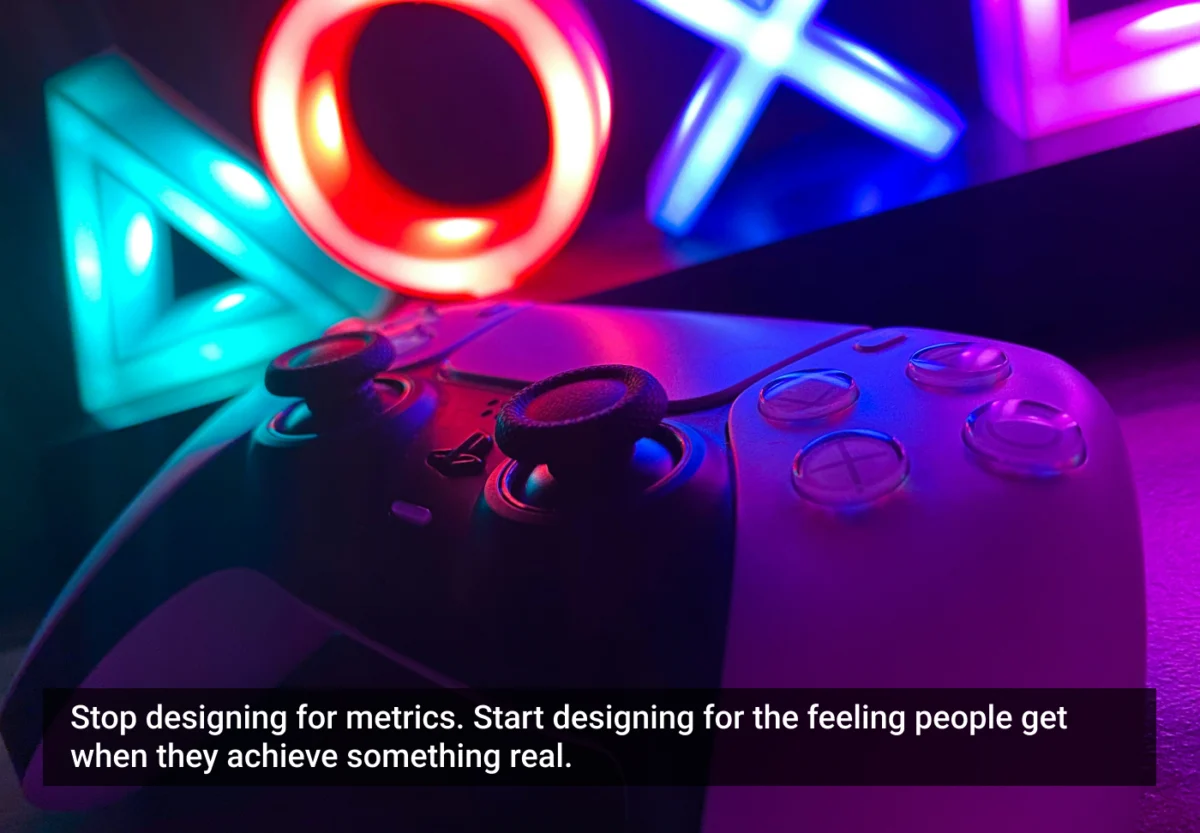
SAN FRANCISCO — For decades, the digital product design playbook has relied on a familiar, albeit cynical, set of tools. Known colloquially as "gamification," this approach has permeated nearly every corner of modern software. Fitness trackers guilt-trip users over broken daily streaks, productivity apps lock features behind superficial achievement badges, and enterprise software deploys hollow leaderboards designed to artificially inflate Daily Active Users (DAU).
Yet, beneath the glossy veneer of progress bars and notification chimes, a quiet exhaustion has set in among consumers. Users are closing apps not with a sense of accomplishment, but with a familiar, hollow mixture of relief and self-loathing—the unmistakable hallmark of behavioral manipulation.
As product teams increasingly grapple with user churn and burnout, a growing movement within the design and tech sectors is calling for a radical paradigm shift. Critics, UX researchers, and game developers are advocating for what they term "Gamification 2.0"—a philosophy that abandons Pavlovian psychology in favor of intrinsic motivation, user dignity, and genuine gameplay design.
Main Facts: The Crisis of Extrinsic Motivation
The core thesis of the Gamification 2.0 movement is straightforward: current digital product design often confuses the exploitation of human psychological vulnerabilities with actual engagement.
- The Metrics Trap: Traditional gamification prioritizes quantitative business metrics—retention, session length, and DAU—over qualitative human experiences.
- The Skinner Box Model: Many current app features rely on variable reward schedules, artificial scarcity, and fear-of-missing-out (FOMO), treating human beings like laboratory animals conditioned to press levers for food pellets.
- The Shift to Intrinsic Value: Gamification 2.0 argues that software should borrow from the philosophy of great video game design, where people play because the experience itself fosters mastery, autonomy, and creativity—not because they are terrified of breaking a digital streak.
"When you watch someone play a game they genuinely love, you see something remarkable," notes industry design literature. "They lean forward. They experiment. They laugh when they fail because failure teaches them something. That’s the feeling your app should create—not anxiety about broken streaks."
Chronology: From Arcade Cabinets to Cloud SaaS
To understand where modern design went astray, industry historians point to the historical evolution of interactive systems over the past fifty years.
Phase 1: The Golden Age of Arcade Cabinets (1970s–1990s)
In the early days of arcade and home console gaming, the relationship between designer and player was transactional yet respectful. Games like Pac-Man, Super Mario Bros., and early 3D titles were designed to be intrinsically rewarding. While high scores and leaderboards existed, they served as a testament to skill development, not as psychological hooks to trap players in perpetual compulsion loops.
Phase 2: The Rise of Social Media and "Growth Hacking" (2000s–2010s)
As the internet shifted toward mobile platforms and ad-supported business models, tech companies began importing simplified game mechanics into non-gaming contexts. Driven by metrics-obsessed growth teams, product managers started bolting points, badges, and leaderboards (PBL) onto software. The focus shifted away from solving user problems and toward maximizing retention dashboards.
Phase 3: The Burnout and the Call for "Gamification 2.0" (Present)
In recent years, user fatigue has reached a tipping point. Consumers have become hyper-aware of dark patterns and manipulative design. The industry is now experiencing a cultural reckoning, with designers asking a fundamental question: Would someone who plays real games find this engaging, or would they see through it immediately?
Supporting Data and Psychological Insights
The psychological impact of traditional gamification versus genuine game-inspired design reveals stark differences in user sentiment and long-term retention.
The Cost of Fake Gamification
According to UX behavioral studies, when apps rely heavily on guilt-inducing mechanisms (such as threatening to wipe out a 300-day streak), they trigger avoidance behaviors. Users who miss a day often abandon the app entirely out of a sense of shame or failure.
- The "Relief" Metric: When users finish a task in a poorly gamified app, their dominant emotion is frequently relief ("I can finally stop") rather than satisfaction ("I learned something valuable").
- The Illusion of Progress: Grinding through meaningless tasks for an arbitrary number does not enhance a user’s real-world capabilities. It merely creates an illusion of productivity while leaving actual skills stagnant.
What Real Achievement Looks Like
In contrast, masterclass video games—such as Portal, Minecraft, Dark Souls, and The Legend of Zelda: Breath of the Wild—foster deep psychological fulfillment through four key pillars:
- Autonomy: Letting users choose their path rather than forcing them down a rigid, linear track.
- Mastery: Providing challenges that genuinely test intellect and reflexes, leading to transferable real-world skills and cognitive satisfaction.
- Creativity: Offering sandboxes where users can build things that did not exist before, generating authentic pride.
- Connection: Fostering community-driven sharing rather than manufactured competition.
When an app successfully channels these principles—much like productivity powerhouses like Notion or creative platforms like Roblox—it builds voluntary, long-term loyalty that requires no artificial bribery.
Official Responses and Industry Perspectives
While major tech corporations have historically guarded their engagement metrics closely, product leaders across the software ecosystem are beginning to speak out against the excesses of manipulative design.
"We are not Pavlov’s dogs, salivating at bells and pressing levers for food pellets," says a prominent voice in the UX ethics community. "Here is what bothers me most about current gamification: it treats humans like laboratory animals. Ring the bell, get the food. Break your streak, feel the shame. This is beneath us."
Venture capitalists and startup founders are also noting a shift in consumer sentiment. Products that rely on dark patterns are facing higher long-term churn as users migrate toward cleaner, more respectful interfaces.
"The standard is no longer Daily Active Users at any cost," explains a Silicon Valley product strategist. "The standard is: Do your users feel genuinely better for having used your app? Do they feel more capable, more accomplished, more skilled at something that matters? If the answer is no, your retention strategy has an expiration date."
Implications: The Road Ahead for Product Teams
The transition to Gamification 2.0 carries profound implications for product managers, UX designers, and software engineers worldwide.
1. A Redefinition of Success Metrics
Product teams must transition away from asking, "How do we increase DAU?" and begin asking, "What would make this experience genuinely enjoyable?" This requires developing more sophisticated, qualitative measures of user satisfaction and long-term value creation.
2. Genre-Matching Over Copied Mechanics
Rather than blindly copying leaderboards or streak counters from competing apps, product teams are being urged to analyze their app’s true purpose and match it with an appropriate game genre. A financial planning app might benefit from the resource-management psychology of a strategy game, while a learning platform might look to puzzle design for inspiration.
3. Restoring User Dignity
Ultimately, Gamification 2.0 is an ethical mandate. It challenges designers to respect user intelligence and time. By rejecting the shortcuts of casino-style addiction engineering, modern tech companies can build tools that foster joy rather than anxiety, and pride rather than shame.
As the digital landscape matures, the verdict from users is clear: software should empower human potential, not exploit human vulnerabilities. Designing for players—rather than mere metrics—is no longer just an idealistic philosophy; it is the ultimate competitive advantage for the next generation of digital products.
 Nana Muazin
 Raul Delapena Setiawan
 Suro Senen
