
 By Suro Senen

In the digital landscape of modern commerce, the inbox has become the most contested real estate on the internet. For years, the prevailing wisdom in ecommerce has been purely transactional: optimize the funnel, decrease cart abandonment, and maximize the Customer Lifetime Value (CLV) through aggressive automation.
While these tactics remain the bedrock of a functioning business, they are increasingly insufficient. As customer acquisition costs (CAC) continue to skyrocket and social media algorithms become more restrictive, the brands that thrive are those that have stopped viewing their email lists as a database of leads and started viewing them as a community of advocates.
This article explores the fundamental shift from transactional email marketing to relationship-driven community building, providing a blueprint for founders to deepen their connection with subscribers.
The Core Thesis: A List vs. A Community
At the most basic level, a "list" is a collection of email addresses harvested through lead magnets, purchases, or newsletter signups. It is a technical asset. A "community," by contrast, is a group of people who share a common identity or affinity for a brand’s mission.
The distinction is not semantic; it is structural. Brands that focus solely on the "list" mindset often suffer from high churn, price sensitivity, and a total reliance on promotional discounting to drive revenue. Conversely, brands that build a "community" foster a sense of belonging. Their customers are less likely to jump ship when a cheaper competitor appears, and they are significantly more likely to act as organic brand ambassadors.
The Chronology of an Email Strategy Evolution
To understand how brands successfully pivot to community building, we must look at the typical lifecycle of a mature email program:
- The Transactional Phase (The Baseline): The business sets up foundational flows—welcome series, cart abandonment, and post-purchase follow-ups. These are essential for operational revenue and cannot be abandoned.
- The Integration Phase (The Pivot): The brand begins to weave "value-add" content into their automated sequences. This might involve sharing educational content, industry insights, or behind-the-scenes stories rather than just product features.
- The Relationship Phase (The Community): The brand shifts to a two-way dialogue. The focus moves from "broadcasting to the masses" to "facilitating conversation." This is the stage where high reply rates, forward rates, and organic advocacy begin to emerge.
The Anatomy of an Insider Experience
Making subscribers feel like "insiders" is the most effective psychological lever for community building. This does not require a complex loyalty program or a gated VIP portal; it requires a shift in transparency and communication framing.
The Power of "Working in Public"
The modern consumer is hyper-aware of marketing polish. Authenticity, therefore, has become a premium commodity. By sharing the "why" behind product development—including the failures, the prototypes that didn’t make the cut, and the challenges faced in the supply chain—brands invite their audience into the narrative of the business.
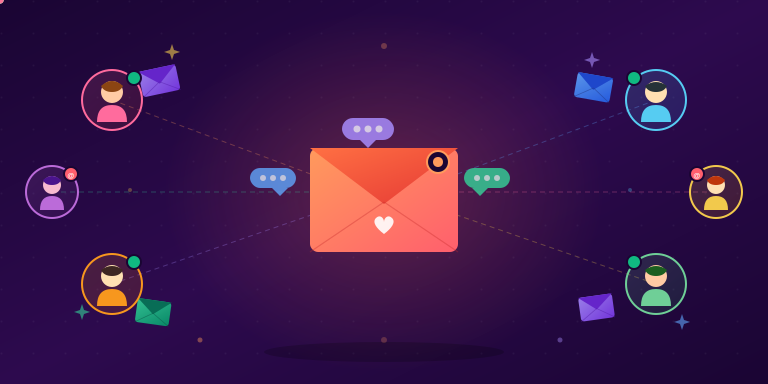
This creates a sense of shared investment. When a customer understands the labor and thought process behind an item, they aren’t just buying a product; they are supporting a vision.
Founder-Led Communication
In an era of corporate-speak and heavily designed templates, the humble, text-only email from a founder remains one of the most effective conversion tools. These emails feel personal, human, and—most importantly—vulnerable. When a founder communicates directly with their audience, it bridges the gap between a faceless corporation and a community of peers.
The Feedback Loop: Why Listening is the New Selling
Most ecommerce email programs are one-directional: the brand speaks, the subscriber receives. Community, however, requires a feedback loop.
The Art of the Simple Question
The most effective way to initiate a conversation is to ask a specific, low-friction question at the end of an email. Instead of a complex survey that forces a user to navigate to a new page, a simple question like, "What is the one thing you’re still trying to figure out regarding [Topic]?" or "What should we create next?" invites an immediate, personal response.
The Scale of Personal Attention
While manual responses to 50,000 subscribers are impossible, the effort remains highly scalable in its impact. Even if a brand only engages with 20 or 30 direct replies a month, those individuals often become the "super-users"—the customers who write the best reviews, refer the most friends, and advocate for the brand in public forums.
Implementing "Reply-Based" Campaigns
Brands should consider integrating specific campaigns designed solely to generate replies. These emails are not meant to drive immediate sales but to surface customer insights and validate brand positioning. By asking, "What is the best thing you’ve bought from us and why?" you generate social proof that can be repurposed in future marketing materials.
Establishing a Recognizable Brand Identity
Identity is the glue that holds a community together. If a brand’s voice is indistinguishable from its competitors—if it sounds like every other "hey friend" email in the inbox—it will never build a community.
A distinct voice is built on clear, unwavering choices:
- The "Stand For" Principle: What does your brand believe about your industry?
- The "Push Back" Principle: What does your brand refuse to do that others in your space commonly do?
- The Consistency Principle: Is your voice as recognizable in a transactional shipping notification as it is in a brand-story manifesto?
When a brand possesses a distinct, consistent point of view, it stops being a commodity. Subscribers feel they are part of a tribe that shares their values, which is the strongest form of customer retention.
Measuring Community Success: Beyond Revenue
While revenue is the lifeblood of any business, it is a lagging indicator of community health. To understand if your community-building efforts are working, you must track the "soft" metrics that signal genuine engagement:
- Reply Rate: This is the primary indicator of two-way communication. A high reply rate is a clear sign that your subscribers view your email as a conversation, not a broadcast.
- Forward Rate: A forwarded email is the highest form of digital endorsement. When someone sends your email to a friend, they are essentially saying, "This brand aligns with my identity and my values."
- Referral Growth: By tracking how new subscribers found you, you can quantify the power of your community. Are people finding you through paid ads, or are they finding you because a friend shared your newsletter?
- Unsubscribe Patterns: Pay attention to which emails trigger unsubscribes. If your educational or "insider" emails have lower unsubscribe rates than your purely promotional ones, you have found your sweet spot.
Implications for the Modern Founder
The shift toward community-focused email marketing is not just a "nice-to-have"—it is a strategic necessity for long-term survival. In a market saturated with options, the brands that win are those that provide value beyond the transaction.
Leveraging the Right Infrastructure
To achieve this balance of revenue and community, founders require the right technical foundation. Tools like Omnisend are designed to facilitate this exact balance. By utilizing advanced segmentation, you can ensure that the right message reaches the right person at the right time, while automation handles the repetitive transactional work. This frees up the founder’s time to focus on the high-level, relationship-building tasks that machines cannot perform.
Final Thoughts
Building a community through email is a marathon, not a sprint. It requires the courage to move away from purely promotional metrics and the discipline to maintain a consistent, authentic voice.
It is important to remember that you do not need a massive audience to build a powerful community. You only need a group of people who feel that they belong to something meaningful. By treating your subscribers as participants in your journey rather than just recipients of your marketing, you build a resilient business that can weather the volatility of the digital marketplace.
For those ready to start, remember that every email is an opportunity to strengthen a bond. Use your voice, listen to your audience, and watch as your "list" transforms into a loyal, growing community.
Foundr readers can get a head start on their community-building journey by taking advantage of 50% off their first three months of Omnisend. Use code FOUNDR50 when you sign up to begin building an email strategy that your customers actually look forward to receiving.
 Reynand Wu
 Nana
 Jia Lissa
