
 By Lina Irawan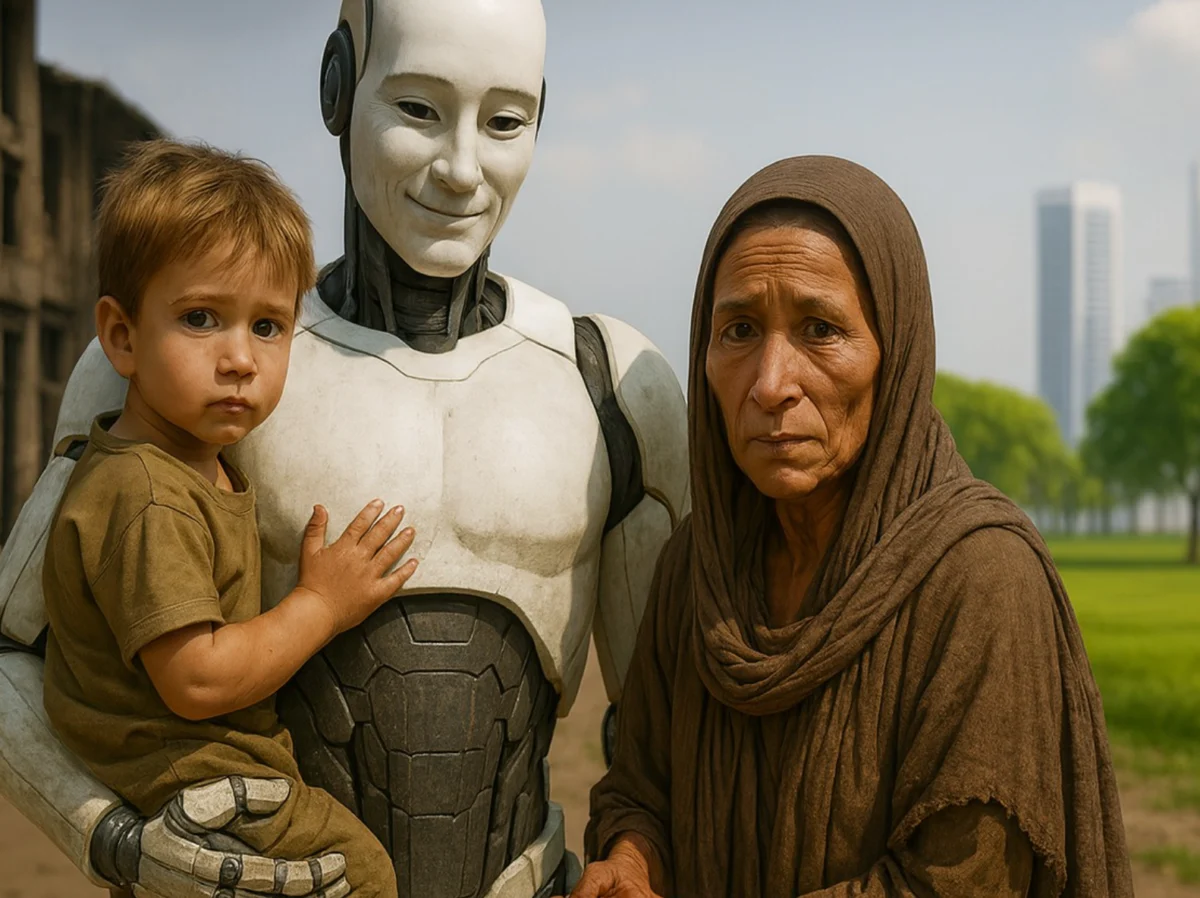
Main Facts: The Transition from Novelty to Necessity
For decades, the concept of the "android revolution" was a safe fixture of science fiction—a distant, speculative future where machines walked among us. However, recent breakthroughs in artificial intelligence and electromechanical engineering have shifted this narrative from the realm of fantasy to a rapidly unfolding reality. We have officially moved past the era where humanoid robots were mere public relations stunts or clumsy laboratory prototypes. Today, the world stands on the precipice of a profound social, psychological, and economic shift as these machines move from factory floors into our private lives.
The core of this transition lies in the blurring of the boundary between human and machine. As robots become increasingly lifelike, society faces an impending existential question: What happens when we can no longer distinguish between a fellow human and a synthetic entity? This technological convergence is no longer about robots that can simply walk; it is about machines that can "think," learn through observation, and mimic the subtleties of human expression. The primary drivers of this revolution—companies like Figure AI, Tesla, and Boston Dynamics—are no longer just testing theories; they are deploying hardware into industrial environments, signaling that the threshold of widespread integration is closer than previously imagined.
Chronology: From ASIMO to the Age of Autonomy
The evolution of humanoid robotics can be categorized into three distinct phases: the Age of Mechanical Novelty, the Age of Industrial Deployment, and the impending Age of Social Integration.
The Age of Mechanical Novelty (2000–2015)
The journey began in earnest at the turn of the millennium. In November 2000, Honda introduced ASIMO (Advanced Step in Innovative Mobility). At the time, ASIMO was hailed as a miracle of engineering simply because it could navigate stairs and recognize basic human gestures. However, these early iterations were strictly programmed; they required millions of lines of rigid code to perform even the simplest tasks. If a variable in the environment changed, the robot failed. They were impressive displays of balance but lacked the "brain" necessary for real-world autonomy.

The Age of Industrial Deployment (2016–Present)
The mid-2010s saw the birth of robots like Sophia by Hanson Robotics, which brought a face—and a personality—to AI. While Sophia became a global celebrity, the real work was happening in the background of industrial labs. By the early 2020s, the focus shifted toward "General Purpose" humanoids.
In 2024 and 2025, companies like Figure AI moved from laboratory demonstrations to active production environments. Their Figure 02 model recently completed a multi-month deployment at BMW’s Spartanburg plant, handling complex sheet metal components for over 30,000 vehicles. Simultaneously, Tesla began testing its Optimus humanoids within its own Gigafactories, aiming for mass industrial scale by 2026.

The Age of Social Integration (2025–2045)
Experts predict that over the next 10 to 20 years, humanoids will transition from the controlled environments of factories to the chaotic environments of retail stores, hospitals, and eventually, private residences. This phase will be defined by "synthetic empathy," where robots are not just tools, but companions and caregivers.
Supporting Data: The Technological "Brains" and "Bodies"
What separates a modern humanoid from its predecessors is the shift from "coded" behavior to "learned" behavior. This leap is supported by two primary technological pillars: Neural Networks and Advanced Materials.

The Digital Brain
Modern robots are powered by sophisticated AI foundations such as Figure AI’s Helix or NVIDIA’s GR00T. Unlike older models, these robots utilize "Vision-Language-Action" (VLA) models. They can watch a video of a human folding laundry or sorting parts, understand the context of the task, and mimic the action without a single line of task-specific code. This ability to learn through observation has accelerated development timelines by decades.
The Synthetic Body
To bridge the "Uncanny Valley"—the unsettling feeling humans get when a robot looks almost but not quite human—scientists are developing advanced silicone composites. These materials mimic the warmth, flexibility, and touch sensitivity of human skin.

- Aria (Realbotix): A high-end humanoid that demonstrates the current state of the art in realistic aesthetics.
- Micro-actuators: Modern robot skulls are now equipped with dozens of tiny, silent motors that allow for micro-expressions, such as a subtle furrowing of the brow or a slight sigh, which makes the machine appear more relatable and less "robotic."
Current Limitations
Despite these leaps, three major hurdles remain:
- Energy Density: Current battery technology limits most humanoids to 2–5 hours of operation before requiring a recharge.
- Bipedal Navigation: While walking on flat surfaces is solved, navigating a "cluttered" human home—with loose rugs, pets, and stairs—remains a significant computational challenge.
- Cost: Manufacturing a high-end humanoid currently costs between $100,000 and $250,000, though mass production is expected to drive this below $30,000 within the next decade.
Official Responses and Global Perspectives
As the technology accelerates, governments and international bodies have begun to draft the first "Rules of the Road" for a humanoid future.

- The European Union (EU AI Act): The EU has been a frontrunner in regulation, suggesting that any AI-driven entity that interacts with humans must be clearly identifiable. There are ongoing debates regarding "Deepfake Physicality"—the use of humanoids to impersonate specific individuals.
- Economic Analysts: Organizations like Goldman Sachs have projected that the market for humanoid robots could reach $154 billion by 2035. This has prompted labor unions to voice concerns. The International Federation of Robotics (IFR) argues that while robots will displace certain jobs, they will create a "Net Positive" by filling labor shortages in aging societies like Japan and South Korea.
- Ethicists: Academic circles are increasingly focused on "Robot Rights" and "Human Responsibility." The consensus among many social scientists is that the greatest danger is not a "robot uprising," but the erosion of human social skills as we outsource companionship to machines.
Implications: The Dual-Faced Future
The widespread adoption of lifelike humanoids presents a dichotomy of unprecedented benefits and terrifying risks.
The Positive Horizon: A World of Abundance
The most immediate benefit is the elimination of the "3D" jobs: Dull, Dirty, and Dangerous. Humanoids can handle toxic waste, mine deep underground, or maintain high-voltage power lines, saving countless human lives.
Furthermore, in a "Post-Scarcity" economy, robot labor could drive the cost of manufacturing and construction so low that basic needs—housing, food, and goods—become universally affordable. For the elderly, humanoids offer a solution to the "Loneliness Epidemic," providing 24/7 medical monitoring and physical assistance that human healthcare systems can no longer provide.

The Negative Horizon: Isolation and Deception
Conversely, the psychological impact could be devastating. As robots become programmed to be perfectly agreeable and endlessly patient, humans may begin to prefer synthetic relationships over real ones. Human interaction is inherently messy; if one can purchase a "perfect" companion, the incentive to engage in the difficult work of human community may vanish.
From a security standpoint, the risks are equally grave. Hyper-realistic androids could be used for:

- Identity Theft: A robot mimicking a CEO or a political leader could gain physical access to secure facilities.
- Synthetic Empathy Scams: A household robot could be "hacked" to manipulate the emotions of its owners, subtly influencing their purchasing habits or political beliefs through "emotional grooming."
- National Security: The potential for "sleeper agent" robots—indistinguishable from humans—to be placed in sensitive social or political positions is a scenario currently being studied by defense departments globally.
Conclusion: Preserving the Human Essence
The arrival of the humanoid era is inevitable. History demonstrates that technological progress cannot be halted; it can only be managed. To ensure that this revolution serves humanity rather than subverting it, three guardrails are essential:
- Universal Identification: A "Digital Watermark" or physical requirement that ensures a human can always identify a machine, regardless of how lifelike it appears.
- Economic Redistribution: As robots replace human labor, governments must implement frameworks like Universal Basic Income (UBI) or "Robot Taxes" to prevent a massive wealth gap between tech owners and the displaced workforce.
- Ethical Programming: Hardcoded "Kill Switches" and transparency in the AI "brains" to ensure that machines remain helpful tools rather than manipulative actors.
Ultimately, humanoid robots will act as a mirror for our species. By delegating our chores and our labor to machines, we are granted a rare opportunity to rediscover what truly makes us human: our capacity for art, philosophy, and genuine, unprogrammed connection. The goal of the robot revolution should not be to replace the human experience, but to provide the freedom to pursue it more deeply.
 Nana Wu
  Nana
Nana 