
 By Reynand Wu
The fundamental architecture of the digital age is facing a physical ceiling. As artificial intelligence (AI) demands ever-increasing computational power and data storage, the current trajectory of silicon-based electronics—which relies on traditional transistors and memory storage—is becoming increasingly unsustainable. The challenge is not merely performance; it is the energy cost of moving data and the physical density of storage.
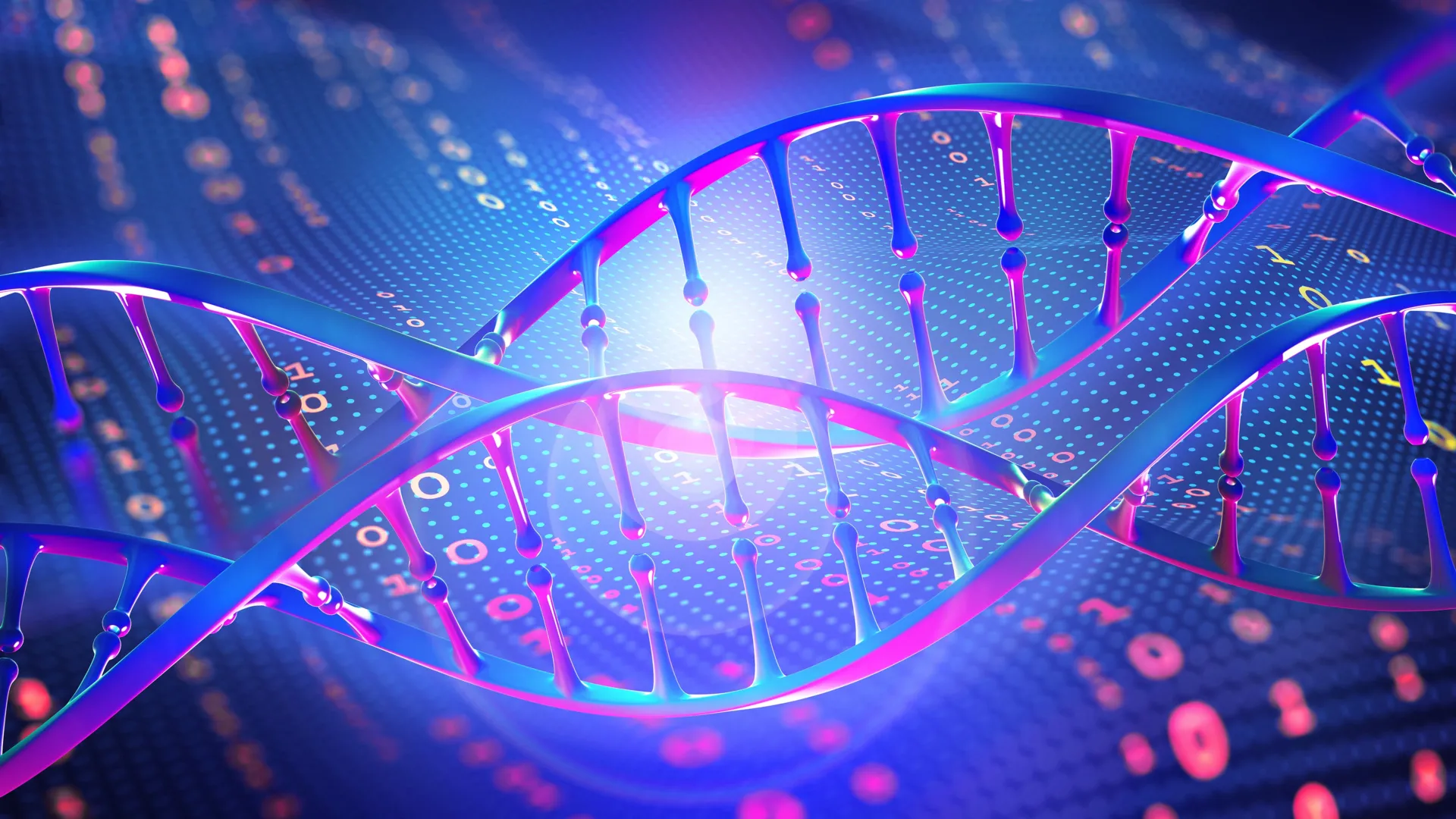
In a groundbreaking development that merges the precision of biological systems with the efficiency of semiconductor materials, researchers at Penn State University have unveiled a new class of bio-hybrid electronics. By synthesizing DNA and integrating it with crystalline perovskite semiconductors, the team has created a memristor—a "memory resistor"—that functions with unprecedented energy efficiency. This discovery, recently published in the journal Advanced Functional Materials, represents a fundamental shift in how we might design the next generation of high-density, low-power memory devices.
The Convergence of Two Domains: Main Facts
At the heart of this innovation is the marriage of two disparate worlds: the biological information density of DNA and the electronic versatility of perovskites. While DNA is widely recognized as the genetic blueprint of life, its potential as a storage medium is staggering. A single gram of DNA can theoretically store approximately 215 million gigabytes of data. However, translating this biological storage capacity into the realm of modern electronics has historically been thwarted by a fundamental incompatibility between organic, squishy biological materials and rigid, inorganic semiconductors.
The Penn State team, led by a multidisciplinary group of researchers, addressed this by developing a proprietary platform that allows these materials to function in tandem. They utilized synthetic, chemically engineered DNA sequences, which offer superior structural rigidity compared to natural DNA, and coupled them with thin-film perovskite semiconductors—materials already proven effective in solar cells and advanced laser technology.
The result is a memristor that operates on a fraction of the power required by conventional flash memory. Unlike standard resistors, which merely oppose electrical current, memristors maintain a record of past electrical activity. This "memory" allows for information to be stored and processed within the same component, mirroring the synaptic functions of the human brain.
A Chronological Progression of the Discovery
The path to this breakthrough was defined by a rigorous, iterative approach to materials engineering:
- Conceptualization (The Incompatibility Problem): The researchers identified that the primary barrier was the "wet," entangled nature of natural DNA. To bridge the gap, they turned to synthetic DNA, which can be computationally designed to specific lengths and rigidities.
- Engineering the "Doping" Technique: The team introduced silver nanoparticles into the DNA structure. This process, known as doping, served two purposes: it enabled the DNA to conduct electricity and forced the molecular units into a highly orderly, crystalline-like arrangement.
- Integration with Perovskites: Once the DNA was "programmed" for conductivity and structure, it was integrated with thin films of perovskite. This hybrid layer created "bio-hybrid pathways" that effectively directed electron flow.
- Validation and Testing: The device was subjected to rigorous stress tests, including operation at temperatures reaching 250 degrees Fahrenheit. It maintained stability and functionality far exceeding traditional memory storage devices, confirming the viability of the hybrid structure.
Supporting Data: Efficiency and Performance
The performance metrics provided by the research team are compelling, particularly regarding power consumption and thermal stability. In an era where data centers account for a significant portion of global energy consumption, the team’s findings offer a potential roadmap for greener computing.
Unprecedented Power Efficiency
Traditional memory storage requires significant energy to manage the flow of electrons, particularly as devices shrink in size. The Penn State bio-hybrid memristor, however, demonstrated that it could perform memory functions while consuming only one-tenth the power of comparable commercial technologies. Furthermore, the device operates at voltages lower than 0.1 volts—a negligible amount compared to the 120-volt current found in standard residential outlets.
Structural Stability and Longevity
One of the primary critiques of incorporating biological material into electronics is the concern regarding degradation. The researchers reported that their device remained functional at room temperature for over six weeks without a loss of integrity. Even under thermal stress tests approaching 250 degrees Fahrenheit, the device maintained its performance, a testament to the robust, orderly structure of the synthetic, silver-doped DNA.
Data Density and Processing
By leveraging the inherent storage density of DNA, the team has created a system that is not only faster but capable of handling the complex, multi-input data streams required by modern AI. Because the device remembers the direction of current flow even after power is removed, it effectively acts as a bridge between permanent storage and volatile processing memory, streamlining the path data must take within a computer’s architecture.
Perspectives from the Laboratory: Official Responses
The research, which has been submitted for patent protection, highlights the necessity of thinking outside the box of traditional silicon engineering.
"Biology and electronics are different domains," noted Kavya S. Keremane, co-corresponding author and postdoctoral researcher in materials science and engineering at Penn State. "Bridging these two fields required developing an entirely new materials platform. By combining the information storage capabilities of DNA with the exceptional electronic properties of perovskite semiconductors, we created a bio-hybrid system that fundamentally changes how low-power memory devices can be designed."
Neela H. Yennawar, director of the Huck Institutes of the Life Sciences’ Biomolecular Interactions Core Facility, emphasized the programmable nature of the breakthrough. "We can computationally determine exactly which sequences we need and how long they should be, and then we can rationally design them with synthetic DNA," Yennawar explained. "These structures can be systematically doped with silver and other ions and engineered to interface seamlessly with perovskites—transforming DNA from a biological macromolecule into a programmable, multifunctional nanomaterials platform."
Bed Poudel, a research professor and co-corresponding author, contextualized the discovery within the broader AI revolution. "As the demand for artificial intelligence grows, we need a new strategy for low-power, high-storage devices," Poudel said. "Nature has the solution—we just have to find it and apply it. This work of integrating DNA into electronics to do amazing things gives a glimpse into what is possible."
Future Implications: The Path to Neuromorphic Computing
The implications of this research extend far beyond the laboratory. The ultimate goal is the realization of "neuromorphic computing"—systems designed to mimic the neural architecture of the human brain. Unlike standard computers, which process information in a linear, binary fashion, the brain is capable of evaluating multiple inputs simultaneously while adapting based on historical experience.
The AI Imperative
As AI systems become more complex, the bottleneck has increasingly become the "von Neumann architecture," where processing and memory are separated, leading to significant energy loss as data travels back and forth. The Penn State memristor bypasses this by enabling "in-memory computing." By placing the storage and the logic in the same physical space, the system drastically reduces latency and energy consumption.
Scaling and Commercialization
While the research is still in the early stages, the ability to use synthetic DNA—which can be produced reliably and at scale—is a major step toward commercialization. The researchers are now looking to refine the fabrication process and explore how these bio-hybrid pathways can be incorporated into larger, more complex circuits.
Beyond mere memory, the potential for "bio-inspired" electronics is vast. Future devices could potentially integrate biological sensors directly with electronic processing, creating a new class of "living" technology that is sensitive to its environment and highly energy-efficient.
Conclusion
The work conducted at Penn State stands as a testament to the power of interdisciplinary research. By looking to the natural world for the ultimate storage solution—DNA—and combining it with the sophisticated material science of perovskites, the researchers have opened a door to a new paradigm in computing. As we look toward a future dominated by AI, the need for devices that are as efficient as they are powerful has never been greater. If the trajectory of this bio-hybrid platform holds true, the next great leap in computing may not come from faster silicon, but from the elegant, programmable code of life itself.
This research was supported by the U.S. National Science Foundation, the National Institutes of Health, Penn State, and the University of Minnesota. Contributing authors included researchers from across the materials science, chemical engineering, and life sciences departments, reflecting the collaborative nature of this breakthrough.
 Ali Ikhwan
 Ammar Sabilarrohman
