SAN FRANCISCO — In the rapidly evolving landscape of product design, a silent crisis is unfolding across corporate boardrooms. When product teams declare, “Let’s add gamification,” they are committing what user experience (UX) architects now view as a fundamental strategic error. According to a new framework circulating through top-tier design circles, applying a one-size-fits-all approach to gamification mirrors the mistake of walking into a recording studio and telling a producer, “Let’s add music,” without specifying the genre.
Jazz, heavy metal, and classical music each attract distinct audiences through completely disparate emotional mechanisms. Yet, for over a decade, software developers have treated “game psychology” as a monolith. Armed with a generic toolkit of progress bars, daily login streaks, and digital badges, they attempt to turn everything from tax filing to enterprise software into an arcade experience—often with disastrous retention rates.
Industry thought leaders are now pushing for Gamification 2.0, a methodology anchored on a single, uncompromising premise: Genre matters. Successful product architecture requires identifying the psychological genre your application naturally aligns with, studying the emotional loops that make that genre compelling, and designing experiences rooted in intentionality rather than superficial mechanics.
The Chronology of a Failed Paradigm: From Points to Purpose
To understand why traditional gamification is sputtering out, one must look at how the trend evolved over the past fifteen years.
2010–2014 (The Badge Era): Buoyed by the initial wave of "gamification" coined by Nick Pelling and popularized by thinkers like Jane McGonigal, companies rushed to slap leaderboards and digital stickers onto mundane tasks.
2015–2019 (The Streak Trap): Driven by hyper-growth metrics, apps gravitated toward habit-forming loops. Daily active user (DAU) counts soared, but true user delight plummeted as consumers experienced "notification fatigue" and hollow compulsion loops.
2020–Present (The Awakening of Gamification 2.0): As subscription fatigue sets in, data shows that users reject apps that treat them like lab rats. Designers are pivoting away from arbitrary extrinsic rewards (XP and badges) and turning to intrinsic psychological frameworks borrowed directly from the video game industry.
Supporting Data: The Multi-Billion Dollar Proof of Genre Mechanics
The numbers speak for themselves. The most lucrative digital ecosystems in the world do not rely on basic streak counters; they master deeply specialized genre mechanics that forge powerful psychological identities:
Mid-Core Strategy & 4X Mobile Games: Titles like Whiteout Survival and Last War: Survival generate hundreds of millions of dollars annually. They succeed not through simple daily login gifts, but by embedding players in complex, socially interdependent ecosystems where strategic agency and alliance responsibilities dictate long-term engagement.
Casual Puzzle Titans: Games like Royal Match pull in staggering revenues by engineering precise, dynamic difficulty curves that trigger constant "aha!" moments without fatiguing the casual player.
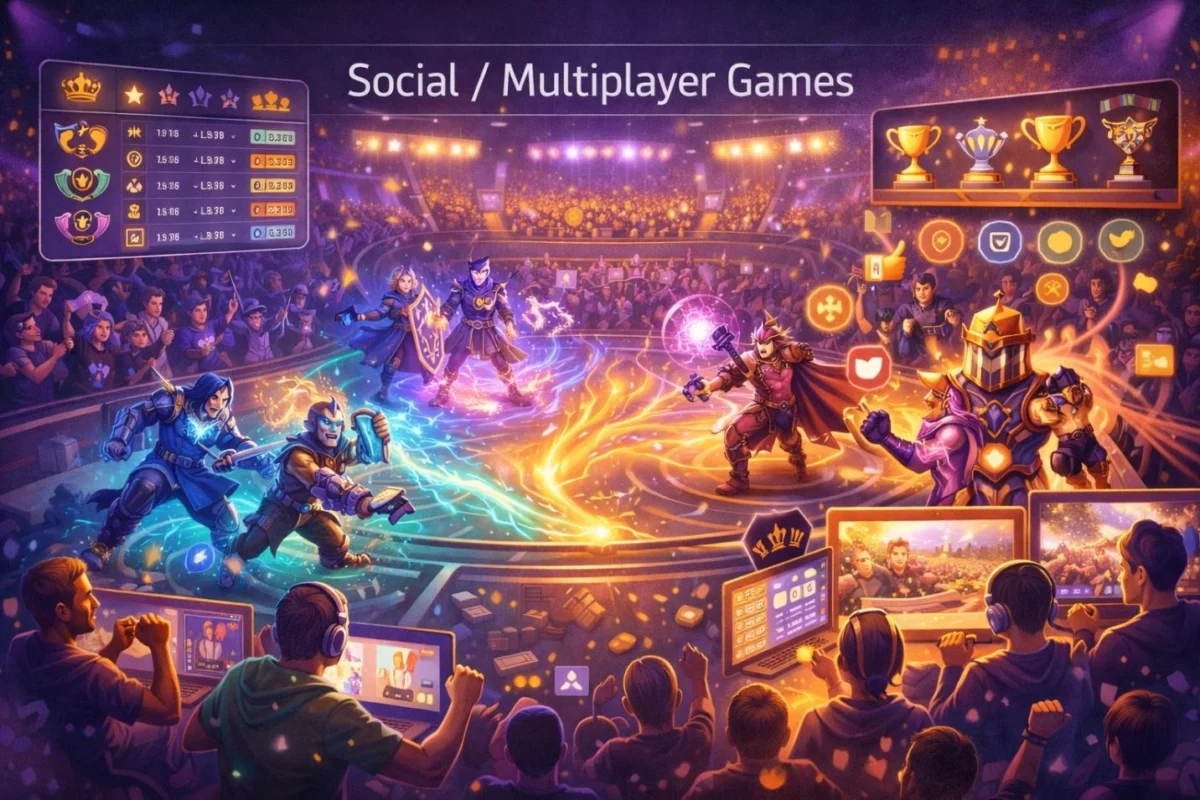
User-Generated Content (UGC) Playgrounds:Roblox commands a multi-billion-dollar valuation and over 70 million daily active users by discarding linear rules altogether, acting instead as a platform that turns consumers into creative stakeholders.
Breaking Down the Six Core Genres of Gamification 2.0
If developers want to capture these levels of intrinsic motivation, they must map their products to one of six primary game genres.
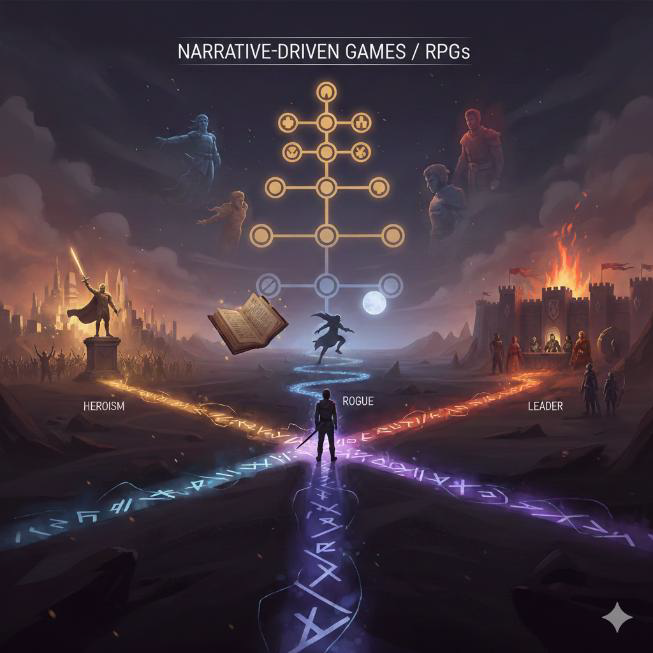
A. Narrative-Driven Games and RPGs (The Last of Us, Mass Effect, Final Fantasy)
The Psychological Hook: Story-seekers crave emotional weight, character growth, and world-building.
The Enterprise Application: Stop treating user journeys as static feature checklists. Instead of telling a user they reached "Level 5," frame milestones as narrative chapters. For example, language apps can frame proficiency not as accumulated XP, but as unlocking the capability to navigate a foreign country or read literature in its native tongue.
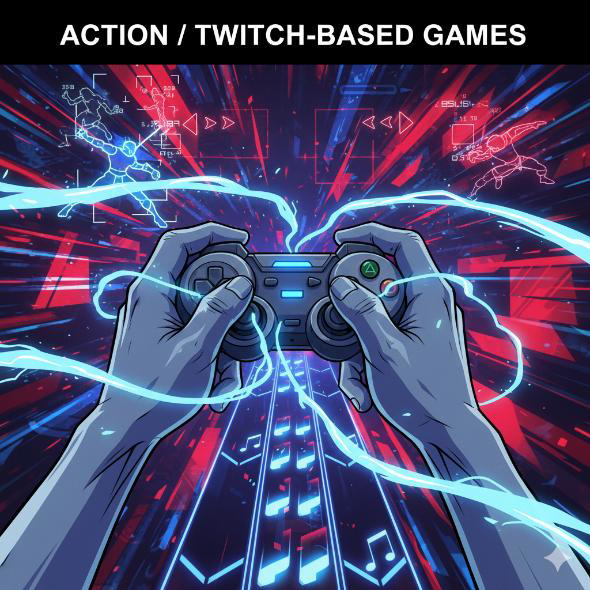
B. Action and Twitch-Based Games (DOOM, Call of Duty, Street Fighter)
The Psychological Hook: Skill-focused players crave immediate sensory feedback, motor mastery, and physical precision.
The Enterprise Application: Productivity and fitness applications frequently fail because logging data feels like an administrative chore. By injecting "juice"—satisfying haptic responses, crisp audio cues, and instantaneous visual feedback—the act of logging a workout or capturing a note becomes inherently pleasurable, divorced from any external reward.
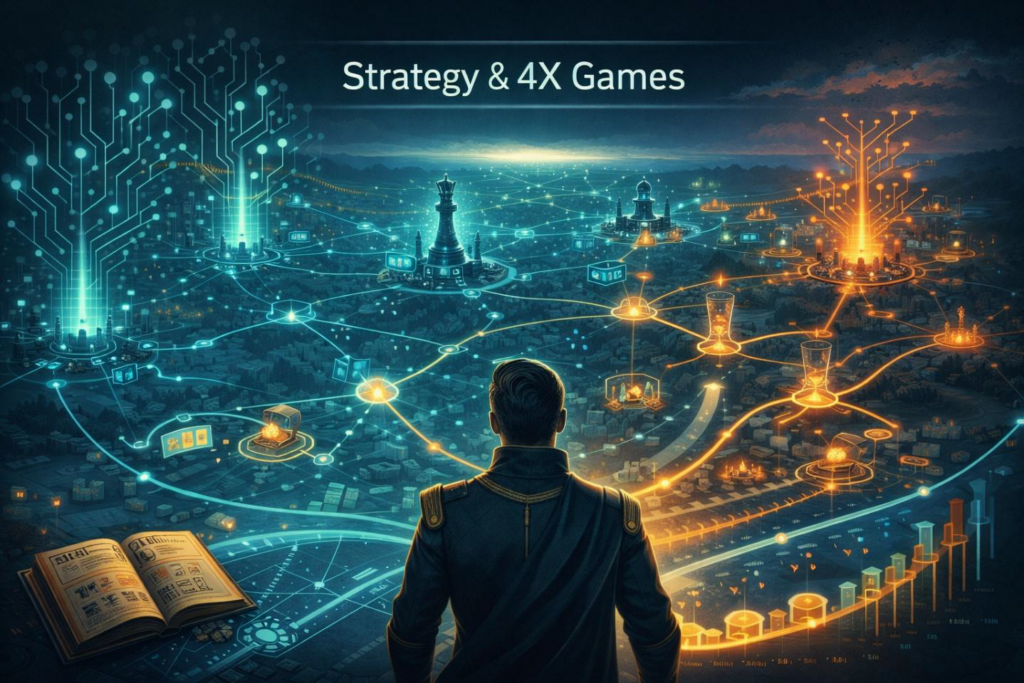
C. Strategy and 4X Games (Civilization, StarCraft, Whiteout Survival)
The Psychological Hook: Long-term planners and system optimizers want to see small choices compound into massive future outcomes, backed by social commitment structures (alliances and team dependencies).
The Enterprise Application: Project management tools and financial apps can adopt "tech trees" and multi-path projections. Rather than showing a linear task list, allow users to visualize how current strategic allocations alter their trajectory months down the line, fostering cooperation rather than cutthroat competition.
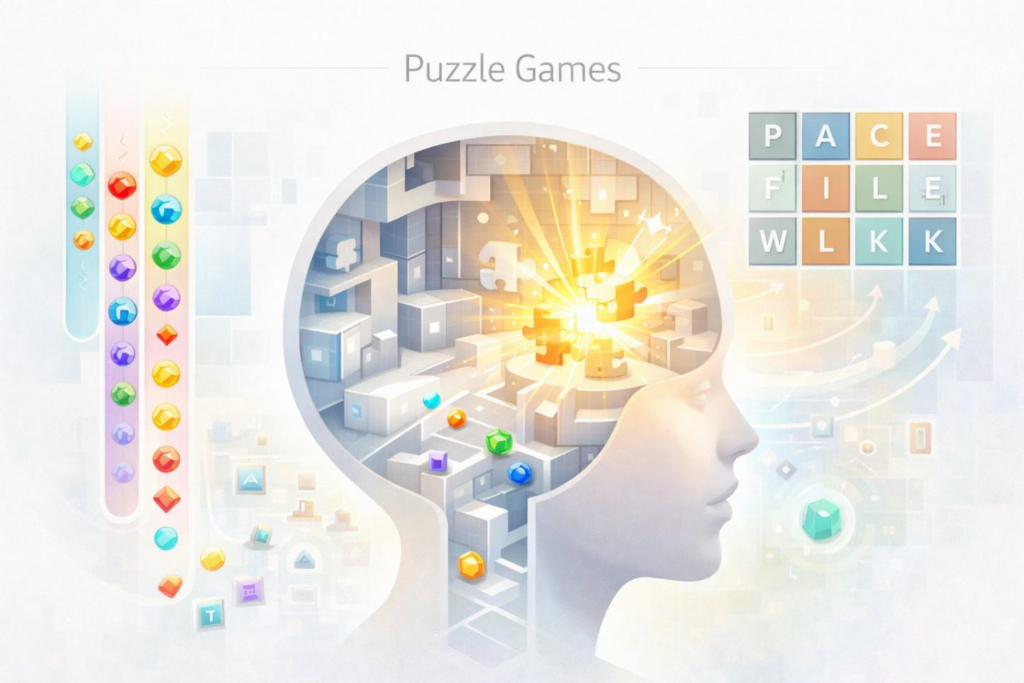
D. Puzzle Games (Portal, Wordle, Royal Match)
The Psychological Hook: Problem-solvers live for the sudden flash of insight—the "aha!" moment.
The Enterprise Application: Onboarding processes should feel like tutorial levels that teach through play rather than dense walls of text. Budgeting apps can present personal finance challenges as puzzles to solve ("Find three ways to trim $200 this month") rather than lectures to endure.
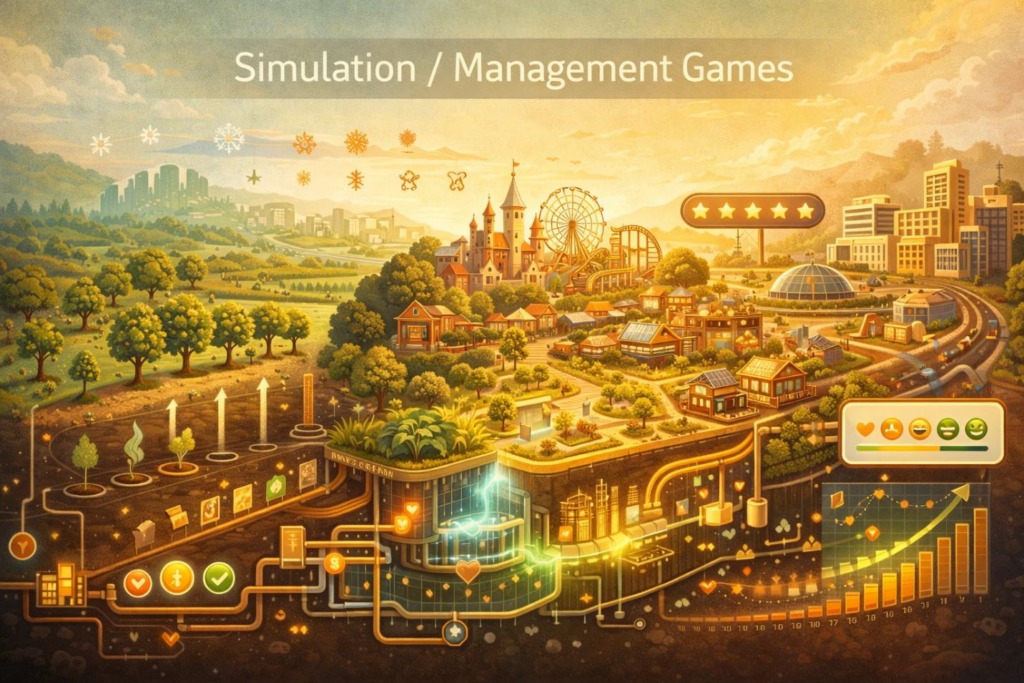
E. Simulation and Management Games (The Sims, Cities: Skylines, Stardew Valley)
The Psychological Hook: Systems thinkers want to build, customize, and watch living environments evolve organically.
The Enterprise Application: CRM tools can visualize relationship management like cultivating a garden (planting initial contacts and watching networks grow), while project management suites can simulate the downstream ripple effects of altered timelines.
F. Sandbox and Open-World Games (Minecraft, Terraria, Breath of the Wild)
The Psychological Hook: Explorers and creators resist prescriptive paths; they demand total agency and infinite flexibility.
The Enterprise Application: Tools like Notion and Obsidian succeed by acting as sandboxes rather than rigid templates, providing raw building blocks that let power users construct workflows unique to their cognitive styles.
Official Industry Responses and Expert Perspectives
As the shift toward Gamification 2.0 gains momentum, industry analysts emphasize that the era of deceptive engagement metrics is drawing to a close.
"When product teams rely solely on badges and streaks, they are treating a symptom of disengagement rather than curing the disease," notes a leading UX research director in Silicon Valley. "Users don’t want to be ‘retained’ by psychological manipulation; they want to feel capable, strategic, and creative. When you align your app with the correct psychological genre, engagement stops being something you force and becomes something the user drives themselves."
Product architects are increasingly being urged to audit their existing software loops. Are users participating because they are genuinely invested in their personal narrative and capability development, or are they merely logging in to protect an artificial streak that triggers anxiety if broken?
Implications for the Future of Software Design
The transition to genre-informed gamification carries profound implications for product development teams across every sector:
A Shift in Metrics: Companies will likely move away from short-term Daily Active Users (DAU) as the sole indicator of health, prioritizing deeper qualitative indicators such as long-term retention, portfolio creation, and peer-to-peer collaboration.
Cross-Disciplinary Hiring: Product design departments are expected to recruit heavily from game design backgrounds—bringing narrative designers, system economists, and level designers into enterprise software development.
The Death of Generic Templates: Off-the-shelf gamification plugins that blindly inject leaderboards and point systems into software will become obsolete, replaced by bespoke, genre-specific psychological frameworks tailored to the specific identity of the user base.
Ultimately, the lesson of Gamification 2.0 is clear: Meaning, agency, and social connection will always outperform badges and points. By understanding the psychological profile of your users and choosing your genre intentionally, you transform casual consumers into deeply invested stakeholders.
Up next in the “Gamification” series: Gamification 2.0. Beyond Points and Badges: Designing for Players, Not Metrics. Chapter 4: Special Considerations.

 By Azzam Bilal Chamdy
 Nana Muazin
 Raul Delapena Setiawan
 Suro Senen
