
 By Lina Hope
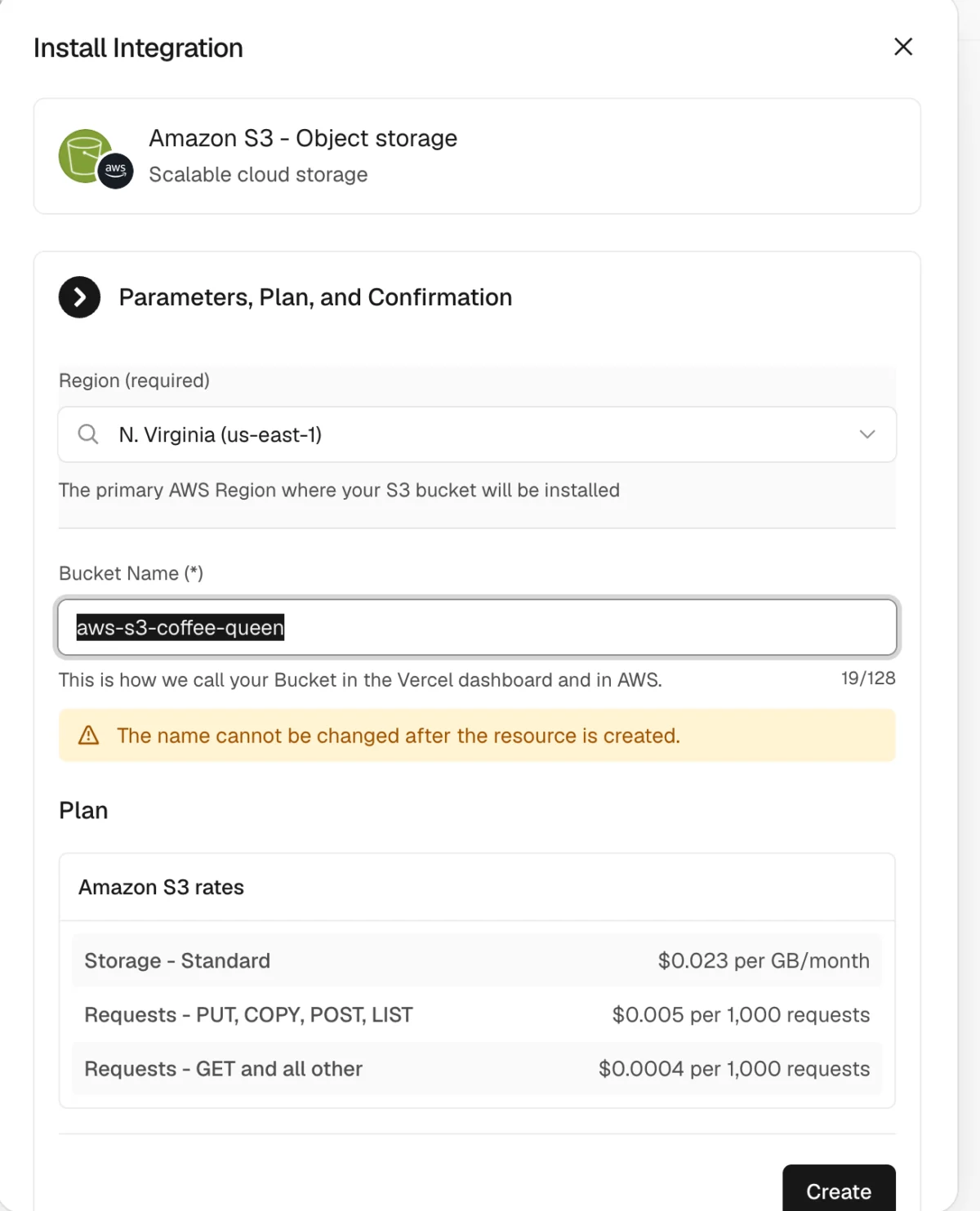
SAN FRANCISCO & SEATTLE — In a major development for the modern cloud ecosystem, Amazon Web Services (AWS) and Vercel have announced a deeply integrated native provisioning workflow for Amazon Simple Storage Service (Amazon S3). Unveiled to developers worldwide, the integration bridges Vercel’s high-velocity frontend and AI application platform with the world’s leading object storage infrastructure.
For millions of developers building applications on Vercel, this release eliminates one of the most persistent friction points in modern software engineering: manually provisioning, configuring, and managing backend cloud infrastructure. By bringing Amazon S3—including advanced capabilities like Amazon S3 Tables and Amazon S3 Vectors—directly into the Vercel Marketplace and the generative AI tool v0, the partnership promises to unify serverless deployment with industrial-grade enterprise storage.
Main Facts: What the Integration Delivers
The new collaboration is not merely a cosmetic link; it is a full-fledged architectural pairing designed to handle three distinct, high-demand workloads: everyday object storage, high-performance analytics, and generative AI search.
- Native Provisioning: Developers can now create, configure, and bind Amazon S3 buckets directly from the Vercel dashboard or through natural language prompts in v0, removing the need to manually configure policies and credentials within the AWS Management Console.
- Comprehensive S3 Ecosystem Support: The integration extends beyond basic bucket creation to support specialized S3 features:
- General Purpose S3 Buckets: For traditional file uploads, media assets, and application data.
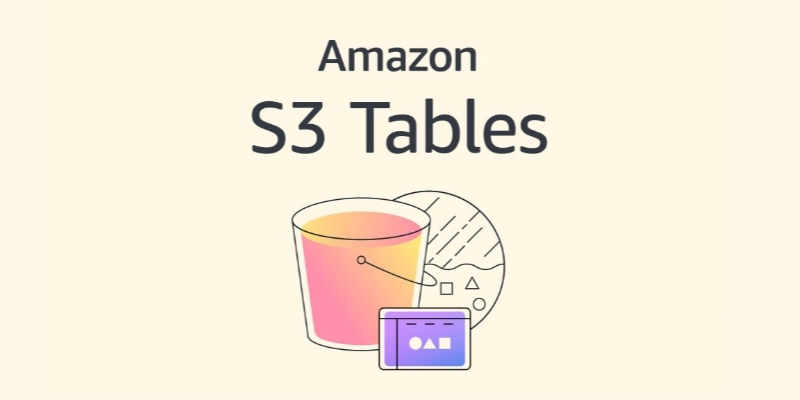
- Amazon S3 Tables: Purpose-built for analytics, offering fully managed Apache Iceberg tables with automated table maintenance, compaction, and query performance optimization.
- Amazon S3 Vectors: Providing native, cost-optimized vector storage for AI agents, retrieval-augmented generation (RAG) applications, and semantic search directly inside S3.
- Zero Static Credentials via OIDC: Security is handled at runtime via OpenID Connect (OIDC). Vercel functions exchange short-lived tokens with AWS Security Token Service (AWS STS), ensuring that no static keys or long-lived credentials are ever stored in project configurations.
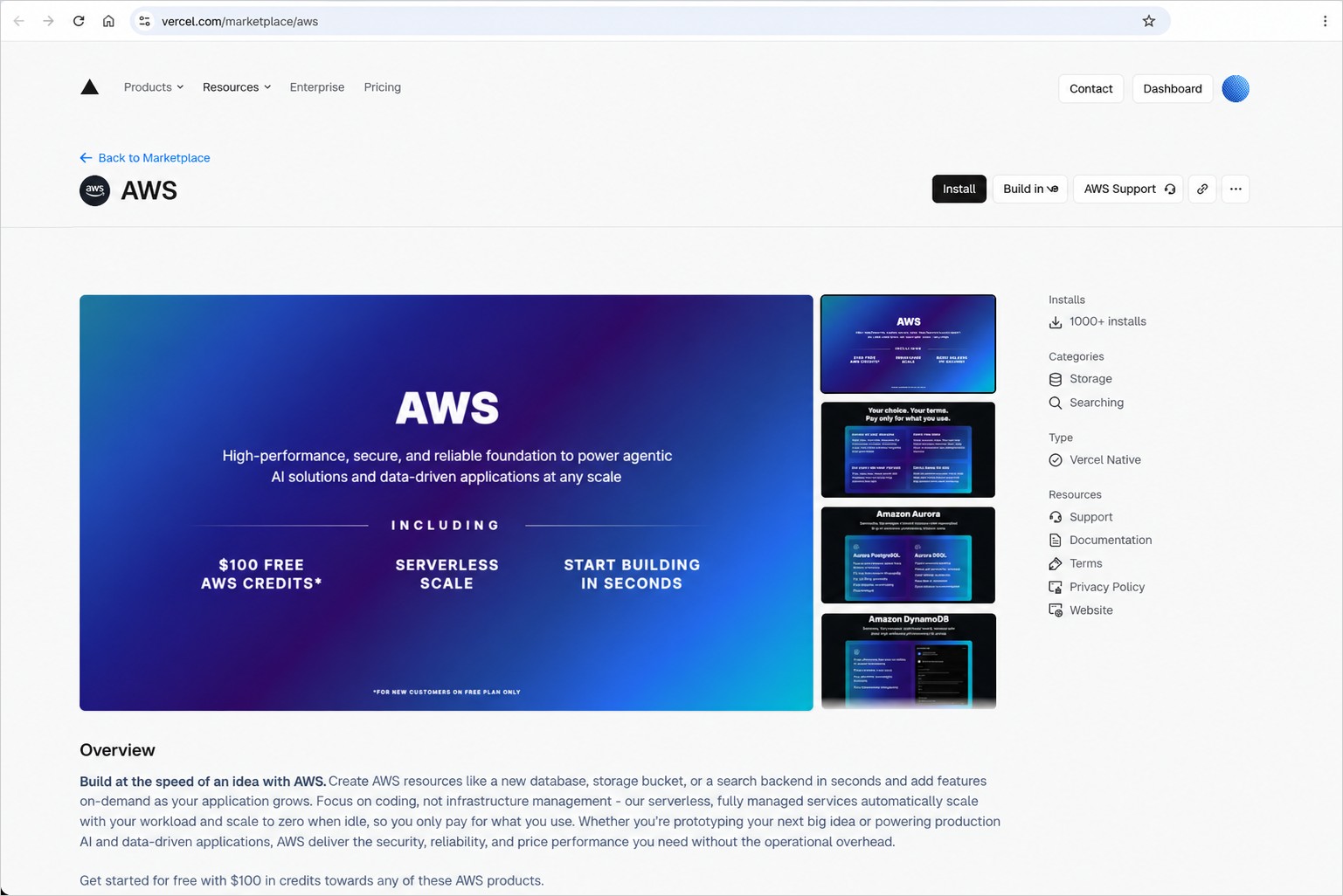
- Unified Billing and Architecture: Joining existing Vercel integrations for Amazon Aurora, Amazon DynamoDB, and Amazon OpenSearch Serverless, the S3 integration completes the application stack. Everything can be managed under a single AWS account with a consolidated bill.
Chronology: The Evolution of Serverless Cloud Storage
The path toward this unified developer experience has been shaped by years of architectural evolution in cloud computing and serverless execution models.
Early Days: The Manual Divide
Historically, frontend developers utilizing modern continuous deployment platforms like Vercel operated in a different universe from backend infrastructure engineers managing AWS accounts. Building a simple application that required file uploads meant leaving the Vercel workflow, logging into the AWS Management Console, manually provisioning an S3 bucket, setting up IAM (Identity and Access Management) roles, generating access keys, and hardcoding environment variables. This process was not only time-consuming but also introduced significant security risks through the potential mishandling of static AWS credentials.
The Rise of Serverless Integrations
As serverless architectures matured, platforms began seeking ways to bridge this gap. Vercel introduced database integrations—allowing seamless connections to services like Amazon Aurora and DynamoDB. However, object storage, analytics, and vector databases required for modern artificial intelligence applications remained complex to orchestrate across distinct platform boundaries.
The Shift to Generative AI and v0
With the explosion of generative AI, the requirements for application storage fundamentally shifted. Developers were no longer just storing JPEGs and PDFs; they were managing massive vector embeddings for semantic search, fine-tuning large language models, and processing clickstream analytics at scale.
Recognizing this shift, AWS expanded S3’s capabilities by introducing S3 Tables for analytics and S3 Vectors for AI workflows. The logical next step was to make these specialized tools accessible where developers actually write code and design applications: within Vercel and v0. Today’s launch marks the culmination of this vision, bringing enterprise-grade storage, analytics, and AI infrastructure directly into the serverless deployment loop.
Supporting Data: Under the Hood of the Vercel-S3 Integration
To understand the technical depth of this integration, it is necessary to examine how resources are provisioned, authenticated, and queried at runtime.
Provisioning and Environment Injection
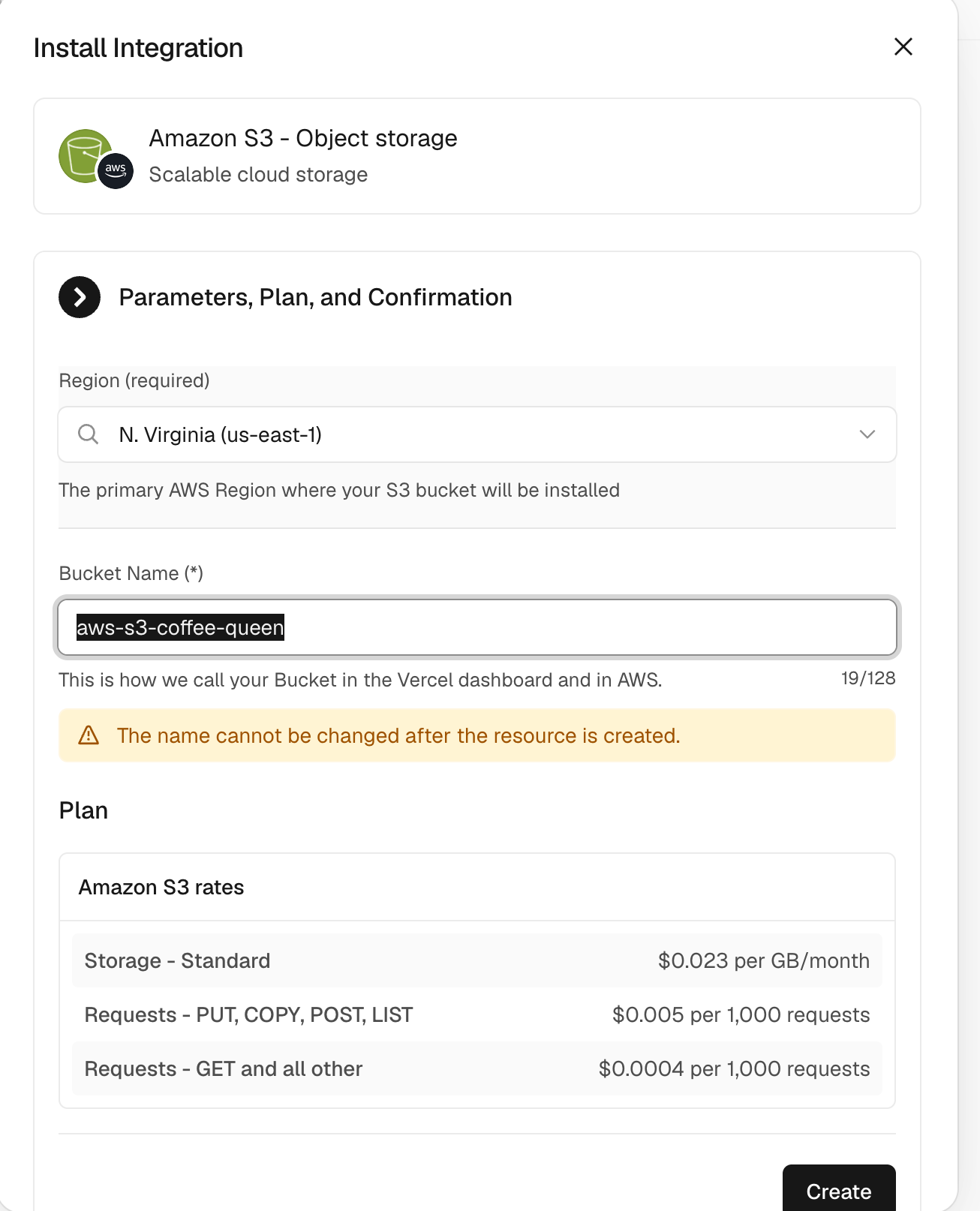
When a developer navigates to the Storage tab in the Vercel dashboard and selects AWS, the system prompts them to choose a bucket type, a geographical region, and a name. Behind the scenes, Vercel provisions the resource in the developer’s linked AWS account.

Once connected, pulling environment variables via the Vercel CLI (vercel link and vercel env pull .env.local) automatically injects critical parameters into the local environment:
AWS_REGIONAWS_ROLE_ARNAWS_RESOURCE_ARN- Resource-specific identifiers like
S3_BUCKET_NAME,S3_TABLE_BUCKET_NAME, orS3_VECTOR_BUCKET_NAME.
Security via OIDC Token Exchange
Rather than relying on vulnerable static environment variables containing AWS_ACCESS_KEY_ID and AWS_SECRET_ACCESS_KEY, Vercel utilizes awsCredentialsProvider from the @vercel/functions/oidc package. At runtime, this provider exchanges a short-lived OpenID Connect token with AWS STS, generating temporary, highly scoped credentials dynamically.
import  S3Client, PutObjectCommand  from "@aws-sdk/client-s3";
import  awsCredentialsProvider  from "@vercel/functions/oidc";

const s3 = new S3Client(
  region: process.env.AWS_REGION,
  credentials: awsCredentialsProvider(
    roleArn: process.env.AWS_ROLE_ARN,
  ),
);
Analytics with DuckDB and S3 Tables
For analytical workloads, S3 Tables provide automated table maintenance built on Apache Iceberg. Developers can leverage engines like DuckDB directly inside a Vercel serverless function to execute high-performance queries without spinning up complex data warehouse clusters. By installing the necessary AWS and Iceberg extensions via DuckDB’s Node.js API, serverless functions can aggregate millions of rows of data stored securely in S3 in real time.
Vector Search for AI Agents
With S3 Vectors, applications can perform semantic search and power AI assistants without maintaining a dedicated external vector database. By passing embedding vectors generated from user queries directly to the S3VectorsClient, developers can retrieve the top $K$ most relevant documents or context fragments to feed into LLM prompts for accurate retrieval-augmented generation (RAG).
import  S3VectorsClient, QueryVectorsCommand  from "@aws-sdk/client-s3vectors";
import  awsCredentialsProvider  from "@vercel/functions/oidc";

const vectors = new S3VectorsClient(
  region: process.env.AWS_REGION,
  credentials: awsCredentialsProvider(
    roleArn: process.env.AWS_ROLE_ARN,
  ),
);
Official Responses and Perspectives
Industry analysts and engineering leaders have responded enthusiastically to the announcement, viewing it as a major step toward reducing cognitive load for full-stack developers.
"Storage is the lifeblood of modern web and AI applications, but configuration complexity has historically slowed down innovation," noted platform engineering leads close to the project. "By uniting the infinite scalability of Amazon S3 with the unmatched developer experience of Vercel and v0, we are enabling teams to focus on building features rather than wrestling with cloud plumbing."
Furthermore, the introduction of natural language provisioning through v0 by Vercel transforms how developers interact with cloud architecture. By simply typing requests into a chat interface—such as “Build a photo gallery where users upload images using AWS” or “Create a support bot that answers questions from my PDFs”—v0 automatically determines the correct storage resource (General Purpose S3 or S3 Vectors), provisions it, establishes the OIDC security bridge, and generates fully functional, production-ready code.
Implications for the Future of Full-Stack Development
The integration of Amazon S3 into the Vercel ecosystem carries profound implications for software development paradigms, cost management, and enterprise cloud adoption.
1. Democratization of Advanced Cloud Architecture
Historically, deploying complex architectures involving vector databases, Apache Iceberg analytics tables, and secure object storage required specialized DevOps teams. By abstracting the provisioning process into intuitive UI workflows and natural language prompts, advanced AWS capabilities are now accessible to frontend developers, indie hackers, and small engineering teams who previously lacked the specialized knowledge required to configure them securely.
2. Heightened Security Standards
The widespread adoption of OIDC-based temporary credentials marks a definitive shift away from the dangerous anti-pattern of hardcoded static AWS keys. By making zero-trust, temporary credential exchange the default operating procedure for Vercel-AWS integrations, the partnership significantly lowers the surface area for security breaches caused by leaked environment variables.
3. Streamlined Financial and Resource Governance
Because businesses can either link their existing enterprise AWS accounts or create new ones directly through Vercel (complete with promotional incentives such as $100 in AWS credits for six months), financial tracking remains transparent. All S3 resources reside within the user’s own AWS account, ensuring that organizations retain full control over data sovereignty, compliance policies, and cost management without sacrificing the speed of serverless deployment.
4. A Complete, Unified Ecosystem
With S3 now sitting alongside Amazon Aurora, DynamoDB, and OpenSearch Serverless inside the Vercel Marketplace, developers possess an end-to-end cloud stack managed from a single dashboard. Whether storing relational records, unstructured media, analytical tables, or high-dimensional AI vectors, the entire application lifecycle—from frontend compilation to deep backend persistence—now operates as a cohesive, frictionless ecosystem.
Pricing, Availability, and Getting Started
Amazon S3, S3 Tables, and S3 Vectors are available starting today on the Vercel Marketplace and v0 by Vercel across all commercial AWS regions supported by Vercel.
- Integration Cost: The Vercel integration is completely free to use; developers pay only standard, consumption-based Amazon S3 pricing for the underlying storage and compute resources consumed.
- Credits: New AWS accounts created through the Vercel platform are eligible for $100 in AWS credits, valid for six months.
- Documentation and Support: Developers looking to explore technical specifications, API calls, and regional availability can utilize the official AWS MCP (Model Context Protocol) Server and plugins with their preferred AI tools, or join the community discussion on AWS re:Post for Amazon S3.
As cloud infrastructure continues to converge with generative interfaces, the Vercel and Amazon S3 integration stands as a benchmark for how powerful enterprise services can be delivered with elegant, consumer-grade simplicity.
 Siti Muinah
 Reynand Wu
 Jia Lissa
