
 By Lina Irawan

In the modern digital landscape, corporate social media accounts often sound like an echo chamber of automated marketing messaging. Audiences have grown increasingly skeptical of polished, top-down brand broadcasts, turning instead toward authentic human connections. This shift has placed employee advocacy at the epicenter of modern marketing strategy.
Yet, as social media budgets face stricter scrutiny, marketing leaders can no longer rely on vanity metrics like "likes" and "shares" to justify their programs. To secure budget, attention, and headcount, organizations must measure employee advocacy with the same rigor applied to paid advertising or sales pipelines.

By evaluating key performance indicators (KPIs) across reach, recruitment, sales, and corporate culture, organizations can transform employee advocacy from a vague cultural initiative into a predictable, revenue-driving machine.
Main Facts: The Shift Toward Measurable Advocacy
Employee advocacy involves encouraging and empowering staff members to share company updates, thought leadership, and brand stories on their personal social networks—predominantly platforms like LinkedIn.

While the concept is straightforward, proving its value requires a comprehensive measurement framework. Real-world case studies highlight the profound financial impact of these programs. For instance, Victoria Samways, Marketing and Brand Manager at agency Major Tom, utilized precise tracking to prove a staggering three-figure return on investment (ROI) from a single employee-driven campaign.
"Thanks to the UTM tracking links, over the coming weeks, we saw a healthy amount of leads that we attributed back to this campaign," Samways explains. "This resulted in over $100k in our pipeline and, as a channel, provided a higher-than-average win rate due to the referral-like context of these leads."
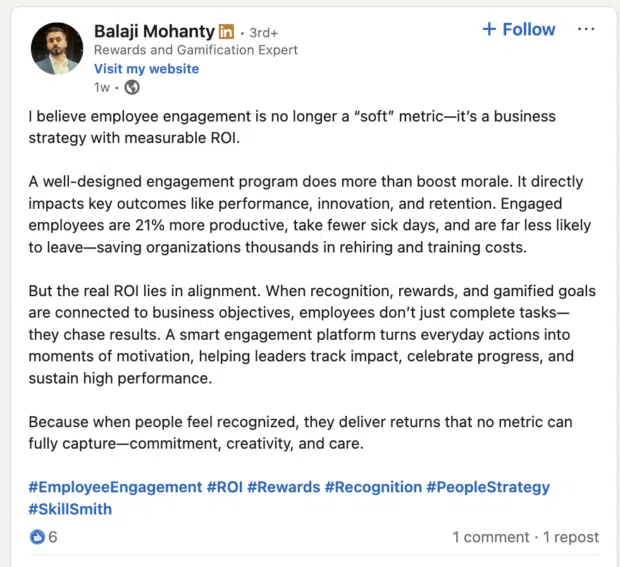
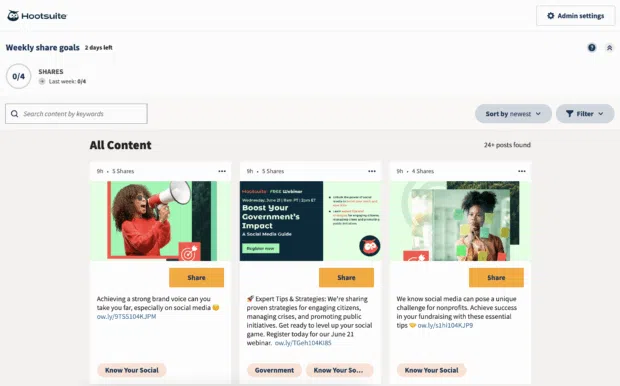
Without such data, employee advocacy programs invariably lose the ongoing corporate competition for attention and resources. Modern organizations are adopting sophisticated software ecosystems—such as Hootsuite’s Parliament application—to streamline content distribution, track click-through rates, and map employee shares directly to enterprise CRM data.
Chronology: The Evolution of Program Measurement
The journey of employee advocacy has evolved significantly over the past decade:
- The Early Era (Pre-2020): Employee advocacy was largely viewed as a nice-to-have cultural perk. Companies focused primarily on high-level reach and impressions, rarely tying employee shares to bottom-line business outcomes.
- The Transition Phase (2020–2024): As remote work normalized and digital networking surged, brands began integrating basic tracking tools. Marketers started recognizing that employee-shared posts outperformed corporate handles, prompting initial attempts at ROI calculations using earned media value (EMV).
- The Modern Era (2025–2026): Driven by tighter economic constraints and a sharper focus on corporate accountability, measurement has matured. Today, executive leadership demands concrete metrics connecting advocacy to lead generation, recruitment cost savings, and employee retention, supported by automated UTM tracking and advanced social operating systems.
Supporting Data and Key Performance Indicators
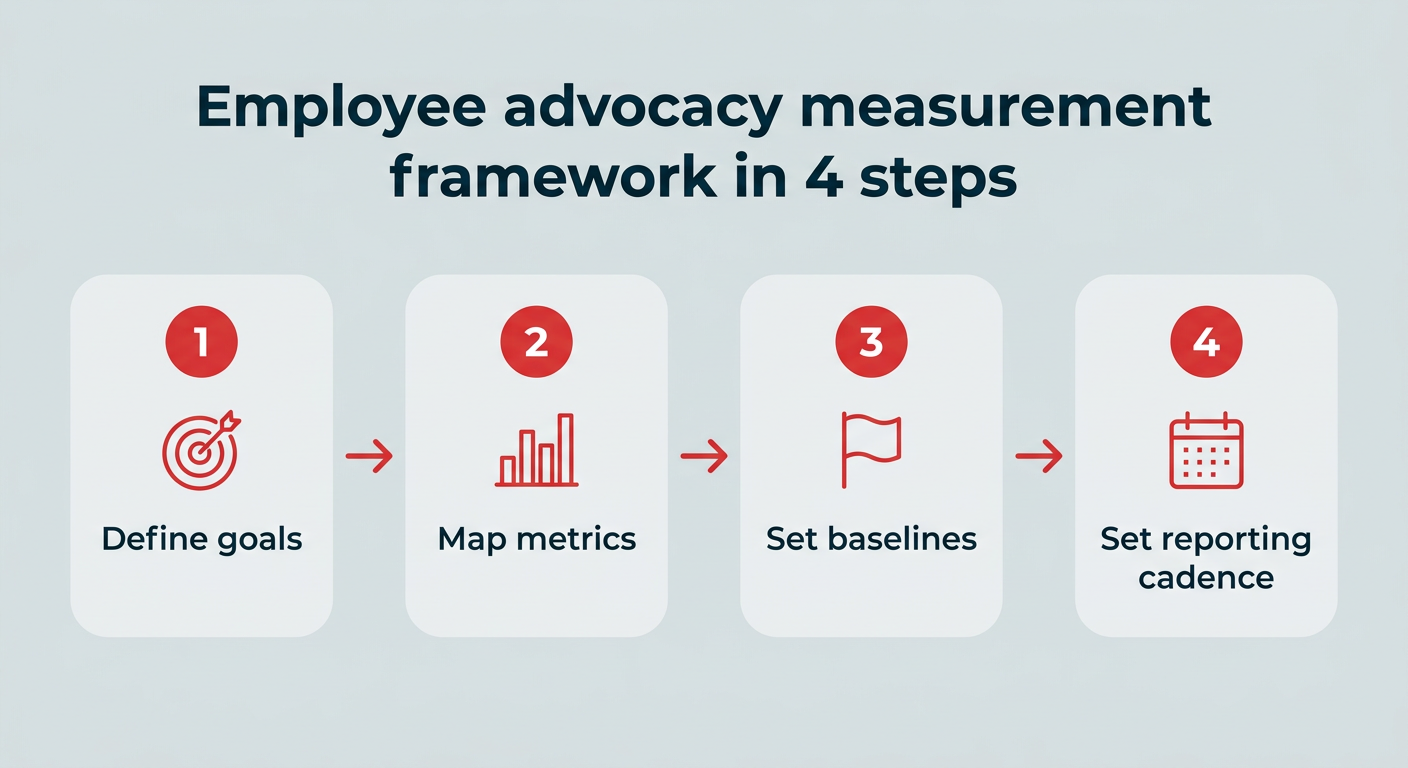
Building a successful measurement framework requires tracking data across seven distinct categories. When organizations align their metrics with overarching business goals, reporting becomes a clear progress update rather than a defensive debate.
| Category | Key Metrics to Track | Strategic Value |
|---|---|---|
| Awareness & Reach | Reach, impressions, share of voice | Evaluates how far content travels via personal networks. |
| Engagement | Likes, comments, shares, CTR, sentiment | Determines if employee posts drive deeper interaction than brand posts. |
| Recruiting | Applicant volume, quality, time-to-hire | Measures the impact of employer branding on talent acquisition. |
| Sales & Lead Gen | Site traffic, leads, conversions, pipeline influence | Connects advocacy directly to revenue and bottom-line growth. |
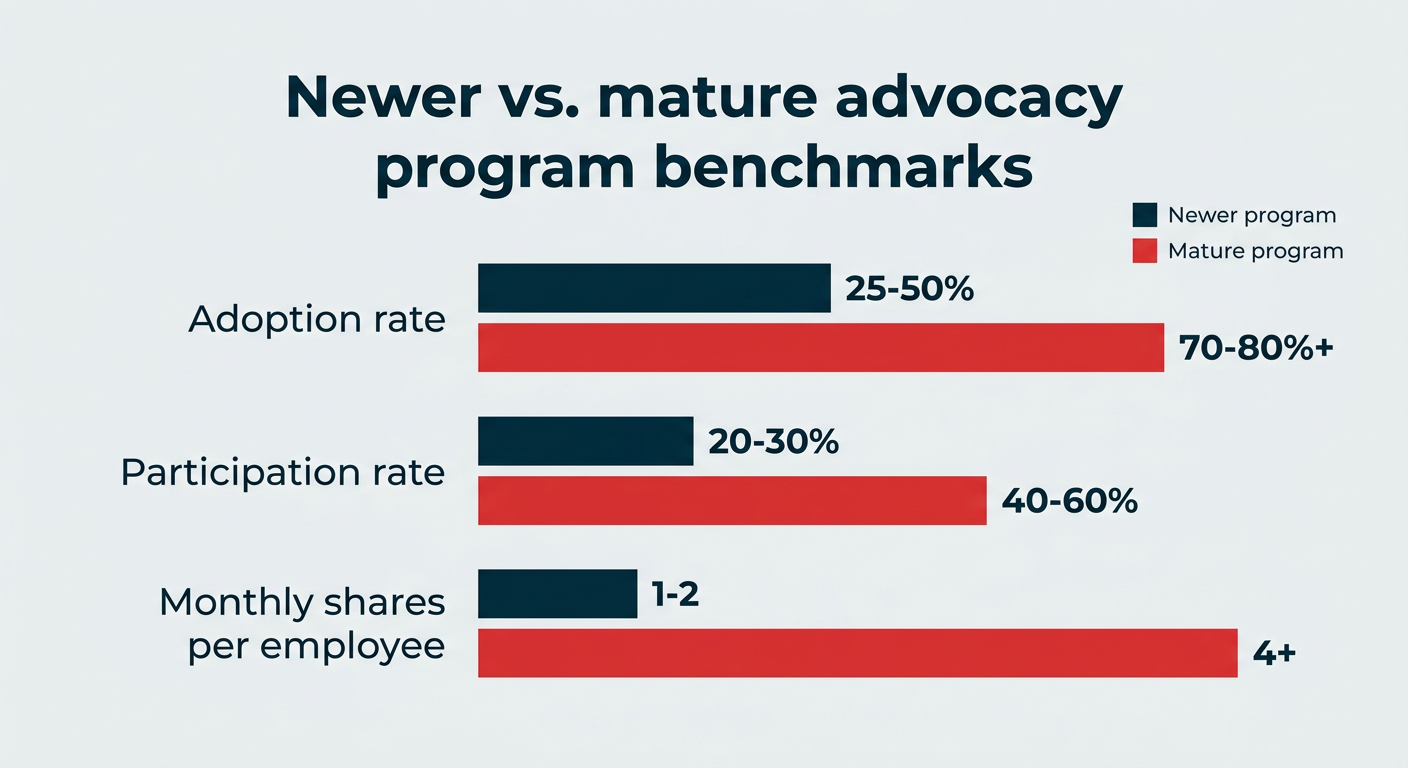
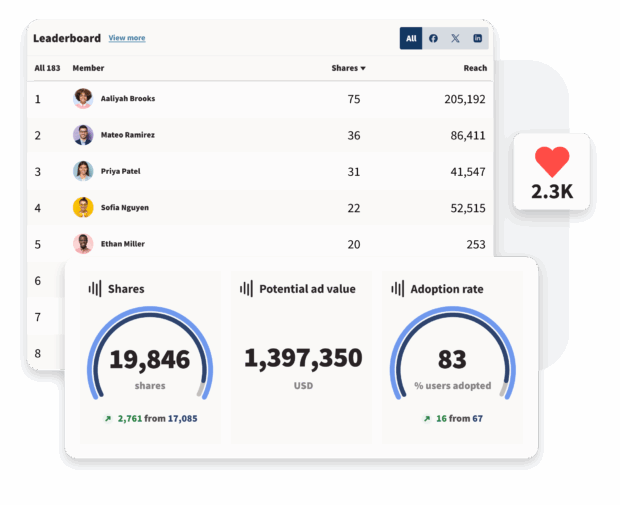
| Participation | Adoption rate, active share rate, shares/employee | Tracks internal program health and workforce adoption. |
| Cultural Impact | Survey scores, thought leadership growth | Assesses employee pride, career development, and morale. |
| Retention | Retention rate, voluntary turnover, cost savings | Explores the correlation between advocacy and long-term loyalty. |
Data from industry leaders underscore these metrics. Gartner case studies consistently show that audience engagement can be up to 10 times higher for employee-shared content compared to brand-pushed posts. Furthermore, LinkedIn data indicates that click-through rates (CTR) double when content originates from an individual employee rather than a corporate profile.
Official Responses and Expert Insights
Industry leaders emphasize that successful advocacy cannot be forced; it must be built on a foundation of genuine organizational pride and clear communication.
"If your employees view their work as a point of pride, and the content as a valuable way to build their personal brand, rather than a corporate requirement, they’ll feel more naturally inclined to share," notes Victoria Samways of Major Tom.
Samways also highlights the importance of keeping tech stacks reliable to maintain user trust. "Repeated issues, like social profiles disconnecting, can erode the trust and ease of using the platform."
To keep participation high, successful organizations often gamify their initiatives. Major Tom, for instance, promotes its advocacy program during company-wide meetings and organizes prize draws for participating employees. For every share, an employee’s name is entered into a draw for gift cards, charity donations, or corporate swag, successfully turning compliance into a fun, rewarding experience.
Implications for the Modern Enterprise
The implications of robust employee advocacy measurement extend far beyond marketing departments, touching human resources, sales enablement, and executive strategy.
1. Recruitment and Retention Savings
With employer trust shifting and employee disengagement threatening organizational growth, advocacy acts as a stabilizing cultural force. When employees actively advocate for their workplace, they deepen their own sense of loyalty. This heightened engagement correlates with improved employee retention, translating into substantial savings on recruitment and onboarding costs.
2. Empowered Sales Teams
Sales professionals who actively share industry insights and company content on social channels enjoy a distinct competitive edge. LinkedIn research demonstrates that salespeople who regularly share content are 45% more likely to exceed their sales quotas, as social selling builds early trust with prospective buyers.
3. C-Suite Alignment
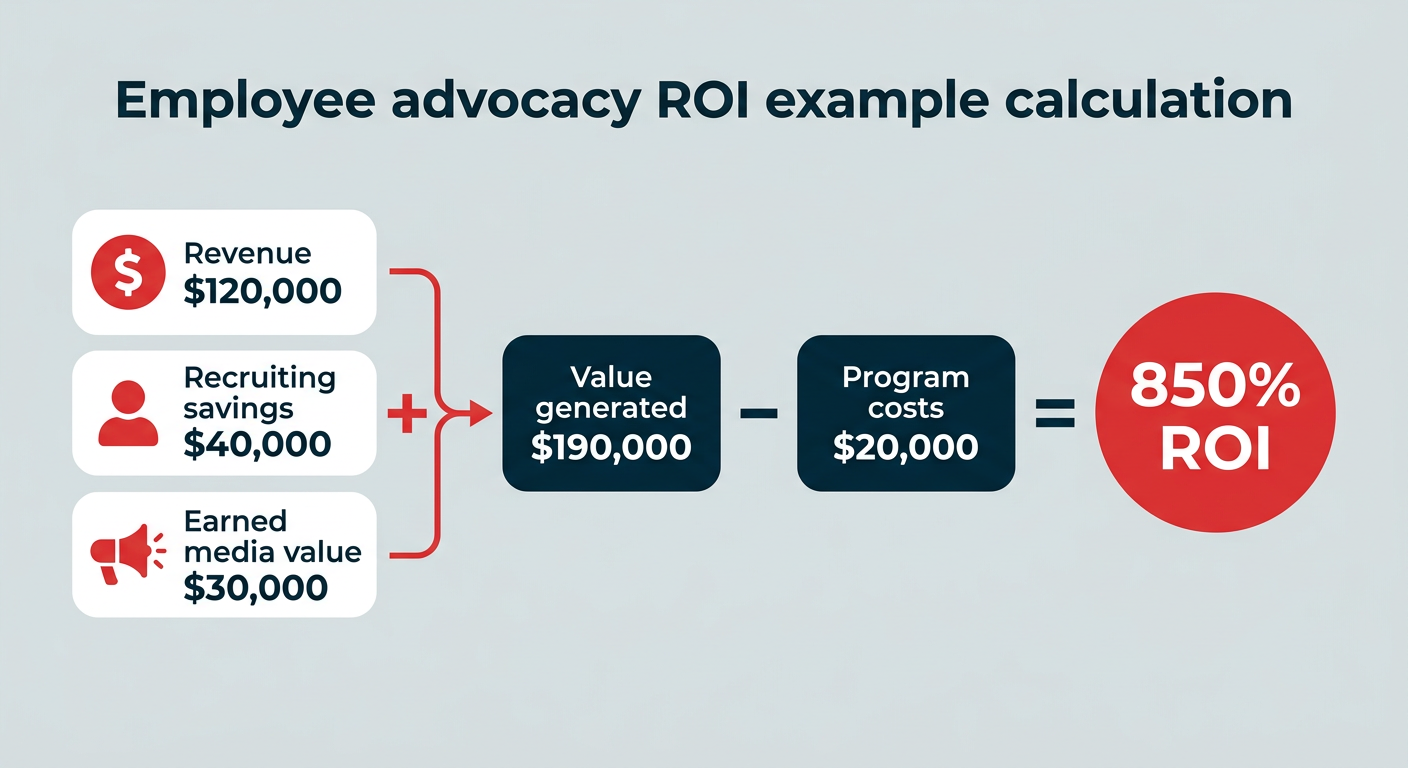
When marketing leaders report to the C-suite, leading with financial outcomes—such as pipeline influence, recruitment savings, and earned media value—transforms the advocacy program from a speculative expense into an essential, high-yielding business asset.
Ultimately, measurement is what makes the invisible value of employee advocacy visible, securing its place as a cornerstone of modern corporate strategy.
 Ammar Sabilarrohman
 Jia Lissa
 Muslim
