
 By Azzam Bilal Chamdy
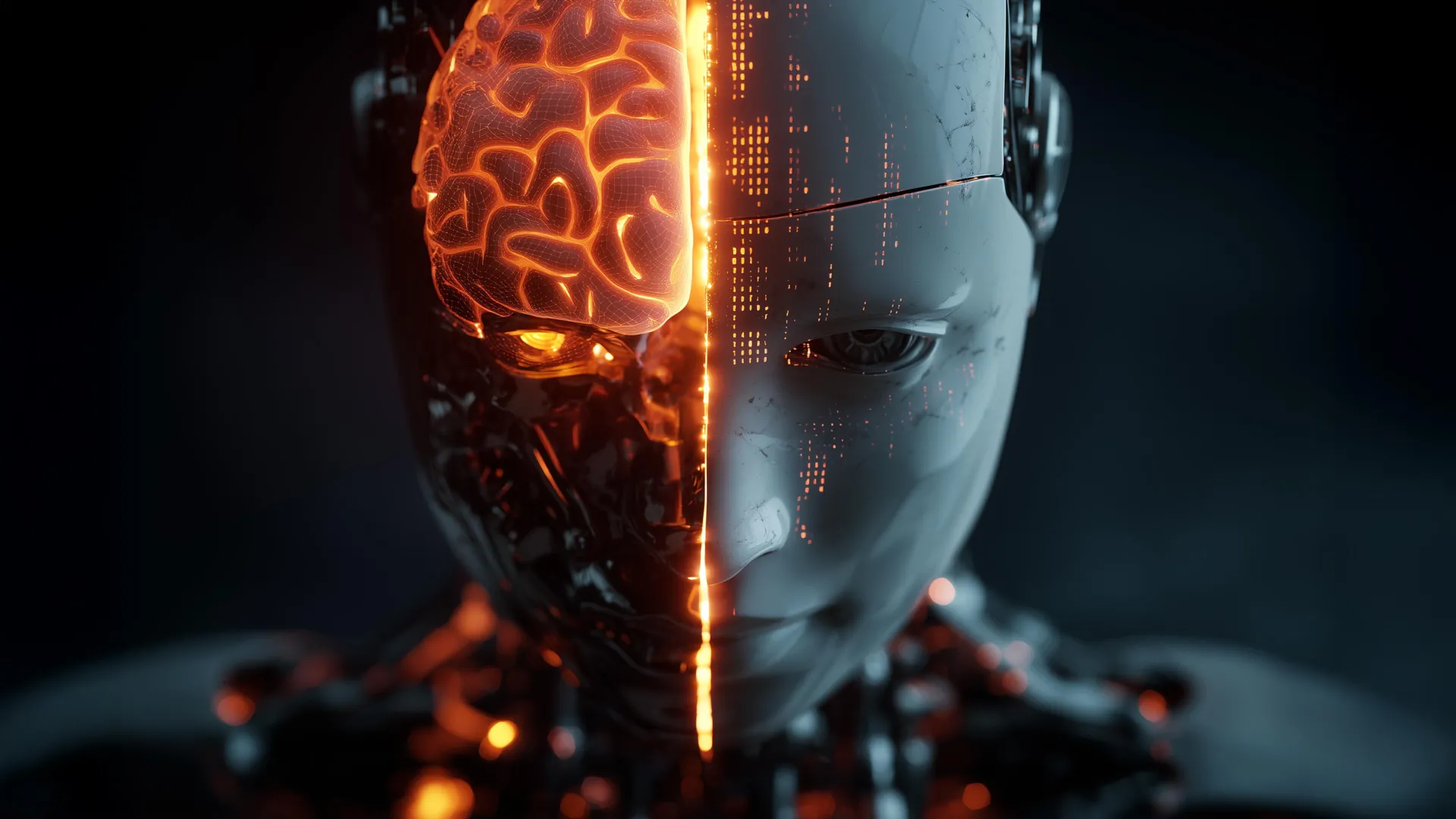
As artificial intelligence systems like Large Language Models (LLMs) and advanced robotics become increasingly sophisticated, the lines between human and machine behavior are blurring. We now interact with software that can mimic empathy, negotiate, collaborate, and even exhibit signs of “reasoning.” These developments have fueled a global debate: if a machine acts exactly like a human, should we treat it as if it has a mind?
A groundbreaking new study from Ludwig Maximilian University of Munich (LMU) suggests that while we may be easily deceived by an AI’s outward performance, our internal barometer for “consciousness” remains remarkably human-centric. Even when machines replicate human behavior with uncanny precision, the human mind refuses to grant them the same status as a fellow biological being.
The Core Finding: A Persistent Psychological Boundary
The study, recently published in the journal Cognition, challenges the prevailing fear that society is on the brink of anthropomorphizing AI into oblivion. Led by Dr. Louis Longin of LMU’s Chair of Philosophy of Mind, the research team—including Dr. Bahador Bahrami and Professor Ophelia Deroy—conducted a series of experiments involving nearly 1,100 participants to test the limits of our perception.
The central takeaway is that humans make a rigid, consistent distinction between awareness and consciousness. While we are willing to concede that an AI can be “aware” of its environment—detecting data, processing inputs, and responding to stimuli—we draw a hard line at “consciousness.” Even when presented with an AI and a human performing identical, highly complex tasks, participants consistently ranked the human as possessing a deeper, more profound inner life, while the AI was relegated to the status of a sophisticated, yet hollow, machine.
Chronology of the Research: Testing the Perception of Agency
To understand how these perceptions are formed, the LMU team structured their investigation around comparative analysis. The study was not merely an opinion poll; it was a controlled psychological evaluation of how we assign mental states to entities.
Phase 1: The Setup
The researchers developed a series of scenarios in which artificial agents were described as having varying degrees of responsiveness to their environments. Some agents were depicted as simple data processors, while others were described as reacting to complex emotional cues, recognizing the feelings of others, or navigating social situations with human-like grace.
Phase 2: The Parallel Test
In a crucial move, the researchers split the 1,100 participants into two groups. One group read these descriptions regarding artificial agents. The second group read identical descriptions, but the agents were identified as human beings. By keeping the behavioral descriptions constant while changing only the “nature” of the agent, the researchers could isolate the “AI effect.”
Phase 3: The Evaluation
Participants were asked to rate these characters on two specific metrics: how “aware” they were of their surroundings and how “conscious” they were. The results provided a clear, empirical look at the divide between how we process functional utility versus existential presence.
Supporting Data: The "Consciousness Gap"
The data revealed a striking anomaly. When participants were asked about awareness—a term they perceived as relating to information processing and sensory detection—the AI and the human were rated with relative parity. If an AI could detect a sound or recognize a facial expression, people were quite comfortable labeling that as a form of awareness.
However, the divergence was sharp when the term consciousness was introduced. Even in instances where an AI demonstrated the most responsive, human-like behavior possible, it was rated significantly lower than the least responsive human in the study.
This indicates a “consciousness gap.” It suggests that for the average person, consciousness is not merely the sum of one’s behaviors. It is an ontological status that, in the minds of the public, is inherently tied to biology. No matter how perfectly a machine simulates the “human,” the participant’s brain flags the machine as lacking the subjective, private interiority that we define as the hallmark of human consciousness.
Official Responses and Expert Insights
The research team suggests that this gap is not just a quirk of psychology; it is a vital safeguard for how we navigate a world populated by intelligent machines.
Dr. Louis Longin: The Nuance of Language
Dr. Longin, the lead author, notes that the panic regarding AI “tricking” us into thinking it is alive may be overstated. “People are quite willing to say that an AI notices things and is aware of its surroundings,” Longin explains. “But they clearly draw a line when it comes to the term ‘consciousness.’ We found that people consistently attribute less consciousness to AI than humans—even when their behavior is identical.”
Professor Ophelia Deroy: The Limitations of Vocabulary
Professor Deroy, a philosopher and senior author of the study, argues that our confusion often stems from the limitations of our own language. “We may be using mental terms to refer to AI, but this may only be because we lack better words,” Deroy notes. “After all, AI is trained to act and speak like a human, so these descriptions seem natural.” We use words like “decide,” “plan,” or “understand” because we lack a technical vocabulary to describe how a neural network processes information, not because we truly believe the machine has a soul.
Dr. Bahador Bahrami: The Responsibility of Communication
Dr. Bahrami, an expert in social neuroscience, emphasizes that the burden of this perception lies with those who create and write about these systems. “Companies and journalists often reach for hyped descriptions of AI models,” Bahrami observes. “They credit them with intentions, plans, or even moral conscience. What our study shows is that everyday judgments are much more discriminating. People do not simply put AI and humans on the same mental scale.”
Implications: The Future of AI Integration
The findings from LMU have profound implications for the future of technology, public policy, and ethics.
1. The Language of Regulation
If the public distinguishes between awareness and consciousness, regulators should do the same. Laws governing AI rights, liability, and moral status must be rooted in this psychological reality. We do not need to grant “rights” to software that no one actually considers conscious, yet we must remain vigilant about the potential for manipulative, hyper-responsive AI to exploit our natural tendency to attribute “awareness” to systems that merely mimic it.
2. The Danger of Hyped Marketing
The study serves as a warning to tech corporations. By marketing AI with terms like “thinking,” “feeling,” or “sentient,” companies are arguably performing a disservice to the public’s understanding of technology. While this marketing may generate short-term excitement, it creates a misalignment between the product’s actual capabilities and the user’s psychological expectations.
3. Re-evaluating Human Exceptionalism
Finally, the research reinforces the idea of human exceptionalism. Despite the rapid advancement of silicon-based logic, humans retain a deep-seated belief that there is something “extra”—a spark of consciousness—that separates us from the machines we build. Whether this is a bias that will eventually fade as AI becomes more integrated into our lives, or a permanent feature of human cognition, remains the central philosophical question of the 21st century.
As we move forward, the LMU study provides a much-needed foundation for this conversation. It suggests that while we are indeed susceptible to the charm and utility of intelligent machines, we are far from losing our grip on the definition of what it means to be human. We can admire the intelligence of the machine, we can utilize its awareness to navigate our data-heavy lives, but we remain, for now, the sole gatekeepers of consciousness.
 Reynand Wu
 Ammar Sabilarrohman
 rifanmuazin
