
 By Suro Senen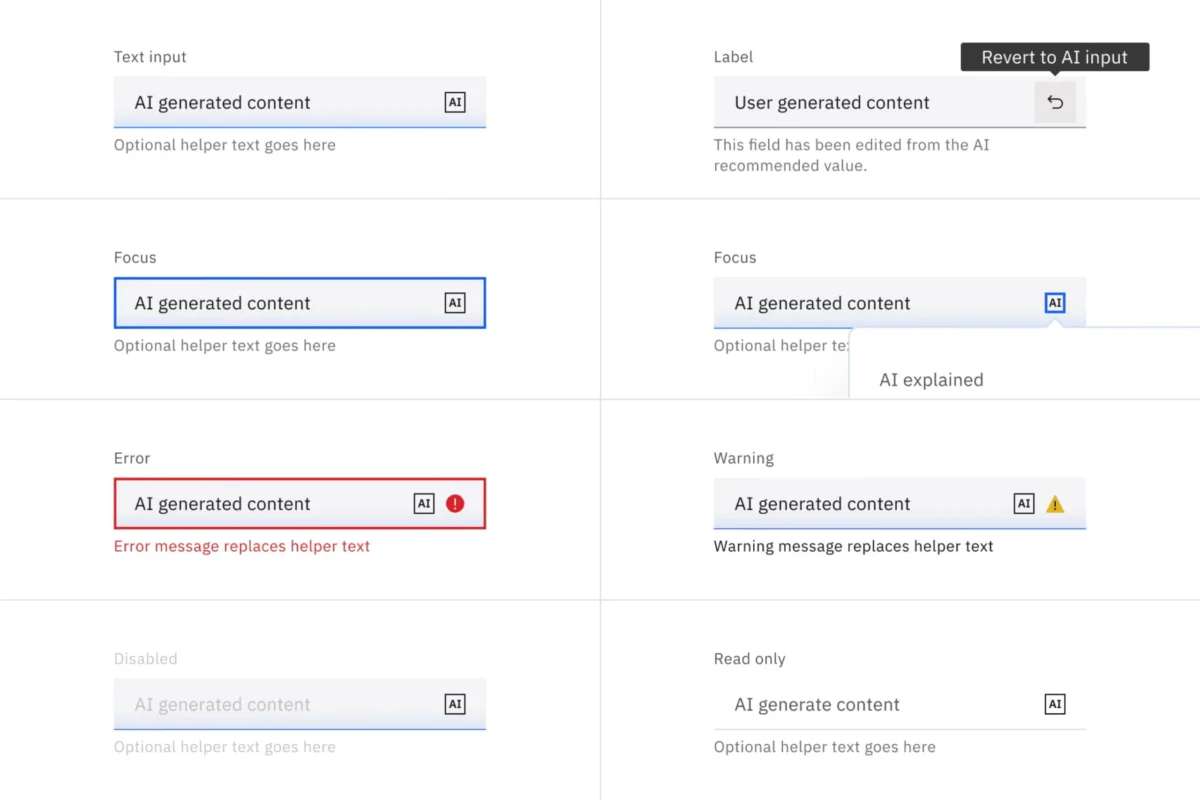
By Smashing Editorial Staff
Brought to you in partnership with Design Patterns For AI Interfaces
Executive Summary: Cutting Through the Panic
Over the past week, technology news cycles have been dominated by ominous warnings of “drastic measures,” “crippling fines,” and “sweeping new AI mandates” rolling out across the European Union. For product managers, designers, and software engineers serving European markets, the headlines have sparked genuine anxiety.
In reality, the situation is far more nuanced, highly targeted, and ultimately grounded in common sense. Far from a draconian crackdown on software innovation, the European Union’s new transparency frameworks—which officially took effect on August 2, 2026—are designed to achieve a singular, straightforward goal: making it undeniably obvious when content has been generated or artificially manipulated by artificial intelligence, particularly when that content touches the public interest.
Crucially, like the European Accessibility Act (EAA) and the General Data Protection Regulation (GDPR) before it, these regulations do not just apply to homegrown European startups and enterprises. Any technology company anywhere in the world that processes data, deploys algorithms, or serves digital outputs to citizens living within the EU must comply.
This comprehensive guide breaks down what the new transparency obligations under Article 50 of the EU AI Act mean for your digital products, why the ubiquitous "AI sparkle" icon is no longer legally sufficient, where the line is drawn between human-edited and machine-generated content, and how global regulatory patterns are shifting the future of software design.
1. Main Facts: The Core Mandates of the 2026 Regulations
To understand how to prepare your product interfaces, it is vital to separate internet panic from legal reality. The framework established by the European Commission centers around clear disclosure rules for artificial intelligence systems.

Who Must Comply?
The obligations under Article 50 of the AI Act apply to two distinct groups:
- Providers: The entities that build, train, or supply the underlying AI models and systems.
- Deployers: The businesses, organizations, and developers who integrate and utilize these AI tools within their customer-facing software, enterprise platforms, marketing workflows, and digital products.
Importantly, outsourcing your AI capabilities to a third-party API provider does not insulate your company from liability. If your platform serves an EU audience, the final deployer shares the legal responsibility for ensuring transparency.
What Content Requires Labeling?
The core objective of the mandate is to ensure that users are immediately aware when they are interacting with artificial intelligence rather than human creators. Specifically, labeling is mandatory when:

- AI-generated or manipulated media realistically resembles actual people, places, objects, or events (such as synthetic imagery, deepfake-adjacent visuals, or hyper-realistic marketing illustrations).
- Text outputs are published to inform the public on matters of public interest—defined broadly to include health, safety, the environment, the economy, finances, politics, science, and culture.
- Automated systems interact directly with natural persons, unless it is entirely obvious from the context that they are conversing with an AI agent (such as a clearly designated customer service chatbot).
However, the rules are equally explicit about what is exempt. The vast majority of everyday AI-assisted workplace productivity—such as using an LLM to brainstorm corporate strategies, drafting internal memos, or formatting spreadsheets—does not require public disclosure, provided human oversight is appropriately applied.
2. Chronology: The Road to the August 2026 Enforcement
The implementation of the EU AI Act’s transparency rules is the culmination of years of legislative debate, public consultations, and phased rollouts. Tracing this timeline helps contextualize why these standards are moving from theory to mandatory enforcement.
- April 2021: The European Commission tables the initial legislative proposal for the Artificial Intelligence Act, marking the world’s first comprehensive legal framework for AI.
- December 2023: European Parliament and Council negotiators reach a provisional political agreement on the final text of the AI Act, setting baseline risk categories and foundational transparency requirements.
- March – June 2024: Formal adoption of the AI Act by the European Parliament and the Council of the European Union, establishing the phased enforcement timeline.
- Late 2024 – 2025: The European Commission initiates drafting sessions for the official Code of Practice on AI-generated content, working alongside technical experts, UX researchers, and legal scholars to design compliance frameworks.
- Early 2026: The release of official European Commission guidelines on Article 50 transparency obligations, alongside the publication of standardized EU AI icon sets and marking methodologies.
- August 2, 2026: The official enforcement date for EU transparency obligations and AI content labeling requirements. Companies serving EU citizens must now ensure full compliance or face substantial regulatory penalties.
3. Supporting Data and Regulatory Nuance: Edited vs. Generated Content
One of the most frequent points of confusion for product teams is determining the threshold where human editing purges an AI output of its labeling requirements. Does feeding raw data into an AI form-fill tool, followed by minor human tweaks, exempt the output?

The Boundary of "Substantive Editorial Control"
According to guidance issued by the European Commission, minor assistive edits do not constitute human generation. Standard tools such as:
- Automated spellcheck and grammar correction
- Formatting adjustments and document restructuring
- Basic image cropping, color correction, and resolution scaling
- AI-powered language translation
…do not trigger mandatory AI disclosure labels.
Conversely, actions that fundamentally build new value or alter reality do require disclosure. These include automated text summaries, composite image generation, substantive structural rewrites, or the algorithmic addition and removal of visual elements from a photograph.

Furthermore, the Commission has made it clear that a superficial human skim ("a human glanced at it before publishing") does not qualify as editorial review. To bypass labeling requirements, there must be substantive editorial control exercised by a named person or corporate entity that takes explicit legal and editorial responsibility for the final output. The only major blanket exception to this rule applies within closed Business-to-Business (B2B) environments where all participating parties are fully aware that the content is machine-generated.
4. Official Responses and Industry Standards: Why Sparkles Aren’t Enough
As software companies rushed to integrate generative features over the last three years, an informal design convention emerged: the "sparkle" icon ($tau$). Placed in corners of text boxes, buttons, and image generators, the sparkle became shorthand for "AI inside."
However, user experience research—including prominent studies by the Nielsen Norman Group (NNG) and design system audits from IBM’s Carbon Design System—has highlighted a critical flaw: the sparkle icon is fundamentally ambiguous.

[Ambiguous UI]  --> Sparkle Icon (*) -> Means "AI Feature", "Enhance", "Magic", or "AI Content"?
[EU Compliant]  --> Clear Icon + Plain Text ("AI-Generated") -> Unambiguous, Accessible, Persistent.
The Ambiguity Problem
To users, a sparkle icon often communicates that a feature is powered by AI (e.g., "click here to make this text punchier"), rather than certifying that the resulting specific content was synthesized by a machine. Because of this ambiguity, European regulatory guidelines explicitly state that generic sparkles do not satisfy legal transparency obligations.
In response, the European Commission released an official EU AI Icon Set as part of its Code of Practice. These standardized marks are specifically engineered to distinguish between:
- Basic AI system integrations.
- Fully AI-generated content.
- Partially AI-modified media.
Designing for Compliance
Legal and UX experts emphasize that dropping an icon into a UI is insufficient on its own. To achieve true compliance under the new guidelines, product teams must adhere to several strict design tenets:

- Visibility: Icons and badges cannot be hidden away in footers, faded into low-contrast greys, or flashed for a split second. They must be clearly legible and immediately noticeable.
- Plain Language: Icons should be paired with explicit, human-readable text labels (such as "AI-Generated" or "AI-Modified").
- Accessibility: Markers must be fully readable by assistive technologies, ensuring screen readers and alternative input devices convey the synthetic nature of the content to visually impaired users.
- Persistence: If an AI-generated image, document, or dataset is downloaded, shared, or exported, the underlying metadata and visible disclosures must persist with the file.
5. Global Implications: A Worldwide Regulatory Pattern
While European regulations often bear the brunt of tech industry grumbling, the 2026 transparency mandates are not happening in a vacuum. They represent a broader, global shift toward algorithmic accountability.
Across international markets, parallel legislative efforts are taking shape:
- United States: While lacking a single omnibus federal AI law akin to the EU AI Act, multiple state legislatures have introduced strict disclosure statutes. These target specific high-risk use cases, such as synthetic human performers in digital media, deepfakes in political advertising, and algorithmic bias in automated hiring platforms.
- Asia-Pacific: Jurisdictions including China, South Korea, and Singapore have rolled out stringent watermarking and labeling requirements for generative AI service providers, emphasizing national security and misinformation prevention.
This convergence proves that AI transparency is no longer an isolated regional hurdle; it is becoming a foundational design pattern for global software engineering. Product teams building cross-border applications can no longer treat compliance as an afterthought. Designing modular, adaptable UI components for AI disclosures is now a core requirement of sustainable product development.

Conclusion: Embracing Clarity Over "AI Slop"
Ultimately, the panic surrounding the August 2026 enforcement deadlines is largely unwarranted. The underlying philosophy of the EU AI Act is simple, rational, and consumer-friendly:
When artificial intelligence generates content that could easily be mistaken for human creation, creators and platforms must state so clearly, unambiguously, and visibly.
By moving away from ambiguous decorative sparkles and adopting explicit, accessible design patterns, product designers have an opportunity to build greater trust with their users. Far from stifling creativity, these transparency measures will help clear away the rising tide of unverified digital noise—commonly known as "AI slop"—allowing genuine human craftsmanship and responsible technology to stand out.

Meet "Design Patterns For AI Interfaces"
To help product designers, UX architects, and engineers navigate these evolving interface requirements, Vitaly Friedman has released Design Patterns For AI Interfaces, a comprehensive video course featuring practical, real-world examples from production-ready software.
- Explore real-world interface teardowns.
- Learn how to implement accessible, compliant disclosure components.
- Join upcoming live UX training workshops.
👉 Jump to a free preview and explore the course today
Useful Resources & Official Documentation
- European Commission Official Statement on AI Transparency (August 2026)
- EU Digital Strategy: Transparency Obligations Under Article 50 of the AI Act
- European Commission Code of Practice on AI-Generated Content
- Official EU AI Icon Set and Labelling Guidelines
- Carbon Design System: AI Label Usage Guidelines
- Nielsen Norman Group: The Problem with AI Sparkle Icons
 Nana Wu
  Nana
Nana 