
 By Suro Senen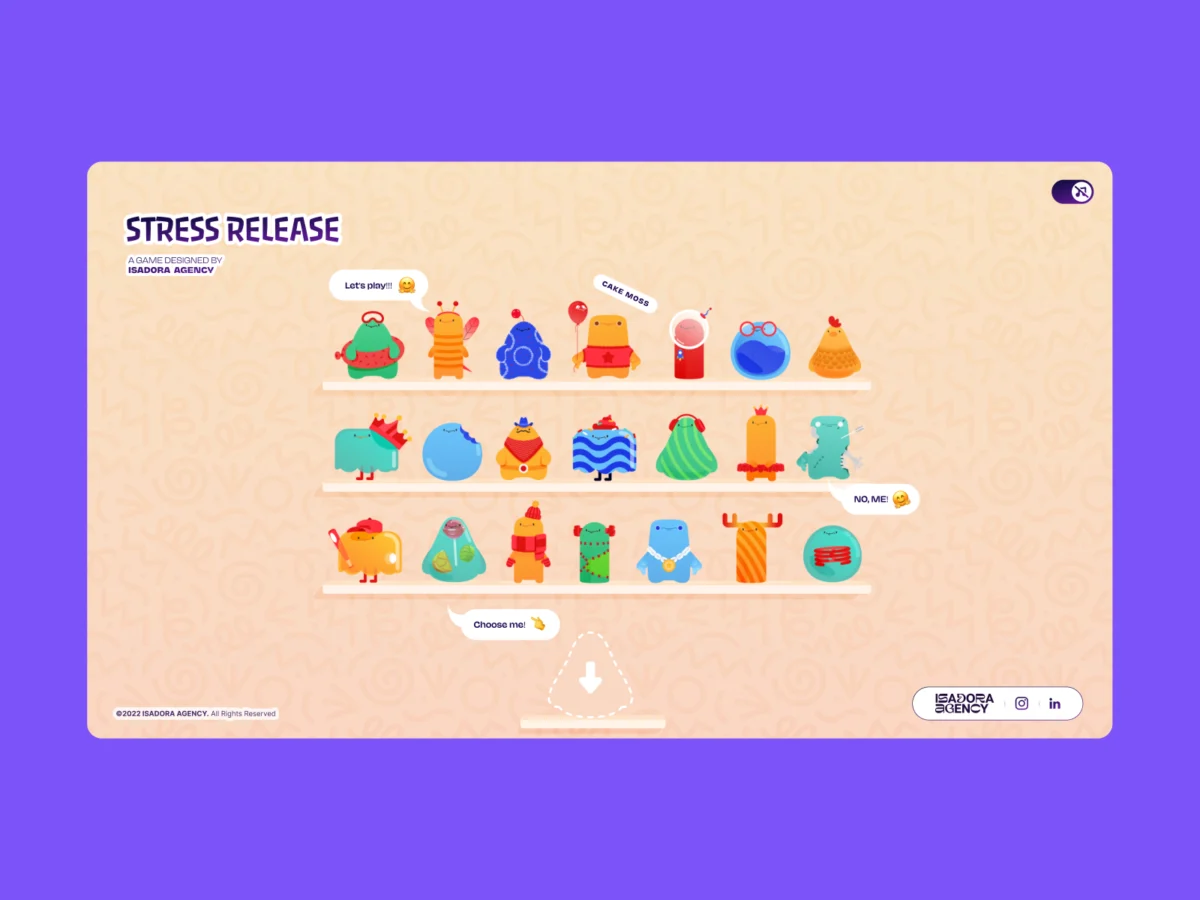
In the ever-evolving landscape of front-end engineering and user experience (UX) design, the quest for digital tactility often leads developers down a well-worn path. When tasked with creating web interfaces that feel bouncy, reactive, or destructive, the industry-standard instinct is immediate: reach for a physics engine. Frameworks like Matter.js, Cannon.js, or customized WebGL pipelines have long reigned as the gold standard for breathing simulated life into browser environments.
However, a recent deep-dive technical case study published by Alexey Kopytin of the Isadora Agency challenges this convention. When Kopytin and his team set out to build Stress Release—an innovative digital stress-relief squeeze toy designed to let burnt-out creatives smash, stretch, and distort animated UI characters—they quickly realized that physics-based simulation and artistic intent were fundamentally at odds.
Rather than relying on algorithmic approximations of gravity and mass, the team bypassed WebGL and Matter.js entirely. Instead, they relied on programmatic Lottie state controls, native DOM manipulation, and distance-based math. The result is a masterclass in architectural decision-making, proving that when building deeply interactive web experiences, architecture must strictly serve art direction.
Main Facts: The Anatomy of "Stress Release"
At its core, Stress Release is a browser-based, gamified micro-experience engineered to provide immediate tactile satisfaction. Users are presented with a colorful, pastel-themed UI featuring a shelf of animated characters. Clicking or tapping on a character initiates a violent, squishy reaction accompanied by score feedback, particle bursts, and dynamic audio-visual states.
However, beneath the playful aesthetic lies a rigorous technical architecture built on three pillars:
- Deterministic Frame Control: Instead of allowing physics engines to calculate how a character bends or bounces, animators provided precise, frame-by-frame JSON sequences. The code acts as a strict trigger mechanism rather than a simulation calculator.
- Radial Input Mapping: Every user click is translated from page coordinates into the character’s local coordinate space using the Pythagorean theorem, establishing a concentric dartboard-like scoring and reaction grid.
- DOM-Based Rendering: By keeping the interface within the Document Object Model (DOM) and rendering animations via SVG through the Lottie runtime, the development team entirely circumvented the overhead and complexity of multi-layered WebGL canvas raycasting and responsive bounding box scaling.
Chronology: From Physics Engine Ambitions to Intentional Motion
Phase 1: The Initial Physics-Based Exploration
When development on Stress Release commenced at the Isadora Agency, the initial prototyping phase followed conventional front-end wisdom. The team integrated standard physics libraries to govern how the animated UI characters would react to user interactions. The initial hypothesis was straightforward: make the characters act like rubber balls that could deform, stretch, and bounce unpredictably across the viewport.

Phase 2: The Creative Realization
As prototyping progressed, a critical disconnect emerged between the generated behavior and the creative vision. Physics engines excel at producing plausible motion—movements that adhere to real-world rules of gravity, velocity, and collision restitution. But plausible motion was not what the studio’s animators had crafted.
The animators had produced intentional motion. They had meticulously designed bespoke keyframes—such as an intricate 181-frame build-up for a "mega squeeze" reaction followed by a precise release sequence. Algorithmic physics approximations constantly threatened to overwrite, distort, or dilute these carefully timed artistic choices. The team faced a pivotal fork in the road: alter the animations to fit a physics engine, or scrap the physics engine to honor the animations. They chose the latter.
Phase 3: Architectural Pivot to Lottie and DOM Math
Abandoning Matter.js and WebGL, Kopytin’s team engineered a lightweight alternative. They leveraged Lottie’s native API to control timeline segments programmatically, paired with vanilla JavaScript event listeners and distance-based math equations. This gave them absolute deterministic control over the application state, ensuring that every user interaction mapped flawlessly to the designer’s intended visual output.

Supporting Data: The Math and Mechanics Behind the Squeeze
To achieve the sensation of physical impact without a physics engine, the Isadora Agency relied on precise coordinate mapping. When a user clicks a character, the system first translates the global page coordinates into the character’s local coordinate space relative to its bounding box center point.
// Character's center point in its own coordinate space
var x_center = parseFloat($("#playChar").width()  / 2);
var y_center = parseFloat($("#playChar").height() / 2);

// Click position relative to the character's top-left corner
var offset = $("#playChar").offset(); // document-relative position
var X = parseFloat(e.pageX - offset.left);
var Y = parseFloat(e.pageY - offset.top);

// Vector from center to click point
var a = parseFloat(X - x_center);
var b = parseFloat(Y - y_center);
Using the Pythagorean theorem via Math.hypot(a, b), the system computes the exact straight-line distance from the center of the click. This single numeric value controls multiple downstream events simultaneously:
-
Scoring Zones: Distance thresholds dictate point rewards, transforming the character into a virtual dartboard.

< 10px: 100 points (Bullseye)< 40px: 70–90 points< 70px: 40–70 points< 100px: 20–40 points< 120px: 10–20 points< 145px: 1–10 points> 145px: 0 points (Miss)
-
Dynamic Explosion Placement: The explosion Lottie animation is repositioned dynamically using the $(a, b)$ vectors, ensuring that visual particle effects erupt precisely where the user’s cursor or finger made contact.
-
Animation Segment Triggering: Characters transition through defined frame ranges (
idle,squeeze1,squeeze2,squeeze3) based on state progression, locking out further clicks mid-animation before gracefully returning to the looping idle state viaplayChar.onComplete.
Mobile Performance Optimization: Managing the Lottie Footprint
While programmatic DOM control and Lottie vector animations solved the artistic control problem, they introduced a formidable engineering hurdle: file size and performance overhead.

Running 21 distinct character animations simultaneously on a character selection shelf, alongside multiple explosion variants, threatens to bog down mobile devices. To maintain a silky-smooth frame rate across platforms, the Isadora Agency implemented aggressive performance optimization strategies:
- Global Quality Scaling: Using
lottie.setQuality(0.5), the shelf animations were throttled to 50% quality, significantly reducing heavy vector interpolation calculations in the background. - Speed Adjustments: Shelf animations were slowed down to 60% speed (
shelf.setSpeed(0.6)), decreasing the number of frame calculations required per second without sacrificing visual charm. - Resource Isolation: When a user enters the active play screen, background animations drop away, and the single focused character runs at full quality (
lottie.setQuality(1)). - CSS Custom Properties: Responsive scaling was handled entirely via CSS variables linked to viewport height and width, allowing Lottie SVGs to scale seamlessly within their containers without triggering costly layout reflows or breaking coordinate math.
Implications: A Paradigm Shift for Gamified Web Design
The success of Stress Release offers a broader lesson for the front-end development community. For years, the industry has suffered from a "tool-first" mentality—automatically reaching for heavy-duty WebGL wrappers, 3D engines, or physics libraries simply because a project requires gamified or tactile elements.
Kopytin’s architectural case study flips this paradigm on its head. It demonstrates that when art direction demands exact emotional and visual beats, deterministic code structures can vastly outperform stochastic physics simulations. By mapping Lottie’s native timeline capabilities directly to the DOM and managing interactions through elementary mathematics, developers can achieve hyper-responsive, deeply tactile user experiences without bloating their application bundles with unnecessary WebGL infrastructure.

Ultimately, Stress Release proves that the most sophisticated digital experiences are often born not from the most complex frameworks, but from a harmonious alignment between what the designer envisions and what the code precisely executes.
 Nana Wu
  Nana
Nana 