
 By Sagoh
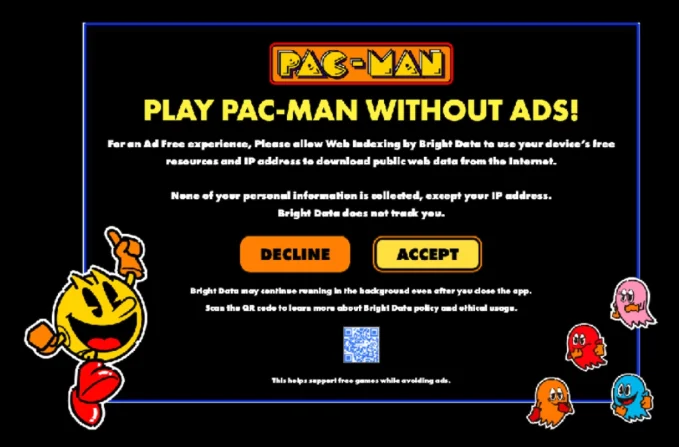
Home appliance giant LG Electronics USA has announced a decisive policy shift targeting applications on its webOS platform that transform smart televisions into always-on residential proxy nodes. This move follows cybersecurity research revealing that nearly half of the apps available on the platform allowed unknown third parties to route external internet traffic through consumer households.
The sweeping regulatory action by LG addresses a growing monetization trend among mobile and connected-device developers: embedding software development kits (SDKs) that auction off consumers’ residential bandwidth to commercial proxy networks. While proxy providers defend these operations as consensual and heavily audited, security experts argue that smart TVs are poorly equipped to act as network gateways, exposing households to compliance vulnerabilities, privacy risks, and unexpected security burdens.
Main Facts: The WebOS Proxy Crackdown
Under the newly enforced directive, LG Electronics USA is actively purging its webOS application marketplace of software containing residential proxy SDKs. John Taylor, Senior Vice President at LG, confirmed that developers have been put on notice to strip these functionalities from their applications immediately.
"A residential proxy network is not an intended use for LG smart TVs, and LG Electronics is working with developers to remove the residential proxy option from their apps on the webOS platform," Taylor said in a statement. "If this option is not removed, these apps will be suspended."
The policy shift arrives on the heels of a July 2026 exposé by cybersecurity firm Spur, which investigated the prevalence of residential proxy architectures across major connected television ecosystems. Spur’s analysis uncovered that over 42 percent of applications on the LG webOS store, and more than a quarter of those on Samsung’s Tizen operating system, integrated SDKs capable of turning everyday consumer entertainment displays into persistent proxy nodes.
Developers utilize these SDKs as a monetization alternative to traditional ad-supported models. By routing traffic through consumer nodes, developers receive payouts from proxy networks. However, the integration often occurs in unexpected software categories, ranging from casual arcade clones like Pac-Man to custom screensavers and file-management utilities.
Chronology of Events
The unfolding crisis and corporate response followed a specific timeline over the summer of 2026:
- July 2, 2026: Cybersecurity firm Spur publishes research detailing the extensive integration of residential proxy SDKs within smart TV application ecosystems, specifically highlighting high infiltration rates on LG and Samsung platforms. Concurrently, broader industry investigations spotlight related infrastructure, such as the FBI’s seizure of the NetNut proxy platform and the Popa botnet.
- Mid-July 2026: Media inquiries are brought to LG Electronics regarding Spur’s findings. Security analysts point out that popular utilities and casual games are quietly double-dipping into data monetization by conscripting household IPs.
- Late July 2026: LG Senior Vice President John Taylor issues an official response to KrebsOnSecurity, declaring that LG’s review of the webOS app catalog is well underway. The company commits to suspending non-compliant applications that fail to remove residential proxy capabilities.
- July 22, 2026: Bright Data, a major residential proxy network identified in the Spur report, issues a formal defense of its operating model, emphasizing peer consent, third-party audits, and strict Know-Your-Customer (KYC) protocols.
- Late July 2026: Simultaneously, separate controversies strike LG’s hardware division. Hardware review channel Gamers Nexus exposes that certain high-end LG LCD monitors are automatically pushing promotional McAfee antivirus applications through Windows Update without explicit user authorization, further drawing scrutiny to LG’s bundled software ecosystems.
Supporting Data: The Scale of Residential Proxy SDKs
To understand the breadth of the issue, security analysts examined the distribution mechanics and market penetration of proxy platforms embedded in consumer electronics.
According to Spur’s telemetry, the normalization of proxy SDK integration spans a wide variety of software types. For example, some implementations offer users a false dichotomy: watch disruptive video advertisements within a simple arcade game, or opt-in to allow the television to serve as a passive background node for external commercial traffic.
Major players dominate this sector, with the residential proxy network Bright Data accounting for the vast majority of proxy SDK pairings observed across both Samsung and LG smart television inventories. These platforms operate by trading digital assets—such as discounted or ad-free app access—for access to residential IP space, which commercial entities use for market research, web scraping, and ad verification.
However, the automated nature of these updates creates systemic vulnerabilities. Security researchers note that smart TVs are uniquely ill-suited to act as gateways for external traffic. Unlike dedicated desktop machines or managed routers, smart displays operate as "black boxes" where consumers rarely monitor outbound packets, active socket connections, or bandwidth consumption.

Official Responses and Industry Defense
The corporate entities driving the residential proxy ecosystem strongly defend their practices, arguing that their networks operate transparently and within legal parameters.
In a statement addressing the Spur report, Bright Data defended its operational framework:
"Every peer opts in through a dedicated screen and receives value in return; every customer is vetted, and our practices have now undergone a second independent audit by PwC. We remain committed to an open, transparent internet where legitimate businesses, researchers, and institutions can responsibly access data that lives in the public domain."
Proxy providers emphasize that they implement rigorous KYC vetting for their corporate clients and enforce technical countermeasures to ensure clients cannot pivot from proxy nodes to attack or compromise local home networks.
Despite these assurances, security experts remain skeptical. Trevor Sutter of Spur pointed out that consumer consent mechanisms in smart home environments are fundamentally flawed.
"A one-time consent prompt buried in a TV app is not a substitute for meaningful transparency, ongoing control, and platform oversight," Sutter wrote. He added that the risks are severely amplified in multi-user households where children or guests may unknowingly agree to terms of service prompts without understanding the implications of turning a family room television into a commercial data relay.
LG’s proactive stance represents a rare hardware-level intervention. By updating developer guidelines and threatening outright store bans, LG is shifting the burden of compliance away from the end user—who lacks the tools to audit smart TV app packages—and back onto the software creators and platform maintainers.
Broader Implications for IoT Security
The webOS proxy controversy sheds light on a broader, systemic issue within the Internet of Things (IoT) landscape: the erosion of device integrity through opaque monetization pipelines. As smart displays, refrigerators, and streaming boxes evolve into general-purpose computing platforms running complex operating systems, they become attractive targets for data brokers and grey-market monetization schemes.
Furthermore, LG’s parallel controversies compound public skepticism regarding the company’s software oversight. The simultaneous revelation by Gamers Nexus—demonstrating that certain LG LCD monitors force-install promotional McAfee security software via automated Windows Update mechanisms without explicit user prompting—illustrates a recurring industry pattern: treating consumer hardware endpoints as marketing surfaces or ancillary revenue generators.
Moving forward, the tech industry faces mounting pressure from regulators and security researchers to establish strict guardrails around connected appliances. If consumer trust in smart home ecosystems is to be preserved, manufacturers must enforce continuous app-store auditing, ensure transparent and granular consent models, and eliminate back-channel monetization SDKs that compromise home network security for corporate profit.
 Lina Irawan
 rifanmuazin
 Neng Nana
