
 By Azzam Bilal Chamdy
In the modern digital economy, the efficiency of your payment infrastructure is as critical to your survival as your product itself. For small business owners and entrepreneurs, the landscape of financial technology (FinTech) has shifted from a mere utility to a strategic competitive advantage. As we move further into 2025, the choice of a payment processor—the digital bridge between a consumer’s wallet and your business account—has become a defining factor in conversion rates, customer retention, and operational scalability.
Whether you are launching your first e-commerce venture or looking to upgrade your legacy point-of-sale (POS) hardware, the sheer volume of options can be overwhelming. This guide dissects the top six payment systems currently dominating the market, providing the analytical framework needed to align your technical infrastructure with your business goals.
What Defines a Modern Payment System?
At its core, a payment system is the technological architecture that facilitates the secure transfer of value from a buyer to a seller. This includes online payment gateways, mobile wallets, credit card processors, and merchant account services.
It is important to distinguish what a payment system is not. It is not a business bank account, nor is it a loan provider, though many modern platforms are beginning to bundle these services together. A payment system is the "plumbing" of the internet, ensuring that data is encrypted, funds are verified, and settlements are processed across global financial networks.
Strategic Criteria: How to Select Your Provider
When evaluating a payment processor, founders must look beyond the glossy marketing materials and examine the underlying technical and financial reality. My research focused on five pillars of performance:
1. Payout Velocity
Cash flow is the lifeblood of a startup. Payout times—the interval between a customer’s transaction and the funds hitting your bank account—vary significantly. In an era where "same-day" or "next-day" payouts are becoming the standard, choosing a provider with long hold times can stifle your ability to reinvest in inventory or marketing.
2. Frictionless Conversion
The "checkout experience" is where most sales are lost. A clunky redirect page or a lack of mobile-optimized payment options leads to high bounce rates. The ideal system offers an integrated checkout flow that keeps the customer within your digital ecosystem.
3. Geographical Accessibility
If your ambitions are global, your payment provider must support cross-border transactions and multi-currency settlement. Some providers are strictly regional, while others offer the robust international infrastructure required to scale across continents.

4. Pricing Architecture
The FinTech industry is notorious for "hidden" fees. Beyond the standard per-transaction percentage, businesses must account for chargeback fees, international processing surcharges, and monthly subscription costs. A transparent, predictable pricing model is essential for accurate financial forecasting.
5. Security and Compliance
PCI-DSS (Payment Card Industry Data Security Standard) compliance is non-negotiable. Your chosen provider must handle the heavy lifting of encryption and tokenization to protect your customers’ sensitive data and shield your business from catastrophic liability.
Top 6 Payment Systems to Consider in 2025
1. Stripe: The Developer’s Choice
Stripe has solidified its position as the gold standard for web-native businesses. Its API-first approach allows for deep customization, making it the preferred choice for SaaS companies and modern e-commerce sites.
- Pros: Exceptional developer documentation, seamless "in-site" checkout, and robust subscription management tools.
- Drawbacks: Requires technical expertise to unlock its full potential; enterprise-level setups can become complex.
- Implications: Stripe is best for businesses that prioritize user experience and want to build a highly custom checkout flow.
2. PayPal: The Trusted Household Name
PayPal remains a cornerstone of the digital payment world. Its ubiquity means that customers are often already logged in, which significantly reduces the friction of entering card details manually.
- Pros: High consumer trust, universal recognition, and simple integration for non-technical founders.
- Drawbacks: Redirects users away from your site, which can disrupt the branding experience.
- Implications: Ideal for new businesses that need to leverage existing consumer trust to increase conversion rates.
3. Authorize.net: The Legacy Powerhouse
As one of the oldest and most reliable gateways, Authorize.net is a staple for businesses that require high-security standards and traditional merchant account flexibility.
- Pros: Advanced fraud detection suite, highly reliable uptime, and excellent support for recurring billing.
- Drawbacks: The interface feels dated compared to newer FinTech entrants; setup can be more rigid.
- Implications: A strong choice for established businesses that prioritize security and proven, long-term stability.
4. Amazon Pay: Leveraging the Giant
Amazon Pay allows your customers to use the payment information already stored in their Amazon accounts. It is essentially a "shortcut" to a sale.
- Pros: Massive trust factor; users feel secure using a platform they interact with daily. Seamless integration with most major e-commerce platforms.
- Drawbacks: Limited control over the checkout UI; can be more expensive than direct credit card processing.
- Implications: Best for e-commerce retailers looking to reduce cart abandonment by simplifying the checkout process.
5. Square: The Retail Champion
If your business operates a physical storefront or requires mobile POS hardware, Square is the industry leader. It has mastered the intersection of hardware and software.
- Pros: Incredible ease of use, sophisticated virtual terminal, and an all-in-one ecosystem for inventory and payroll.
- Drawbacks: Transaction fees can be higher for low-volume sellers; account stability can be strict for certain high-risk industries.
- Implications: The premier choice for brick-and-mortar stores, cafes, and pop-up retailers.
6. SecurePay: The Hidden Contender
SecurePay provides a versatile, cost-effective alternative for small businesses that need a broad range of features without the complexity of larger, enterprise-heavy platforms.
- Pros: Excellent API integration, comprehensive suite of payment options, and often more accessible entry points for startups.
- Drawbacks: Lower brand recognition among consumers, which can occasionally cause hesitation in "first-time" shoppers.
- Implications: A great "under-the-radar" pick for startups that want a balance of performance and price without being tied to the "big three" providers.
Chronology of Market Evolution
The evolution of these systems has followed a clear trajectory:
- 2010–2015: The rise of online payment gateways (PayPal, Authorize.net) simplified the internet.
- 2015–2020: The "API Era" (Stripe) allowed developers to treat money like code, leading to hyper-personalized checkouts.
- 2020–2025: The "Integrated Ecosystem" era. Providers like Square and Stripe are no longer just payment processors; they are business management platforms, offering analytics, tax automation, and capital lending to their users.
Official Industry Outlook and Data
According to recent market analysis, the global digital payment market is expected to grow by nearly 12% annually through 2030. Key data points for small businesses include:
- Cart Abandonment: Businesses that offer at least three diverse payment methods (e.g., Credit Card, Digital Wallet, and Buy-Now-Pay-Later) see a 15% increase in completed transactions.
- Security Costs: Small businesses that fail to use PCI-compliant gateways face an average cost of $200,000 per data breach—a figure that often leads to total business insolvency.
Implications for Your Strategy
Choosing a payment system is not a "set it and forget it" task. As your business grows, your needs will change. A startup may prioritize the low barrier to entry of PayPal, while a scaling e-commerce brand will eventually require the custom architecture provided by Stripe.
The most important takeaway for 2025 is that friction is the enemy of profit. Every extra click, every request for redundant information, and every redirect to a third-party site is an opportunity for your customer to reconsider their purchase. Choose a system that integrates seamlessly with your brand identity and your operational workflow.
Frequently Asked Questions (FAQ)
What is the best software for a small business?
There is no single "best," but Square, Stripe, and PayPal cover 90% of business use cases. Evaluate your ratio of in-person to online sales before deciding.
How do mobile payments work?
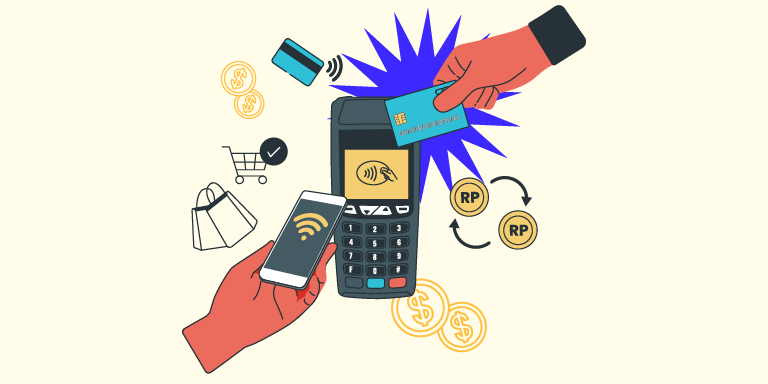
Mobile payments use NFC (Near Field Communication) technology. When a customer taps their phone, the terminal receives an encrypted token rather than raw card data, making it one of the most secure forms of payment.
Do I need a merchant account?
Modern Payment Service Providers (PSPs) like Stripe and Square aggregate merchants under their own master accounts, meaning you don’t usually need to apply for a separate, complex merchant account through a traditional bank.
Are there monthly fees?
Most modern providers operate on a "pay-as-you-go" model (a percentage per transaction). Monthly fees are usually reserved for advanced features, reporting suites, or specialized hardware rentals.
Disclaimer: Pricing and feature sets in the FinTech industry change rapidly. The information above is based on industry standards as of early 2025. Always consult the provider’s latest terms of service before finalizing your decision.
 Dwi Wanna
  rifanmuazin
  Asep Darmawan