
 By Laily UPN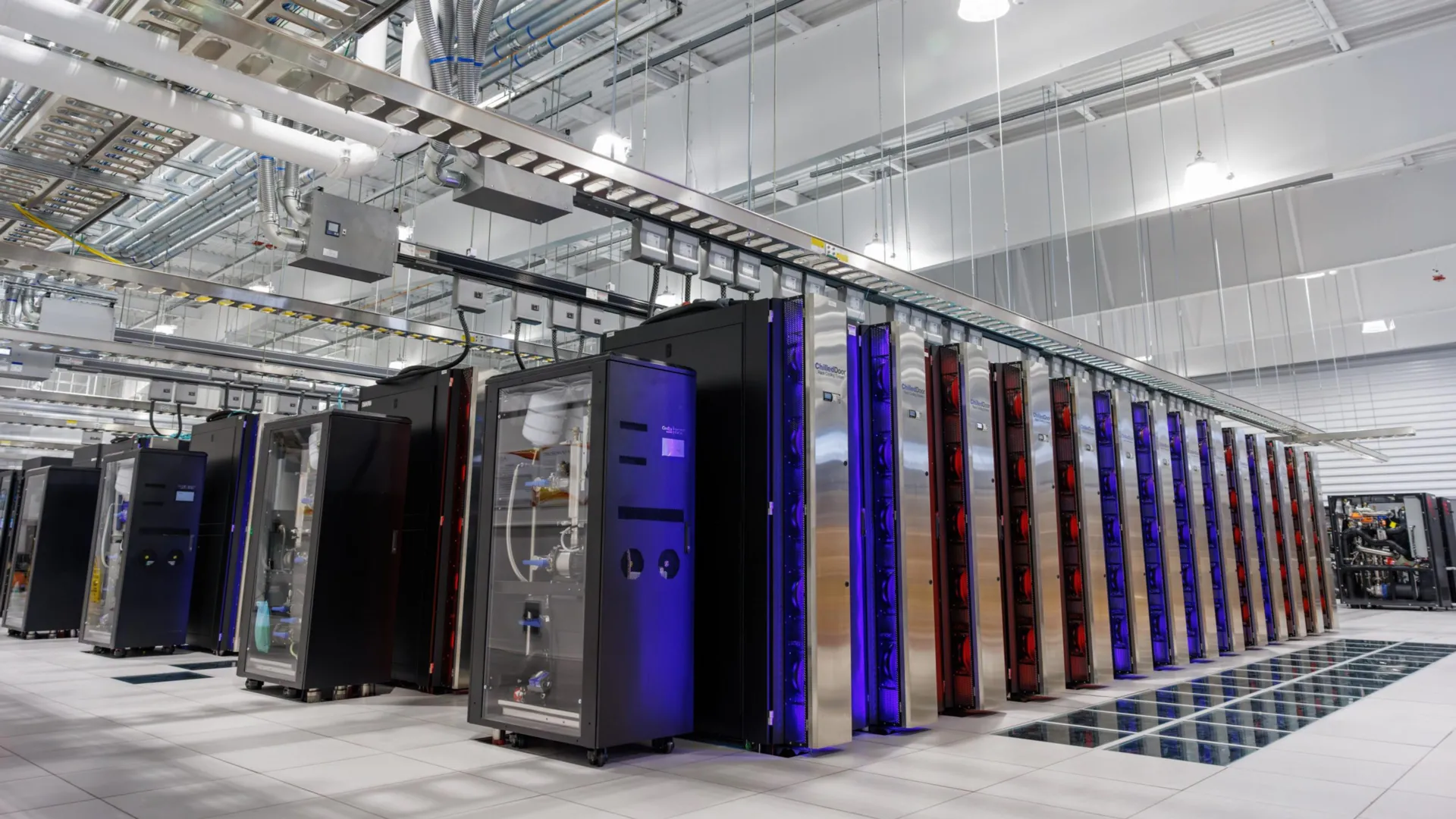
As the artificial intelligence revolution accelerates, it is leaving a massive, invisible footprint on the global climate. Behind the sleek interfaces of chatbots and the sophisticated maneuvers of autonomous robotics lies a power-hungry infrastructure that is straining the electrical grids of the United States. According to the International Energy Agency (IEA), AI systems and the gargantuan data centers that house them consumed a staggering 415 terawatt-hours of electricity in 2024—a figure that accounts for over 10% of the nation’s total electricity production.
The trajectory is even more alarming. With the rapid integration of AI into finance, healthcare, and manufacturing, demand is projected to double by 2030. This exponential growth has placed the tech industry at a crossroads: continue the "brute force" path of massive neural networks or pivot toward a more sustainable, efficient, and logical architecture.
At the School of Engineering, researchers led by Matthias Scheutz, the Karol Family Applied Technology Professor, have unveiled a proof-of-concept that may provide the answer. By introducing "neuro-symbolic AI," the team has developed a system capable of reducing energy consumption by up to 100 times while simultaneously improving performance.
The Chronology of the Energy Bottleneck
To understand why this breakthrough is critical, one must examine the evolution of AI energy consumption.
The Era of Big Data (2015–2020)
The early adoption of deep learning models required massive datasets. As companies scaled their models, the focus was almost entirely on performance metrics—accuracy and speed—with little regard for the energy cost of training.
The Generative Explosion (2021–2023)
The advent of Large Language Models (LLMs) like ChatGPT and Gemini shifted the paradigm. These models, trained on trillions of parameters, began consuming electricity at rates that forced tech giants to secure dedicated power plants. By late 2023, the industry reached a saturation point where the cost of energy began to outweigh the marginal gains in model intelligence.
The Search for Efficiency (2024–Present)
As grid operators began issuing warnings about potential blackouts and the environmental impact of data centers became a central political issue, the research focus shifted. Scientists began looking for "sparse" AI architectures that require less compute power to achieve the same results. This is the timeline in which Scheutz’s neuro-symbolic research emerges—a pivotal move to decouple AI capability from energy consumption.
Supporting Data: The Case for Neuro-Symbolic Efficiency
The research conducted by Scheutz’s lab will be formally presented at the International Conference of Robotics and Automation in Vienna this May. The data provides a compelling argument for a structural shift in how AI is programmed.
The Tower of Hanoi Benchmark
To test their hybrid system, researchers utilized the "Tower of Hanoi" puzzle, a classic problem requiring foresight and logical planning.
- Standard VLA Models: Achieved only a 34% success rate, often failing due to trial-and-error confusion.
- Neuro-Symbolic VLA: Achieved a 95% success rate, demonstrating an ability to "reason" through the steps rather than guessing.
- Novel Complexity: When presented with a complex, unseen version of the puzzle, the hybrid system maintained a 78% success rate, while traditional models failed entirely.
Time and Energy Savings
The efficiency gains are not merely incremental; they are transformational.
- Training Time: The neuro-symbolic system learned the task in 34 minutes, whereas conventional models required over 36 hours (a day and a half).
- Operational Energy: During operation, the new system utilized only 5% of the energy consumed by traditional models.
- Training Energy: The energy required to train the model was reduced to just 1% of the energy footprint of standard systems.
Official Perspective: The Mechanics of Hybrid Reasoning
Unlike standard Large Language Models (LLMs), which operate on statistical probability—predicting the "next word" or "next movement" based on historical patterns—the team’s neuro-symbolic approach incorporates Visual-Language-Action (VLA) capabilities. These systems are designed for the physical world, allowing robots to see, understand, and interact with objects.
"Like an LLM, VLA models act on statistical results from large training sets of similar scenarios, but that can lead to errors," explains Professor Scheutz. "A neuro-symbolic VLA can apply rules that limit the amount of trial and error during learning and get to a solution much faster."
Why Traditional AI Struggles
Conventional AI lacks a "world model." If a robot attempting to stack blocks encounters a shadow, it may mistake the shadow for a physical object. Because it relies on statistical patterns rather than logical rules (like gravity or geometry), it may attempt to place a block in mid-air, causing a collapse.
This mimics the "hallucination" problem in chatbots, where an AI might fabricate a legal case or produce an image of a person with six fingers. The root cause is the same: the system is pattern-matching, not reasoning. By adding a symbolic layer—a set of hard-coded rules and abstract concepts—the AI gains a framework of "common sense" that prevents it from wasting cycles on impossible actions.
The Implications for Infrastructure and Sustainability
The implications of this research extend far beyond the laboratory. We are currently witnessing a massive expansion of energy infrastructure to support AI, with new data centers frequently requiring hundreds of megawatts—enough to power a small city.
The Hidden Cost of Search
Scheutz highlights the disproportionate nature of our current AI reliance. "When you search on Google, the AI summary at the top of the page consumes up to 100 times more energy than the generation of the standard website listings," he notes. This energy-to-value ratio is increasingly unsustainable. If the current growth rate continues, the demand for electricity will outpace the deployment of renewable energy, forcing providers to rely on fossil-fuel-based "peaker plants" to keep the data centers humming.
A Sustainable Path Forward
The shift toward neuro-symbolic AI suggests that the "bigger is better" philosophy of the last decade may be obsolete. By teaching AI to reason—to apply logic alongside statistical inference—we can:
- Reduce Hardware Dependency: Lower energy requirements mean fewer GPUs and TPUs are needed, easing the global shortage of high-end chips.
- Enhance Reliability: Systems that rely on rules are inherently more predictable, making them safer for use in critical sectors like healthcare, autonomous driving, and logistics.
- Climate Mitigation: If the 100-fold reduction in energy consumption is scalable across the industry, it could effectively decouple AI progress from carbon emissions.
The Road Ahead
The upcoming presentation in Vienna marks a significant milestone in the field. It signals to the tech giants—those currently engaged in a trillion-dollar race for compute power—that the solution to their energy crisis may not be more power plants, but smarter algorithms.
As the world grapples with the climate crisis, the marriage of neural networks and symbolic reasoning offers a beacon of hope. It suggests that we do not have to choose between the promise of artificial intelligence and the health of our planet. By imbuing our machines with the ability to think logically rather than just computing statistically, we can build a future that is not only more intelligent but also more efficient, sustainable, and fundamentally grounded in the realities of the physical world.
 Sagoh
Sagoh  Asro
Asro  Siti Muinah