
 By Siti Muinah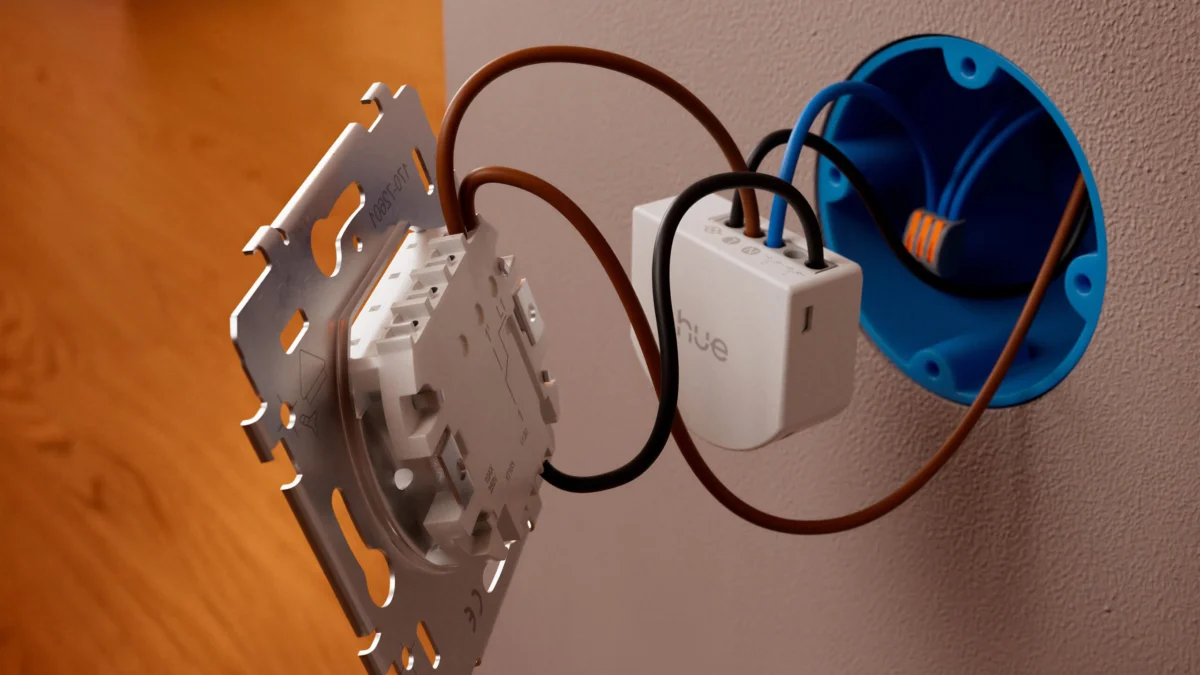
In a significant expansion of its smart home portfolio, Signify—the parent company behind Philips Hue—has unveiled a suite of new products designed to bridge the gap between traditional electrical infrastructure and the modern smart home. The announcement, which includes long-awaited in-wall relay modules, new entry-level aesthetic lamps, and next-generation candle bulbs, marks a pivot toward making the Hue ecosystem more accessible and deeply integrated into the physical fabric of the home.
The most notable addition, the Wired Wall Switch Module, promises to revolutionize how users interact with non-smart lighting. By installing these modules behind existing physical switches, homeowners can finally bring "dumb" fixtures—such as recessed ceiling lights or ornate pendant lighting—into the Philips Hue app environment. While this move brings Hue into direct competition with established smart relay manufacturers, the company is positioning its solution as the premium, unified choice for existing Hue users.
Main Facts: A Holistic Update to the Hue Portfolio
The latest product drop from Philips Hue is categorized into three primary areas: infrastructure control, decorative accent lighting, and core bulb performance.
1. The Wired Wall Switch Modules
These in-wall relays are the stars of the release. They allow users to retain their existing physical light switches while enabling smart control. Unlike previous iterations that functioned as remote triggers, these wired versions act as true relays. They are available in three configurations:
- 1-Channel Module: Designed for standard single-rocker switches.
- 2-Channel Module: Engineered for double-rocker setups.
- Dimmer Module: Providing the ability to manage light intensity via existing wall hardware.
- Hardwired Control Module: A dedicated version that allows traditional switches to control existing Hue smart bulbs without cutting power to them.
2. The New Play Lamp Series
Targeting users who admire the high-end aesthetic of the Signe gradient series but desire a more accessible price point, the new Play Table Lamp and Play Floor Lamp (Large) offer a streamlined design. These lamps are purpose-built for the Hue "Entertainment" experience, capable of syncing lighting effects with movies, music, and gaming sessions when paired with the Philips Hue Sync Box.
3. Next-Generation E14 Candle Bulbs
The refreshed E14 candle bulbs represent a leap in technical performance. Featuring a broader white light spectrum (1000K to 20,000K) and improved color fidelity via "Chromasync" technology, these bulbs are designed for chandeliers and decorative sconces. Most importantly, they introduce native Matter-over-Thread support, allowing them to communicate directly with ecosystems like Apple Home or Google Home, bypassing the historical requirement for a dedicated Hue Bridge.
Chronology: The Evolution of Hue Integration
The journey toward this release has been years in the making. Philips Hue has long been criticized for its "smart bulb only" philosophy, which often conflicted with the reality of wall switches being turned off manually, cutting power to the smart bulbs and rendering them unreachable by apps or voice assistants.
- 2021: Signify introduced the battery-powered wall module, a stopgap solution that allowed users to keep their lights powered while sending "smart" commands to the Hue system. However, this did not solve the issue for non-smart, hardwired lights.
- 2023–2024: As the Matter standard gained traction, Signify began preparing its hardware for a more interoperable future. The industry shift toward Thread—a low-power, mesh-networking protocol—became the primary focus for the company’s R&D department.
- June 2026: The official launch of the Wired Wall Switch Module. This date marks the first time in the company’s history that it has entered the "in-wall relay" market, a space previously dominated by third-party manufacturers like Aqara, Shelly, and Lutron.
Supporting Data: Technical Specifications and Pricing
The pricing strategy for this rollout suggests a tier-based approach, balancing premium design with functional utility.
| Product | Price (EUR) | Price (USD) | Key Features |
|---|---|---|---|
| 1/2-Channel Relay Module | €44.99 | N/A | In-wall installation; existing switch compatibility. |
| Play Table Lamp | €79.99 | $79.99 | Sync-ready; compact 23.6" design. |
| Play Floor Lamp (Large) | €149.99 | $149.99 | Gradient-capable; entertainment sync. |
| E14 Candle (2-Pack) | €109.99 | $109.99 | Matter-over-Thread; 0.2% dimming. |
The E14 candle bulbs offer a significant improvement in dimming capabilities, reaching a low of 0.2%, which is essential for mood lighting in residential settings. The integration of Matter-over-Thread is a data-driven move to reduce latency and improve the robustness of the smart home mesh network.

Official Responses and Strategic Outlook
The decision to limit the Wired Wall Switch Modules to the European market has sparked conversation among tech enthusiasts. George Yianni, CTO of Signify, addressed this geographical disparity in a recent interview with The Verge.
"DIY modules are not such an established category in the US; it’s more fully integrated switches," Yianni noted. He explained that the US electrical market’s preference for pre-integrated smart switches makes the "behind-the-switch" module a niche product. However, he left the door open for a future expansion: "If people really want these in the US, then maybe we’ll look at it. I think the modules are quite exciting; it’s something that we’ve talked about doing for a long time."
This response highlights Signify’s cautious approach to market-specific infrastructure. By testing the waters in Europe—where modular, behind-the-switch relays are a standard part of electrical renovations—Signify is effectively mitigating risk before attempting to disrupt the US market, which favors different installation standards.
Implications: The Future of the "Smart" Home
The implications of this launch are twofold: one for the end-user, and one for the smart home industry at large.
For the Consumer
For the average Hue user, the barrier to entry for a "whole-home" smart lighting system has dropped. Historically, users were forced to swap out every single light fixture or bulb in a room to make it "smart." Now, by installing a relay behind the wall, a user can transform a legacy chandelier or a high-end architectural light fixture into a controllable, dimmable, and automatable component of the Hue ecosystem without touching the fixture itself.
For the Smart Home Ecosystem
The inclusion of Matter-over-Thread in the new candle bulbs signals the beginning of the end for proprietary hubs. By allowing these bulbs to connect directly to third-party ecosystems, Signify is acknowledging that the "walled garden" approach is no longer the primary driver of consumer loyalty. Instead, the company is banking on the quality of its lighting—the color accuracy, the smoothness of the transitions, and the robustness of its sync technology—to retain users, rather than the necessity of the Hue Bridge.
The Competitive Landscape
Philips Hue now finds itself in a direct head-on collision with brands like Shelly and Aqara. While these competitors have long offered reliable, cost-effective in-wall relays, they often lack the seamless UI/UX and entertainment-sync capabilities that the Hue app provides. By bringing this functionality in-house, Signify is betting that users will pay a premium for a "complete" ecosystem that requires no third-party bridging software or complicated integrations like Home Assistant to achieve parity.
Ultimately, this move validates the importance of "hidden" smart home technology. As the market matures, users are becoming less interested in flashy, visible gadgets and more interested in invisible, reliable, and integrated control that respects the existing aesthetic of their homes. With this expansion, Philips Hue has effectively signaled that the next frontier of smart lighting isn’t just about the bulb—it’s about the walls themselves.
 Raul Delapena Setiawan
  Asro
Asro 