
 By Laily UPN
In the rapidly evolving world of e-commerce, few comparisons generate as much confusion as the one between Shopify and Pirate Ship. New merchants often frame the debate as a rivalry, asking which platform they should choose to power their business. However, industry experts and veteran sellers understand that this is a category error. Shopify is a comprehensive engine for commerce, while Pirate Ship is a specialized utility for logistics.
For the modern entrepreneur, the question isn’t "which one is better?" but rather "how can I leverage both to maximize efficiency and profit?" This article breaks down the technical, financial, and operational realities of both platforms to help you build a high-performance shipping strategy.
Main Facts: Defining the Two Pillars
To understand why these platforms are often mentioned in the same breath, one must first recognize their fundamental purposes.
Shopify is an all-in-one e-commerce platform. It provides the digital infrastructure—the "storefront"—that allows a merchant to list products, manage inventory, process secure payments, and handle marketing. Shipping is merely one module within a much larger ecosystem.
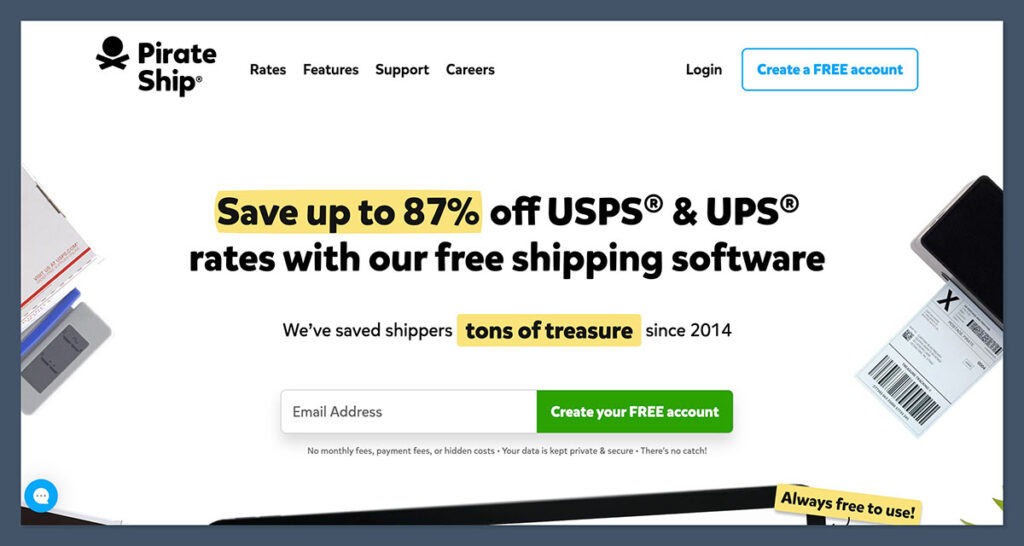
Pirate Ship, conversely, is a focused SaaS (Software as a Service) tool designed for one purpose: purchasing discounted postage. It acts as a digital post office that negotiates bulk rates with major carriers like USPS and UPS and passes those savings directly to the merchant. It does not host your website, process your credit card transactions, or provide a public-facing product catalog.

The reality of the current e-commerce landscape is that these tools are not mutually exclusive. Through a seamless integration, they function as a symbiotic pair: Shopify serves as the "front office" that generates the order, while Pirate Ship serves as the "back office" that fulfills the delivery.
Chronology: The Evolution of Shipping Integration
The relationship between these two platforms has matured alongside the rise of "headless" commerce and specialized shipping tech.
- The Early Years: Historically, small business owners relied on the post office counter or expensive retail rates.
- The Rise of Shopify: When Shopify gained dominance, it introduced "Shopify Shipping," allowing merchants to buy labels without leaving their dashboard. This removed a significant friction point for beginners.
- The Pirate Ship Disruption: Pirate Ship gained massive traction by targeting the "shipping arbitrage" market. By offering deeper discounts on specific services—such as USPS Priority Mail Cubic and UPS Ground Saver—they appealed to high-volume sellers who needed to protect their margins.
- The Integration Era: Eventually, the release of the official Pirate Ship app for Shopify bridged the gap. Merchants no longer had to choose; they could use Shopify’s backend for store management and sync their unfulfilled orders to Pirate Ship with a single click.
Supporting Data: Where the Platforms Diverge
When assessing the "better" option, we must look at the specific operational metrics that drive business success.
Cost Structure and Financial Impact
- Shopify: Operates on a tiered subscription model. Basic plans start at $29/month (annual billing), while enterprise-level Shopify Plus accounts can exceed $2,300/month. These fees cover the hosting, security, and sales engine of the business.
- Pirate Ship: Follows a "zero-cost" software model. There are no monthly subscriptions, no setup fees, and no per-label markups. They derive their revenue from carrier volume incentives, not from the merchants themselves.
Carrier Capabilities
While both platforms offer access to USPS and UPS, the depth of these offerings varies:
- Shopify offers a user-friendly interface that includes DHL Express, which is essential for international scaling.
- Pirate Ship specializes in domestic USPS and UPS optimization. Its strength lies in "Cubic" pricing—a method of calculating rates based on package volume rather than just weight. For merchants shipping heavy, small items (like books or hardware), this can result in savings of 30% to 50% compared to standard rates.
Checkout Transparency
One of the most critical differences is the "live rate" capability. Shopify’s advanced tiers allow merchants to display real-time carrier-calculated shipping rates to customers during checkout. This prevents the "shipping profit/loss" trap where a customer is overcharged or undercharged for postage. Pirate Ship, being a post-sale tool, does not interact with your checkout page.

Official Perspectives and Market Positioning
In official communications, Shopify positions itself as the "all-in-one" solution, emphasizing the convenience of having everything in one place. They argue that for the majority of growing businesses, the time saved by staying within the Shopify dashboard outweighs the marginal cost savings of a third-party shipping tool.
Pirate Ship’s marketing is distinctly "anti-corporate." They lean into their "pirate" branding, emphasizing that they are on the side of the merchant against the "big carriers." Their support team is famous for being approachable, technical, and surprisingly transparent about carrier rate changes, which has earned them a cult following among small-to-medium enterprise (SME) owners.
Implications for Your Business Strategy
The "Simplicity" Argument
If you are a startup or a hobbyist selling fewer than 50 items a month, the "administrative load" of jumping between apps can be a productivity killer. For these users, Shopify Shipping is often the better choice. The ability to print a label, generate a packing slip, and update the customer’s order status in one click within the same tab is a massive time-saver.
The "Margin" Argument
As your volume grows to hundreds or thousands of orders, the "cents" matter. If your average label is $0.50 cheaper on Pirate Ship, that represents hundreds of dollars in lost profit per month if you stay solely within Shopify. For high-volume sellers, the integration is mandatory. The minor friction of switching tabs or syncing orders is a small price to pay for significant annual cost savings.
The "Carrier Mix" Strategy
It is also vital to consider your carrier mix. If your business model relies heavily on FedEx or specific regional couriers, neither platform will fully satisfy your needs. You may find yourself needing a "Multi-Carrier Shipping" solution (like ShipStation or Shippo) that connects both Shopify and Pirate Ship to an even wider array of delivery providers.
Conclusion: Crafting Your Workflow
The "Shopify vs. Pirate Ship" debate is ultimately a false dichotomy. The most successful e-commerce merchants treat their tech stack as a modular system.
- For the Foundation: Use Shopify to build your brand, handle your checkout, and manage your customer relationships.
- For the Logistics: Use Pirate Ship as your specialized fulfillment engine to optimize your postage spend.
- For the Workflow: Automate the hand-off. Use the Shopify app to sync your data so that the fulfillment process remains frictionless.
By separating your sales platform from your shipping tool, you gain the best of both worlds: the robust sales features of an industry leader and the specialized, low-cost efficiency of a dedicated logistics partner. As you scale, remember that every dollar saved on shipping is a dollar added directly to your net profit. Don’t let brand loyalty to a platform stand in the way of your bottom line.
 Dwi Wanna
  Lina Irawan
  Basiran