
 By Layla Zulfa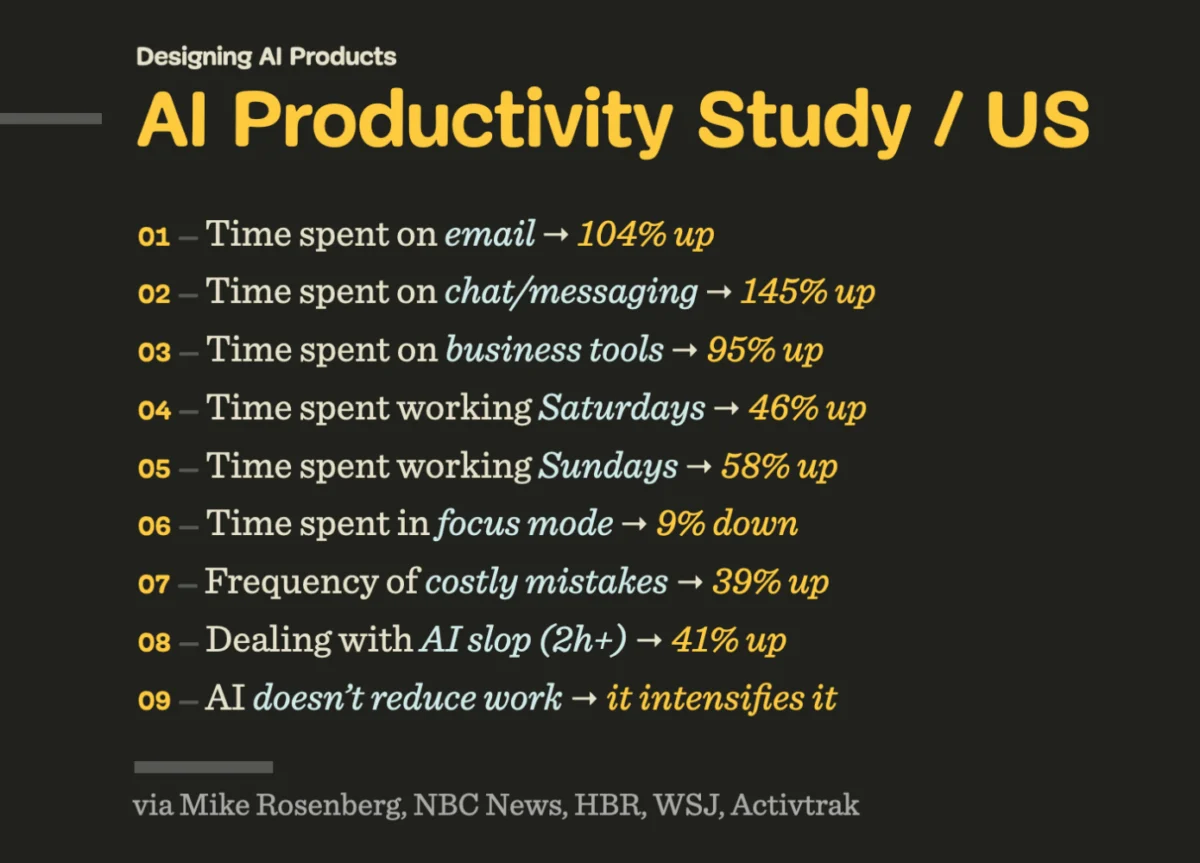
Main Facts: The Disconnect Between Innovation and Adoption
In the current technological landscape, a significant rift has formed between the vision of Silicon Valley’s executive suites and the practical realities of the global workforce. For the past two years, the corporate world has operated under a singular, silent assumption: that every consumer and employee is "craving" more Artificial Intelligence (AI) in their daily lives. From AI-powered toothbrushes to generative chatbots embedded in every enterprise software suite, the "AI-first" mantra has become the default strategy for product development.
However, emerging market data and user experience (UX) research suggest a starkly different reality. Most people do not want "more AI"—at least not in the intrusive, conversational, and often unreliable format currently being pushed by tech leaders. Instead, a growing "adoption gap" is becoming visible. According to recent studies, including a 2024 IBM report on AI implementation, many AI features are suffering from low retention and adoption rates. Despite the billions of dollars invested in research and development, these features often carry high delivery costs and significant risks to brand reputation when they fail to deliver consistent value.
The core of the issue lies in a fundamental misunderstanding of value propositions. As industry experts like David Bland and Vitaly Friedman have noted, "AI" is not a product in itself; it is a resource or an activity. When companies treat AI as the primary selling point, they often overlook the fact that users do not want to "interact with AI"—they want to complete tasks more efficiently. Currently, many AI integrations are functioning as "bolt-ons" that disrupt existing workflows, forcing users to hop between fragmented systems and perform the "hidden labor" of verifying AI-generated outputs.
Chronology: From the Gold Rush to the Trough of Disillusionment
The journey to our current state of AI fatigue can be traced through several distinct phases over the last few years:
1. The Generative Spark (Late 2022 – Early 2023)
The public release of Large Language Models (LLMs) like ChatGPT created an immediate "Gold Rush" mentality. Organizations feared being left behind, leading to a frantic scramble to integrate generative features. During this phase, the novelty of AI was enough to drive engagement, and the limitations of the technology were largely forgiven as "beta" quirks.
2. The "AI-Everything" Phase (Mid 2023 – Early 2024)
Software vendors began a period of "AI-washing," where existing automation was rebranded as AI, and new, often unnecessary, chat interfaces were added to everything from spreadsheets to project management tools. This period saw the rise of the "magical box" UI—the belief that a single prompt field could replace complex, specialized interfaces.
3. The Great Realignment (Late 2024 – Present)
The current phase is defined by a "reality check." Organizations are discovering that AI features often increase the cognitive load on employees. Instead of reducing work, AI has intensified it by requiring users to check for hallucinations, manage "AI slop" (low-quality generated content), and navigate more complex digital environments. The sentiment has shifted from excitement to skepticism, and in many cases, outright resistance due to fears of job displacement and the loss of human-centric work.
Supporting Data: The Hidden Costs of AI Productivity
While the narrative from AI providers focuses on "unprecedented productivity gains," empirical data paints a more complex picture. A meta-analysis of productivity studies involving US workers reveals that AI does not always reduce work; in many instances, it intensifies it.

According to data compiled from sources including Harvard Business Review, The Wall Street Journal, and ActivTrak:
- Communication Overload: Time spent on email has increased by 104% in some sectors as AI makes it easier to send more (though not necessarily better) messages. Chat and messaging volumes have surged by 145%.
- The "Weekend Creep": Contrary to the promise of a shorter work week, work performed on Saturdays has risen by 46%, and Sunday work by 58%, as employees use the "extra time" provided by AI to take on even more tasks.
- Error Management: Costly mistakes attributed to over-reliance on AI outputs have risen by 39%. Dealing with "AI slop"—the generic or incorrect content generated by LLMs—now accounts for a 41% increase in "cleanup" tasks for editors and managers.
- Concentration Deficit: "Focus mode" or deep work time has actually decreased by 9% as users are constantly interrupted by AI-driven notifications and the need to switch contexts between traditional tools and new AI interfaces.
Furthermore, a study by the Brookings Institution and The Washington Post highlighted the vulnerability of different sectors. While software developers and PR specialists are highly "exposed" to AI, this exposure is often viewed with anxiety rather than enthusiasm. The "Value Proposition" chart popularized by David Bland illustrates that while AI can be a "Key Activity" or "Key Resource" in a business model, it fails when placed in the "Value Proposition" box. Customers do not buy AI; they buy solutions to their problems.
Official Responses and Expert Perspectives: The Call for "AI-Second" Design
UX leaders and industry veterans are beginning to speak out against the "AI-first" dogma. Vitaly Friedman, a prominent voice in the design community, argues for a shift toward "AI-second" thinking. In this framework, AI is subtle, humble, and ambient. It operates in the background to handle mundane tasks without requiring the user to change their mental model or engage in a "conversation" with a machine.
The "Human-in-the-Loop" Necessity
Experts emphasize that people compare "features with features," not "software with humans." If an AI-powered feature is less reliable than a traditional, deterministic feature, the user will view the AI as a liability. The unpredictability of AI—its tendency to hallucinate or provide inconsistent results—makes it a hard sell for mission-critical tasks where reliability is paramount.

The Philosophical Pushback
Bo Young Lee, a noted leadership consultant, recently summarized a growing social sentiment regarding the boundaries of automation: "I don’t want to read books written by AI… I want AI to do all the physical and mental labor that taxes me so I can read books written by humans." This sentiment highlights a critical boundary: consumers generally want AI to handle the "dull, dirty, and dangerous" tasks, but they want to reserve the "rewarding, creative, and human" tasks for themselves.
Implications: A Strategic Shift in Product Development
The implications of this shift in consumer and employee sentiment are profound for the next generation of product development.
1. From "Chat-First" to "Integrated Automation"
The "magical box" or chatbot interface is likely to recede in favor of deeply integrated, invisible AI. Instead of asking a user to "prompt" a system to summarize a document, the system should simply provide a high-quality summary as a standard part of the interface, only when relevant.
2. Solving the "Context-Switching" Problem
For AI to be adopted, it must stop taking people out of their regular way of working. Future successful AI implementations will focus on reducing the "hop-on, hop-off" nature of current tools. This means AI must adapt to human mental models, rather than forcing humans to learn the specific "language" of prompt engineering.

3. The Value of Reliability over Speed
As the novelty of speed wears off, the market will prioritize reliability. A tool that works 100% of the time to perform a small task is more valuable than a tool that works 80% of the time to perform a large task, especially if the 20% failure rate requires manual auditing.
4. Protecting the Human Element
Organizations that use AI to "automate the boring stuff" will see higher morale and retention than those that use it to replace creative or interpersonal roles. The goal of AI should be to provide "headspace"—giving humans more time to spend with other humans, whether in a professional or personal capacity.
Conclusion: The Future is AI-Augmented, Not AI-Led
The current resistance to AI is not necessarily a rejection of the technology itself, but a rejection of how it is being implemented. People don’t want a "romantic AI partner" or an "AI art museum"; they want a tool that makes their taxes easier, organizes their cluttered inboxes, and handles the logistics of their lives.
As we move forward, the most successful companies will be those that stop treating AI as a "magic wand" and start treating it as a specialized tool. By focusing on "AI-second" design—where the technology supports rather than supplants the human experience—the industry can bridge the adoption gap and create products that people actually want to use. The ultimate goal of technology should be to facilitate human connection and creativity, not to become a substitute for it.
 Nana Wu
  Nana
Nana 