
 By Suro Senen
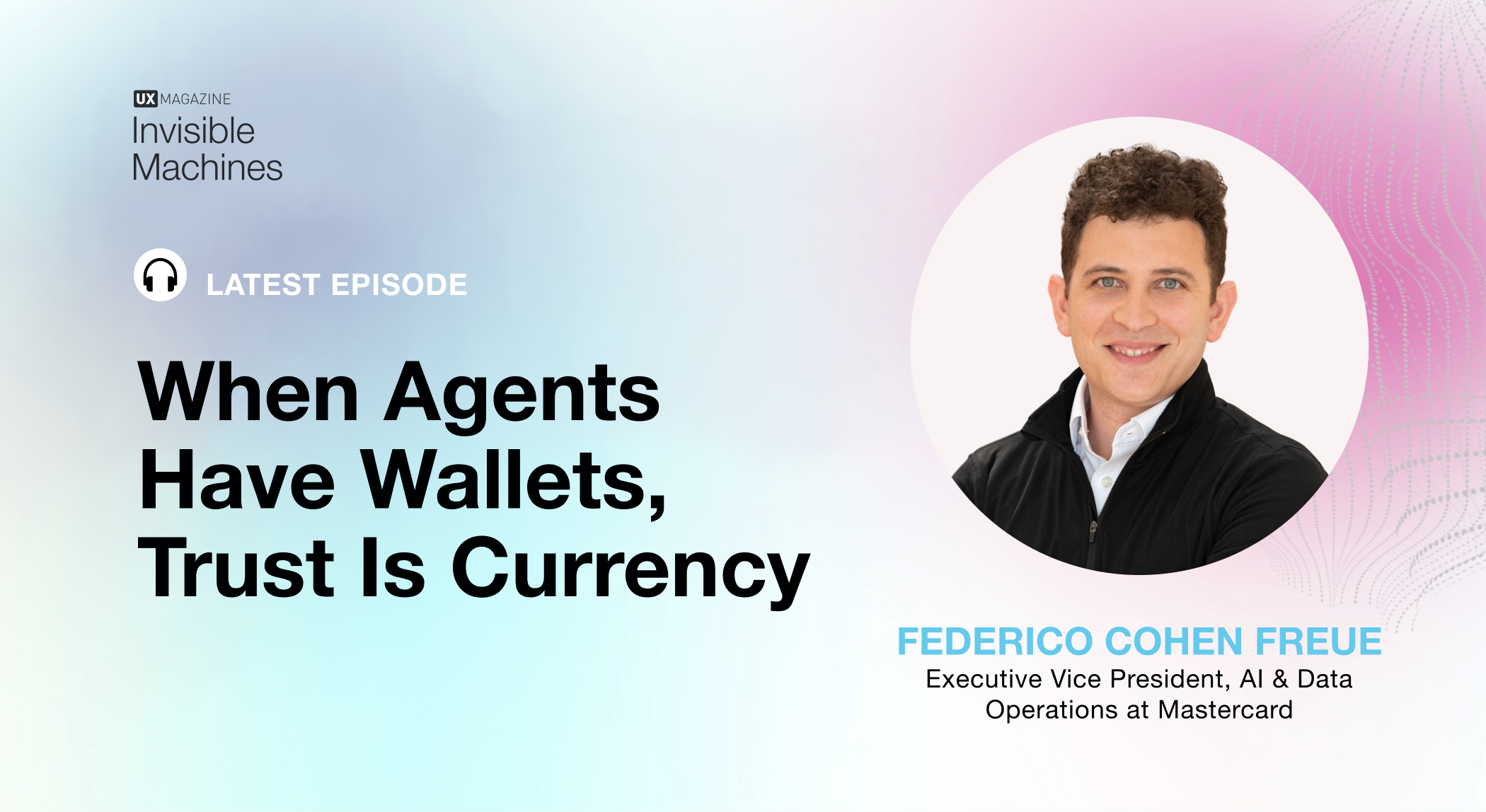
NEW YORK — In the modern corporate landscape, enterprise transformation is no longer a slow-moving marathon; it is a high-stakes sprint dictated by the dizzying acceleration of artificial intelligence. Yet, behind the press releases and soaring stock valuations, a quieter, more profound struggle is taking place inside the world’s largest organizations: the gap between wanting AI and being structurally ready for it.
To understand this friction, one needs only to look at the inbox of Federico Cohen Freue, head of Mastercard’s central AI and data team. Freue—affectionately known within his circle as "Fed"—manages roughly a thousand AI project proposals, ideas, and formal requests every single year. Originating from every corner of Mastercard’s global footprint, these pitches represent the collective ambition of an enterprise desperately trying to future-proof its operations.
A few years ago, more than half of those incoming requests shared a singular, unimaginative objective: chatbots. Today, the landscape has fundamentally shifted. More than half of the proposals landing on Freue’s desk are for autonomous AI agents.
For enterprise leaders, this evolution is a positive signal. It indicates that the organizational mental model of what AI can achieve has matured. Stakeholders are no longer envisioning static question-and-answer interfaces that merely summarize text documents. Instead, they are conceptualizing dynamic, action-oriented systems embedded directly into complex workflows, capable of executing tasks on human behalf.
However, as Freue is quick to point out, wanting an agent and being structurally ready to deploy one are two entirely different realities. Navigating that distinction requires a fundamental rethink of enterprise engineering, governance, trust frameworks, and organizational learning.
1. Main Facts: The Shift from Chatbots to Autonomous Agents
The transition from passive chatbots to active AI agents marks a watershed moment in corporate technology adoption. Chatbots wait to be asked; agents take initiative. Chatbots retrieve information; agents execute transactions, orchestrate workflows, and negotiate outcomes across digital ecosystems.
At Mastercard, this shift has forced a radical reevaluation of how projects are filtered, prioritized, and built. With a thousand incoming ideas annually, the central AI team cannot afford to say yes to everything. Instead, they rely on a deceptively simple strategic framework—a mandate that fits neatly into a single sentence: Use AI to make commerce more secure, smarter, more personal, and to make Mastercard stronger.
This simplicity is intentional. When a global enterprise operates with thousands of engineers and product managers, complex governance frameworks often collapse under their own weight. A shared, universally understood lens ensures that prioritization becomes a constructive strategic conversation rather than an administrative negotiation. It does not answer every edge-case question, but it answers the most critical one: Does this initiative fundamentally fit our core mission?
Crucially, this framework is not designed to serve as a compliance checklist or a reactive guardrail. It is a proactive strategic filter that shapes how teams think before they ever write a line of code or submit a project proposal.
2. Chronology: The Evolution of Enterprise AI Demand
To fully grasp the current state of enterprise AI, it is helpful to trace its rapid chronological evolution over the past half-decade:
- Phase 1: The Generative Novelty (2022–2023): Following the public breakthrough of large language models (LLMs), enterprise demand was dominated by superficial applications. Organizations scrambled to deploy customer service chatbots and internal document search tools. The primary goal was experimentation and proof-of-concept validation.
- Phase 2: The Integration Bottleneck (2023–2024): Organizations quickly discovered that off-the-shelf models hallucinated, lacked context, and failed to integrate securely with legacy backend systems. The limitations of isolated tools prompted a pivot toward enterprise-grade data governance, retrieval-augmented generation (RAG), and tighter security protocols.
- Phase 3: The Agentic Revolution (Present Day): The current era is defined by the demand for autonomy. Enterprises no longer want software that talks about work; they want software that does the work. This includes multi-step reasoning engines, programmatic API orchestration, and autonomous execution capabilities—culminating in the rise of agentic payments and algorithmic commerce.
3. Supporting Data & Analogies: The Ball Bearing Problem
In evaluating the readiness of incoming agentic proposals, Mastercard’s leadership frequently relies on a striking conceptual model known as The Ball Bearing Problem.
Imagine two ball bearings sitting side by side. Visually, they are identical. Both possess the correct dimensions, the appropriate metallic sheen, and the right physical form. However, one has been meticulously machined to exact engineering tolerances using superior materials; the other has not. To the naked eye, even an expert observer cannot tell the difference between the two.
Yet, if you place the poorly machined ball bearing into a high-stress environment—such as a commercial airplane engine—the engine inevitably catastrophic fails.
AI agent demos operate on the exact same principle. A polished, beautiful prototype of an autonomous agent can look flawless in a controlled demonstration. It can dazzle executives, secure funding, and generate immense organizational excitement. But a visually impressive demo is not proof of a viable, resilient enterprise solution. The visual experience is identical; the underlying engineering integrity is vastly different.
This is precisely why Mastercard’s AI team invests heavily in internal training, education, and technical fluency before greenlighting deployment. If employees and product managers understand the rigorous conditions that make AI actually work—what "machined correctly" means in software architecture—they submit better proposals, build more resilient systems, and catch architectural failures long before they reach production.
4. Official Perspectives: Trust as the Ultimate Currency
As artificial intelligence rapidly transitions from internal productivity tools to external, consumer-facing commerce engines, the conversation naturally shifts toward agentic payments—autonomous AI agents executing financial transactions on behalf of human users.
The consumer demand for this capability is already materializing, and product discovery patterns are swiftly shifting toward LLM-mediated search and conversational commerce. Consumers increasingly expect to articulate a complex goal—such as "Plan a multi-city business trip with sustainable hotels and optimal flight connections within a specific budget"—and have an agent handle the entire end-to-end execution, including booking and payment.
For a global payments network like Mastercard, this represents both an unprecedented opportunity and a monumental risk.
According to Federico Cohen Freue, the corporate instinct is often to race toward the flashy, downstream applications: multi-vendor trip booking, smart inventory replenishment, and algorithmic price negotiation between buyer and seller agents. However, Mastercard’s strategic priority is deliberately inverted.
Before building exciting consumer-facing features, the foundational infrastructure must be locked down. This includes:
- Agent Identity Verification: Ensuring cryptographic certainty regarding which human or corporate entity an autonomous agent represents.
- Delegated Authority Frameworks: Establishing clear, enforceable boundaries on what financial limits and contractual permissions an agent possesses.
- Merchant Acceptance Standards: Defining universal protocols for how merchants accept and validate agent-driven transactions.
Freue summarizes this philosophy with a defining maxim: Trust is the currency of innovation.
As commercial transactions grow exponentially more complex—involving multiple autonomous parties, dynamic pricing algorithms, and automated execution chains—the traditional role of a trusted financial network does not diminish. It compounds. The digital middleman, once casually dismissed by tech utopians as obsolete in a peer-to-peer digital age, suddenly emerges as the most critical trust node in the entire economic system.
5. Strategic Implications: Knowledge Before Action
Beyond payments and agent architectures, Mastercard’s leadership emphasizes a profound realization regarding enterprise learning and knowledge management: Knowledge must always precede action.
Traditional enterprise AI implementations suffer from a reactive design flaw. Organizations construct massive knowledge repositories, train a model on internal data, and wait passively for a human employee to query it. This chatbot paradigm places the entire cognitive burden on the person who least knows what they are looking for. It assumes that employees already possess the meta-knowledge required to ask the right questions.
An advanced, AI-first organization flips this paradigm from reactive retrieval to proactive delivery. This architecture rests on three foundational pillars:
- The Canonical Knowledge Map: Moving away from fragmented document repositories where seventeen versions of the same corporate policy exist across seventeen distinct folders. Instead, enterprises must build a centralized knowledge map where each core concept lives in a single, authoritative location, explicitly linked to related ideas and tracking its own historical evolution.
- The Dynamic Learning Twin: Creating a real-time system model that understands the specific knowledge gaps of an individual employee.
- GPS for Expertise: Solving a corporate variant of the traveling salesman problem. Given where an employee currently stands and where their role requires them to go, the system calculates the most efficient, personalized learning route—continuously rerouting as domain knowledge shifts and company policies evolve.
Freue acknowledges that this is rarely a technology problem; it is fundamentally a cultural one. Asking modern enterprises to treat learning as a continuous, dynamic operating process rather than an onboarding checkbox requires a complete overhaul of corporate readiness and performance incentives.
Conclusion: The Sequencing Imperative
The underlying thread connecting Mastercard’s approach to AI governance, agentic payments, and enterprise learning is sequencing.
In the rush to capitalize on artificial intelligence, most organizations commit a fundamental tactical error: they start with the doing. They deploy an agent to automate a workflow, spin up a model to replace a manual process, or launch a chatbot to answer questions nobody is asking. When these initiatives inevitably fracture under real-world pressures, leadership often diagnoses it as a technology failure.
Mastercard’s institutional perspective suggests otherwise. In almost every case, it is not a technology problem; it is a knowledge problem. The system—and the humans managing it—did not possess enough foundational clarity to execute the task reliably.
The definitive takeaway for enterprise leaders navigating the AI era is simple yet demanding: Before you ask what artificial intelligence can do for your business, you must rigorously ask what your organization actually knows. Because in the age of autonomous agents, the software will only ever be as intelligent, secure, and trustworthy as the foundational knowledge upon which it is built.
 Nana Muazin
 Raul Delapena Setiawan
