
 By Azzam Bilal Chamdy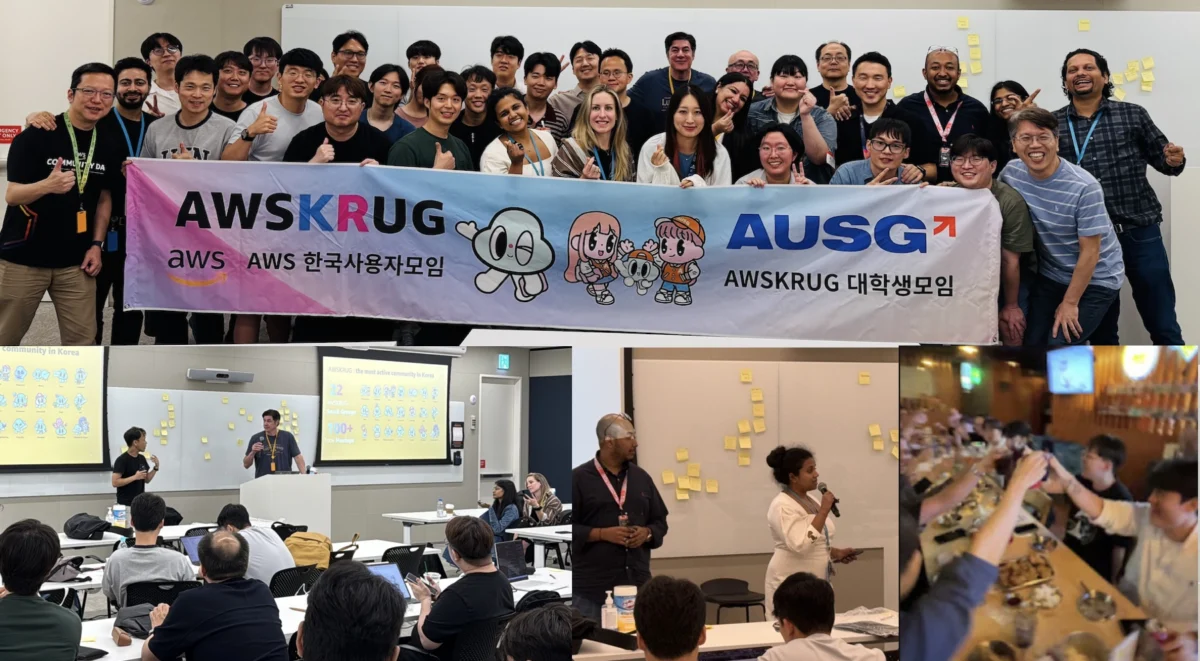
Introduction: Cultivating Global Innovation
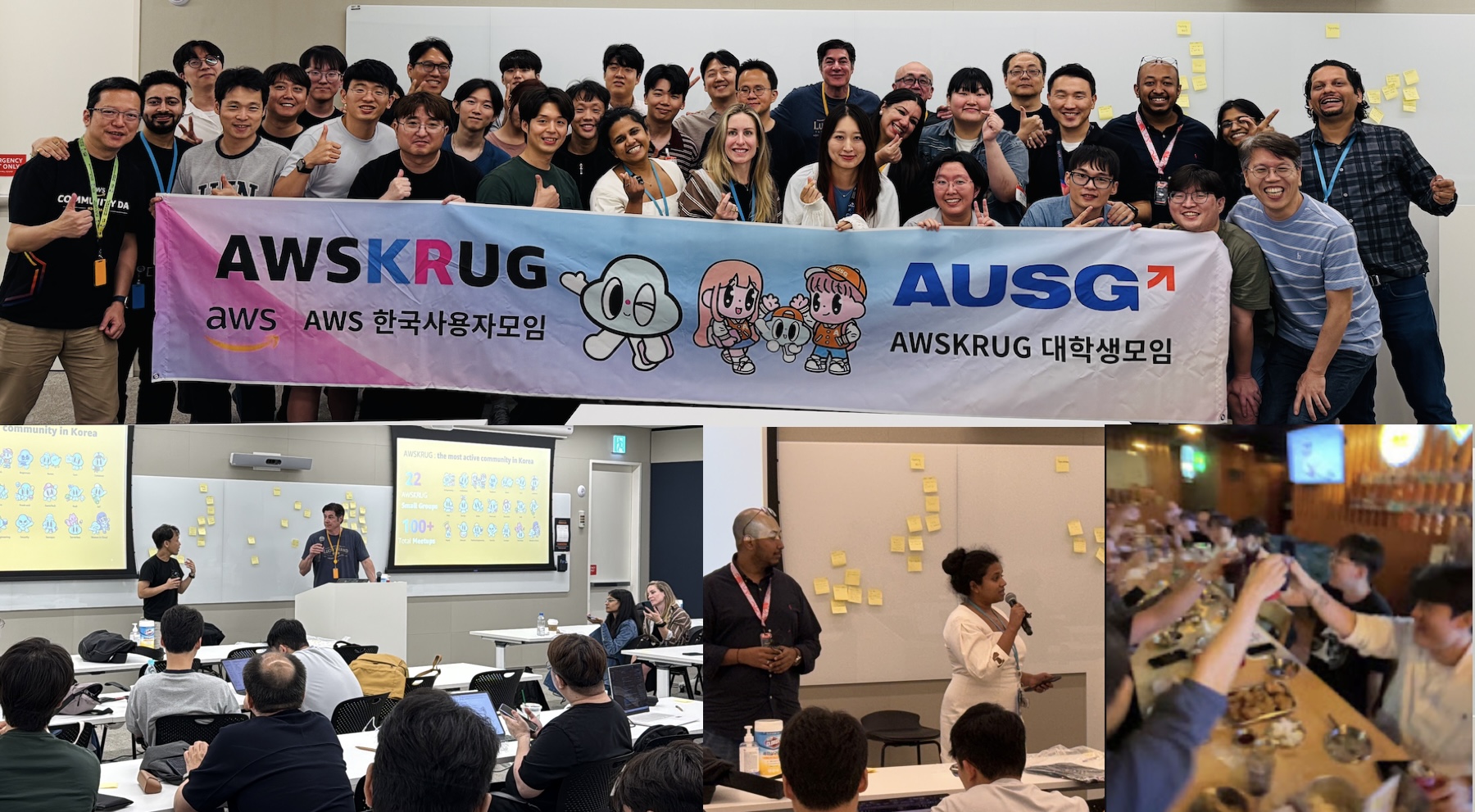
In an era defined by rapid technological shifts, the bridge between cloud providers and their developer communities has never been more critical. Last week, the AWS Developer Experience team underscored this commitment by visiting Seoul to engage with the AWS Korea User Group (AWSKRUG), the preeminent cloud developer community in the region.
AWSKRUG stands as a testament to the power of localized collaboration. With over 20 specialized meetup groups focusing on specific technical domains and geographic areas, the community hosts more than 100 events annually. These gatherings serve as the lifeblood of the local developer ecosystem, providing a platform for knowledge exchange, networking, and the rigorous testing of new cloud architectures. This week’s dispatch explores the intersection of these community insights and the latest technical advancements rolling out from the AWS product teams.
The Seoul Connection: Insights from the Frontlines
The visit to Seoul was not merely a courtesy call but a strategic listening tour. The AWS Developer Experience team regularly traverses the Asia-Pacific region to engage directly with user group leaders, ensuring that the feedback loop between the engineers building the tools and the builders deploying them remains unobstructed.
The Feedback Loop
During the discussions in Seoul, community leaders provided candid assessments of the first half of the year. The dialogue focused on three core pillars:
- Performance Evaluation: A retrospective on community initiatives, identifying successful frameworks and areas where impact fell short of expectations.
- Capability Gaps: Honest feedback on where AWS tools and documentation currently create friction for developers, particularly for those scaling rapidly in competitive markets.
- Strategic Support: A clear articulation of what the community requires from AWS to foster deeper engagement, including better access to early-stage feature previews and technical workshops.
The meeting concluded with a traditional Chimaek session—a cultural staple involving Korean fried chicken and beer—which provided a relaxed, informal environment for builders to discuss the future of the cloud. This human-centric approach remains central to AWS’s strategy, acknowledging that the most robust software is built when developers feel heard and supported.
Technical Spotlight: Accelerating AI-Driven Serverless Development
The most significant technical development last week was the launch of the one-click Lambda setup prompt for coding agents. As AI-assisted coding tools like Claude Code, Cursor, and GitHub Copilot become ubiquitous, the challenge for developers has shifted from writing code to configuring the environments in which that code operates.
Streamlining Infrastructure Setup
The new one-click prompt is designed to eliminate the manual configuration overhead traditionally associated with setting up Serverless Model Context Protocol (MCP) servers. By embedding serverless best practices directly into the agent’s initialization process, AWS is enabling developers to bypass the "cold start" of infrastructure setup.
Key Features of the New Agent Prompt:
- Best Practice Embedding: The prompt automatically configures the agent with AWS serverless architectural standards, ensuring that security and scalability are baked into the configuration from the start.
- Broad Ecosystem Support: The setup guide provides comprehensive installation commands for the industry’s leading AI agents, including Devin Desktop, Kiro, OpenCode, and Codex.
- One-Click Deployment: By utilizing the "Copy agent prompt" button on the Lambda console, developers can instantly import the necessary configuration parameters into their preferred AI environment.
Leveraging the Agent Toolkit for AWS
To complement the Lambda prompt, the Agent Toolkit for AWS has been optimized to provide coding agents with "current" AWS knowledge. In a field where documentation can age quickly, the toolkit allows agents to access real-time resource data and secure access patterns. By running the specified fetch command for the AWS MCP Server, developers can ensure their agents are operating with the most recent API definitions and security protocols, reducing the likelihood of "hallucinated" infrastructure code.
Chronology of Progress: A Week of AWS Innovation
The rapid pace of cloud development often makes it difficult to track incremental improvements. Here is a breakdown of the strategic focus observed across the AWS ecosystem last week:

- Early Week: Community Alignment: The focus was on the Seoul community engagement, emphasizing the importance of developer advocacy in the Asia-Pacific region.
- Mid-Week: AI Agent Optimization: The rollout of the Lambda setup prompts, marking a shift toward "infrastructure-as-code-as-conversation."
- End-of-Week: Operational Transparency: Addressing the technical challenges regarding the Cost Explorer dashboard to maintain user trust.
Supporting Data: Why Community Matters
The scale of the AWSKRUG initiative is not an outlier but a reflection of the broader AWS ecosystem strategy. Data suggests that developer communities contribute significantly to:
- Reduced Time-to-Market: Developers participating in user groups report a 30% faster adoption rate of new services compared to those working in silos.
- Knowledge Retention: Peer-to-peer troubleshooting at meetups reduces the volume of foundational support tickets, allowing engineers to focus on more complex architectural challenges.
- Feedback Velocity: Communities act as an early warning system for feature gaps or documentation errors, allowing product teams to pivot in weeks rather than months.
Official Response: Addressing the Cost Explorer Incident
Transparency is the bedrock of cloud infrastructure. Last weekend, some AWS customers encountered an anomaly where the Cost Explorer displayed inaccurate estimated billing data. This resulted in unnecessary concern, with some users receiving erroneous budget and cost anomaly detection alerts.
The Official Position
AWS confirmed that the issue was localized to the display of estimated billing information and did not impact the actual billing processes or the integrity of underlying account data.
- Status: The issue has been fully resolved, and all AWS billing services are currently operating within normal parameters.
- The Retrospective: AWS has initiated a formal post-incident review (PIR) to understand the root cause of the reporting failure. This includes a commitment to:
- Refining Error Detection: Improving the sensitivity of monitors that track the health of internal billing data feeds.
- Communication Protocols: Enhancing the speed and clarity of incident notifications sent to users via the AWS Health Dashboard.
- Future-Proofing: Implementing redundant validation checks for estimated cost data to prevent inflated figures from reaching the customer dashboard.
AWS has apologized for the confusion, acknowledging that billing transparency is a primary concern for startups and enterprises alike. Customers are encouraged to verify their billing details via the AWS Health Dashboard for the most up-to-date information on the incident resolution.
Implications: The Future of Cloud Development
As we look toward the remainder of the year, two trends are becoming increasingly clear.
The Rise of the "AI-Native" Builder
The introduction of the one-click Lambda agent prompt is a harbinger of the "AI-Native" development lifecycle. We are moving toward a world where developers no longer write infrastructure templates manually. Instead, they curate and manage the context provided to AI agents. The role of the developer is shifting from a "coder" to an "architect of intent."
The Decentralization of Knowledge
The success of the AWSKRUG model highlights that the future of cloud mastery is decentralized. While official documentation remains the "source of truth," the community is where that truth is applied to real-world problems. By investing in these regional hubs, AWS is not just selling cloud storage and compute; it is fostering a global brain trust that evolves alongside the technology.
Conclusion: Staying Connected
The velocity of AWS development shows no signs of slowing. Whether it is through the deployment of AI-powered agents or the refinement of internal billing systems, the goal remains the same: to provide a friction-free environment for builders to create, deploy, and scale.
For those looking to deepen their engagement, the upcoming schedule of AWS Summits and local developer meetups remains the best avenue to connect with peers and experts. As we move forward, the collaboration between the Developer Experience team and global communities like AWSKRUG will continue to be a defining feature of the AWS ecosystem.
Stay tuned to the "What’s New with AWS" page for real-time updates, and check back next Monday for our next Weekly Roundup.
 Neng Nana
  Suro Senen
  Lina Hope