
 By Siti Muinah
In the modern era of computing, we are living through a renaissance of raw processing power. From the integration of dedicated Neural Processing Units (NPUs) designed to handle generative AI tasks to the latest high-end NVIDIA GPUs capable of rendering complex 3D scenes in real-time, the hardware inside our laptops has never been more impressive. Yet, amidst this race for clock speeds and teraflops, a fundamental pillar of the "laptop" identity is being eroded: portability.
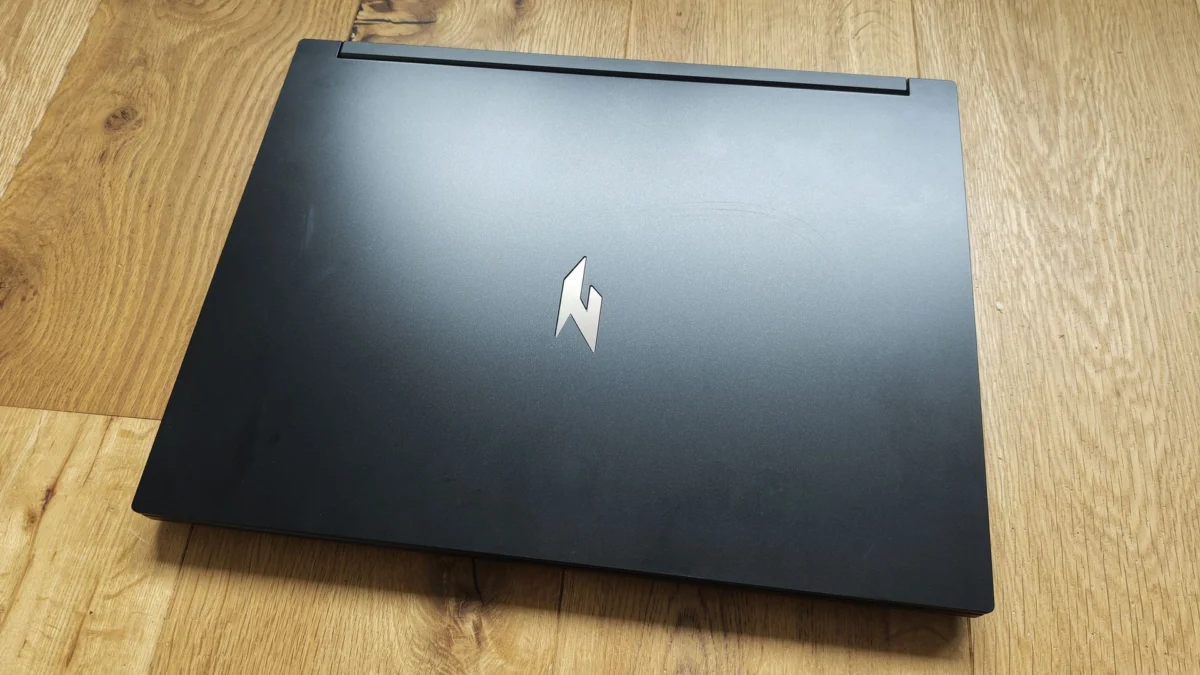
The central question facing power users and creative professionals today is simple yet profound: How long can you actually expect your machine to last away from a wall outlet? Recent testing of the Acer Nitro V 16 AI, which saw the machine expire after a mere 90 minutes of video playback, serves as a stark reminder that high performance often comes at the cost of genuine mobility.
The Chasm Between Expectation and Reality
When we invest in a laptop—particularly a machine marketed for "creative work" or "AI integration"—we are buying into the promise of freedom. We expect a device that serves our workflow, not one that dictates our proximity to an electrical socket.
The performance gap between modern machines is widening. On one end of the spectrum, we have devices like the Lenovo Yoga Slim 7x, which has demonstrated an impressive 13-hour battery life. This is the gold standard for the modern mobile professional. It allows for a full day of intensive labor, leaving enough capacity to work through the evening without the looming anxiety of a "Low Battery" notification.
Conversely, machines like the Acer Nitro V 16 AI represent a troubling trend: the "desktop replacement" disguised as a portable device. If a laptop requires a power cable after an hour and a half, it effectively ceases to be a laptop. It becomes a tethered workstation that happens to have a hinge.
Chronology of the Battery Dilemma
The evolution of laptop battery life has not been a linear progression. In the early 2010s, as Ultrabooks rose to prominence, there was a concerted industry effort to maximize efficiency. Manufacturers like Apple and Dell focused heavily on optimizing power states, allowing devices to sip energy rather than gulp it.
However, the recent pivot toward AI and heavy-duty gaming hardware has shifted the industry focus.
- 2020-2022: The industry saw a "Golden Age" of efficiency, led largely by the introduction of ARM-based architectures. Devices became thinner, lighter, and longer-lasting.
- 2023: The "AI Boom" hit the market. Manufacturers rushed to integrate NPUs and power-hungry GPUs into standard chassis. The cooling requirements and voltage demands of these chips began to significantly outpace battery capacity gains.
- 2024: We are currently in a period of fragmentation. While some manufacturers continue to prioritize efficiency, others are sacrificing battery life to claim superior benchmark scores, often ignoring the real-world implications for the end user.
The Psychological Toll of "Battery Anxiety"
For the creative professional—the photographer editing on the go, the writer working from an artisan coffee shop, or the developer coding on a train—battery life is not just a spec; it is a mental buffer.
When a machine lasts only 90 minutes, the user enters a state of constant surveillance. You are not thinking about the color grading of your video or the architecture of your code; you are calculating the percentage drop every ten minutes. You are wondering if a burst of processing power—perhaps a quick AI upscale—will trigger a sudden shutdown.
This anxiety destroys the flow state. If you cannot trust your hardware to be there when inspiration strikes, the hardware has failed in its primary duty. The reliability of a tool is directly proportional to its ability to function without intervention. As seen in the longevity of older devices like the 2023 MacBook Pro, which can still hold a charge through a full workday even after years of use, reliability is a feature that should be prioritized over a slight increase in GPU clock speed.
Supporting Data and Technical Realities
The technical culprit is often a combination of inefficient power management and the "power-hungry" nature of the latest mobile hardware. While an NPU can handle AI tasks efficiently, the total system power draw—including the high-refresh-rate displays and discrete graphics cards—often exceeds what modern lithium-ion batteries can sustain for long periods.
| Device Category | Average Battery Life (Real World) | Primary Bottleneck |
|---|---|---|
| Ultra-Mobile/ARM | 12–16 Hours | Software Compatibility |
| Mainstream Professional | 8–10 Hours | Display Brightness/Background Tasks |
| AI/Gaming Focused | 1–3 Hours | High-Wattage GPU/CPU Cooling |
The data suggests that manufacturers are increasingly prioritizing "Peak Performance" scores—the kind that look great in a marketing slide—over "Sustained Efficiency." For the average consumer, this is a trap. A high-spec machine that cannot operate away from a wall socket is essentially a desktop PC with a cumbersome form factor.
The Case for Structural Change
If we are to move past this era of tethered "portables," industry designers need to shift their priorities. The industry currently over-indexes on hardware specifications (RAM, NPU speed, GPU tiers) while under-investing in power density and software-level power optimization.
Official responses from major manufacturers often highlight that users can simply "carry a charger." While it is true that USB-C has made charging more universal, this is a concession, not a solution. Carrying a heavy power brick, searching for outlets in crowded transit hubs, and constantly worrying about connectivity is a regression in user experience.
Implications for the Creative Future
The long-term implication of this trend is a bifurcation of the laptop market. We are moving toward a world where "Creative Laptops" are split into two camps:
- True Portables: Machines that prioritize efficiency and ARM-based or highly optimized x86 chips.
- Portable Powerhouses: Essentially mobile desktops that are only "portable" in the sense that they can be moved from one desk to another.
The danger is that creative professionals will be forced to buy the latter, only to realize that they have sacrificed the mobility they desperately need for power they only occasionally utilize.
Conclusion: A Call for Balanced Innovation
It is time for the tech industry to recalibrate. We do not need thinner laptops or higher peak clock speeds if it means our machines die before the coffee in our cup has gone cold. We need machines that respect our time and our need for mobility.
When laptop brands design their next flagship, they should treat battery life with the same level of marketing fervor they apply to their new AI features. A laptop that lasts all day is a friend; a laptop that lasts 90 minutes is a burden. For the creative industry to truly flourish, the next revolution in hardware should not be measured in teraflops, but in the freedom to work wherever, whenever, and for as long as we choose—without a power socket in sight.
 Iffa Jayyana
 Reynand Wu
 Nila Kartika Wati
