
 By Asro
For the modern merchant, the Point of Sale (POS) system is no longer just a digital cash register—it is the central nervous system of the business. As the retail landscape shifts toward omnichannel integration, the choice between Square, Shopify, and Clover has become the most consequential decision a business owner can make. However, this is not a simple comparison of feature lists; it is a fundamental choice between three distinct business models.
For the vast majority of single-store retailers, Square remains the safest entry point. It stands alone as the only platform among the big three that offers a genuinely free software tier, a transparent, standardized rate card, and a commitment-free, month-to-month relationship. Yet, as a business scales—particularly into the realm of integrated online selling or high-volume processing—the “best” choice often shifts toward Shopify for its ecommerce dominance or Clover for its unique ability to negotiate custom processing rates.
The Structural Divide: Why These Platforms Are Not the Same
The primary difficulty in comparing these systems lies in the fact that they are fundamentally different products. Square and Clover are, at their core, payments companies that built POS software to facilitate transactions. Shopify, conversely, is an ecommerce powerhouse that built a "till" as an extension of its digital storefront.
The most significant divergence is found in the sales channel. Square and Shopify deal directly with the merchant. Clover, however, is a product of the legacy payments industry; it is distributed through a sprawling network of over 60 independent sales organizations (ISOs). This middleman structure is the root cause of the erratic pricing, varying contract terms, and inconsistent support quality associated with the Clover ecosystem. When you sign up for Square or Shopify, you are signing up for a product; when you sign up for Clover, you are entering into a contract with a third-party reseller who is effectively reselling the Fiserv platform at a retail markup.
A Chronology of Change: The Shifting POS Landscape
Timing is a critical factor for any merchant evaluating these platforms. The industry is currently undergoing a period of rapid consolidation and re-alignment.
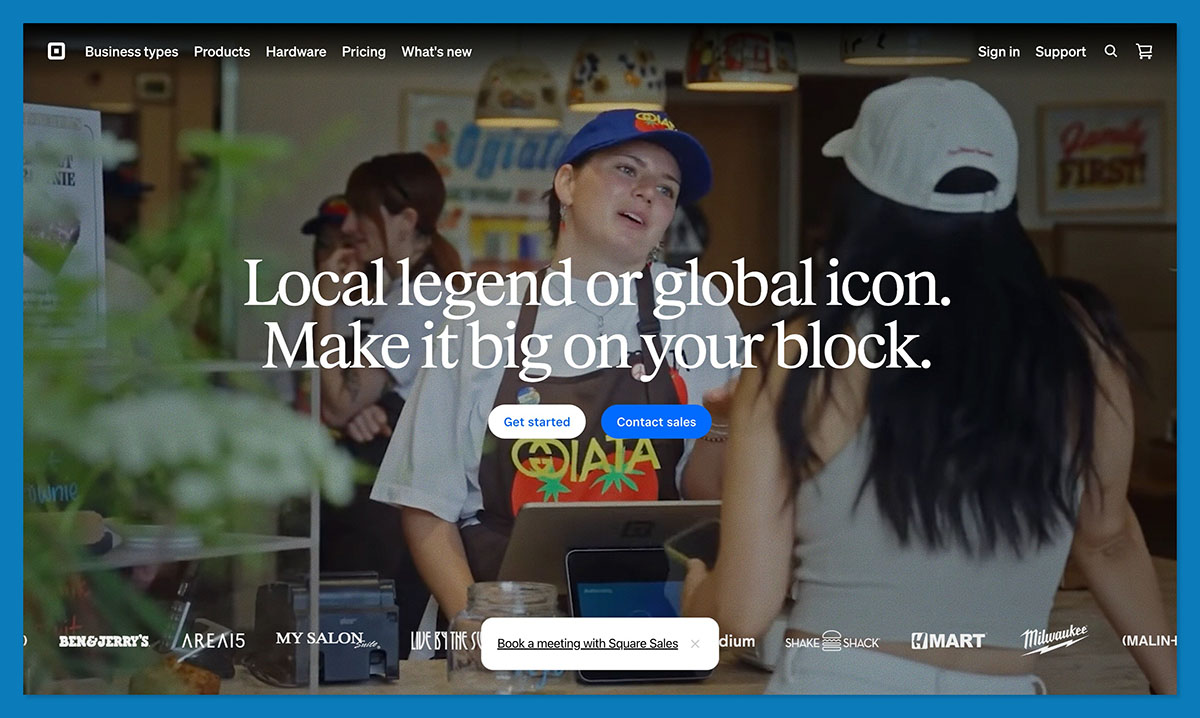
In a major structural shift on October 6, 2025, Square retired approximately 18 vertical-specific plans, consolidating its offerings into three unified tiers: Free, Plus ($49/location), and Premium ($149/location). This transition rendered most legacy comparison guides obsolete. Consequently, merchants searching for "Square for Retail Plus" may find themselves confused by outdated documentation.
Similarly, Shopify has been aggressive in its hardware lifecycle management. The company discontinued the "POS Go" device for new sales in the US as of August 28, 2024. While existing units are supported until May 26, 2027, the company has pivoted its hardware strategy toward mobile-first solutions like "Tap to Pay" on standard smartphones.
Meanwhile, Clover remains in a perpetual state of opaque pricing. Because its costs are determined by the reseller rather than the manufacturer, there is no "published" price for the system. A merchant’s quote is as much a reflection of the reseller’s commission structure as it is the value of the software.
Supporting Data: The Cost of Doing Business
To understand the true cost of these platforms, one must look beyond the monthly subscription fee and analyze the "all-in" cost of processing, hardware, and potential exit penalties.
The Pricing Matrix (Per Location)
| Feature | Square | Shopify | Clover |
|---|---|---|---|
| Software Cost | $0–$149/mo | $39–$399/mo (+ $89 POS Pro) | Variable ($0–$105/mo) |
| In-Person Rate | 2.4%–2.6% + 15¢ | 2.4%–2.6% + 10¢ | Negotiated by Reseller |
| Hardware | Free reader to $899 | $49 to $349 | $49 to $1,899 |
| Contract | Month-to-month | Month-to-month | Often 36–48 month lease |
The "Exit Risk" Reality
The most expensive aspect of choosing a POS is the cost of leaving. Square and Shopify maintain transparent, month-to-month agreements with no termination fees. If a business owner decides to switch, the process is largely administrative.
Clover, however, presents a significant "lock-in" risk. Because its hardware is proprietary and provisioned to the Fiserv network, the machines cannot be reprogrammed for other processors. If a merchant signs a 36-month lease and decides to switch to Square after one year, they may find themselves liable for the remaining lease balance plus additional early termination fees ranging from $295 to $595. Data from Better Business Bureau (BBB) complaints suggest that some merchants have struggled with billing continuing even after formal cancellation requests.
Strategic Implications: How to Choose
The decision between these three platforms should be dictated by the specific needs of your business model.
1. The Case for Square: Predictability and Ease
Square is the undisputed winner for the merchant who values transparency. Because the rate card is identical for every merchant, there is no need to hire a consultant to decipher a contract. The "Free" plan covers basic inventory, refunds, and reporting, making it the perfect starting point for a new business. Its hardware range is arguably the most user-friendly, with the ability to turn a standard smartphone into a payment terminal via "Tap to Pay" features.
2. The Case for Shopify: Omnichannel Mastery
If your business generates a significant portion of its revenue online, Shopify is the only logical choice. Because the POS is an extension of the ecommerce platform, inventory levels, customer records, and order histories are synced in real-time. The "POS Pro" tier, while an added expense, provides essential features like cross-location returns and advanced inventory management that would require cumbersome workarounds on other platforms.
3. The Case for Clover: The High-Volume Negotiator
Clover is the primary choice for businesses processing over $25,000–$30,000 in monthly card volume. At this scale, the "flat rate" fees charged by Square and Shopify begin to erode profit margins. Clover allows merchants to negotiate "interchange-plus" pricing—a model where the merchant pays the actual cost of the card network plus a fixed markup. For a high-volume retailer with a debit-heavy customer base, this can result in thousands of dollars in annual savings. However, this advantage comes with the caveat of rigid, long-term hardware leases.

Official Responses and Market Sentiment
Market sentiment, as tracked by independent platforms like Capterra, highlights a clear divide in user satisfaction. Square consistently holds higher satisfaction ratings (averaging 4.7/5) compared to Clover (averaging 3.8/5).
The industry consensus is that Shopify’s support infrastructure is robust for those within its ecosystem, though it is often criticized for the "hidden" costs of its third-party processor surcharges (if one chooses not to use Shopify Payments). Meanwhile, Clover’s support is inherently fragmented; a merchant’s experience depends entirely on the competency and honesty of their specific reseller. If the reseller is attentive, the service is excellent; if the reseller is predatory, the merchant is often left with no recourse other than the corporate parent, which is frequently ill-equipped to handle local service issues.
Final Recommendations for Merchants
Before signing any contract, every merchant should pose the following four questions to their prospective provider:
- What are the termination fees? If the answer is anything other than "none," proceed with extreme caution.
- Is the hardware proprietary? If you switch processors, can this machine be reprogrammed, or is it destined for a landfill?
- What is the "all-in" processing cost? Ask for a total breakdown, including batch fees, monthly gateway fees, and PCI compliance fees.
- Who is providing the support? Are you calling the company that built the software, or a third-party intermediary?
In the current market, Square remains the standard for simplicity, Shopify for integration, and Clover for those willing to navigate complex contracts to save on high-volume processing costs. By understanding the structural differences between these three giants, business owners can ensure that their POS system serves as a catalyst for growth rather than a source of long-term financial friction.
 Dwi Wanna
  Lina Irawan
  Basiran