
 By Lina Hope
By Global Technology & Enterprise Strategy Desk
Published: October 2023 / Special Enterprise Report
Main Facts: The Procurement Paradox of the Autonomous Era
As enterprises scramble to capture the efficiencies promised by artificial intelligence, a quiet crisis is unfolding in boardrooms and procurement departments worldwide. According to recent insights from Brian Evergreen, founder of The Future Solving Company and author of Autonomous Transformation, the standard corporate playbook for technology adoption—built on Requests for Proposals (RFPs), analyst quadrants, feature matrices, and exhaustive vendor bake-offs—is fundamentally obsolete.
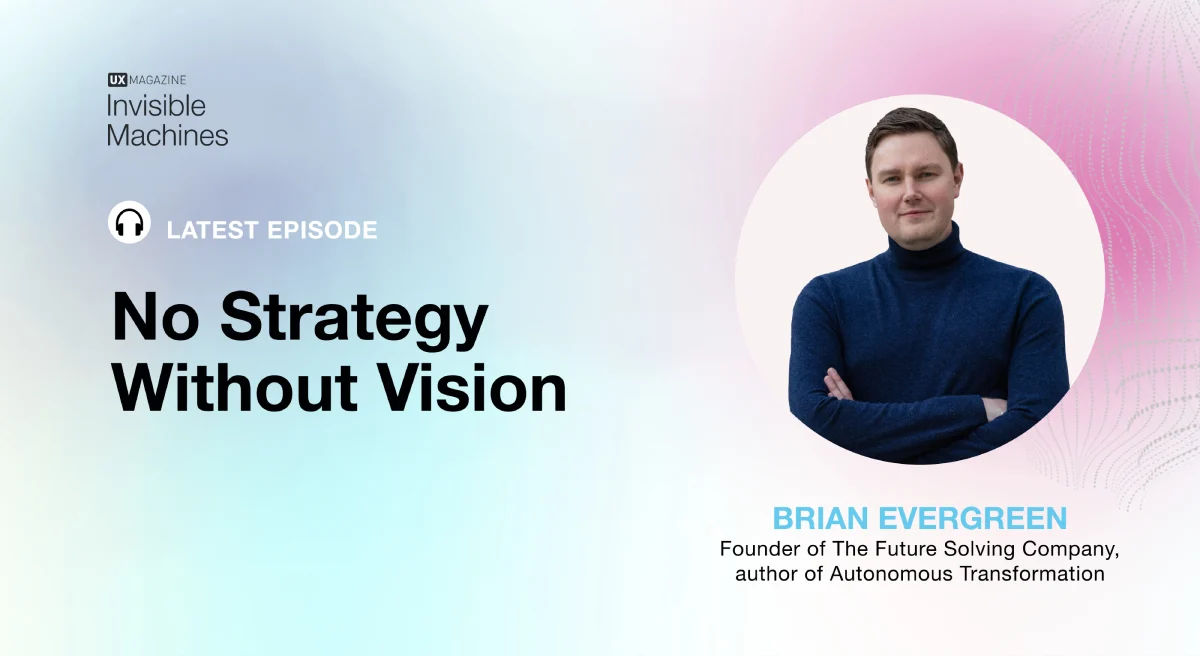
Speaking on the Invisible Machines podcast alongside host Robb Wilson, CEO of OneReach.ai, Evergreen articulated a provocative thesis: most organizations do not have an AI strategy; they have an agentic AI plan. These plans are typically busy, intelligent on paper, and hollow at their core.
The core disconnect lies in the nature of agentic AI—autonomous systems capable of executing complex, multi-step workflows with minimal human intervention. Unlike classical machine learning or early generative AI tools that function as static software features, agentic systems alter the operational fabric of a business. Yet, companies continue to approach them using procurement mechanisms designed for a world of static, physical SKUs.
Key takeaways from the discourse include:
- The Literacy Trap: Executive AI literacy often serves as a false authorization to sprint directly into use-case lists and vendor shortlists without establishing a foundational vision.
- The Death of the Feature Checklist: In an era where foundation models update dynamically—often shipping new capabilities mid-procurement cycle—static vendor feature matrices are not just stale; they actively mislead organizations about true capability parity.
- Problem Solving vs. Future Solving: Traditional corporate problem-solving is an elimination exercise focused on cutting waste and curating legacy value. Agentic AI rewards "future solving"—beginning with an uncompromised appetite for a desired future state and working backward to identify the necessary conditions for its realization.
Chronology: From Bell Labs to Blockbuster—A History of Enterprise Blind Spots
To understand why modern organizations struggle to adapt to agentic AI, industry strategists look to historical precedents where technological shifts collided with entrenched corporate inertia.
1952: The Bell Labs Reconstitution Experiment
Faced with the uncomfortable realization that their most lucrative breakthroughs were aging out, the leadership at Bell Labs initiated a radical thought exercise. They forced their engineering and research teams to operate under a startling premise: Assume the entire telephone network has been completely destroyed and is utterly irreparable.
The teams were instructed to rebuild the infrastructure entirely from scratch using contemporary science, modern economics, and current regulatory frameworks. The objective was not nostalgia for state-monopoly R&D, but rather a structural proof-of-concept: breakthrough cadence can be systematically convened. Innovation was not treated as a random byproduct of hope, but as a deliberate architectural exercise.
The Late 1990s to Early 2000s: The Blockbuster Paradigm
Decades later, a contrasting historical lesson played out in the entertainment sector. Blockbuster developed a credible, streaming-shaped pilot years before on-demand video became the dominant market category. However, the company’s leadership ultimately shelved the initiative.
According to Robb Wilson, who consulted during that era, the failure was not technical; it was structural and relational. Blockbuster’s primary "customer of record" was often the franchisee, not the retail renter. A robust digital streaming initiative was viewed internally as a direct threat—a mechanism that would cannibalize the late-fee economics upon which the entire balance sheet depended. Because leadership failed to future-solve a new cooperative model with their franchisees, the technology was abandoned, and a historic market leader collapsed.
Present Day: The Agentic Transition
Fast forward to the current enterprise landscape. Organizations are repeating the Blockbuster error under the guise of digital transformation. They deploy bottom-up innovation programs and isolated AI pilots, measuring success through shallow adoption metrics while fundamentally avoiding the difficult task of aligning internal incentives, data architectures, and corporate vision with the realities of autonomous systems.
Supporting Data & Industry Insights: Building the Governed Knowledge Layer
The transition from traditional software procurement to agentic AI implementation requires a fundamental overhaul of enterprise data architecture. During the Invisible Machines discussion, co-host Josh Tyson highlighted early pioneering work by financial institutions like Morgan Stanley to illustrate what operationalizing a "vision-first" strategy actually looks like in practice.
Rather than dumping unstructured PDFs into a generic vector database—a common anti-pattern in early enterprise generative AI rollouts—Morgan Stanley invested heavily in creating a governed knowledge layer.
The Anatomy of a Governed Knowledge Layer
- Data Ownership: Clear accountability for every data asset ingested into the system, eliminating ghost data and unverified inputs.
- Freshness Protocols: Automated mechanisms to ensure that the information powering autonomous agents reflects real-time regulatory, market, and internal policy changes.
- Verifiable Provenance: Traceability that allows human operators to audit why an agent made a specific recommendation or executed a multi-step transaction.
Without such infrastructure, organizations quickly discover that their grand AI strategies founder on the shores of operational reality. As Evergreen notes, when you press executives to define what "must be true" for their utopian AI vision to exist, the answer almost invariably bottoms out in data hygiene, cross-functional data ownership, and radical alignment of human incentives.
Furthermore, industry data consistently demonstrates that employee adoption metrics can be deeply misleading. As Wilson pointed out, high usage rates of an application do not guarantee strategic success if the organization is simply accelerating down the wrong path. Wide usage of the wrong future remains the wrong future.
Official Responses and Expert Perspectives
The dialogue between Brian Evergreen and Robb Wilson serves as a severe design critique of modern corporate governance. Below are core perspectives synthesized from their industry analyses:
"The first question is almost never the one on the slide. Executives bring a two-step into the room: build enough literacy to sound credible in a board deck, then race to a use case list and a vendor shortlist. That is not strategy; that is a plan. It is busy, intelligent, and hollow at the center."
— Brian Evergreen, Founder, The Future Solving Company
Evergreen argues that standard procurement workflows (RFPs, analyst quadrants, feature matrices, and oral defenses) are built exclusively for items that fit neatly into a supply chain SKU. When applied to exploration and autonomous technology, they break down completely. Trend lines do not behave like the laws of physics, and common software features offered by competing vendors are not interchangeable capabilities.
"Mass literacy plus mass use-case hunting produces motion without architecture. Training everyone in a city to swing hammers might produce sturdier houses, but you will not stumble into the Duomo."
— Brian Evergreen
Robb Wilson expands on this critique by highlighting the psychological comfort enterprises find in structured vendor evaluations.
"Companies don’t lack planning; they have a highly evolved plan for buying known solutions. That plan is rational right up until the moment you are no longer commissioning a defined product. Treating innovation like a science fair where the hypothesis is ‘which vendor checks the most boxes’ misleads you about what capability parity actually means in an age of continuous model updates."
— Robb Wilson, CEO, OneReach.ai
Implications: Authoring the Autonomous Enterprise
The shift toward agentic AI carries profound structural implications for product development, user experience (UX), and organizational design.
1. The Death of Traditional UX and Fragmented Interfaces
UX and product design teams are historically trained to reduce uncertainty by making workflows concrete: deterministic user flows, rigid state machines, and precise acceptance criteria. Agentic AI rewards the exact opposite approach.
Organizations must learn to hold the interface and the vendor bake-off in abeyance until they can explicitly articulate the future they are trying to make legible. In an autonomous world, traditional user interfaces begin to collapse. As intent is handled end-to-end by autonomous agents, the winning experience is defined by seamless relationships rather than transactional clicks. Software interactions become invisible, much like how younger generations view digital artifacts—wondering what a "login" screen or a floppy-disk "save" icon ever truly meant.
2. Friction, Momentum, and the North Star
Organizations inevitably encounter friction when deploying AI—resistance from middle management, data silos, security concerns, and cultural inertia. Evergreen warns that friction is inexhaustible if approached without a clear destination.
[ Traditional Approach ]
Procurement First ➔ RFP Checklist ➔ Vendor Bake-Off ➔ Siloed Pilots ➔ Strategic Drift

[ Future-Solving Model ]
Vision First ➔ Desired Future State ➔ Necessary Conditions ➔ Governed Architecture ➔ Autonomous Execution
Vision acts as the organizational steamroller. When leaders enroll employees in a compelling, visceral future state—such as an advisory system that responds in real-time, or a trusted partnership that eliminates shadow IT—people willingly clear the operational obstacles in its service. Motivation overrides friction.
3. The Imperative of Authorship
Ultimately, the emergence of agentic AI forces a stark choice upon enterprise leadership. The future of any given industry will not be discovered by measuring today’s operational metrics with greater precision. It will be authored by those willing to name their desired reality in human language, map out the necessary systemic truths, and only then select the models and agents required to build it.
If an enterprise fails to author its own story across organizational silos, platform and technology companies will gladly write it by default. Real AI strategy is not a competitive vendor bake-off held on the deck of a corporate ship whose ultimate heading nobody has agreed upon. It is a vision-first revolution that starts long before the first line of code is written or the first RFP is issued.
 Nana Muazin
 Raul Delapena Setiawan
 Suro Senen
