
 By Lina Hope
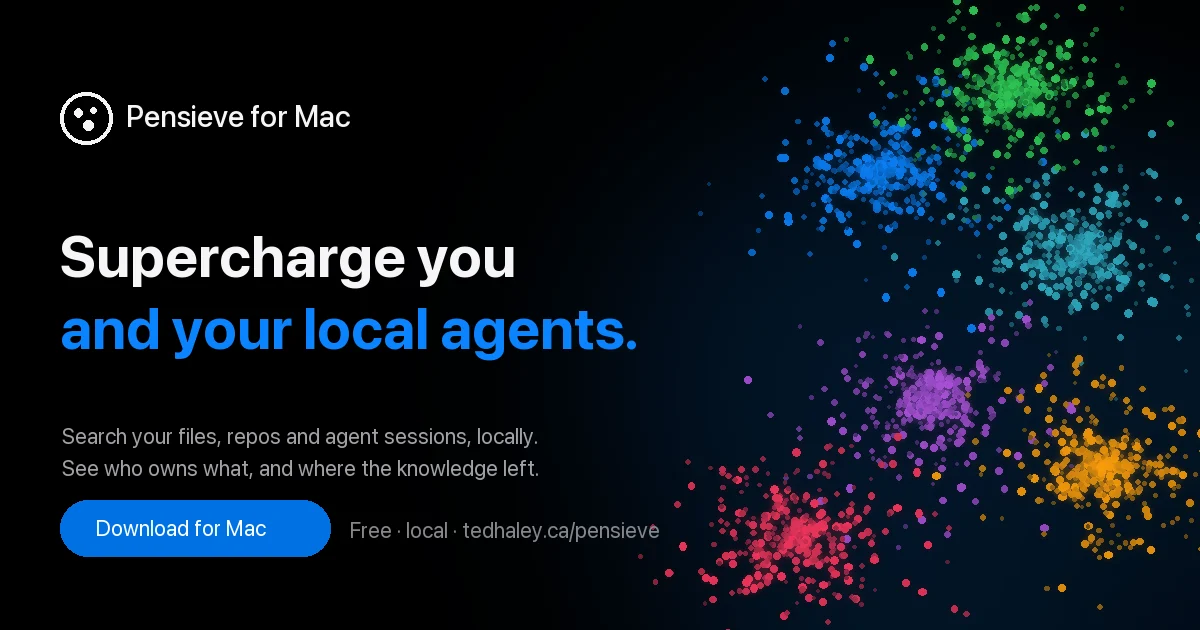
In the rapidly evolving landscape of software engineering, the primary bottleneck for AI coding agents has shifted from model intelligence to context accessibility. While tools like Claude Code, Cursor, and Codex have demonstrated an uncanny ability to generate complex software architectures, they often struggle with the "needle in the haystack" problem. They spend excessive time and computational budget scanning entire repositories, performing redundant grep operations, and struggling to synthesize disparate documentation.
Enter Pensieve, an open-source, local-first utility designed to bridge the gap between high-level reasoning and granular file-system awareness. By providing a unified, semantically searchable index of a developer’s local environment, Pensieve aims to optimize how AI agents interact with code, significantly reducing tool costs and latency.
The Core Problem: Why Agents Struggle with Context
For a developer utilizing modern AI agents, the standard workflow is often inefficient. When an agent is asked to debug a specific issue—such as why card retries stop after a decline—it typically initiates a brute-force search. It greps the entire repository, reads dozens of files, and attempts to correlate disparate code blocks.
This process is not only slow but expensive. Every time an agent reads a file, it consumes token limits and incurs API costs. Furthermore, the sheer volume of "noise" generated by a full-disk scan can lead the model to hallucinate or focus on irrelevant code segments. Pensieve intervenes by acting as a high-speed, local-first mediator that uses the Model Context Protocol (MCP) to supply only the "few passages that matter."
The "Search Before You Grep" Philosophy
Pensieve introduces a paradigm shift: agents should search for meaning, not just syntax. By leveraging a local vector-based search, the tool allows developers to query by concept (e.g., "payments") or by exact string (e.g., "retry"). This prevents the agent from falling into the "grep-and-read" cycle, instead enabling it to pinpoint exact line numbers and relevant file paths before a single unnecessary file is loaded into the model’s context window.
A Chronology of Development
The trajectory of Pensieve reflects the broader trend of "Local-First" software development. As developers grew weary of cloud-dependent tools that leaked private intellectual property and incurred high latency, the demand for high-performance, on-device tools skyrocketed.
- Initial Conception: The project began with a focus on solving the fragmentation of developer knowledge. By mapping git history and file changes to a unified search index, the creators sought to provide a "second brain" for coding environments.
- Integration Phase: Recognizing that independent search tools are often ignored, the developers pivoted to deep integration with existing agents. By utilizing the Model Context Protocol (MCP), Pensieve became a plug-and-play layer for Claude Code, Codex, and Cursor.
- Benchmarking and Validation: In the most recent development phase, the team moved away from anecdotal success stories toward empirical validation. By running 144 rigorous tests across four distinct repositories, they established that integrating Pensieve could reduce tool calls by 43% and decrease lookup costs by 18%.
Supporting Data: Efficiency Through Automation
The impact of Pensieve is most clearly visible in its benchmark performance. The engineering team behind the tool performed a comparative study using Claude Sonnet as the primary agent across four repositories, ranging from 504 files to 34,847 files.
Key Performance Indicators (KPIs)
- Tool Call Reduction: Agents using Pensieve averaged 2.0 tool calls per lookup, compared to 3.4 for agents relying on standard search methods.
- Cost Efficiency: The tool proved consistently cheaper across all tested repositories, saving an average of 18% in API costs per lookup. In larger repositories (34,000+ files), the savings climbed as high as 28%.
- Latency: Each search query executed by Pensieve takes between 0.1 to 0.2 seconds, with total lookup times—including agent processing—dropping from 10.9 seconds to 8.6 seconds.
These figures suggest that for enterprise-level development teams, the cost savings associated with Pensieve could scale exponentially, paying for the implementation time in a matter of weeks through reduced token consumption.
Professional Insights: Privacy and Ownership
One of the most critical aspects of Pensieve, particularly for enterprise clients, is its "Privacy by Design" architecture. In an era where corporate espionage and data privacy are top-of-mind, the ability to maintain a search index entirely on a local machine is a significant competitive advantage.
The Local-First Architecture
Pensieve runs locally on Apple Silicon Macs, with all indexing performed on-device. The system does not communicate with a centralized cloud; it does not require a user account; and it does not offload sensitive codebase data to third-party servers. For developers working with proprietary logic, API keys, or .env files, Pensieve’s capability to automatically skip sensitive directories ensures that the "local brain" remains secure.
The "Bus Factor" and Knowledge Mapping
Beyond search, Pensieve offers a unique feature: Knowledge Gap Analysis. By analyzing git blame and commit history, the tool generates a "map" of repository ownership. It can flag areas of code that have become "stale"—areas where the original authors are no longer active—and identify the current "domain experts" based on recent contributions. This feature helps prevent the "bus factor" (the risk associated with a team member leaving) by identifying exactly who holds the historical context required for future refactoring.
Implications for the Future of AI Development
The introduction of Pensieve signals a maturation of the AI-assisted development ecosystem. We are moving away from "black box" agents that operate with limited visibility into the codebase, toward transparent, integrated systems that respect the developer’s local workflow.
The End of "Stale Context"
One of the most impressive technical feats of Pensieve is its "Always Current" indexing system. The tool watches folders, git worktrees, and active agent sessions in real-time. Even uncommitted changes are indexed instantly, ensuring that when a developer asks an agent to "refactor the auth flow," the agent sees the code as it exists now, not as it existed at the time of the last commit.
Bridging the Gap
The implications for the broader developer community are profound:
- Lowered Barriers for Junior Engineers: By surfacing "who owns what" and providing clear documentation on historical code changes, Pensieve acts as a mentor, guiding developers to the right resources without requiring them to disturb senior team members.
- Sustainability in AI Coding: As the world grapples with the energy costs of AI, tools that make agents more efficient are not just a convenience—they are a necessity. By reducing the number of tool calls and tokens required to solve a problem, Pensieve contributes to a more sustainable model of software development.
- Standardization of Agent Interactions: The widespread adoption of the Model Context Protocol (MCP) through tools like Pensieve suggests a future where different agents (Claude, Codex, Gemini) can share the same underlying index of knowledge, creating an interoperable ecosystem that benefits the entire industry.
Conclusion: A New Standard
Pensieve is more than just a search bar for your desktop; it is a critical infrastructure layer for the AI-augmented developer. By optimizing how information is retrieved, processed, and maintained, it solves the most pressing problems in modern coding: cost, latency, and context-loss.
As the tool continues to evolve—moving from its current focus on Apple Silicon to broader platform support—it is poised to become a staple in the professional developer’s toolkit. Whether you are an individual freelancer looking to save on API costs or an engineering manager trying to map knowledge gaps within a massive monorepo, the case for a local-first, agent-aware search index is clear. In the race to build better software, Pensieve ensures that you—and your agents—never lose the thread.
For those interested in the technical implementation, the project is fully open-source and available on GitHub. Installation is straightforward, requiring only a single command to integrate with existing agents, allowing developers to experience the benefits of "searching before they grep" immediately.
 Sagoh
 Pevita Pearce
 Layla Zulfa
