
 By Layla Zulfa
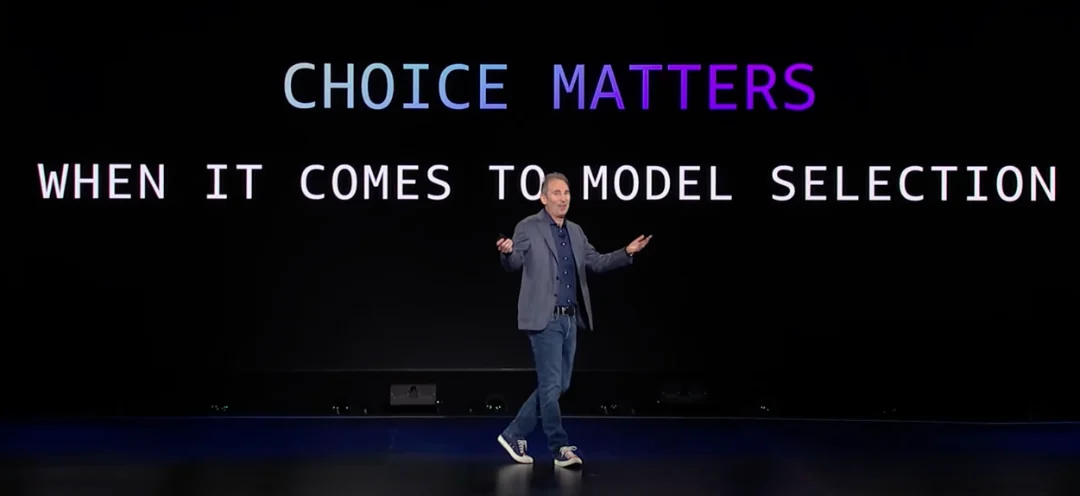
SEATTLE — In the rapidly accelerating landscape of enterprise artificial intelligence, a profound philosophical shift is currently underway. For years, the prevailing question in the generative AI space was singular and straightforward: "How smart is the model?" Today, as frontier models proliferate at a breathtaking pace, that metric has been joined—and often superseded—by a more nuanced corporate calculation: "Which specific model fits this exact workflow, at this optimal cost, with the lowest acceptable latency?"
This evolving ethos of granular optimization took center stage last week across the Amazon Web Services (AWS) ecosystem. Daniel Abib, writing in the official AWS News Blog, highlighted a wave of strategic platform integrations on Amazon Bedrock, the company’s fully managed service that offers high-performing foundation models via a single API.
The latest updates bring powerful new choices to enterprise developers and cloud architects, spearheaded by the introduction of OpenAI’s GPT-6 Sol and GPT-6 Luna, alongside Anthropic’s Claude Opus 5.5. These additions redefine the intelligence-versus-efficiency curve, signaling a departure from brute-force model deployment toward precision-engineered, cost-conscious application design.
Main Facts
The core development centers on the expansion of model diversity within Amazon Bedrock, providing developers with advanced tools to match computational workloads precisely to infrastructure economics.
- OpenAI Integration Expansion: Amazon Bedrock has welcomed two distinct variants from OpenAI’s next-generation lineup: GPT-6 Sol and GPT-6 Luna.
- GPT-6 Sol is engineered explicitly for demanding, recurring workloads such as advanced software development, systems operations, and complex technical problem-solving.
- GPT-6 Luna is optimized for focused, highly repeatable tasks executed at massive scale, offering enterprises a high-throughput, cost-effective alternative for routine automation.
- Economic Advantage: Both GPT-6 Sol and GPT-6 Luna debut on AWS at significantly reduced price points compared to their GPT-5.6 predecessors, drastically lowering the barrier to entry for high-volume enterprise deployments.
- Anthropic Claude 5.5 Debut: Anthropic’s Claude Opus 5.5—the flagship pioneer of the new Claude 5.5 family—is now generally available on AWS.
- Token Efficiency: Claude Opus 5.5 is architected to perform complex tasks using significantly fewer tokens than its predecessor, Opus 5.
- Specialized Capabilities: The model is heavily tuned for advanced agentic coding, multi-step autonomous workflows, and long-running programmatic tasks that demand sustained context retention.
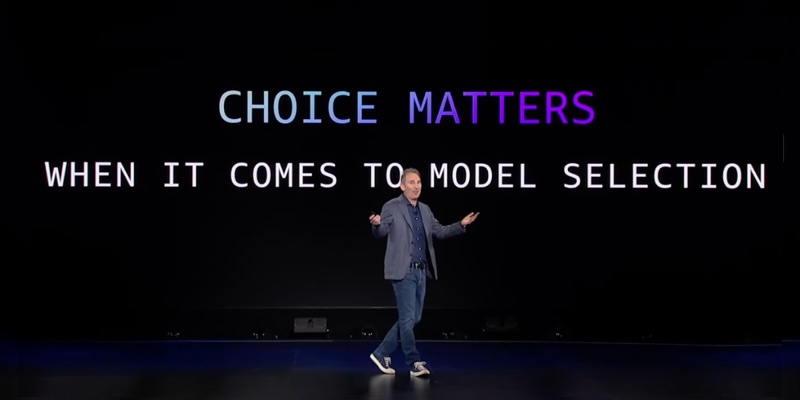
- The Paradigm Shift: The overarching trend underscores an industry-wide pivot away from reaching for the largest, most expensive model by default. Instead, engineering teams are increasingly embracing multi-model architectures, deploying hyper-efficient models for micro-tasks and reserving heavyweight models strictly for deep reasoning.
Chronology of the Release Wave
The rollout of these enterprise-grade models represents the culmination of months of infrastructure scaling and partnership expansion between AWS and the industry’s leading AI laboratories.
Early Development and Predecessor Baselines
For much of the preceding year, enterprise AI adoption was heavily anchored by OpenAI’s GPT-5.6 generation and Anthropic’s Claude 5 series. While these models delivered unprecedented reasoning capabilities, enterprises frequently reported friction regarding inference costs and latency when scaling models to millions of daily operational transactions. Organizations demanded greater granularity in how they balanced financial expenditure against computational performance.
The Bedrock Integration Phase
Recognizing this operational bottleneck, AWS engineering teams worked in close coordination with OpenAI and Anthropic to integrate their next-generation architectures directly into the Amazon Bedrock framework. By leveraging Bedrock’s secure, scalable infrastructure, enterprise customers gained the ability to test, fine-tune, and deploy these new models without the heavy lift of managing underlying GPU clusters.
Official Launch and Weekly Roundup (Late September 2026)
The integration went live for global AWS customers, accompanied by comprehensive documentation, specialized blog posts detailing use-case optimization, and infrastructure updates designed to support the emerging ecosystem of autonomous AI agents. Daniel Abib formally encapsulated these developments in the weekly AWS broadcast, framing the releases as a defining milestone for architectural choice in cloud computing.
Supporting Data and Technical Breakdown
To fully appreciate the significance of the GPT-6 and Claude 5.5 rollouts, it is necessary to examine the technical parameters and economic shifts driving modern cloud architectures.
The Intelligence-Versus-Efficiency Curve
| Model Family | Variant | Primary Design Focus | Economic Positioning | Target Workloads |
|---|---|---|---|---|
| OpenAI GPT-6 | Sol | Complex reasoning & operational resilience | Significantly lower than GPT-5.6 | Software development, DevOps, system architecture |
| OpenAI GPT-6 | Luna | High-volume, repeatable execution | Highly cost-optimized | Routine automation, batch data processing, triage |
| Anthropic Claude 5.5 | Opus 5.5 | Agentic autonomy & token efficiency | Optimized for low token burn | Autonomous coding agents, long-context analysis |
Token Economics and Performance Metrics
In cloud-based AI infrastructure, cost is fundamentally dictated by token consumption and inference latency.
- Claude Opus 5.5 addresses token bloat by refining its internal attention mechanisms. Early benchmarks indicate that complex coding tasks require up to 25% fewer input and output tokens to achieve parity or superiority over Claude Opus 5, directly translating to lower compute bills for enterprise software factories.
- GPT-6 Sol and Luna leverage optimized mixture-of-experts (MoE) routing, allowing AWS to pass down cost savings to end-users. By tailoring the model size to the complexity of the prompt, companies can route mundane tasks to Luna while seamlessly escalating complex architectural challenges to Sol.
Official Responses and Industry Commentary
The introduction of these frontier models has drawn widespread praise from enterprise architects, cloud engineers, and industry analysts who view Amazon Bedrock as a critical aggregator of multi-vendor AI capabilities.
In his weekly analysis, AWS contributor Daniel Abib emphasized the philosophical alignment of the recent releases:
"What I like about all three [models] is that they push toward the same idea: match the model to the job instead of reaching for the biggest one every time. The other thread was observability catching up to this agentic world…"
Industry observers note that AWS’s strategy of remaining model-agnostic—hosting top-tier offerings from OpenAI, Anthropic, Meta, Mistral, and Cohere on a single managed plane—vindicates the multi-model paradigm. Rather than locking customers into a proprietary ecosystem, AWS is positioning Amazon Bedrock as the definitive control center for enterprise artificial intelligence.

Enterprise software developers participating in early testing phases have echoed these sentiments, highlighting the particular utility of GPT-6 Sol in automated continuous integration/continuous deployment (CI/CD) pipelines. By pairing Sol’s robust coding logic with automated safety guardrails on AWS, engineering organizations are reporting significant reductions in debugging cycles.
Implications for the Future of Enterprise Cloud Computing
The deployment of GPT-6 Sol, GPT-6 Luna, and Claude Opus 5.5 on Amazon Bedrock carries profound implications for the trajectory of enterprise technology over the next several years.
1. The Rise of Multi-Model Orchestration
The days of relying on a single monolithic foundation model across an entire enterprise are rapidly drawing to a close. Organizations are transitioning toward sophisticated, multi-model pipelines. A typical customer service application might use a lightweight model for initial intent classification, route complex inquiries through an intermediate reasoning engine, and deploy specialized coding agents like Claude Opus 5.5 or GPT-6 Sol in the backend to resolve technical trouble tickets. Amazon Bedrock serves as the crucial glue holding these heterogeneous architectures together.
2. Operationalizing Autonomous Agents ("Agentic Workflows")
As models become more efficient at executing multi-step tasks with minimal human intervention, the focus of cloud engineering has shifted toward observability and control. Deploying autonomous agents requires robust logging, tracing, and security frameworks to ensure that agents operate within compliance boundaries. The alignment of these new model releases with advanced AWS monitoring tools signals that the cloud infrastructure is maturing to support fully autonomous enterprise operations.
3. Democratization via Compression and Cost Reduction
By offering next-generation intelligence at price points significantly below previous iterations, AWS and its partners are lowering the financial barrier to AI adoption. Small and medium-sized businesses (SMBs) can now leverage capabilities that were previously restricted to heavily funded technology conglomerates. This democratization is expected to accelerate innovation across vertical sectors, including healthcare, financial services, legal technology, and logistics.
Looking Ahead
As the generative AI market continues its relentless march forward, the emphasis will increasingly fall on operational excellence, cost governance, and architectural flexibility. With the successful integration of OpenAI’s newest variants and Anthropic’s flagship model family, Amazon Bedrock has solidified its position as a central hub for the next era of intelligent cloud computing. Builders and developers are encouraged to monitor the AWS Builder Center and the What’s New with AWS portal for ongoing updates, regional availability announcements, and deep-dive technical workshops.
 Siti Muinah
 Reynand Wu
 Jia Lissa
