
 By Siti Muinah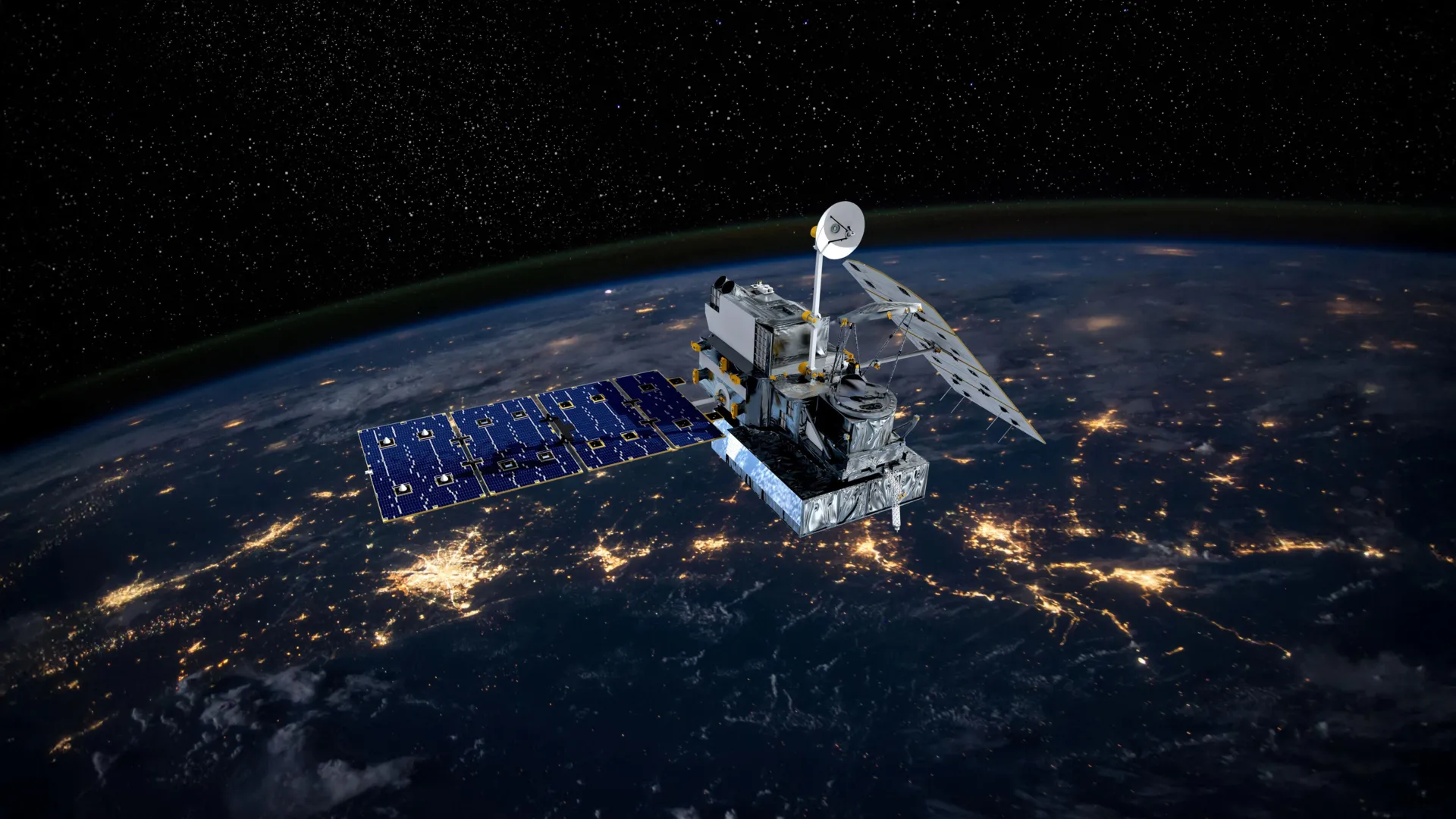
The prospect of a company becoming the fundamental infrastructure provider of the space age—acting as the railroad, utility, and cloud provider simultaneously—has sent shockwaves through global financial markets. As the long-awaited public offering of SpaceX looms, investors are shifting their focus from simple rocket reusability to a far more lucrative and complex vision: the creation of a fully integrated orbital ecosystem. This transition marks a fundamental departure from aerospace history, signaling that we are no longer just exploring space; we are beginning to colonize it with the digital bedrock of our civilization.
At the heart of this ambition lies a concept that, until recently, belonged exclusively to the realm of science fiction: the orbital data center. As artificial intelligence drives an insatiable, exponential demand for compute power, Earth-bound infrastructure is buckling under the weight of its own environmental and physical constraints. Companies are now looking upward, proposing that the vacuum of space might be the ultimate solution to the terrestrial "data center dilemma."
The Logic of the Orbital Pivot: Escaping Earth’s Constraints
The business case for orbital computing is deceptively simple. On Earth, data centers have become flashpoints for local controversy. They consume gargantuan amounts of electricity, place extreme burdens on local water supplies for cooling, and demand vast swaths of land that often face stiff resistance from zoning boards and community activists. In some regions, "data center moratoria" have been enacted to protect local power grids and natural resources from the insatiable appetite of AI clusters.
Space, by contrast, offers a clean slate. With abundant, uninterrupted solar energy and a vacuum that serves as a thermal sink, proponents argue that space-based facilities can bypass the "NIMBY" (Not In My Backyard) protests and energy grid bottlenecks that currently plague giants like AWS, Google, and Microsoft.
Chronology: From Satellites to Server Farms
- 2015–2020: The rise of massive LEO (Low Earth Orbit) satellite constellations, led by SpaceX’s Starlink, proves that high-bandwidth, low-latency communication between space and Earth is commercially viable.
- 2023–2024: The "AI Boom" triggers a global crisis in data center capacity. Power prices skyrocket in regions with high concentrations of GPU clusters, such as Northern Virginia and parts of Europe.
- 2025: Initial industry white papers emerge from aerospace startups and established space contractors regarding "Space-Edge Computing."
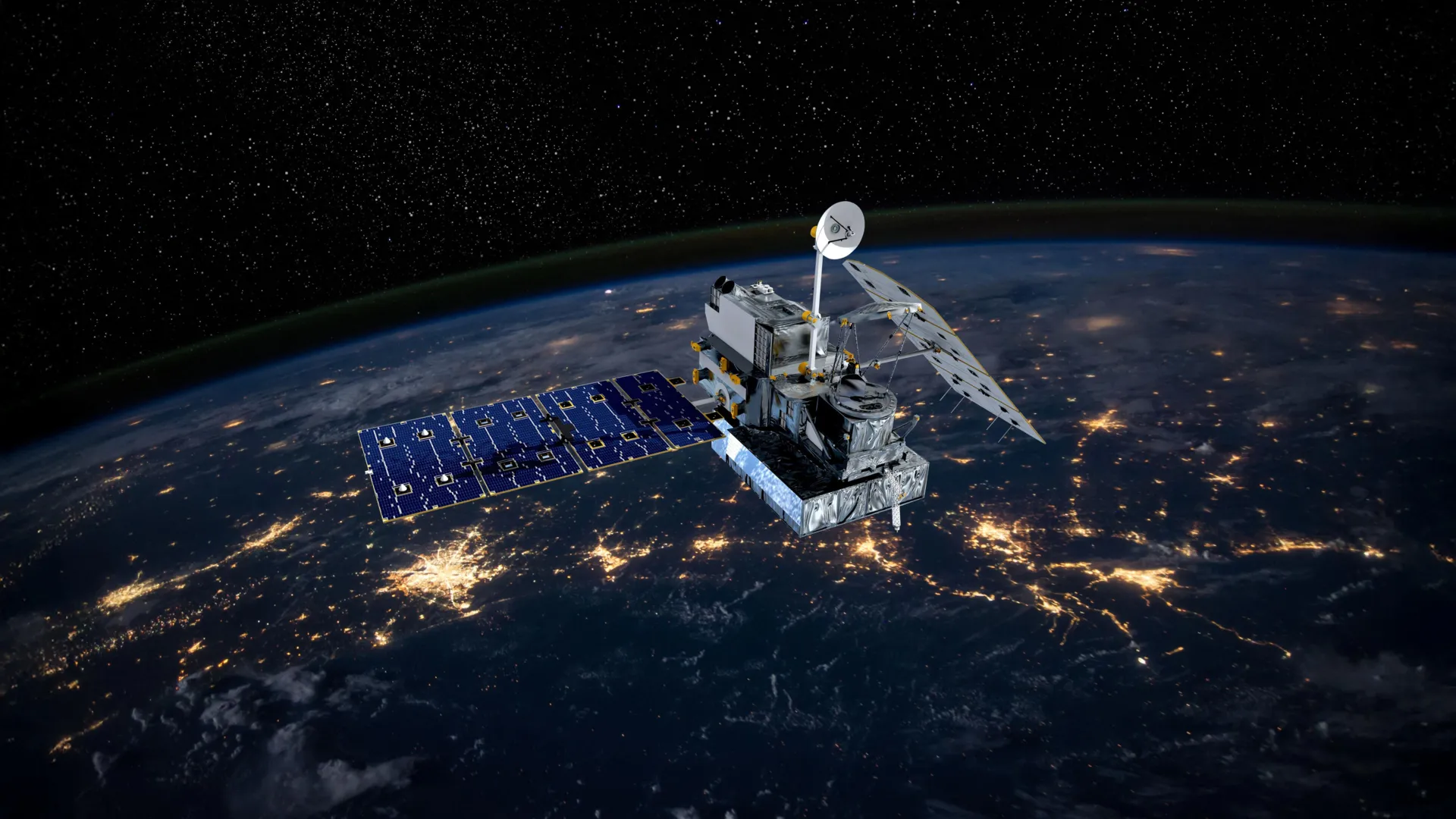
- 2026: SpaceX formally announces the development of the "AI1 Compute Satellite," signaling the first serious, large-scale attempt to bring server-grade architecture into orbit.
- Present Day: Industry analysts and engineering experts engage in a rigorous debate regarding the technical feasibility of scaling these systems from small, experimental nodes to industrial-scale infrastructure.
Supporting Data: The Physics of Space Computing
While the vision is intoxicating, the transition from satellite communications to industrial-scale server hosting is fraught with physical realities that defy simple engineering solutions.
The Thermal Paradox
The greatest hurdle to space computing is thermodynamics. On Earth, data centers use forced air or liquid cooling to dump heat into the atmosphere or local water systems. In space, there is no medium for convective cooling. Heat must be shed via infrared radiation—a slow and inefficient process.
To put this into perspective, a 10-megawatt data center—a fraction of the size of a modern terrestrial facility—would require radiator surfaces spanning roughly two football fields to prevent the hardware from melting down. This adds immense weight and complexity, both of which are critical variables in the economics of launch costs.
The Radiation Environment
Space is a harsh, radioactive environment. Solar flares and cosmic rays constantly bombard hardware, leading to "bit flips" and physical degradation of semiconductors. While terrestrial servers are shielded by the Earth’s atmosphere and magnetosphere, orbital servers require heavy shielding. This shielding, however, adds mass, compounding the already high costs of heavy-lift launches.
Power and Efficiency
Solar panels are the primary energy source in orbit. However, even the most advanced photovoltaic cells currently operate at roughly 50% efficiency. Furthermore, the orbital cycle introduces the problem of "eclipse periods," where the Earth blocks the sun, forcing the data center to rely on massive, heavy battery arrays or nuclear thermal systems to maintain uptime.
Official Responses and Industry Outlook
Industry leaders and government agencies are currently caught between skepticism and cautious optimism. The Department of Defense and various intelligence agencies have expressed interest in orbital computing for the purpose of "real-time theater processing"—analyzing satellite imagery and sensor data in situ rather than beaming raw data down to Earth for processing.
However, established cloud providers remain largely on the sidelines. A spokesperson for a leading infrastructure firm recently noted, "The latency requirements for most AI and financial applications make space-based processing a non-starter for the near future. The speed of light is a hard limit, and the round-trip delay between Earth and LEO, while small, is still significant for high-frequency trading or interactive AI models."
SpaceX, through its recent AI1 Compute Satellite disclosures, has acknowledged these limitations. The company has framed the AI1 not as a replacement for terrestrial clouds, but as a specialized edge-computing platform designed to optimize space-to-space communications and high-speed data processing for orbital assets.
The Implications: A New Industrial Paradigm
If successful, the migration of computing to space would represent a fundamental shift in the global economy.
1. The Decentralization of Infrastructure
Space-based data centers would effectively decouple the digital economy from geographic and political boundaries. A nation or corporation with an orbital presence would no longer be beholden to the energy or water policies of the country where their data centers are physically located. This creates a new "sovereignty of the cloud" that could disrupt current international telecommunications and data residency laws.
2. Environmental Trade-offs
While orbital centers solve the problem of local community backlash on Earth, they introduce a new environmental concern: the impact of the launch cycle itself. The chemical footprint of thousands of heavy-lift rocket launches required to assemble and refresh orbital data centers is a subject of intense environmental scrutiny. Furthermore, the risk of "Kessler Syndrome"—a chain reaction of orbital collisions caused by space debris—increases exponentially with every launch.
3. The Economic "Refresh" Challenge
On Earth, data center hardware is refreshed every three to five years to keep pace with the rapid evolution of silicon. In orbit, the cost of maintenance and hardware upgrades is prohibitive. If an orbital server becomes obsolete, it effectively becomes "space junk." The industry must develop modular, in-space serviceable, and assembly-friendly architectures to prevent these multibillion-dollar investments from becoming stranded, non-upgradable assets within half a decade.
Conclusion: A Specialized Future
The dream of moving the entire internet to space remains a distant, perhaps impossible, goal given the current laws of physics and economics. The most viable path forward, according to experts in systems engineering, is a bifurcated model.
Mainstream, latency-sensitive computing will remain on Earth, likely powered by a mix of modular nuclear reactors and advanced green energy. Space-based computing will emerge as a specialized niche, serving as the "intelligence layer" for the growing orbital economy. Whether it is processing high-resolution Earth observation data, facilitating autonomous satellite swarms, or acting as a relay for deep-space communications, the orbital data center will be a crucial piece of the puzzle for a humanity that has finally begun to treat space as a functional, industrial extension of its own backyard.
The race is no longer just about who can get to the moon or Mars first; it is about who can build the most efficient, resilient, and scalable digital infrastructure in the silence of the void. As investors pour capital into this emerging sector, the ultimate success will depend on whether engineering ingenuity can overcome the cold, harsh, and unforgiving realities of the orbital environment.
 Sagoh
Sagoh  Asro
Asro 