
 By Asep Darmawan
In the high-stakes world of digital commerce, the adage "what worked yesterday won’t always work tomorrow" is not just a sentiment—it is a brutal reality. Consumer attention spans are fracturing, email inboxes are becoming increasingly crowded, and the digital landscape is littered with the remnants of once-successful campaigns that failed to adapt.
For founders and marketing leads, the difference between stagnant growth and explosive scaling often comes down to one fundamental practice: A/B testing. Far from being a "nice-to-have" luxury for large corporations, A/B testing is the non-negotiable heartbeat of a sustainable business. It is the bridge between gut-feeling marketing and data-driven revenue, allowing brands to squeeze maximum value out of their existing assets without increasing their acquisition spend.
The Main Facts: Why Intuition Isn’t a Strategy
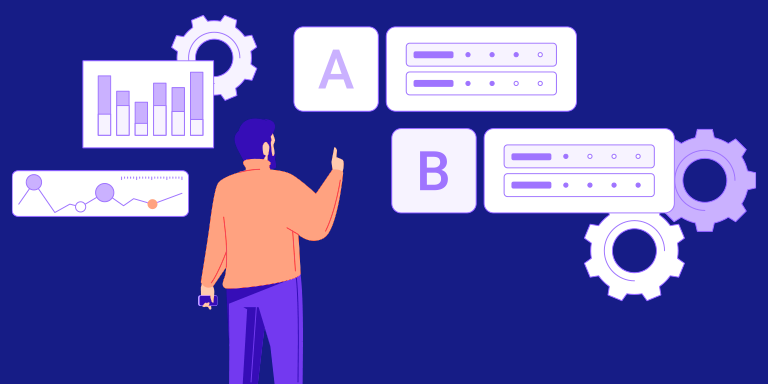
Smart entrepreneurs have moved past the era of relying on hunches. In an age of algorithm-driven discovery and hyper-personalized content, guessing is a liability. A/B testing—the process of comparing two versions of a digital asset to see which performs better—is the only way to validate assumptions.
Whether you are optimizing an e-commerce storefront or fine-tuning a SaaS conversion funnel, the logic remains the same: small, incremental wins compound. A 5% lift in open rates here, a 10% bump in click-throughs there; these percentages, when aggregated, result in massive revenue gains over time. By systematically eliminating underperforming elements, you are effectively "buying" more revenue without spending an additional dollar on customer acquisition.
Chronology of a Data-Driven Shift
The evolution of email marketing over the last three years provides a clear timeline for why this shift is mandatory.
- 2022: The Baseline. As brands navigated post-pandemic shifts, average email open rates hovered around 22.9%. Many companies relied on static, "one-size-fits-all" campaigns that prioritized volume over relevance.
- 2023: The Optimization Pivot. Data from industry leaders like Omnisend revealed a significant shift. Merchants who embraced rigorous segmentation and consistent A/B testing saw open rates climb to 25.1%. This period marked a transition where "email volume" became secondary to "email intelligence."
- 2024 and Beyond: The Era of Automation. We are currently in a phase where manual testing is being superseded by automated, triggered flows. Modern platforms now allow for real-time adjustments in welcome series, abandoned cart sequences, and post-purchase follow-ups. The data confirms that these automated, optimized touchpoints outperform standard campaigns by an order of magnitude—sometimes seeing conversion rates improve by over 2,000%.
Supporting Data: The Power of Micro-Adjustments
The math behind optimization is compelling. Consider the following industry benchmarks that highlight the urgency of testing:
- The First Impression: A staggering 43% of consumers decide whether to open an email based solely on the subject line. Conversely, poor copy is a primary driver for being marked as spam; 69% of users cite the subject line as the reason they mark messages as junk. This impacts not just a single campaign, but the sender’s long-term domain reputation.
- The Power of Personalization: Research indicates that personalized subject lines boost open rates by up to 26%. When this is combined with automated segmentation, the effectiveness of the communication increases exponentially.
- The Compounding Effect: For e-commerce brands, testing abandoned cart flows—a high-intent stage of the funnel—has been shown to generate, on average, an extra $5,000 in monthly sales for mid-sized merchants. These aren’t windfalls; they are the result of iterative improvements to CTA buttons, timing, and preheader text.
Official Perspectives: The Role of Automation
Leading marketing technology platforms, such as Omnisend, emphasize that the goal of A/B testing is not just to "win" a test, but to build a library of consumer intelligence.
"The best-performing brands don’t treat A/B testing as an emergency measure for when sales drop," says a spokesperson from the Omnisend team. "They treat it as an operating system. Every test provides data that informs landing pages, paid ads, and social media strategy. It creates a feedback loop that makes every other marketing channel more efficient."
The industry consensus is clear: the brands that win are the ones that move fastest, test widest, and learn deepest. By automating these tests, brands can reduce the "burnout" associated with manual data analysis and focus on high-level strategy.
Strategic Implications: How to Build Your Framework
If you are ready to move beyond "guesswork," you must implement a structured, repeatable framework. Here is how to execute professional-grade testing without losing hours to data entry:
1. Start with a Sharp Hypothesis
Never test for the sake of testing. A good hypothesis is specific and directional.
- The Wrong Way: "Let’s see if a blue button works better than a red one."
- The Right Way: "We hypothesize that a benefit-driven CTA (‘Claim My 20% Off’) will increase click-through rates by 10% over a generic CTA (‘Learn More’) because it creates immediate perceived value."
2. Isolate the Variable
You cannot know what moved the needle if you change the subject line, the button color, and the send time all at once. Isolate your variables to ensure your data remains clean.
3. Choose the Metric That Matches the Goal
Don’t measure "open rates" for a test meant to improve "conversions."
- Subject Line Tests: Measure Open Rates.
- CTA/Copy Tests: Measure Click-Through Rates.
- Landing Page/Offer Tests: Measure Conversion Rates.
4. Ensure Statistical Significance
A test run on 50 people is noise. A test run on 1,000 people is a signal. Use a representative sample size to avoid false positives. If your list is small, utilize the "20/20/60" rule: test your two variants on 20% of your audience each, and automatically send the winner to the remaining 60%.
What You Should Be Testing Right Now
To keep your momentum, keep these five high-leverage elements in your testing rotation:
- Subject Lines: Test curiosity-driven vs. benefit-driven vs. urgent.
- CTAs: Test direct commands (e.g., "Buy Now") vs. soft transitions (e.g., "See What’s Inside").
- Send Times: Use testing to identify your audience’s peak "inbox active" hours.
- Sender Identity: Test a person’s name (e.g., "Jane from Brand") vs. the company name.
- Audience Segments: Test how loyal repeat customers respond to a different message than first-time visitors.
Conclusion: The Competitive Advantage of Consistency
In a saturated market, the "big win" is rarely a single, earth-shattering idea. It is the cumulative effect of a thousand small, smart decisions. By building an infrastructure for A/B testing, you gain a massive competitive advantage: you learn what your customers want faster than your competitors do.
You do not need to overhaul your entire marketing strategy to see results. You only need to commit to the habit of testing. Whether you are a lean startup or a scaling e-commerce brand, the data is waiting for you in your existing audience. Start testing, start learning, and start converting.
For those ready to integrate these practices, platforms like Omnisend offer the tools to automate these flows, allowing you to segment and test without the technical overhead. Foundr readers can currently access an exclusive offer: 50% off for the first three months with code FOUNDR50. Take the guesswork out of your growth and start building a smarter funnel today.
 Dwi Wanna
  rifanmuazin