
 By Siti Muinah
The global dropshipping market in 2026 has reached a staggering valuation of approximately $543.53 billion. As the barrier to entry remains relatively low, the influx of new entrepreneurs has created a hyper-competitive environment where "business as usual" is no longer a viable strategy. In this saturated landscape, the difference between a failing store and a thriving e-commerce empire often boils down to one critical factor: the choice of a dropshipping partner.
As merchants look to optimize their supply chains and streamline operations, two industry leaders—Doba and Spocket—consistently rise to the top of the conversation. While both platforms facilitate the connection between retailers and suppliers, they cater to fundamentally different operational needs. This report provides a comprehensive analysis of their current standing, technological capabilities, and strategic implications for modern retailers.
Main Facts: Defining the Playing Field
In 2026, the dropshipping model has evolved from a simple "find and list" process into a sophisticated, data-driven operation.
- Doba has repositioned itself as an all-in-one operational hub. It is built for scalability, offering over 1 million SKUs with a heavy emphasis on U.S.-based warehousing and multi-channel synchronization.
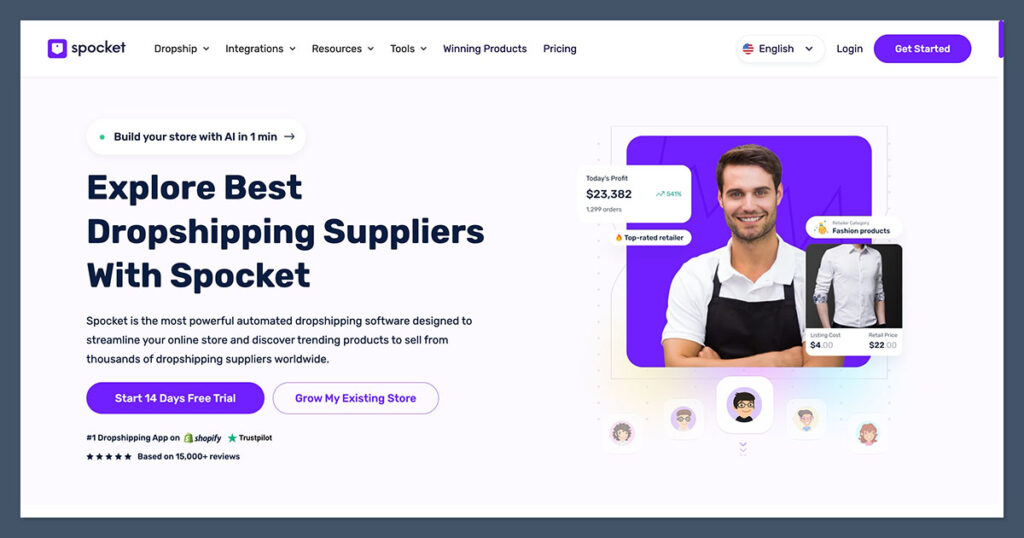
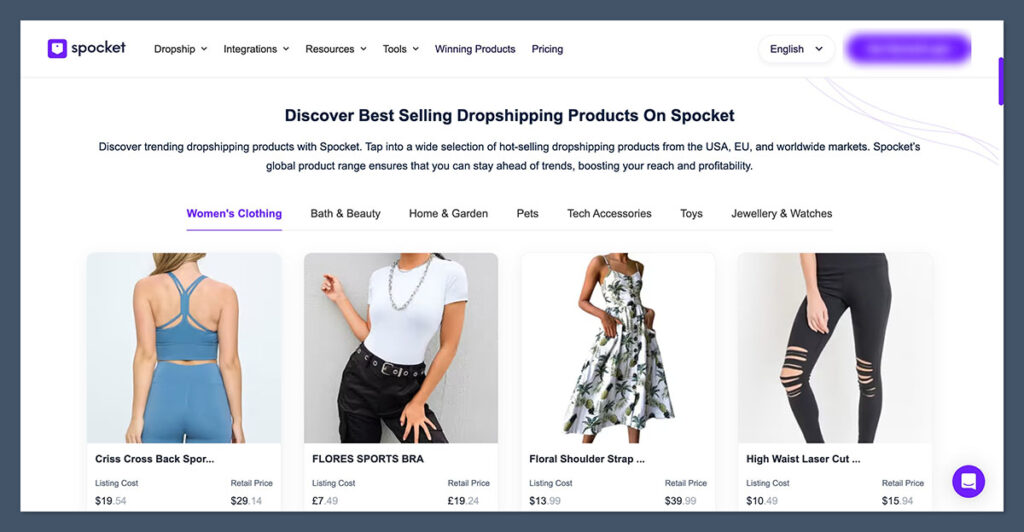
- Spocket remains the gold standard for curation. It prioritizes high-quality, local suppliers from the U.S. and Europe, focusing on helping beginners build a brand-centric store with less complexity.
The primary divergence lies in their philosophy: Doba focuses on managing the complexity of growth, while Spocket focuses on simplifying the path to launch.
Chronology: The Evolution of Support and AI
The dropshipping industry has seen a rapid shift toward automation over the past 24 months.
- Pre-2024: Both platforms functioned primarily as product directories. The manual labor of listing, syncing inventory, and tracking orders was the primary pain point for retailers.
- 2025: The introduction of AI-assisted tools began to change the landscape. Spocket focused on improved filtering and search logic, while Doba began developing its "Pilot" AI.
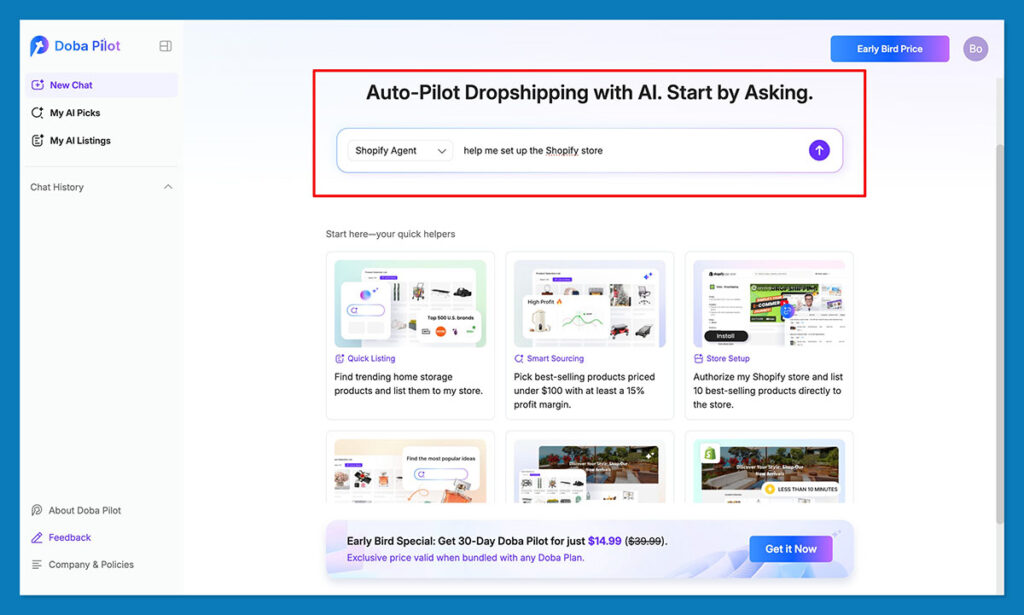
- 2026 (The Current Era): Doba has successfully rolled out a comprehensive "Doba Pilot" upgrade. This AI agent has moved beyond simple product searching to act as an end-to-end operational assistant, covering market research, automated listings, and even after-sales conflict resolution.
Supporting Data: Comparative Matrix
For retailers determining their next move, the following data points illustrate the core differences in service and capability:
| Comparison Point | Doba | Spocket |
|---|---|---|
| Best For | Scaling/Multi-channel sellers | Beginners/Curated boutiques |
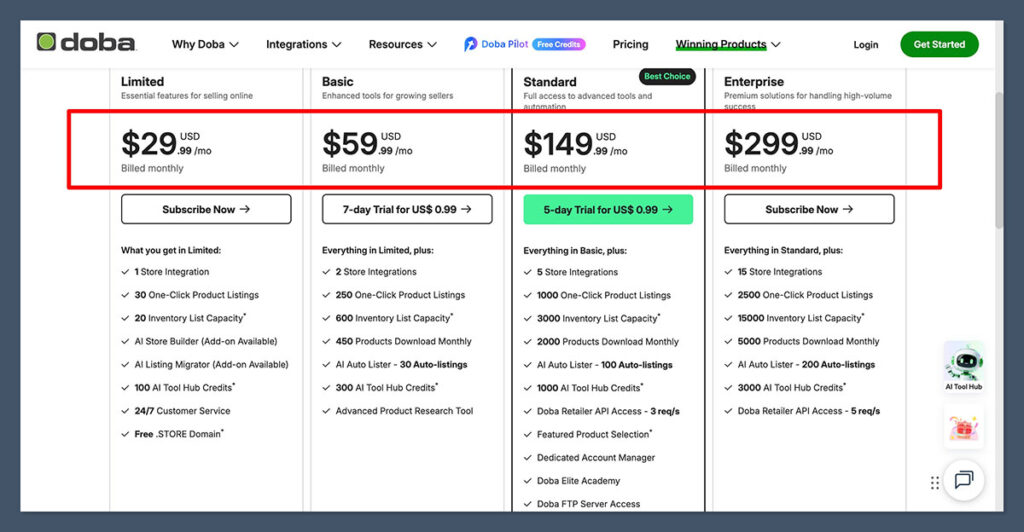
| Starting Price | $29.99/month | $39.99/month |
| Catalog Size | 1M+ SKUs (U.S. focused) | ~1M products (U.S./EU focused) |
| Store Connections | Up to 15 (plan dependent) | One subscription per store |
| Key AI Feature | Doba Pilot (Full lifecycle) | Intelligent product filtering |
| Marketplaces | Shopify, Amazon, TikTok, Walmart, etc. | Shopify, Wix, WooCommerce, Amazon |
The Rise of the Operational Hub: Doba’s Strategic Shift
Doba has undergone a transformation that moves it far beyond a simple directory. By integrating AI-driven workflows, it has become a central command center for e-commerce.
The Power of Doba Pilot
The latest iteration of Doba Pilot is perhaps the most significant technological leap in the industry this year. It functions as a conversational agent that assists in:
- Market Scout: Analyzing demand and seasonality to validate product viability before the retailer invests capital.
- Smart Sourcing: Filtering by warehouse location and price range based on natural language prompts.
- Unified Fulfillment: Managing logistics, return requests, and tracking from a single dashboard, which drastically reduces the need to switch between disparate software tabs.
For the growing business, this centralization is critical. It allows retailers to scale across platforms—such as Amazon, TikTok Shop, and Walmart—without manually updating stock counts or managing multiple order tracking systems.

The Curator’s Choice: Spocket’s Focus on Quality
Spocket remains the favored choice for entrepreneurs who view dropshipping as a vehicle for building a premium brand. The platform’s vetting process is stringent, requiring suppliers to either hold their own inventory or offer substantial discounts (minimum 25%) to ensure the retailer’s profit margins are protected.
Why Beginners Still Lean Toward Spocket
Spocket’s user interface is intentionally streamlined. Where Doba provides a vast, feature-rich interface, Spocket provides a cleaner, guided experience. For a merchant focused on a single niche—such as sustainable home decor or specialized hobbyist equipment—Spocket’s curated nature makes the initial setup feel less overwhelming.
However, the cost structure is a notable consideration. Because Spocket requires a separate subscription for each connected store, it becomes exponentially more expensive as a business grows into a multi-channel or multi-brand entity.
Implications: The Reality of Fulfillment and Returns
Regardless of the platform, the "last mile" of delivery remains the most volatile aspect of dropshipping.
Shipping and Transparency
Both platforms have made strides in domestic shipping. Doba reports that roughly 90% of its products are sourced from U.S. warehouses, which is a major selling point for American retailers aiming to mimic the delivery speed of giants like Amazon. Spocket counters this with its strong network of vetted EU and U.S. suppliers.
The Burden of Returns
Returns are where the two companies take different paths:
- Doba: Offers "After-Sales Protection Services," which assists in mitigating losses from non-defective returns or delivery errors. This adds a layer of safety for retailers dealing with high-volume sales.
- Spocket: Places more autonomy in the hands of individual suppliers. While this allows for more tailored product experiences, it also means that return policies can vary significantly from one supplier to the next, requiring the retailer to be more diligent in their due diligence.
Official Perspectives and Expert Verdict
Industry analysts note that the choice between Doba and Spocket is not necessarily about which platform is "better," but which is more aligned with the merchant’s current growth stage.
The Case for Doba
If your objective is to build a multi-channel, scalable enterprise, Doba’s infrastructure is superior. Its ability to automate listing migrations, sync inventory across platforms like TikTok Shop and eBay, and utilize AI for daily operational tasks makes it the more robust choice for high-volume sellers. While the learning curve was historically steeper, the introduction of the Doba Pilot AI has effectively lowered the barrier to entry.
The Case for Spocket
If your priority is high-quality branding, branded invoicing, and an easy, frictionless experience for a single storefront, Spocket remains unmatched. It is the platform of choice for those who want to spend their time on marketing and product selection rather than navigating complex inventory management software.
Conclusion: Preparing for the Future
As we head deeper into 2026, the dropshipping model continues to mature. Success is increasingly found in data transparency, fast domestic fulfillment, and the intelligent use of automation to handle the mundane tasks of e-commerce.
Retailers should consider the following final check:
- Do you plan to manage more than one store or sell on multiple marketplaces? If yes, Doba provides the necessary tools and cost-effective scaling to prevent operational collapse.
- Is your brand image your primary competitive advantage? If yes, Spocket’s focus on curation and branded invoices will likely serve your needs better.
The tools are now more powerful than ever; the task for the 2026 entrepreneur is to choose the partner that best complements their specific business model. Whether you opt for the feature-rich, AI-heavy environment of Doba or the streamlined, quality-focused ecosystem of Spocket, the key is to leverage these tools to build a sustainable value proposition that keeps customers coming back.
 Laily UPN
 Neng Nana
 Sagoh
