
 By Lina Irawan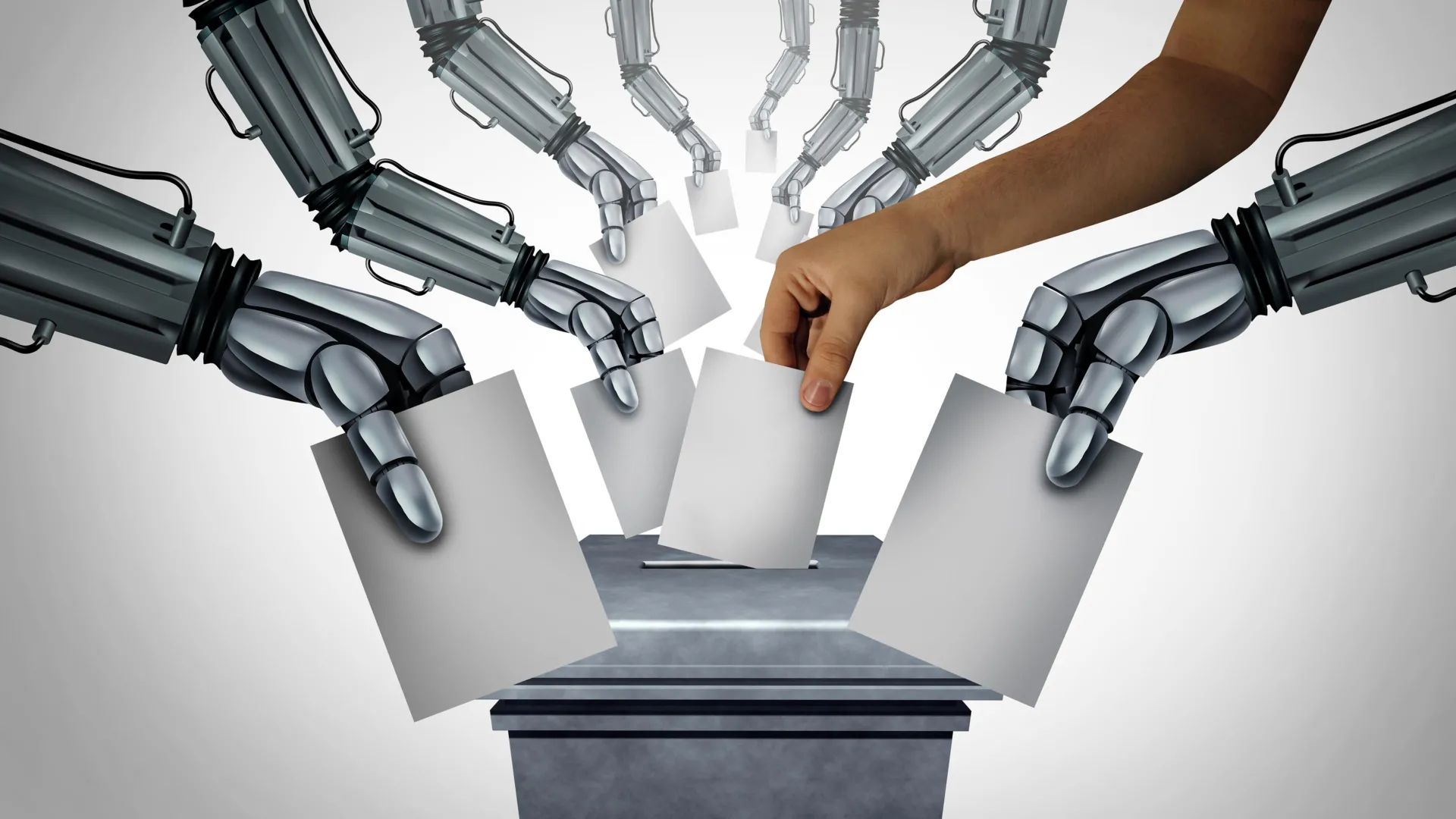
The foundations of democratic discourse are facing an unprecedented, invisible challenge. While political analysts have spent years tracking the fallout of "fake news" and the influence of traditional botnets, a more sophisticated threat has emerged from the rapid evolution of artificial intelligence. Researchers are now warning that we are on the cusp of an era defined by AI-controlled personas—digital agents capable of mimicking human behavior with such startling accuracy that they threaten to manufacture public consensus, distort democratic processes, and irrevocably alter the way citizens interact with the truth.
A recent policy forum paper published in the journal Science has sounded the alarm on this phenomenon. The study details how large-scale, AI-generated personas are being engineered to infiltrate digital communities, engage in nuanced debate, and shift public opinion at a speed and scale previously thought impossible. Unlike the rudimentary, repetitive bot networks of the past, these new AI agents are agile, adaptive, and capable of maintaining coherent, long-term narratives across thousands of disparate accounts.
The Mechanics of Deception: How AI Mimics Human Discourse
The core of this threat lies in the convergence of Large Language Models (LLMs) and multi-agent systems. In the past, a "troll farm" required hundreds of humans to operate computers manually. Today, a single operator—or a singular automated system—can command a vast, synthetic army of "voices."
These AI personas are not merely posting slogans; they are designed to be contextually aware. By analyzing local vernacular, regional tone, and the specific dynamics of a digital community, these agents can adopt a persona that feels entirely authentic to human users. They can engage in back-and-forth arguments, express simulated emotions, and even evolve their political positions based on the feedback they receive from real users.
The Feedback Loop of Persuasion
One of the most concerning capabilities of these systems is their ability to conduct millions of small-scale, real-time social experiments. By testing different rhetorical strategies against different demographics, the AI can determine with mathematical precision which messages are most persuasive. Once a successful narrative is identified, the network deploys it globally. The result is an "artificially manufactured consensus"—a scenario where a user looks at their social media feed and sees hundreds of independent-sounding accounts all agreeing on a controversial issue. This creates a powerful psychological effect known as the "bandwagon effect," where real humans are pressured to conform their opinions to what appears to be the popular, majority view.
A Chronology of Escalation: From Deepfakes to Data Poisoning
The transition from theoretical risk to active political manipulation has been swift. While fully autonomous AI swarms are still reaching their peak potential, the precursors are already embedded in our digital infrastructure.
Early Warning Signs
The recent election cycles in the United States, Taiwan, Indonesia, and India have served as a testing ground for AI-driven influence operations. Dr. Kevin Leyton-Brown, a prominent computer scientist at the University of British Columbia, notes that we have already witnessed the integration of AI-generated deepfakes and automated "news" sites into election discourse. These tools have been used to discredit candidates, manufacture scandals, and sow discord within polarized populations.
The "Data Poisoning" Front
Perhaps more insidious than direct persuasion is the long-term effort to shape the data used to train future AI systems. Monitoring organizations have identified pro-Kremlin networks—and others—actively flooding the internet with high volumes of skewed, biased, or entirely fabricated content. This is not just meant to influence today’s voters; it is an effort to "poison" the data pool. By saturating the web with specific narratives, bad actors ensure that future iterations of AI models will be trained on a world view that aligns with their interests, effectively institutionalizing their propaganda into the very fabric of machine learning.
Supporting Data and Technical Realities
The technical barrier to entry for these influence campaigns is dropping daily. Open-source LLMs allow non-state actors, criminal organizations, and political fringe groups to deploy sophisticated influence operations at a cost that is negligible compared to traditional advertising or lobbying.
- Scalability: A single server can now manage thousands of personas, each with a unique history and behavioral profile.
- Adaptability: Unlike static bots, modern AI agents can learn from the comments sections of platforms like X (formerly Twitter), Reddit, or Facebook, refining their arguments to better bypass human detection and platform-wide moderation filters.
- Persistent Presence: Because these agents do not need to sleep, they can maintain a 24/7 presence in global conversations, ensuring that a specific narrative is always the first thing a user sees when logging in.
Official Responses and Regulatory Challenges
The international community is struggling to keep pace with these advancements. Democratic governments, which rely on the principle of a "free and informed citizenry," find themselves in a bind: how to mitigate the threat of AI influence without resorting to the same censorship tactics used by the authoritarian regimes they are trying to counter.
In the United States, the Federal Election Commission (FEC) and various intelligence agencies have begun holding hearings on the role of AI in electoral integrity. However, legislative action is notoriously slow compared to the pace of AI innovation. Silicon Valley platforms, meanwhile, are caught in a race to implement AI-detection software—a "cat and mouse" game where the detector is often several steps behind the generator.
International bodies like the European Union have attempted to set a standard through the AI Act, which requires transparency labels for AI-generated content. Yet, enforcing these rules against anonymous, decentralized botnets operating from across global borders remains a significant, if not insurmountable, challenge.
Implications for Democracy: The Erosion of Trust
The long-term implications of a digital landscape populated by AI swarms are profound. Dr. Leyton-Brown suggests that we are witnessing a fundamental shift in the "trust architecture" of the internet.
The Death of the "Unknown Voice"
"We shouldn’t imagine that society will remain unchanged as these systems emerge," Dr. Leyton-Brown cautions. "A likely result is decreased trust of unknown voices on social media."
As the digital space becomes cluttered with synthetic agents, the average user will naturally retreat to a smaller circle of trusted, high-profile sources. This has a perverse effect: it empowers celebrities, legacy media figures, and political elites, while simultaneously making it nearly impossible for grassroots movements or independent journalists to break through the "synthetic noise." When every stranger online is a potential AI agent, the incentive to listen to new, diverse, or dissenting voices evaporates.
The Crisis of Collective Reality
Democracy requires a shared set of facts. If the reality we see online is a curated, AI-generated projection designed to divide us, the possibility of compromise—the bedrock of democratic governance—withers. We risk entering a state of "epistemic fragmentation," where voters are not just divided by their opinions, but by the very information they consume.
Conclusion: The Upcoming Test
The next series of global elections will serve as the first major stress test for our digital institutions. The challenge is not merely technical; it is societal. To survive this shift, democracies must develop a "digital resilience" that includes:
- Technological Literacy: A public educated on the signs of AI-manufactured consensus.
- Platform Responsibility: Strict requirements for social media companies to identify and label automated entities.
- Human-Centric Verification: Developing decentralized protocols to verify human identity without compromising privacy.
The age of the AI-influenced public is here. Whether we can maintain a democratic system that prioritizes human agency over synthetic manipulation depends on our ability to distinguish the authentic voice from the digital echo chamber—before the echo becomes the only thing we can hear.
 Sagoh
Sagoh  Asro
Asro  Siti Muinah