
 By Lina Hope

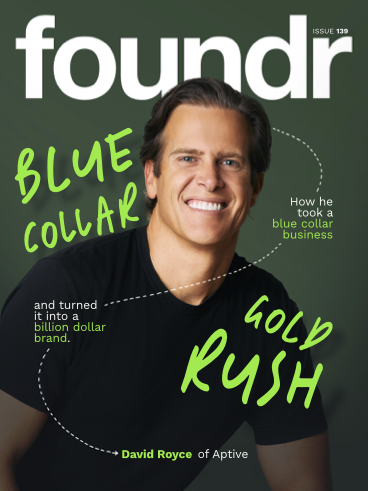
In the polished, high-stakes world of venture capital and tech-centric entrepreneurship, the path to a billion-dollar valuation is usually paved with proprietary software, disruptive algorithms, or revolutionary consumer hardware. David Royce, however, took a different route. He built his fortune in an industry that most Ivy League finance graduates would "not touch with a ten-foot pole": residential pest control.
As the founder and chairman of Aptive Environmental, the third-largest residential pest control service in North America, Royce has rewritten the rules of wealth creation. His journey from an academic underachiever who struggled with undiagnosed ADHD to a titan of the home services industry offers a masterclass in persistence, operational excellence, and the counterintuitive power of "unsexy" businesses.
The Foundation: From "Not Smart" to Sales Prodigy
The narrative of David Royce’s success begins not in a boardroom, but in a sixth-grade classroom. For much of his early life, Royce operated under the assumption that he lacked intellectual prowess. Because he struggled to focus on traditional subjects, he internalized a narrative of failure.
"I struggled in school because I couldn’t focus unless I cared deeply," Royce explains. "When you’re a kid, you don’t say, ‘I might have undiagnosed ADHD.’ You say, ‘I guess I’m not smart.’"
The trajectory of his life shifted due to a single teacher, Mrs. Luft, who recognized his potential and offered the validation he couldn’t provide for himself. That newfound confidence ignited a work ethic that would eventually become his hallmark. Later in adulthood, when diagnosed with ADHD, Royce reframed the condition from a liability into a "superpower," provided he was working in an environment he cared about.

The Crucible of Door-to-Door Sales
Royce’s entry into business was purely accidental. Seeking summer income, he accepted a commission-only, door-to-door sales position in pest control. The first week was an unmitigated disaster. While his peers were closing deals, Royce spent five days in Sacramento performing "free cardio"—walking neighborhoods without a single sale.
Instead of retreating, Royce leaned into the grind. He spent his weekends devouring sales literature and committing to 90 minutes of daily study. By the end of his first summer, he was the top sales rookie in a company of 200. This experience codified his philosophy: "Persistence is genius in disguise."
Chronology of an Empire
Royce’s rise is marked by a series of strategic pivots that leveraged his sales background and financial education to scale operations at breakneck speeds.
- The Early Years (2000s): After four summers of generating $225,000 in personal sales—capital he initially earmarked for an MBA—Royce decided to forgo the ivory tower for the field. He utilized his $300,000 in savings as seed capital, choosing to launch his own pest control venture rather than enter investment banking.
- The First Lessons in Cash Flow: In his inaugural year in Los Angeles, Royce faced a growth crisis. He had projected 4,000 customers but secured 7,500. While his sales were booming, the business model required him to pay sales commissions upfront. He faced a liquidity crunch that nearly bankrupted the company. He navigated this by negotiating payment terms with his team, learning the hard way that "revenues are vanity, profits are sanity, but cash flow is reality."
- The "Asset Deal" Strategy: Royce executed three successful exits to the same strategic buyer. Each time, he sold the customer base and the service technicians, but retained his core leadership and salesforce—the "golden goose." He then used the proceeds to start the next iteration of the company, better capitalized and more efficient.
- Aptive Environmental: His fourth venture, Aptive, grew to over $500 million in annual revenue. By prioritizing scalable training, data-driven service features, and a proprietary sales app that gamified performance, Royce grew seven to ten times faster than the industry average.
Supporting Data and Operational Philosophy
Royce’s success is built on three pillars that transformed a blue-collar service into a high-performance machine.
1. The Science of the "Close"
Royce codified a training program that focused on psychological precision. His methods included:
- Option Closes: Replacing yes/no questions with binary choices that both favored the company (e.g., "3:00 or 5:00?").
- The RAC Method: Resolve the doubt, provide an "ace" (a compelling fact/value proposition), and close again from a new angle.
- Non-Verbal Communication: Teaching reps that if their body language signals fear, the customer will instinctively reject the pitch.
2. Culture as Design
Rather than relying on superficial perks, Royce focused on intentional culture. He implemented a profit-sharing model, giving away 25% of the company to employees. This resulted in a nine-digit payout to team members upon exit, allowing many to clear mortgages and student debt. As Royce notes, "Ownership is a far better retention tool than ping-pong tables."
3. The "Unsexy" Advantage
Royce argues that the most lucrative opportunities often reside in industries ignored by the tech-obsessed elite. With millions of baby boomers retiring and looking to exit essential service businesses, the market is ripe for consolidation. Because these businesses provide recurring revenue and aren’t easily replaced by AI, they offer a level of stability that high-growth tech startups often lack.
Official Lessons: Mistakes and Missteps
Even a seasoned entrepreneur is susceptible to the pitfalls of rapid scaling. Royce admits that his biggest failures came from attempting to professionalize the company too quickly with "big-company" hires who lacked the grit of the front-line culture.
When hiring a CFO from a billion-dollar tech firm, Royce granted him significant autonomy. However, the executive lacked an understanding of how specific expenses impacted the company’s daily cash flow. This disconnect led to missed forecasts during a critical sale process, causing multiple potential buyers to withdraw their offers.
"Resumes don’t run companies," Royce reflects. "People do." The lesson was clear: verify every assumption, and never miss a forecast during a transaction process.

The Implications: Moving Beyond the Hero Complex
The final phase of Royce’s tenure at Aptive was defined by his transition from "hero" to "architect." Recognizing that he could not scale if the company remained dependent on his personal intervention, he spent a decade grooming his successor.
The transition was not merely a structural change but a psychological one for Royce. He had to learn to watch from the sidelines, allowing his team to win in their own way, even if it differed from his own methodology.
The Philosophy of "Just a Little More"
When asked about his "number"—the point at which he would be satisfied—Royce rejects the premise. He argues that human ambition is designed to reset the goalpost as soon as a target is hit.
"Entrepreneurship isn’t really about a big exit or financial freedom," Royce says. "It’s the expertise, discipline, and character you develop along the way. If you don’t enjoy the climb, the summit is going to disappoint you."
Legacy and Future Outlook
David Royce’s story stands as a testament to the fact that extraordinary wealth can be built in the most ordinary places. By applying intellectual rigor to "boring" tasks, and by prioritizing the development of future leaders over personal accolades, he has created a template for modern business success.
As the economy continues to evolve, Royce’s focus remains on the human element. For him, the ultimate metric of a successful career isn’t the final valuation of his companies, but the number of leaders he helped cultivate. In an era where many entrepreneurs are obsessed with the "image" of success, Royce serves as a potent reminder that the most valuable opportunities are often hidden in plain sight, waiting for someone willing to do the work that everyone else wants to avoid.
 Asep Darmawan
 Reynand Wu
 Nana
